
Choosing a mazda 3 sun shade requires understanding that “one size fits all” rarely holds true for this popular compact car. With four distinct generations spanning over two decades, the Mazda 3 has undergone dramatic styling and structural changes. Each generation features a unique windshield angle, glass surface area, and rearview mirror housing assembly. Selecting the correct size ensures edge-to-edge coverage, keeping your cabin cool under the intense tropical sun and protecting your dashboard from UV-induced cracking.
To find the perfect fit, you must first pinpoint your car’s exact generation, decide between a tailored custom-fit or a flexible universal shade, and accurately measure your windshield if opting for a multi-vehicle model. Taking these steps prevents common issues like sagging, light leaks, and interference with modern safety sensors.
Identify Your Mazda 3 Generation and Model Year
Before browsing online marketplaces or visiting auto accessory shops, you must identify your vehicle’s specific production generation. Purchasing an interior accessory like a sun shade without this information often leads to loose fits, sagging, or large gaps that let in heat and UV rays. Windshield glass dimensions, curvature, and the technology clusters mounted near the rearview mirror have evolved significantly with each design cycle.
Products mentioned in this guide
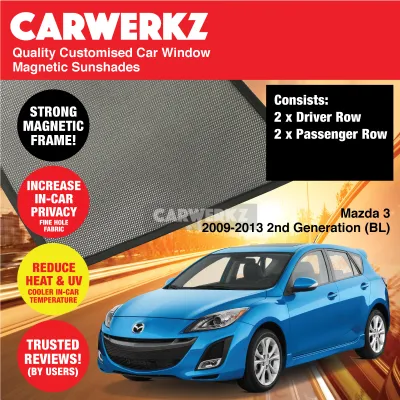
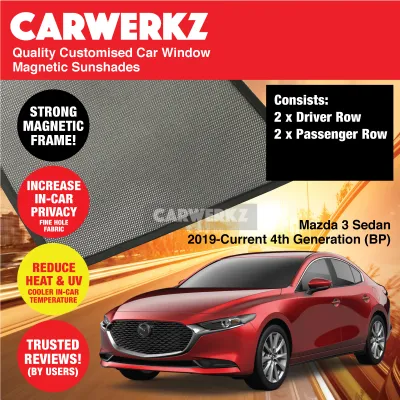
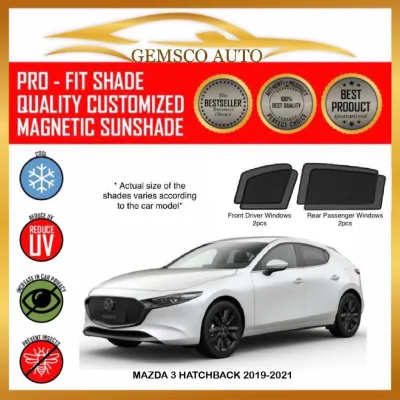
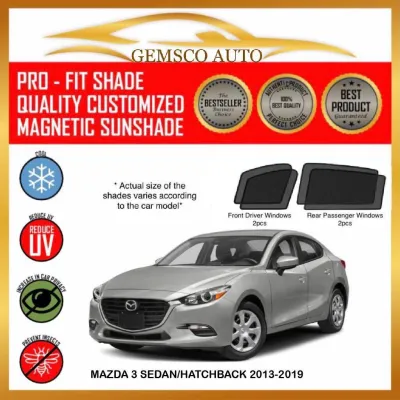
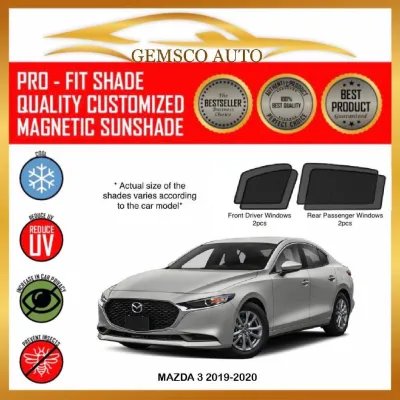
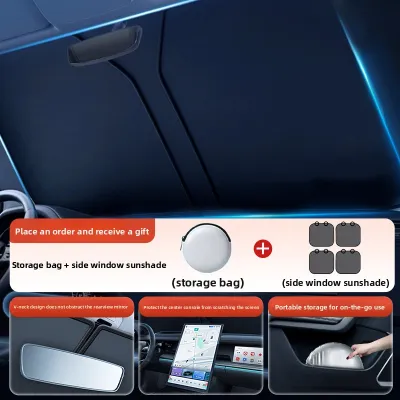

Prices are valid at publication and may change. Please refer to the product page for the latest price.
To find your exact model year and registration details, check your vehicle log card via the Land Transport Authority portal, or look at the manufacturing plate located on the driver’s side door jamb. You can also verify the model phase through your infotainment system’s software version or the physical design of your dashboard.
The Mazda 3 has transitioned through four major generations, each with distinct windshield profiles:
- First Generation (BK, 2003–2009): Features a more upright windshield design with a relatively small glass surface area and a simple, slim rearview mirror mount without advanced sensor pods.
- Second Generation (BL, 2009–2013): Characterized by a sweeping windshield that curves gently into a rounded roofline, introducing slightly larger glass dimensions and early rain-sensing wiper housings on premium trims.
- Third Generation (BM/BY, 2013–2018): Showcases Mazda’s Kodo design language, resulting in a steeply raked, aerodynamic windshield. This generation introduced larger sensor clusters behind the rearview mirror for early safety camera features.
- Fourth Generation (BP, 2019–Present): Features a highly sleek, aggressive windshield angle with an expansive glass area. It houses a bulky, sophisticated camera and sensor array behind the rearview mirror for advanced driver assistance systems, demanding precise cutouts.
A sun shade designed for a first-generation BK model will be far too small and unstable for a modern fourth-generation BP model. Conversely, a fourth-generation shade will overlap awkwardly and fail to fit the narrower frame of older models. Dashboard depth and the distance between the glass and the sun visors also vary, directly affecting how the shade is held in place.
Custom-Fit vs. Universal Sun Shades: Which is Better?
When shopping for a mazda 3 sun shade, you will generally choose between custom-fit and universal options. Each style offers distinct trade-offs in terms of coverage, ease of use, storage, and cost.

Custom-fit sun shades are laser-measured and tailored specifically to the exact dimensions of a particular Mazda 3 generation. These shades match the precise perimeter of your windshield frame, leaving virtually no gaps for sunlight to penetrate. They feature built-in cutouts that hug the rearview mirror mount and safety camera housings perfectly. While highly effective at blockading heat, custom-fit options are typically constructed from stiff, multi-layered reflective materials that do not fold down as compactly. They also sit in a higher price bracket, generally ranging from S$50 to S$100 or more on specialty automotive sites.
Universal sun shades are mass-produced in standard geometric shapes, such as rectangles or overlapping circles. They rely on flexible wire frames or soft accordion folds to fit a wide range of vehicle makes and models. While highly budget-friendly—typically costing between S$15 and S$30—universal shades rarely provide a seamless fit. You will often experience light leaks around the corners, and you must manually tuck the excess material around the rearview mirror and A-pillars.
The complex sensor housings on modern Mazda 3 models present a unique challenge. The camera system on Gen 3 and Gen 4 models occupies a significant portion of the upper-middle windshield. A custom-fit shade is engineered with a dedicated recess to accommodate this bulky housing without putting pressure on the camera bracket. A universal shade, lacking this specific cutout, must be forced or bent around the sensor pod, which can cause the shade to sag or potentially misalign the delicate camera sensors over time.
When purchasing online, read product descriptions carefully. Avoid listings that simply state “fits Mazda 3” without specifying the model years or chassis codes (BK, BL, BM, or BP). Look for explicit compatibility confirmations, such as “Designed for Mazda 3 BP Sedan/Hatchback,” to ensure you do not receive an ill-fitting accessory.
How to Measure Your Windshield for a Universal Sun Shade
If you decide to purchase a universal or semi-custom sun shade, taking manual measurements of your Mazda 3 windshield is the most reliable way to prevent buying the wrong size. Do not rely on generic manufacturer sizing charts, as they often generalize compact cars into a single category.
To get started, you will need a flexible metal measuring tape or a soft tailor’s tape. It is best to take these measurements from inside the vehicle cabin to reflect the actual space where the sun shade will sit.
Follow these steps to measure your windshield accurately:
- Measure the Width: Extend your measuring tape horizontally across the inside of the windshield. Take two separate measurements: one along the very top edge near the headliner, and one along the widest point near the middle of the glass. Note both figures, as windshields taper significantly toward the roof.
- Measure the Height: Measure vertically from the top edge of the glass down to where the windshield meets the dashboard. Slide the tape measure down into the dashboard lip where the glass terminates to capture the full vertical span.
- Account for the Dashboard Lip and Sensors: Note the depth of the dashboard recess near the defroster vents. Also, measure the width and depth of the rearview mirror bracket and sensor housing to estimate how much clearance your shade will need.
As a general rule of thumb, select a universal sun shade that is slightly larger—about 2 to 5 centimeters wider and taller—than your measured interior glass dimensions. A slightly oversized shade can be wedged gently against the soft pillars and headliner, using tension to hold itself upright. If the shade is even slightly too small, it will lack the structural support to stay up, sliding down onto the dashboard and exposing your interior to direct sunlight.
Because the Mazda 3 features a highly aerodynamic, low-profile roofline, the windshield is mounted at a very sharp angle. This means the sun shade must resist gravity along a long diagonal slope. A flimsy, undersized shade will buckle in the middle under its own weight, rendering it ineffective.
Installation and Fitment Tips for Maximum Coverage
Proper installation is key to maximizing the thermal performance of your mazda 3 sun shade. Even a high-quality custom-fit shade will fail to keep your cabin cool if it is positioned incorrectly or leaves large gaps.
To install your sun shade effectively, follow these steps:
- Unfold the Shade inside the Cabin: Carefully open the sun shade across the front passenger and driver seats, ensuring you do not strike the infotainment screen or rearview mirror.
- Position the Bottom Edge First: Slide the bottom edge of the shade deep into the crevice where the windshield meets the dashboard. Ensure it covers the lower defroster vents and sits flat against the glass.
- Push the Top Edge into Place: Lift the top of the shade up against the headliner. Carefully guide the center cutout around your rearview mirror mount and any sensor housings.
- Secure with Sun Visors: Pull down both the driver and passenger sun visors, pressing them firmly against the sun shade to lock it against the windshield frame.
When dealing with the prominent rain sensors and safety cameras on newer Mazda 3 generations, never force the shade’s frame against the plastic housing. If using a two-piece spring-wire universal shade, overlap the inner circles slightly behind the rearview mirror to create a snug seal without putting pressure on the camera bracket.
If you have a front-facing dashcam mounted on your windscreen—a standard setup for most drivers—take extra care when sliding the shade into position. Avoid pulling or snagging the camera’s power cable or shifting its recording angle. You may need to gently tuck the shade behind the dashcam mount to keep the lens clear and prevent the adhesive from peeling off under pressure.
Once installed, perform a quick verification check. Sit in the driver’s seat and look for any direct light leaks around the A-pillars, the top headliner edge, and the center mirror area. Adjust the positioning or visor tension to eliminate these gaps.
For safety, always ensure the sun shade is completely removed and stowed away before starting your vehicle. Never attempt to drive with the shade partially installed or resting on the dashboard, as it can severely obstruct your forward vision and interfere with the deployment of the passenger-side dashboard airbag or side curtain airbags in an accident.
Maintaining and Storing Your Sun Shade
A well-maintained sun shade can last for years, preserving your Mazda 3’s interior aesthetics and resale value. Proper handling prevents the reflective material from flaking and keeps the internal support structures intact.
When folding your sun shade, always follow the manufacturer’s intended mechanism. For accordion-style shades, fold along the pre-creased lines systematically rather than stuffing the shade into a tight space, which can permanently crease and weaken the thermal barriers. For spring-wire circle shades, use a smooth twisting motion to collapse the loops into a compact circle. Forcing the wire frame against its natural resistance can snap or warp the metal, rendering the shade unusable.
Avoid tossing your sun shade loosely onto the back seat where it can slide around during sudden braking. In a Mazda 3, safe and convenient storage spots include:
- Behind the Front Seats: Slide the folded shade into the seatback pockets for quick access.
- The Front Passenger Footwell: Tuck it along the side of the center console if you drive alone frequently.
- The Trunk or Cargo Area: Keep it flat in the boot of your sedan or hatchback to maintain a clean, clutter-free cabin.
Over time, the reflective surface of the shade will collect dust, pollen, and fingerprints. Clean it periodically by wiping the surface down with a damp microfiber cloth. Avoid using harsh chemical cleaners or abrasive pads, which can strip away the reflective metallic coating. Because Singapore experiences high relative humidity, ensure the shade is completely dry before folding and storing it to prevent mold, mildew, and unpleasant odors from developing in your cabin.
Frequently Asked Questions (FAQ)
Will a universal sun shade scratch my Mazda 3 windshield or dashboard?
High-quality sun shades feature bound, double-stitched fabric edges or soft felt borders designed to protect delicate interior surfaces. However, cheap universal shades with exposed metal wire frames or rough nylon stitching can scratch the plastic dashboard trim or the soft leatherette wrapping on newer Mazda 3 dashboards. Always inspect the perimeter of a new shade for sharp edges before installation. Additionally, ensure your dashboard is free of loose grit or dust, as the pressure of the shade can trap and grind these abrasive particles against the windshield glass.
Do I need a separate sun shade for the rear window of my Mazda 3?
While the front windshield is the primary source of solar heat entry, the rear window also contributes significantly to cabin temperatures. This is especially true for Mazda 3 hatchback variants, which feature a steeply raked, expansive rear glass pane that acts like a greenhouse. To achieve comprehensive thermal protection, consider installing a dedicated rear window shade. You can use suction-cup-mounted mesh screens or custom-fit magnetic side-window shades. Always ensure that any rear window shade does not obstruct your rearview mirror visibility or violate local road safety regulations while driving.
Community discussion
Share your experience or ask a question. Comments are reviewed before publication.