
Selecting the right Maxima chain lubricant for your motorcycle in Singapore depends on matching your specific riding style—whether daily commuting, long-distance touring, or track riding—with your chain’s construction and the local tropical climate. Because Singapore experiences high humidity and sudden downpours, your choice must balance corrosion resistance, fling resistance, and ease of maintenance. By evaluating how you ride and verifying your motorcycle manufacturer’s specifications, you can select a formulation that keeps your drivetrain operating smoothly and safely.
Assessing Your Riding Conditions and Motorcycle Needs
To choose the most effective chain lubricant, you must first analyze your primary riding environment and how it affects your motorcycle’s drivetrain. Daily urban commuting in stop-and-go traffic exposes your chain to different stresses than high-speed weekend touring or closed-circuit track days. Stop-and-go riding generates localized heat and attracts road dust, while high-speed riding subjects the chain to intense centrifugal forces that can easily fling off poorly adhering lubricants.
Singapore’s tropical rainforest climate introduces unique environmental challenges that directly impact chain longevity. With relative humidity levels frequently exceeding 80 percent and sudden, heavy rain showers occurring throughout the year, metal components are highly susceptible to rapid oxidation and rust. Road spray during wet weather carries fine grit, road grime, and acidic water from ponding areas, which can quickly wash away weak lubricants and penetrate the chain’s moving parts. Consequently, riders in this environment require a lubricant with robust water-displacement properties and strong metal adhesion to prevent premature wear.
Products mentioned in this guide
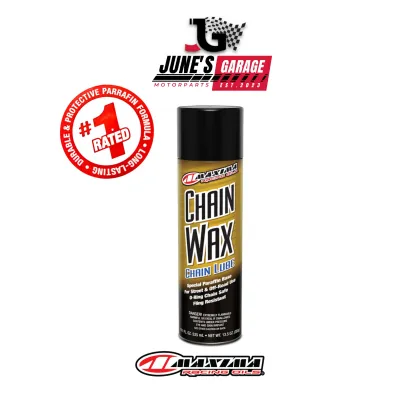
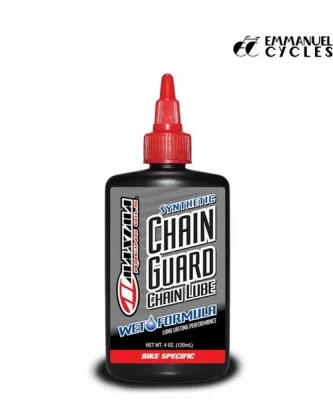
Prices are valid at publication and may change. Please refer to the product page for the latest price.
Before selecting any product, you must verify your motorcycle manufacturer’s chain specifications. Modern motorcycles typically use either standard (non-sealed) chains or sealed chains, which include O-ring, X-ring, or Z-ring designs. Sealed chains feature rubber rings that lock factory-applied grease inside the internal pin and bushing assembly. For these chains, the external lubricant’s primary role is to keep the rubber seals moist and pliable while lubricating the contact points between the rollers and the sprocket teeth. Using an incompatible lubricant containing harsh solvents can cause these rubber seals to swell, crack, or degrade, leading to grease loss and rapid chain failure.
Exploring Maxima Chain Lubricant Categories
Maxima offers several chain lubricant formulations, primarily categorized by their application formats and chemical bases. Understanding these categories allows you to select a product that fits your maintenance routine and performance requirements. The two primary application formats are aerosol sprays and liquid drip bottles, each offering distinct advantages depending on your garage setup and precision preferences.

Aerosol lubricants are highly popular due to their convenience and ease of application. They utilize pressurized propellants and volatile carrier solvents to deliver a fine mist that easily penetrates deep into the chain’s rollers and side plates. Once applied, the carrier solvents evaporate, leaving behind a thick, protective lubricating film. However, aerosols require careful aiming and the use of protective cardboard or shields to prevent overspray from contaminating your rear tire, brake rotor, or swingarm. Liquid drip-on lubricants, while taking longer to apply link by link, offer maximum precision, eliminate overspray risks, and are highly portable for long trips.
Within these formats, the formulations generally fall into three main product lines: standard chain lubricants, chain waxes, and racing-specific formulas. Standard synthetic or petroleum-based chain lubricants remain somewhat wet or tacky after application, providing continuous water barrier protection and excellent cushioning under heavy loads. Chain waxes are formulated with paraffin or similar wax bases that go on wet but dry to a hard, non-tacky, protective barrier. This dry film is highly resistant to attracting dirt, sand, and road grit. Racing-specific formulas are engineered for high-RPM performance, prioritizing minimal rolling resistance and extreme-pressure protection, though they typically offer less long-term weather protection.
Regardless of the category you choose, reading the product label is a critical safety step. You must ensure the label explicitly states that the formula is safe for O-ring, X-ring, and other rubber-sealed chains. The label also provides specific instructions regarding application temperature, shaking requirements, and necessary curing times, which are essential for achieving the product’s intended performance and preventing fling-off.
Matching the Right Lube to Your Riding Style
For daily commuters navigating Singapore’s busy streets, the ideal chain lubricant must offer excellent fling resistance and reliable wet-weather protection. Commuting involves frequent stop-and-go cycles, which can cause wet lubricants to attract airborne dust and exhaust soot, forming an abrasive grinding paste on your sprockets. A dry-type chain wax or a highly fling-resistant synthetic lubricant is highly suitable for this riding style. These formulations dry to a clean, protective barrier that resists dirt accumulation while shielding the metal from daily rain showers and road spray, keeping your commuter bike clean and reducing the frequency of messy cleanups.
Weekend tourers and long-distance riders require a lubricant designed for extended mileage and varied weather exposure. When covering long distances, you cannot always predict when you will encounter a sudden downpour or dusty road conditions. For this style of riding, a heavy-duty synthetic chain lubricant with advanced water-displacement properties is highly recommended. These formulas provide a durable, tenacious film that resists being washed off by prolonged rain and continues to lubricate the chain over hundreds of kilometers. While they may attract slightly more dust than a dry wax, their superior moisture barrier is essential for preventing rust during long journeys.
Performance and track riders operate their motorcycles under extreme loads, high speeds, and elevated temperatures. For these closed-course environments, a specialized racing chain lubricant is the appropriate choice. These formulas are engineered to minimize frictional drag, maximizing power transfer to the rear wheel while protecting the chain from the intense heat generated at high RPMs. However, track riders must verify that the lubricant complies with local track regulations regarding fluid use. Because racing lubricants prioritize low friction over long-term weather protection, they require more frequent post-ride cleaning and reapplication to prevent atmospheric corrosion between track sessions.
Application and Maintenance Best Practices
To maximize the effectiveness of your chosen Maxima chain lubricant, you must follow proper application and maintenance procedures. Applying fresh lubricant over a dirty, gritty chain is counterproductive, as it traps abrasive particles against the metal surfaces and rubber seals, accelerating wear. Always begin by thoroughly cleaning the chain using a dedicated, O-ring-safe chain cleaner. Avoid using harsh household solvents, gasoline, or wire brushes, which can permanently damage the rubber seals and scratch the metal plates. Use a soft-bristled chain brush to gently agitate dirt, then wipe the chain completely dry with a clean, lint-free rag before applying any lubricant.
When applying the lubricant, safety must be your top priority. Never clean or lubricate a motorcycle chain with the engine running or the bike in gear. Always place the motorcycle on a center stand, paddock stand, or use a wheel roller, and rotate the rear wheel slowly by hand. Keep your fingers well away from the sprocket teeth and chain run to prevent severe entrapment injuries. Apply the lubricant to the inside run of the chain—the side facing the sprockets—as it passes along the bottom of the swingarm. Aim the nozzle directly at the gap between the inner and outer link plates where the rubber seals are located, as well as onto the center rollers. This ensures that centrifugal force pushes the lubricant outward into the joints when the motorcycle is ridden.
After application, allow sufficient curing time before riding. Most aerosol lubricants contain volatile solvents that require time to evaporate so the lubricant can bond securely to the metal. Riding immediately after application will cause the wet lubricant to fling off onto your rear tire, swingarm, and riding gear, creating a safety hazard and leaving the chain unprotected. Allow the chain to cure for at least 15 to 30 minutes, or ideally overnight, to ensure maximum adhesion.
Finally, establish a routine inspection schedule to monitor your chain’s condition. In Singapore’s humid climate, you should inspect your chain weekly or every 300 to 500 kilometers. Check for proper chain tension and alignment according to your motorcycle owner’s manual, and look for signs of dry rollers, rust spots, or stiff links. Regular inspections allow you to address minor lubrication needs before they develop into costly drivetrain damage.
Purchasing Safely and Verifying Compatibility
To ensure you are getting genuine Maxima products that perform as intended, always purchase from authorized dealers, reputable local motorcycle workshops, or established online marketplaces. Counterfeit or improperly stored lubricants may not offer the same level of protection and could contain aggressive solvents that damage your chain’s rubber seals. When buying from physical stores, inspect the packaging for clear, legible branding, intact safety seals, and batch codes.
Before applying any product to your motorcycle, double-check the label to verify its explicit compatibility with your specific chain type. Ensure the packaging clearly states that it is safe for O-ring, X-ring, or Z-ring chains if your motorcycle is equipped with a sealed chain. If you are ever unsure about product compatibility or proper application procedures, consult your motorcycle’s owner’s manual or seek advice from a qualified motorcycle technician.
Frequently Asked Questions (FAQ)
Can I use Maxima chain lube on any motorcycle chain?
You must check the product label to ensure compatibility with your specific chain type. While most modern Maxima chain lubricants are formulated to be safe for both standard and sealed (O-ring, X-ring, Z-ring) chains, some specialized formulas or generic cleaners may contain solvents that can degrade rubber seals. Always cross-reference the product label instructions with your motorcycle owner’s manual before application.
How often should I reapply chain lube in Singapore's climate?
Due to Singapore’s high humidity and frequent rain, you should inspect your chain regularly and reapply lubricant every 300 to 500 kilometers under dry conditions. If you ride through a heavy downpour or standing water, you should inspect, clean, and reapply the lubricant as soon as possible after your ride, as water can wash away the protective barrier and lead to rapid rust formation.
Is it necessary to clean the chain before applying a new layer of lube?
Yes, cleaning the chain before applying fresh lubricant is highly recommended. Applying new lubricant over road grime, dust, and old grease traps abrasive particles against the chain rollers and rubber seals, which accelerates wear on both the chain and sprockets. Using a dedicated, seal-safe chain cleaner and allowing it to dry completely ensures the new lubricant can adhere properly to the metal surfaces.
Community discussion
Share your experience or ask a question. Comments are reviewed before publication.