
Selecting the ideal Lutian pressure washer for home car washing requires a clear understanding of your washing environment, your vehicle’s delicate surfaces, and the technical specifications of the machine. Lutian offers a wide range of pressure washers, from ultra-compact handheld units to heavy-duty induction motor machines. The best choice is not simply the most powerful one, but the one that matches your water source, storage space, and paint safety requirements.
For homeowners in Singapore, practical constraints like storage space in apartments and water access in shared car parks heavily influence which model is most suitable. By focusing on verifiable specifications such as working pressure, flow rate, and motor type, you can select a machine that delivers a thorough clean without risking damage to your vehicle’s clear coat or electrical components.
Quick Selection Guide for Home Car Washing
To find the right balance for regular vehicle maintenance, you must look past maximum pressure ratings and focus on the working pressure. For safe home car washing, a working pressure between 70 bar and 100 bar is the ideal range. This provides sufficient force to cut through road grime, brake dust, and mud without peeling paint, lifting decals, or damaging delicate rubber window seals.
Products mentioned in this guide
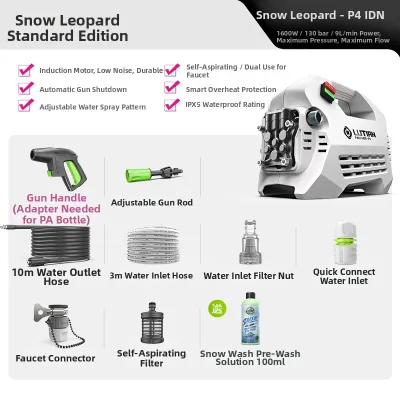
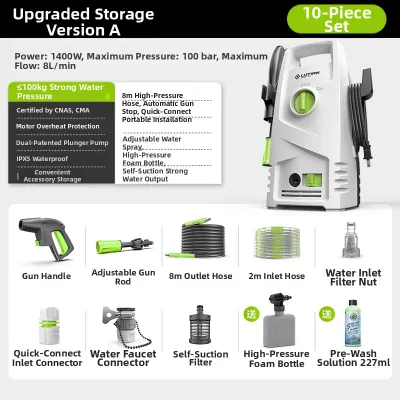
Prices are valid at publication and may change. Please refer to the product page for the latest price.
Physical handling is another critical factor when selecting a machine. A heavy, bulky unit can make car washing feel like a chore, leading to less frequent maintenance. If you live in a high-rise apartment and wash your car in a shared wash bay, a lightweight, compact unit weighing under 10 kg with a sturdy carry handle is highly practical. For landed properties with dedicated driveways, a slightly heavier wheeled unit offers excellent stability and easy movement around the vehicle.
Your washing setup is only as good as its accessories. A complete home car washing system requires a dedicated foam cannon to apply a thick layer of pre-wash soap, an adjustable spray nozzle to control the water pattern, and high-pressure hoses with robust connectors. Ensuring these accessories are compatible with your chosen Lutian model before purchase saves time and prevents frustrating leaks during operation.
Matching Water Pressure and Flow Rate to Your Vehicle
When browsing online listings, you will often see maximum pressure ratings highlighted in bold text. However, maximum pressure represents the absolute limit the pump can reach before the bypass valve opens, not the pressure you experience during continuous use. Always locate the silver specification plate on the machine’s body or check the official product manual to find the rated working pressure, which is the true indicator of cleaning performance.

Water flow rate, measured in liters per minute or liters per hour, is just as important as pressure for effective cleaning. While pressure lifts the dirt from the surface, flow rate is what flushes the debris away. A machine with a working pressure of 80 bar and a flow rate of 6.5 liters per minute will often clean a car faster and more safely than a machine with 100 bar but only 5 liters per minute of flow.
Adjustable nozzles and variable spray patterns are essential tools for protecting your vehicle’s exterior. Never use a pinpoint, 0-degree red nozzle on a car, as the concentrated stream can easily cut through paint and tires. Instead, utilize a 25-degree or 40-degree fan spray pattern, which distributes the water pressure over a wider area, making it safe for body panels, glass, and plastic trim.
Operating technique is the final line of defense for your vehicle’s paintwork. Always maintain a minimum distance of 30 to 45 centimeters between the spray tip and the car’s surface. Keep the wand moving constantly in a sweeping motion, and avoid lingering on areas with existing stone chips, exposed carbon fiber, or delicate parking sensors. Spraying at a 45-degree angle to the panel helps sweep dirt away rather than forcing it directly into the clear coat.
Evaluating Portability, Storage, and Power Requirements
Your residential layout dictates the physical form factor of the pressure washer you should buy. Compact carry-handle models are highly space-efficient and can easily fit on a utility room shelf or in the boot of your car. Wheeled trolley designs, while larger, reduce physical strain by allowing you to roll the machine along the side of your vehicle as you wash, which is ideal for larger driveways.
Electrical safety and compatibility require careful verification before purchase. In Singapore, household electrical appliances must operate safely on a 220V-240V supply and should come equipped with a factory-fitted, fused UK 3-pin plug. Avoid using high-draw pressure washers with lightweight household extension cords, as this can cause significant voltage drops, overheating, and potential damage to the machine’s motor.
Water source flexibility is a crucial consideration for urban car owners. If you wash your car in an HDB multi-storey car park wash bay, you may not have access to a threaded water tap. In this scenario, you must verify if the Lutian model features a self-priming pump, which allows the machine to draw water directly from a bucket or collapsible container. For landed properties with an outdoor garden tap, a standard quick-connect inlet hose setup is perfectly adequate.
Hose management and storage features keep your washing area organized and prolong the lifespan of your equipment. Look for models that feature integrated hose reels, power cord hooks, and dedicated slots for storing the spray gun and nozzles. Keeping high-pressure hoses free of sharp kinks during storage prevents internal wire braid damage and extends the hose’s operational life.
Assessing Ease of Use and Essential Accessories
A standard soap bottle attachment included with many entry-level pressure washers simply mixes soap into the water stream, resulting in a runny mixture that slides off the car too quickly. A true adjustable foam cannon mixes air, water, and car shampoo to create a thick, clinging foam. This foam dwells on the paintwork, safely dissolving and lifting abrasive dirt particles before you touch the car with a wash mitt.
Connection types play a major role in how quickly you can set up and pack away your equipment. Plastic quick-connect fittings are common and convenient, but they can crack over time due to high pressure or exposure to sunlight. Upgrading to brass or heavy-duty composite quick-connect fittings ensures a secure, leak-free connection between the machine, hose, and spray gun, saving you from wet hands and lost water pressure.
Understanding the difference between motor types helps you choose a machine that matches your usage habits. Universal carbon brush motors are lightweight and inexpensive, making them common in budget-friendly, highly portable models, though they tend to be quite loud and run hot during extended use. Induction motors are heavier and more expensive, but they operate much more quietly, run cooler, and offer a significantly longer lifespan, making them the preferred choice for dedicated car enthusiasts.
Building Your Shortlist: Pre-Purchase Verification Steps
Before finalizing your purchase on any e-commerce platform, cross-reference the listed model number with Lutian’s official global documentation. Online listings can sometimes feature exaggerated performance claims or confusing model names. Verifying the actual rated pressure, power consumption, and weight against official manufacturer specifications ensures you receive the exact performance you expect.
Warranty terms and local support are vital for long-term peace of mind. Ensure the seller offers a valid local warranty rather than a parallel import warranty that requires shipping the machine overseas for repairs. Check if the seller or local distributors stock common replacement parts, such as O-rings, replacement high-pressure hoses, and compatible spray guns, so a simple worn seal does not render your machine useless.
Electrical safety certifications are non-negotiable for high-power water appliances. Verify that the pressure washer carries the appropriate local safety marks, such as the Singapore Safety Mark, indicating it has been tested and approved for safe household use. Be highly skeptical of listings offering extremely high pressure ratings at unusually low prices, such as under S$50, as these often lack proper electrical insulation, thermal overload protection, and genuine safety certifications.
Frequently Asked Questions (FAQ)
This section addresses common operational and maintenance questions to help you get the most out of your home pressure washer while protecting your vehicle and equipment.
Can I use a pressure washer to clean my car's engine bay?
Yes, but you must proceed with extreme caution and proper preparation. High-pressure water can easily penetrate electrical connectors, fuse boxes, alternators, and spark plug wells, leading to costly electrical faults. Before washing, cover all sensitive electrical components, air intakes, and exposed wiring securely with plastic wrap or aluminum foil.
Always consult your vehicle owner’s manual for specific warnings regarding engine bay cleaning. Use the widest fan spray pattern available, maintain a safe distance of at least 50 centimeters, and never spray water directly at electrical connections or seals. Use a low-pressure setting or a gentle hand-rinse method for the most sensitive areas.
How should I store the pressure washer to prevent internal seal damage?
Proper shutdown and storage procedures are essential for preserving the internal rubber seals and valves of your pressure washer. Once you have finished washing your car, turn off the power switch and turn off the water supply tap. Squeeze the spray gun trigger to release all trapped water pressure remaining inside the hose and pump.
Disconnect the water inlet and high-pressure hoses, and tilt the machine slightly to allow any residual water to drain out of the pump casing. Store the pressure washer in a cool, dry indoor location away from direct sunlight. Exposure to extreme heat and UV rays can degrade the plastic housing, stiffen the high-pressure hoses, and dry out the internal rubber O-rings, leading to premature leaks.
Is it necessary to use a water filter with the pressure washer?
Yes, using a water inlet filter is highly recommended to protect the internal components of your pressure washer. Even clean domestic tap water can carry microscopic particles of rust, sediment, or mineral scale from old water pipes. If these abrasive particles enter the high-pressure pump, they can score the pistons, damage the valves, and quickly ruin the internal seals.
Most pressure washers come with a basic mesh screen, but a clear, external water inlet filter provides much better protection. This allows you to visually inspect the filter for debris buildup. Clean the filter regularly under running water according to the manufacturer’s instructions to ensure unrestricted water flow to the pump.
Community discussion
Share your experience or ask a question. Comments are reviewed before publication.