
Selecting the right replacement or upgrade battery for your electric bicycle is one of the most critical decisions you will make for your ride’s performance, safety, and longevity. To choose the correct Kok Max battery, you must first ensure that the battery’s nominal voltage matches your e-bike controller’s rated voltage exactly, and that the physical dimensions fit securely within your bike’s battery compartment.
While a higher capacity—measured in Ampere-hours—will extend your riding range, the battery pack must still fit the physical space and weight limitations of your frame. The selection process requires a systematic sequence: first, verify your motor controller’s electrical limits; second, measure your battery compartment’s physical boundaries; and third, confirm that the discharge connectors match your existing wiring. By following this structured approach, you can safely identify a compatible battery pack that meets your daily commuting needs.
Understand Your E-Bike's Power and Physical Requirements
Before browsing any battery catalog, you must extract the precise baseline specifications of your current electric bicycle. The most critical electrical component to inspect is the motor controller, which is typically housed inside the frame, near the bottom bracket, or within the battery dock. Locate the physical label on the controller and note the rated voltage, which is usually listed as 36V, 48V, or 52V. Matching this nominal voltage is non-negotiable; installing a battery with a higher nominal voltage than the controller is rated to handle can instantly destroy the internal capacitors and electronics, while a lower voltage battery will fail to power the system.
Products mentioned in this guide

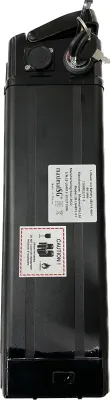
Prices are valid at publication and may change. Please refer to the product page for the latest price.
Physical compatibility is just as vital as electrical alignment. Use a precise measuring tape or digital caliper to measure the length, width, and height of your existing battery compartment or mounting dock. Be sure to account for the sliding clearance required to mount and dismount the pack, as well as the space needed to access the key switch and charging port. Even a minor discrepancy of a few millimeters can prevent the battery from locking securely into its cradle, leading to dangerous vibrations or accidental detachment while riding.
Next, examine the discharge connector that links the battery to the controller. Common connector types include XT60, XT90, Anderson Powerpoles, bullet connectors, and various proprietary multi-pin plugs. You must identify both the physical shape of the connector and the exact pin configuration to ensure a plug-and-play connection. If the connectors do not match, you will need to determine if an adapter is available or if the wiring must be modified.
Finally, check your e-bike’s maximum weight capacity, which is typically specified in the owner’s manual. High-capacity batteries utilize more internal cells, which significantly increases the overall weight of the pack. You must ensure that the added weight of a larger battery, combined with your own body weight and any cargo, does not exceed the structural limits of your e-bike’s frame, spokes, and braking system.
Key Specifications to Check on Kok Max Batteries
Once you have documented your e-bike’s baseline requirements, you can begin evaluating the technical specifications of Kok Max batteries. Understanding how to read these product labels and spec sheets is essential for making an informed and safe purchase.

Voltage and Voltage States
- Nominal Voltage: This is the average operating voltage of the battery pack (e.g., 36V or 48V) and must match your controller's rated voltage.
- Peak Voltage: A fully charged battery exhibits a higher peak voltage (for example, a nominal 48V lithium battery charges up to approximately 54.6V). Ensure your controller is designed to handle this standard peak charging limit.
- Cut-off Voltage: This is the minimum safe voltage level at which the battery's internal management system will shut down power to protect the cells from over-discharge.
Capacity and Energy Density
- Ampere-hours (Ah): This rating measures the electrical charge the battery can deliver over time. A higher Ah rating directly translates to a longer riding range per charge.
- Watt-hours (Wh): Calculated by multiplying nominal voltage by capacity (V x Ah), Watt-hours represent the total energy stored in the pack. Comparing Wh ratings across different models gives you a clear picture of relative range adjustments.
Discharge Current Ratings
- Continuous Discharge Current (A): This is the maximum current the battery can safely deliver on an ongoing basis. This rating must meet or exceed the maximum current draw of your e-bike's controller.
- Peak Discharge Current (A): This represents the short-term current boost the battery can provide during high-load scenarios, such as accelerating from a complete stop or climbing steep hills.
Dimensions and Weight
- Physical Footprint: Always cross-reference the manufacturer's detailed dimensional drawings against your compartment measurements, paying close attention to the exit path of the wiring.
- Total Mass: Note the weight of the battery pack in kilograms to evaluate how it will affect your bike's center of gravity and overall handling.
Evaluating Battery Chemistry and BMS Features
The internal construction and safety systems of a battery pack are just as important as its external specifications. When reviewing Kok Max battery options, pay close attention to the chemistry of the cells and the features of the integrated Battery Management System (BMS).
Most modern e-bike batteries utilize lithium-based chemistries, with Lithium Nickel Manganese Cobalt Oxide (NMC) and Lithium Iron Phosphate (LiFePO4) being the most common. NMC cells are highly popular because they offer high energy density, resulting in a lighter and more compact battery pack for a given capacity. On the other hand, LiFePO4 cells provide exceptional thermal stability, a lower risk of thermal runaway, and a significantly longer cycle life, meaning the battery can be charged and discharged many more times before its capacity begins to degrade. However, LiFePO4 packs are generally heavier and bulkier than their NMC counterparts.
The BMS is the electronic brain of the battery, constantly monitoring the voltage, current, and temperature of individual cell groups. A high-quality BMS is essential for preventing hazardous operating conditions. When reviewing specifications, verify that the battery includes robust protections against overcharging, over-discharging, over-current, short circuits, and extreme temperatures. These safety cutoffs prevent cell damage and minimize the risk of electrical fires.
Additionally, look at the cell configuration, which is often written in a format like “13S4P” (meaning 13 cells in series and 4 cells in parallel). The number of series cells determines the nominal voltage, while the number of parallel cells determines the overall capacity and current-handling capability. A higher parallel count distributes the electrical load across more cells, which reduces internal resistance, minimizes heat generation, and improves voltage stability under heavy acceleration.
Finally, check for recognized testing standards and certifications on the product packaging or official documentation. Look for markings such as UN38.3, which certifies that the battery has passed rigorous safety testing for transportation, or UL 2271, which is a specific safety standard for batteries used in light electric vehicles. In Singapore, ensuring your battery meets recognized safety standards is highly recommended for peace of mind and compliance with local safety guidelines.
How to Build Your Kok Max Battery Shortlist
To simplify your buying decision, you can use a structured filtering process to narrow down the available Kok Max battery models to a shortlist of viable candidates.
Step 1: Filter by Voltage and Physical Fit
Immediately eliminate any battery models that do not match your e-bike’s nominal voltage. Next, remove any options that exceed the physical dimensions of your battery compartment or mounting dock. There is no room for compromise in this step; a battery must fit physically and match electrically to be considered.
Step 2: Verify Discharge Current Compatibility
Examine the remaining models and compare their continuous discharge current ratings against your e-bike controller’s maximum current limit. If your controller draws a maximum of 25 Amps, your battery’s BMS must be rated for at least 25 Amps continuous discharge. Eliminate any models that fall short of this requirement, as they will constantly shut down under load.
Step 3: Rank by Capacity and Range Needs
Rank the surviving candidates by their capacity (Ah) or total energy (Wh). Consider your typical daily commute distance, the terrain you ride on, and how frequently you prefer to charge your bike. If you have a long commute or ride up frequent hills, prioritize higher-capacity models.
Step 4: Evaluate Practical Trade-offs
For the final selection, weigh the trade-offs of each shortlisted model. A larger capacity battery will give you more range but will add weight to your bike and may require a longer charging time. Additionally, check if the battery requires a specific mounting bracket or a different charger, and factor these elements into your final decision.
Pre-Purchase Verification and Safety Checks
Before finalizing your purchase, there are several critical safety boundaries and verification steps you must complete to ensure a successful and safe installation.
First, verify the credentials of the seller. Purchase your battery from authorized local distributors or reputable retailers to ensure you receive a genuine product with a valid manufacturer’s warranty that can be serviced locally in Singapore. Avoid purchasing unbranded or unverified batteries from online marketplaces, as these may lack proper quality control and safety certifications.
Second, confirm that you have a compatible charger. You must use a charger that is specifically designed for your battery’s exact chemistry and nominal voltage. Using an incorrect charger—such as using a lead-acid charger on a lithium battery, or using a charger designed for a different voltage—can cause severe overcharging, destroy the battery cells, and pose a serious fire hazard.
Third, review the manufacturer’s installation instructions. For any electrical work, including modifying connectors, splicing wires, or changing the mounting bracket, always refer to your original e-bike manufacturer’s instructions. Incorrect wiring can lead to short circuits, component damage, or electrical fires. If you are not experienced with electrical systems, seek qualified professional installation from a certified e-bike technician before purchasing or operating the new battery.
Finally, establish a safe testing protocol for your new battery’s first use. Conduct the initial charge in a well-ventilated, dry indoor area, away from direct sunlight and flammable materials. Monitor the battery and charger periodically for any signs of abnormal heat, swelling, or unusual odors. For your first ride, plan a short, low-speed trip close to home to monitor how the battery performs under load and to ensure there are no error codes or sudden power drops.
Frequently Asked Questions (FAQ)
Can I use a higher voltage Kok Max battery to make my e-bike faster?
No, you should never use a battery with a higher nominal voltage than your e-bike’s controller and motor are rated to handle. Introducing excess voltage can instantly overheat and destroy the sensitive electronic components inside your controller, damage the motor windings, or trigger an electrical short circuit. Always check the maximum voltage tolerance printed on your controller’s label before considering any electrical modifications. If you are looking to upgrade your system’s speed or power safely, you must consult a qualified e-bike technician to evaluate a complete system overhaul, which typically requires replacing the controller, motor, and battery together to ensure compatibility.
Do I need to buy a new charger when upgrading to a different Kok Max battery capacity?
If your new Kok Max battery has the exact same nominal voltage and chemistry as your old one, you can generally use your existing charger, provided the connector matches. However, if you have upgraded to a battery with a significantly larger capacity (Ah), your older, lower-amperage charger will take much longer to fully charge the pack. To maintain optimal battery health and ensure safe charging cycles, it is highly recommended to use the manufacturer-approved charger specifically paired with your new battery model. Never attempt to use a charger designed for a different battery chemistry, as this can lead to dangerous overcharging and permanent cell damage.
How should I store my Kok Max e-bike battery during periods of non-use?
To preserve the lifespan and health of your battery during periods of inactivity, store it in a cool, dry indoor environment away from direct sunlight, moisture, and extreme temperatures. Singapore’s warm and humid climate makes proper storage especially important; avoid leaving the battery in hot outdoor sheds or parked in direct sunlight. Never store your battery completely empty or fully charged, as both states place high stress on the internal cells. Instead, charge or discharge the battery to a partial state of charge—typically between 40% and 60%—before storage. Check the battery’s voltage every few weeks and top it up periodically according to the manufacturer’s storage guidelines to prevent the cells from falling into a deep-discharge state.
Community discussion
Share your experience or ask a question. Comments are reviewed before publication.