
Upgrading your car audio system with a heavy bass subwoofer transforms your daily drive, but achieving satisfying low-end response requires more than just buying the largest speaker available. The ideal setup depends on a careful balance between your vehicle’s physical constraints, your preferred musical genres, and the acoustic characteristics of different enclosure designs. You must match the physical cone size with a compatible enclosure that fits your trunk or cabin while staying within your car’s electrical limits.
In Singapore, where compact sedans, hatchbacks, and family SUVs dominate the roads, maximizing limited boot space while achieving deep, satisfying bass is a common challenge. High humidity and heat also mean your installation choices must account for thermal management and secure mounting. This guide walks you through the essential decisions to select the right subwoofer size and box type for your specific car and listening preferences.
Assess Your Vehicle's Available Space and Mounting Options
Before browsing online marketplaces or local car audio shops, you must measure your vehicle’s cargo area. Use a tape measure to record the maximum width, height, and depth of the space you are willing to dedicate to a subwoofer enclosure. Remember to account for the swing path of trunk hinges, access to the spare tire well, and any rear seat folding mechanisms.
Products mentioned in this guide
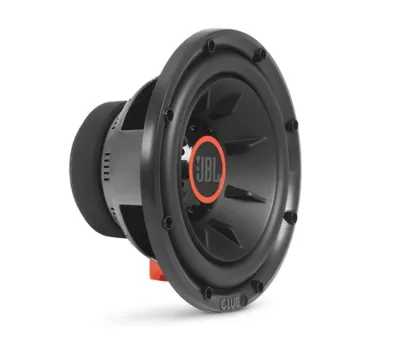
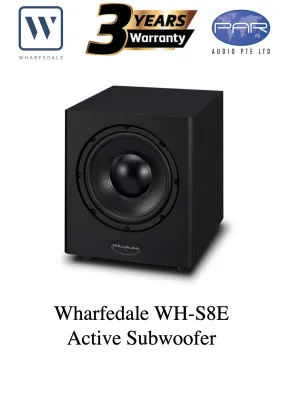


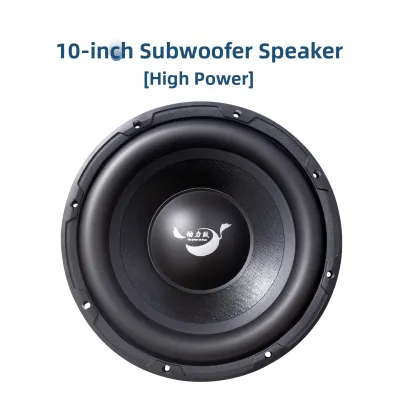
Prices are valid at publication and may change. Please refer to the product page for the latest price.
In compact cars or HDB multi-storey carpark-friendly hatchbacks, space is at a premium. If you cannot spare trunk volume, consider alternative mounting locations. Under-seat active subwoofers or custom fiberglass enclosures molded into the side utility panels of your boot can deliver low-end reinforcement without sacrificing daily grocery-carrying capacity.
Larger, high-output enclosures require substantial physical volume to function correctly. A heavy bass subwoofer needs a specific volume of air behind it to control cone movement and prevent mechanical damage. Sacrificing too much cargo space for a massive box might make your vehicle impractical for daily errands, so decide on your space tolerance early.
Compare Subwoofer Sizes for Your Desired Bass Profile
The diameter of a subwoofer cone directly influences how much air it can displace and how deeply it can play. Larger cones have more surface area, allowing them to move more air with less physical excursion, which generally translates to deeper low-frequency reproduction.

However, larger drivers require larger enclosures and more power to control. Choosing the right size is a compromise between your vehicle’s physical limits, your budget in S$, and the specific music genres you enjoy.
8-Inch and 10-Inch Subwoofers
An 8-inch or 10-inch heavy bass subwoofer is highly suited for smaller vehicles, hatchbacks, or discreet installations. These compact sizes require minimal enclosure volume, making them easier to integrate under seats or in tight trunk corners.
Acoustically, smaller subwoofers offer a fast, punchy transient response. They excel at reproducing the tight, rapid bass lines found in rock, metal, pop, and acoustic tracks. While they provide excellent clarity, they may struggle to reproduce the lowest, wind-inducing sub-bass frequencies found in heavy electronic, trap, or hip-hop music.
12-Inch and 15-Inch Subwoofers
For those seeking deep, rumbling low-end extension and high acoustic output, 12-inch and 15-inch subwoofers are the traditional choices. These larger drivers are ideal for SUVs, station wagons, or larger sedans with generous boot space.
These sizes require significantly larger enclosure volumes to perform correctly. Without adequate air volume, a large driver can suffer from restricted cone movement, leading to poor sound quality and potential mechanical failure. When properly housed, they deliver the physical, chest-thumping impact desired for bass-heavy genres like dubstep, hip-hop, and orchestral soundtracks.
Select the Best Enclosure Type for Your Sound Preference
The enclosure is just as important as the subwoofer itself; it acts as the speaker’s acoustic engine. The same subwoofer will sound completely different depending on whether it is installed in a sealed, ported, or bandpass box.
Always review the manufacturer’s recommended enclosure volume and tuning specifications for your specific subwoofer model before building or purchasing a pre-made box. Deviating from these specifications can result in muddy sound, reduced power handling, or physical damage to the driver.
Sealed Enclosures
Sealed enclosures are completely airtight boxes that rely on a pocket of trapped air to act as a spring, controlling the subwoofer’s cone movement. This design requires the least physical space, making it a practical choice for space-constrained daily drivers.
Acoustically, sealed boxes deliver precise, tight, and highly accurate bass with a smooth frequency roll-off. They are favored by audiophiles who prioritize sound quality and musical accuracy. However, because the trapped air resists cone movement, sealed enclosures typically require more amplifier power to achieve high volume levels compared to vented designs.
Ported and Bandpass Enclosures
Ported enclosures feature a tuned vent or port that allows air to escape, using the rear radiation of the subwoofer cone to reinforce the front output at specific frequencies. This design is highly efficient, delivering louder, more aggressive bass with less amplifier power, though it requires a significantly larger physical footprint in your trunk.
Bandpass enclosures place the subwoofer inside a dual-chamber box—typically one sealed chamber and one ported chamber. This configuration maximizes acoustic output within a narrow frequency band, creating incredibly loud, localized bass. The trade-off is a sacrifice in overall sound quality, a bulkier footprint, and a loss of transient response, making them less suitable for varied musical tastes.
Match Amplifier Power and Vehicle Electrical Limits
Adding a heavy bass subwoofer to your car audio system increases the electrical load on your vehicle. You must match your amplifier’s continuous power output (measured in RMS wattage) to the subwoofer’s RMS power handling at the correct final impedance (measured in ohms). Never use peak power ratings as a guide, as they do not represent sustained performance and can lead to thermal failure.
Your vehicle’s stock alternator and battery are designed to power standard factory electronics, not high-current audio systems. In Singapore’s hot climate, car batteries already face thermal stress; adding a high-wattage amplifier can accelerate wear or cause severe voltage drops. If your system demands significant current, you may need to monitor your vehicle’s voltage or consider electrical upgrades.
Safety is paramount when running heavy-gauge power wires from the car battery to the amplifier. Always install an appropriate inline fuse close to the battery terminal to protect the vehicle from electrical fires in the event of a short circuit. Use high-quality, pure copper power cables and secure them away from moving parts or high-heat areas in the engine bay.
Plan for Professional Installation and Safety Checks
While basic car audio upgrades can be a rewarding DIY project, complex electrical work carries inherent risks. If you are unsure about routing high-current power wires through the firewall, tapping into the vehicle’s CAN bus, or integrating with modern factory infotainment systems, stop and consult a qualified car audio technician.
Physical safety inside the cabin is another critical factor. A heavy subwoofer enclosure sitting loose in the boot can become a dangerous projectile during sudden braking or a collision. Ensure the box is securely bolted, bracketed, or strapped down to the vehicle’s chassis.
Additionally, verify that your wiring paths and mounting locations do not interfere with safety systems. Avoid running cables near airbag deployment zones, seatbelt pretensioners, or rear-visibility sensors. Always refer to your vehicle’s original owner’s manual and product documentation to verify compatibility, mounting positions, and safety impact before starting any disassembly.
Frequently Asked Questions (FAQ)
Can I install a heavy bass subwoofer without upgrading my car battery? (FAQ)
Yes, you can install moderate-power subwoofers on a stock electrical system, but high-power setups require caution. To determine if your system is safe, check the total RMS wattage of your amplifier and its efficiency class. Class D amplifiers are generally more efficient and draw less current than older Class A/B designs.
Watch for signs of electrical strain, such as dimming headlights when the bass hits or a dropping voltage reading on your dashboard. If you experience these symptoms, you may need to install a high-capacity capacitor to smooth out short voltage dips, upgrade to an AGM battery, or consult a professional about a high-output alternator.
Does a heavier subwoofer magnet always mean better bass? (FAQ)
No, a heavier magnet does not automatically guarantee better bass quality or higher performance. While a larger magnet can indicate a powerful motor structure capable of handling more power, overall sound quality depends on the entire engineering of the driver.
Instead of focusing solely on physical weight, evaluate the subwoofer’s Thiele/Small parameters, which describe its physical and electrical characteristics. Matching these parameters to a properly designed and constructed enclosure is far more critical for achieving deep, clean, and controlled bass than the weight of the magnet alone.
Community discussion
Share your experience or ask a question. Comments are reviewed before publication.