
To choose the right Grip Puppies size for your motorcycle, you must measure the outer diameter of your currently installed factory grips, not the bare metal of your handlebars. Because these foam covers slip directly over your existing grips rather than replacing them, standard handlebar specifications—such as 7/8-inch (22mm) or 1-inch (25.4mm) bars—are only starting points. The correct fit depends on the final thickness of your current setup and the length of your grip area.
Selecting the appropriate variant ensures that the closed-cell foam stretches sufficiently to remain secure without tearing during installation. A proper fit prevents the covers from slipping or rotating while riding, which is critical for throttle control and overall safety. By taking a few precise measurements and evaluating your riding style, you can find the ideal match to reduce hand fatigue and damp engine vibrations.
Quick Guide: Determining Your Handlebar Diameter and Grip Size
Before purchasing grip covers, it is essential to distinguish between your motorcycle’s bare handlebar diameter and the outer diameter of your installed factory grips. Standard motorcycle handlebars typically come in two main sizes: 7/8-inch (approximately 22mm), which is common on sportbikes, dual-sports, and adventure motorcycles, and 1-inch (approximately 25.4mm), which is standard on many cruisers and touring bikes. However, factory grips add varying degrees of thickness to these bars. For example, a heated grip or an insulated cruiser grip will have a significantly larger outer diameter than a thin, minimalist sportbike grip, even if both are mounted on identical 7/8-inch handlebars.
Products mentioned in this guide

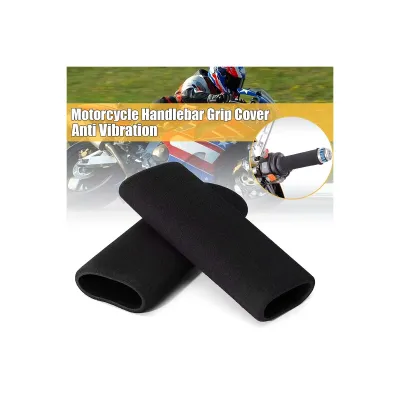
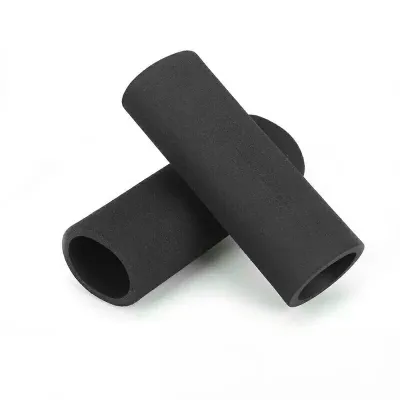
![[SG INSTOCKS] MOTORCYCLE HANDLEGRIPS SPONGE GRIP PUPPIES MOTOR HANDLE BAR](https://img.lazcdn.com/g/p/36bdc50da7bdf87165cf1ed74feab8b6.jpg_400x400q80.jpg_.webp)
Prices are valid at publication and may change. Please refer to the product page for the latest price.
To measure your outer grip diameter accurately, you should use a set of digital or vernier calipers. Clamp the calipers gently around the widest part of your existing rubber grip, making sure not to compress the rubber, to get an accurate reading. Take measurements at a few different points along the grip body to ensure you capture any subtle bulges or tapers that might affect the overall fit. Even a minor difference of one or two millimeters can influence how tightly the foam cover clings to the underlying rubber.
If you do not own calipers, you can use a flexible sewing tape measure to find the circumference of the grip. Wrap the tape around the center of the grip, record the measurement in millimeters, and divide that number by pi (approximately 3.1416) to calculate the outer diameter. Alternatively, wrap a thin strip of paper around the grip, mark the overlap point with a pencil, measure the flat strip with a standard ruler, and apply the same mathematical division to find the diameter.
Once you have your outer grip diameter, you can consult the manufacturer’s sizing guidelines. Standard Grip Puppies are designed to fit grips with an outer diameter ranging from 1.25 inches (3.17 cm) to 1.45 inches (3.68 cm). If your existing grips fall into this range, the standard size will provide the necessary tension. The closed-cell foam material relies on a tight, elastic stretch to grip the underlying rubber and prevent throttle slippage. If your current grips are exceptionally thick—such as heavy aftermarket cruiser grips that exceed 1.45 inches in diameter—you will need to look for oversized or “Big Squeeze” variants designed specifically for larger circumferences.
In addition to the diameter, you must measure the physical length of your current grips. Standard slip-on covers are typically around 5 inches (12.7 cm) long but can be trimmed down to match shorter grips. Use a ruler to measure the distance from the inner flange (near the switch housing) to the outer edge of the grip. If the cover is too long, it will overhang the end of the handlebar, which can interfere with bar-end weights, handguards, or throttle operation. Trimming must be done cleanly with a sharp utility knife or heavy-duty scissors to prevent the foam from fraying or splitting under tension.
Understanding Grip Puppies Compatibility and Fitment Limits
The closed-cell foam material used in these grip covers is engineered for durability and elasticity, but it has definite physical limits. While the foam can stretch to accommodate a range of sizes, forcing a standard cover onto an excessively large grip can overstretch the material, leading to premature tearing, thinning of the foam cushion, or a reduction in vibration-damping efficiency. Conversely, installing a cover on a grip that is too thin will result in insufficient tension, causing the cover to spin freely around the handlebar, which poses a severe safety hazard during throttle application.

Another critical factor is the style of your handlebar end weights (bar ends) and internal threaded inserts. Most motorcycles utilize bar ends to damp handlebar vibrations, and these weights often overlap the outer edge of the factory grip. To install slip-on foam covers, you must typically remove these bar-end weights first. This process may involve unscrewing a hex bolt or securing an internal expansion sleeve. Once the covers are slid into position, the bar ends must be reinstalled. You must ensure that the reinstalled bar end does not compress or pinch the foam cover against the throttle sleeve, as this can cause the throttle to stick open.
The physical shape of your factory grips also dictates how well the slip-on covers will fit. Cylindrical, smooth, or lightly textured factory grips provide the most uniform surface for the foam to adhere to, ensuring an even distribution of tension. If your motorcycle is equipped with heavily contoured, ribbed, or ergonomic grips—such as those with pronounced finger grooves or palm swells—the foam cover will stretch unevenly. This uneven stretching can create localized air pockets, wrinkles, or high-wear spots where the foam is stretched thin over protrusions, which can compromise both comfort and grip security.
Finally, you must carefully evaluate the clearance around your control assemblies. This includes the gap between the inner edge of the grip and the switch housing, as well as the proximity of the brake master cylinder and clutch perch. Because slip-on covers increase the overall diameter of your grips, they reduce the physical space between the grip surface and your control levers. You must verify that your fingers can still easily reach and fully operate the front brake and clutch levers without interference. Additionally, ensure there is a clear, unobstructed gap between the rotating throttle sleeve (with the cover installed) and the stationary switch housing to prevent any binding or friction.
Matching the Right Variant to Your Riding Style
Choosing the correct grip cover setup is not just about physical dimensions; it also involves matching the product’s characteristics to your specific riding environment and physical needs.
Long-Distance Touring and Cruising
For riders who spend hours on the highway, the primary challenge is managing high-frequency engine vibrations that travel through the frame to the handlebars. This continuous vibration can cause hand numbness, tingling, and muscle fatigue, particularly on long stretches. The thick, closed-cell foam of a properly sized grip cover acts as an effective dampening barrier, absorbing these vibrations before they reach your hands.
Additionally, the increased outer diameter provided by the foam cover is highly beneficial for long-distance comfort. If you have larger hands or suffer from joint stiffness, wrapping your fingers around a slightly thicker grip requires less muscular effort to maintain a constant throttle position. This reduces the strain on your forearms and wrists, allowing for a more relaxed grip pressure. For cruisers and touring bikes, choosing a standard or slightly larger variant that matches your hand size can significantly extend your comfortable riding range.
Off-Road and Adventure Riding
When riding off-road or on adventure trails, your handlebars are subjected to sudden, sharp impacts from rocks, ruts, and uneven terrain. While suspension systems absorb the bulk of these forces, a significant amount of shock is still transferred to your hands and wrists. Slip-on foam covers provide an extra layer of shock absorption, helping to cushion these sudden impacts and reduce the physical toll of a day spent on rugged trails.
However, off-road riders must balance this cushioning with control precision. When wearing thick adventure or off-road gloves, an excessively thick grip can make it difficult to maintain a secure hold on the bars, especially during active standing maneuvers where you need to shift your body weight. You must ensure that the added bulk of the foam cover does not hinder your ability to wrap your fingers completely around the grip or reach the clutch and front brake levers quickly. For off-road applications, a standard, snugly fitted cover that is trimmed precisely to avoid interference with wrap-around handguards is usually the best choice.
Daily Commuting and Urban Riding
Urban commuting in dense traffic involves constant stop-and-go riding, requiring frequent clutch modulation, throttle adjustments, and rapid braking. In this environment, maintaining precise, immediate control over your motorcycle is paramount. While the extra comfort of a foam cover can make daily commutes more pleasant, you must ensure that the increased grip diameter does not compromise your tactile feedback or your ability to operate switchgear, such as turn signals and horns, quickly and easily.
For city riders, a standard-sized cover that fits tightly over thin factory grips offers a good balance of comfort and control. It provides enough cushioning to ease the strain of repetitive hand movements without adding so much bulk that you lose the precise feel of the throttle. Additionally, since urban motorcycles are frequently parked in public areas and exposed to the elements, choosing a high-quality, durable variant that resists wear from constant glove friction and exposure to sunlight is essential for long-term satisfaction.
Pre-Purchase Checklist and Installation Safety Boundaries
To ensure a successful and safe upgrade, you should perform a thorough pre-purchase inspection and adhere strictly to safety protocols during the installation process.
Pre-Purchase Verification Checklist
- Measure Outer Diameter: Use calipers or a tape measure to confirm your factory grip's outer diameter falls within the recommended range (typically 1.25 to 1.45 inches for standard sizes).
- Measure Grip Length: Determine the exact length of your current grips to identify if trimming of the foam cover will be required.
- Inspect Bar Ends: Check how your handlebar end weights are mounted and confirm you have the correct tools to remove and reinstall them safely.
- Evaluate Grip Shape: Verify that your existing grips are cylindrical and do not have extreme contours or finger grooves that could cause uneven stretching.
- Assess Lever Clearance: Check the distance between your grips and control levers to ensure a thicker grip will not impede lever travel or reach.
When you are ready to install the covers, you must follow a safe and clean installation method. Never use petroleum-based lubricants, grease, or WD-40 to slide the foam covers onto your grips, as these substances will degrade the foam material and cause the covers to slip permanently, creating a dangerous riding condition. Instead, use manufacturer-approved temporary lubricants such as highly diluted soapy water, rubbing alcohol, or a light mist of hairspray. These liquids provide the necessary lubrication to slide the tight foam cover over the rubber grip but will evaporate completely within a few hours, leaving a dry, high-friction bond that keeps the cover securely in place.
Immediately after sliding the covers into position and reinstalling your bar-end weights, you must perform a strict safety check before starting your motorcycle. This is the static throttle return-to-idle test. With the engine turned off, twist the throttle grip fully and release it. The throttle must snap back to the closed position instantly and completely under its own spring tension. Perform this test with the handlebars turned fully to the left, fully to the right, and centered. If the throttle sluggishly returns or sticks in any position, the foam cover is likely binding against the bar-end weight, the switch housing, or the handguard. You must adjust or trim the cover immediately to eliminate any friction before riding.
If your motorcycle features complex integrated switchgear, active factory-heated grips, or non-standard ride-by-wire throttle assemblies, you should consult your vehicle’s official service manual or a qualified motorcycle technician before proceeding. Modifying grips on modern motorcycles with sensitive electronic throttle sensors or delicate heating elements requires careful handling to avoid damaging internal wiring or causing electronic faults. A professional can ensure that the installation is completed without compromising the safety or functionality of your motorcycle’s controls.
Frequently Asked Questions (FAQ)
Can I install Grip Puppies over heated motorcycle grips?
Yes, you can install these foam covers over factory or aftermarket heated grips, but you must be aware of the thermal properties of the material. Because closed-cell foam acts as an insulator, it will slow down the transfer of heat from the grips to your hands, meaning it may take longer to feel the warmth, and the maximum temperature felt through the gloves will be reduced. You should check the manufacturer guidelines for both your heated grips and the foam covers to ensure that trapping heat under the foam does not risk overheating or damaging the internal heating elements, especially when running the system on its highest setting.
Do Grip Puppies work with aftermarket ergonomic grips?
These foam covers are designed primarily for standard cylindrical grips and do not work well with highly contoured, ergonomic, or custom-shaped aftermarket grips. If your existing grips feature pronounced palm swells, deep finger grooves, or chrome accents (such as those found on many cruiser-style ISO grips), the foam cover will stretch unevenly, leading to wrinkles, loose pockets, and rapid wear at the high-pressure points. For the best fit, security, and comfort, it is highly recommended to install these covers over standard, uniform cylindrical grips.
How does the foam material hold up in high-humidity tropical climates?
In high-humidity tropical environments, such as Singapore, high-quality closed-cell foam holds up remarkably well because it is naturally resistant to water absorption, preventing it from acting like a wet sponge during heavy downpours. However, constant exposure to intense ultraviolet (UV) radiation and high ambient temperatures will eventually accelerate the aging of any elastomer. Over time, you may notice the material becoming slightly sticky, developing fine surface cracks, or losing its elasticity. To maximize their lifespan, you should perform routine visual inspections and replace the covers if you observe significant material breakdown, crumbling, or a loss of secure grip tension.
Community discussion
Share your experience or ask a question. Comments are reviewed before publication.