
Choosing a GPR helmet in Singapore requires matching your budget with the specific riding conditions you face daily. Whether you are navigating congested city streets during a sudden tropical downpour or cruising along the East Coast Parkway, your helmet must provide certified protection, reliable ventilation, and a secure fit. By understanding what features are available at entry-level, mid-range, and premium price points, you can invest your money where it matters most—ensuring essential safety compliance and comfort without overpaying for unnecessary aesthetics.
Setting Your Budget Priorities for a GPR Helmet
When establishing your budget for a GPR helmet, safety certifications must always take precedence over aesthetic designs, color schemes, or graphic liveries. In Singapore, any motorcycle helmet used on public roads must comply with local safety regulations, which typically require recognized international standards or specific local testing approvals. Before looking at any other feature, verify that the helmet carries the appropriate safety labels, as riding with an unapproved helmet is both a safety hazard and a legal offense.
The primary driver of helmet pricing is the shell material, which directly impacts both weight and energy absorption. Standard thermoplastic shells are highly durable and cost-effective to manufacture, making them the baseline for budget-friendly options. However, they require a thicker construction to meet safety standards, which increases the overall weight. On the other hand, composite fibers, fiberglass, and carbon fiber blends offer excellent strength-to-weight ratios, allowing manufacturers to build lighter helmets that significantly reduce neck strain during long rides.
Products mentioned in this guide
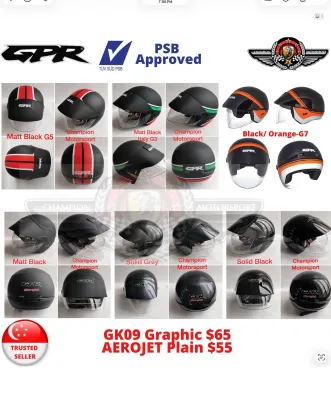
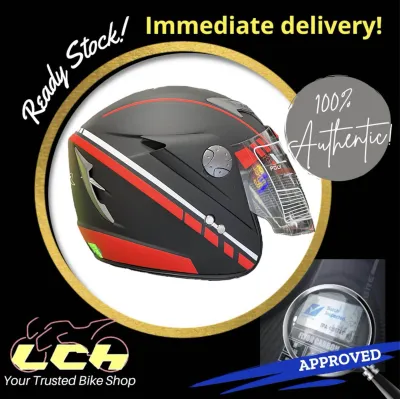
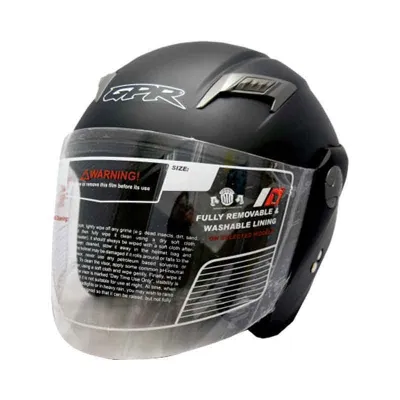
![[Lch Motor] Gpr Motorcycle Helmet Red Strike](https://img.lazcdn.com/g/p/6dc9d29d06e07244657592789a584662.png_400x400q80.png_.webp)
![[Lch Motor] Gpr Motorcycle Helmet](https://img.lazcdn.com/g/ff/kf/S851069629a7041e0b100a98ae0ccd3c5X.jpg_400x400q80.jpg_.webp)
Prices are valid at publication and may change. Please refer to the product page for the latest price.
Comfort features should be evaluated based on your typical riding duration and patterns. If your daily commute consists of short, fifteen-minute trips, a basic helmet with standard ventilation and fixed liners may suffice. However, if you are a delivery rider or frequently embark on long-distance tours, investing in a helmet with fully removable, washable moisture-wicking liners and advanced ventilation channels becomes a necessity for maintaining hygiene and comfort in Singapore’s humid climate.
To make an informed decision, establish a clear hierarchy of needs. Always prioritize safety compliance and a correct physical fit first, as an ill-fitting premium helmet is less safe than a properly fitted entry-level model. Once safety and fitment are secured, evaluate the retention system—such as a double D-ring or a quick-release micrometric buckle—before finally considering convenience features like integrated sun visors, speaker cutouts, or aerodynamic spoilers.
What to Expect from Entry-Level GPR Helmets
At the entry-level tier, GPR helmets focus on delivering essential protection at an accessible price point. The primary objective when shopping in this category is to verify compliance with mandatory safety standards. Ensure that the helmet is legally approved for road use in Singapore and features the necessary certification stickers. While these models do not include high-end racing technologies, they provide the baseline impact resistance required to protect your head in an accident.

Most entry-level helmets utilize standard ABS (Acrylonitrile Butadiene Styrene) or polycarbonate shells. These materials are highly resilient and excellent at dispersing impact energy, but they are inherently heavier than composite alternatives. A heavier helmet can lead to noticeable neck fatigue during extended riding sessions, so it is important to try the helmet on and assess how the weight is distributed across your head before purchasing.
Aerodynamic performance and noise reduction are typically basic in entry-level models. At highway speeds, you may experience increased wind resistance, lift, and elevated wind noise inside the helmet. The ventilation systems are also simplified, usually consisting of basic open-and-close vents on the chin and forehead without the complex internal EPS channels found in more expensive models, which can make the helmet feel warm during slow-moving traffic.
Visor mechanisms on entry-level helmets are functional but may lack advanced convenience features. You might find that swapping visors requires tools or a more deliberate effort compared to quick-release systems. Additionally, entry-level visors rarely come with premium anti-scratch coatings or pre-installed pins for anti-fog inserts, meaning you will need to perform more frequent maintenance and manually manage visor fogging during humid mornings or sudden rainstorms.
Evaluating Mid-Range GPR Helmet Upgrades
Stepping up to a mid-range GPR helmet introduces several significant upgrades that directly improve daily ride quality, particularly in Singapore’s hot and humid climate. One of the most valuable upgrades in this tier is an improved visor mechanism. Mid-range models often feature tool-less quick-release visors with clearer optics and pre-installed pins for Pinlock anti-fog inserts. This is a crucial safety feature, as it prevents your visor from fogging up during sudden tropical downpours without requiring you to ride with an open visor.
The interior of a mid-range helmet also receives a substantial upgrade. Instead of basic nylon liners, you can expect high-quality, moisture-wicking fabrics that pull sweat away from your skin. These liners are typically fully removable and washable, allowing you to maintain proper hygiene and prevent the buildup of bacteria and odors. The cheek pads and crown liners are also contoured more ergonomically, providing a snugger, more comfortable fit that adapts to your facial structure over time.
Ventilation is another area where mid-range helmets excel. Manufacturers design these models with advanced multi-port ventilation systems, featuring strategically placed intake vents and rear exhaust ports. These vents align with deep channels carved directly into the inner EPS liner, creating a venturi effect that actively pulls hot, humid air out of the helmet. This continuous airflow is essential for staying cool and focused when navigating congested city traffic.
Additionally, mid-range helmets frequently incorporate practical convenience features that enhance versatility. Many models include an integrated, drop-down inner sun visor that can be easily deployed with an external lever, eliminating the need to swap visors or wear sunglasses when riding into direct sunlight. Upgraded retention systems, such as reinforced micrometric buckles or high-strength double D-rings, also provide a more secure and customizable fit.
Assessing Premium GPR Helmet Features
For riders with a higher budget, premium GPR helmets offer cutting-edge materials and advanced engineering designed for maximum performance, comfort, and safety. The defining characteristic of a premium helmet is its shell construction, which typically utilizes advanced composite fibers, fiberglass, or pure carbon fiber. These materials are incredibly strong yet remarkably lightweight, drastically reducing the physical strain on your neck and shoulders during long-distance touring or high-speed track days.
Safety technology in premium helmets goes beyond basic impact absorption. Look for advanced safety features such as an Emergency Quick Release System (EQRS). This system allows emergency medical personnel to easily remove the cheek pads via integrated pull-tabs while the helmet is still on the rider’s head, minimizing the risk of secondary neck injuries during helmet removal after an accident. The inner EPS liners also feature multi-density construction to manage both high- and low-speed impacts more effectively.
Aerodynamics are meticulously refined in premium models through extensive wind-tunnel testing. These helmets feature sculpted shell shapes, integrated rear spoilers, and refined aerodynamic ridges that minimize drag, lift, and buffeting at high speeds. To complement this, premium helmets utilize advanced noise-dampening neck rolls, chin curtains, and specialized visor seals that block out turbulent air, resulting in a quieter riding experience.
When investing in a premium GPR helmet, it is essential to ensure that the higher price tag is justified by these tangible engineering benefits rather than purely cosmetic factors. While limited-edition racer replicas and exclusive brand collaborations look appealing, they do not add to the helmet’s protective capabilities. Focus your budget on acquiring superior shell materials, advanced safety systems, integrated communication system cutouts, and premium optical visors that offer genuine performance advantages.
Hidden Costs and Pre-Purchase Checks
When planning your GPR helmet purchase, it is important to calculate the total cost of ownership rather than just looking at the sticker price. If you are purchasing your helmet online or importing it, remember to factor in potential shipping fees and import taxes, such as Singapore’s Goods and Services Tax (GST) for overseas shipments. Additionally, budget for essential add-ons like anti-fog Pinlock inserts, replacement visors (such as tinted or photochromic options), and spare cheek pads if you need to customize the fit.
To guarantee product authenticity and protect your investment, always purchase from authorized local distributors or official flagship stores on reputable e-commerce platforms. Be highly cautious of third-party sellers offering steep discounts, as counterfeit helmets are a major safety hazard and fail to meet basic impact standards. Buying from an authorized source also ensures that you receive a valid manufacturer’s warranty and access to genuine replacement parts like visors, vents, and liners.
Before finalizing your purchase, carefully review the seller’s return and exchange policies. Because helmets are classified as personal safety gear, strict hygiene regulations often prevent retailers from accepting returns once the helmet has been worn or if the protective film on the visor has been removed. This makes it critical to measure your head accurately and, if possible, visit a physical store to try on the exact model to confirm that the shell shape matches your head profile.
Upon receiving your helmet, perform a thorough pre-use inspection. Check the exterior shell for any hairline cracks or manufacturing defects, and ensure that all ventilation switches and visor mechanisms operate smoothly. Verify that the mandatory safety certification labels are permanently affixed to the helmet shell or retention strap, and confirm that the packaging, helmet bag, and user manual are fully intact before taking your new helmet out on the road.
Frequently Asked Questions (FAQ)
Are affordable GPR helmets safe for daily commuting?
Yes, affordable GPR helmets are safe for daily commuting, provided they carry the necessary safety certifications approved for use on Singapore’s roads. Any legally compliant helmet must pass rigorous impact, penetration, and retention system tests to ensure it provides adequate protection in an accident. While premium helmets offer lighter materials, superior aerodynamics, and advanced comfort features, an entry-level certified helmet will deliver the essential impact protection required for urban commuting, provided it fits your head shape correctly and is securely fastened.
How can I verify the authenticity of a GPR helmet bought online?
To verify the authenticity of a GPR helmet purchased online, start by inspecting the physical build quality. Genuine helmets feature high-quality interior stitching, smooth visor operation, and crisp, clear graphics without any blurry edges or misaligned decals. Check for official holographic security stickers, unique serial numbers, and correct safety standard markings on the chin strap or rear shell. To avoid counterfeit products entirely, only purchase from authorized local distributors or official brand stores on online marketplaces, and avoid third-party listings with unverified reviews or suspiciously low prices.
Community discussion
Share your experience or ask a question. Comments are reviewed before publication.