
The Nissan Serena is celebrated for its expansive cabin, a design feature made possible by its towering roofline and exceptionally large front windshield. While this massive glass area provides excellent road visibility, it also acts as a giant greenhouse under the intense tropical sun. Selecting a front windshield sunshade for this specific MPV requires more than grabbing a generic size off a retail shelf. To protect your dashboard from UV damage and keep cabin temperatures manageable, you must find a shade that matches the Serena’s unique glass dimensions, accommodates its advanced safety sensor housing, and remains easy to store within the cabin.
Measure and Map Your Windshield Dimensions
The Serena has evolved through several generations popular in Singapore, including the C26, C27, and the C28. Each generation features distinct windshield angles, glass heights, and width profiles. Relying on generic “large car” or “SUV” sizing charts often leads to a shade that is either too short to reach the sun visors or too wide to sit flat against the glass.
To establish a baseline, measure the physical boundaries of your windshield yourself. Use a flexible measuring tape to record the maximum width along the bottom edge near the dashboard, the width along the top edge near the roofline, and the vertical height down the center. Keep in mind that the Serena’s dashboard is exceptionally deep, meaning the distance from the steering wheel to the base of the glass is longer than in standard sedans.
Products mentioned in this guide
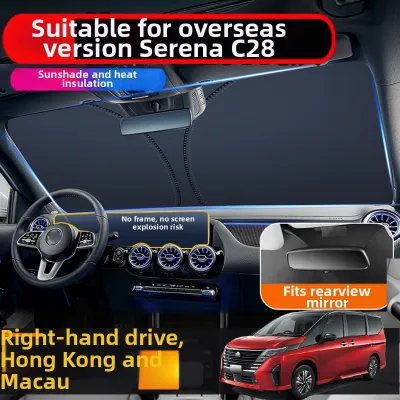
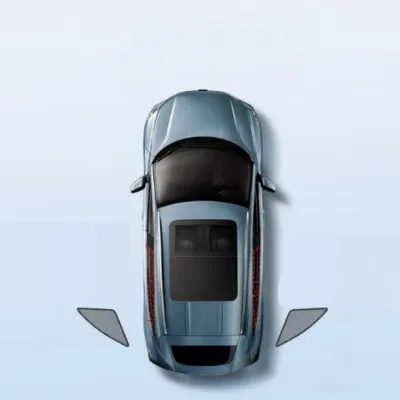
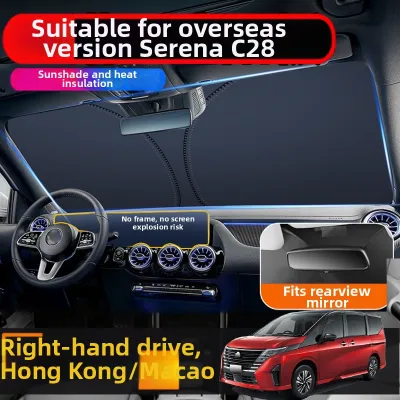
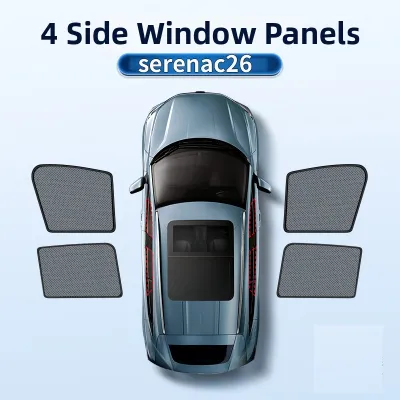
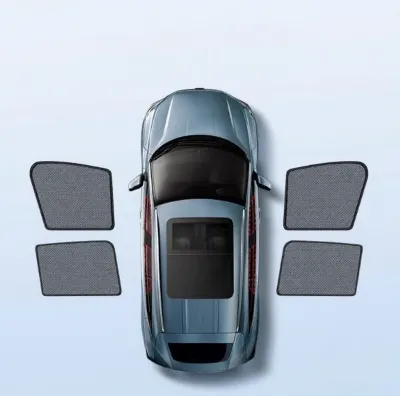
Prices are valid at publication and may change. Please refer to the product page for the latest price.
Beyond basic dimensions, you must map the hardware mounted directly to the glass. The Serena features a prominent central housing behind the rearview mirror that contains the camera systems for Nissan’s ProPILOT driver assistance suite. There may also be rain sensors, automatic headlight sensors, and local electronic toll collection units affixed to the glass. Mark where these components sit so you can select a sunshade with a corresponding cutout or a flexible split-top design.
Weigh Custom-Fit Against Universal Sunshade Styles
Custom-fit sunshades are engineered specifically for individual vehicle models and generations. For a vehicle with a complex windshield layout like the Serena, a custom-fit option offers edge-to-edge coverage. These shades are patterned to slide precisely into the corners of the A-pillars and feature a dedicated hook-and-loop fastener or cutout that wraps securely around the ProPILOT camera housing. This tight fit minimizes light leaks, which are the primary cause of localized dashboard hot spots.

Universal sunshades, including rectangular folding panels or pop-up spring-wire circles, are widely available and generally more budget-friendly. However, because they are designed to fit a broad range of vehicles, they often require significant overlapping or tucking when installed in a Serena. This can leave large gaps near the top corners or put unnecessary pressure on the rearview mirror mount. Umbrella-style universal shades, which deploy like a standard rain umbrella, feature a central shaft that can press against the Serena’s deep dashboard or scratch the delicate plastic trim if not positioned with extreme care.
When comparing structural types, consider how the material handles the Serena’s massive glass surface. Accordion-fold foil shades offer excellent rigidity, allowing them to stand upright against the steep windshield without sagging in the middle. Roll-up fabric or thin reflective nylon shades are highly flexible but may require you to pull down both sun visors completely to hold them in place, which can be awkward to reach across the deep dashboard.
Ensure Full Coverage and Sensor Clearance
Full coverage is essential to prevent peripheral light from baking the dashboard materials, steering wheel, and front seats. Over time, UV exposure can cause the soft-touch plastics of the Serena’s dashboard to fade, crack, or become sticky. Ensure the sunshade you choose extends fully to the base of the A-pillars and sits flush against the lower cowl of the windshield.
Safety must remain your primary concern when positioning any accessory near the windshield. The ProPILOT cameras and radar sensors rely on a clear, unobstructed view through the glass to function correctly. A sunshade must never press hard against this sensor housing, as physical pressure can misalign the cameras or damage the mounting brackets. Furthermore, highly reflective silver backings should not face inward toward the sensors, as trapped heat or reflected light can cause the sensitive electronics to overheat while the car is parked.
Structural stability is another critical factor. Because the Serena’s windshield is set at a steep angle, a flimsy or poorly supported sunshade can easily sag under its own weight, especially when subjected to cabin heat. If the shade slips down, it not only exposes the dashboard to direct sunlight but can also drape over the steering wheel or gear selector, creating an inconvenience when you return to the vehicle. Look for shades with reinforced borders or stiff internal panels that maintain their shape even during long hours of exposure.
Assess Daily Installation and Storage Practicality
The physical effort required to deploy and pack away a sunshade can determine whether you actually use it daily. Because of the Serena’s high roofline and deep dashboard, reaching the bottom corners of the windshield requires a bit of a stretch. A rigid, one-piece custom folding shade can be cumbersome to unfold inside the cabin, especially if you have a front-seat passenger. You must maneuver the large board carefully to avoid striking the infotainment screen, the rearview mirror, or your passenger’s head.
Storage is equally important in a family-focused MPV where cabin space is highly utilized. While the Serena offers numerous clever storage compartments, a large, rigid sunshade will not fit into the glovebox or standard door pockets. Before purchasing, check the folded dimensions of the shade. Accordion-style shades usually fold into a long, flat bar that can be slipped between the front seats or stored in the seatback pockets. Flexible wire-frame shades fold down into compact circles that can easily slide under a seat or into the door bin, though they require a bit of practice to twist and fold properly.
Examine the attachment mechanisms used to hold the shade in place. Suction cups are common on universal models, but they can leave unsightly round residue marks on the glass and tend to lose suction as the windshield heats up. Visor clips or magnetic rings offer a cleaner alternative, but you must ensure they do not scratch the delicate fabric of the A-pillars or the plastic trim of the sun visors. Relying on the vehicle’s built-in sun visors to wedge the shade in place is often the safest and cleanest method, provided the shade is tall enough to reach them.
Verify Compatibility Claims Before Purchasing
Before finalizing your purchase on any online marketplace or at an automotive accessory shop, double-check the compatibility list. Do not rely solely on a product title that says “Fits Nissan Serena.” Look for the specific chassis code—such as C26, C27, or C28—to ensure the shade matches the exact glass geometry of your vehicle.
It is highly recommended to review the retailer’s return and exchange policies before buying. Even with careful research, a physical fitment test in your actual vehicle is the only way to guarantee that the shade does not interfere with your specific dashcam setup, electronic toll unit, or aftermarket accessories. If the shade pinches a wire or blocks a critical sensor, you will want the flexibility to exchange it for a better-fitting model.
Finally, look past marketing buzzwords like “space-grade insulation” or “absolute heat block.” Instead, focus on verifiable material specifications, such as multi-layered construction with a reflective outer layer and a felt or soft fabric backing that protects your interior trim from scratches. Reading user reviews specifically written by other Serena owners can provide valuable real-world insights into how well the shade fits around the prominent central sensor console.
Frequently Asked Questions (FAQ)
Will a sunshade interfere with the Nissan ProPILOT sensors?
The ProPILOT camera and sensor array are housed in a plastic console mounted directly to the windshield behind the rearview mirror. A properly designed sunshade will not interfere with these sensors while the vehicle is parked, provided it features a cutout that allows the shade to sit around the housing rather than pushing against it. Never force a rigid sunshade underneath or over the sensor housing, as this can apply physical stress to the camera mounts or trap excessive heat against the sensitive electronics.
Can I use two smaller universal sunshades instead of one large one?
Using two smaller, overlapping universal shades is a common temporary solution, but it is not ideal for the Nissan Serena. Because of the windshield’s height and steep angle, two separate shades are difficult to secure without them sliding down or overlapping excessively, which creates a large gap in the center. This gap allows direct sunlight to hit the dashboard and the central infotainment screen. A single, correctly sized shade provides far better structural stability and complete coverage.
How do I clean and maintain the sunshade to prevent windshield scratches?
To protect your windshield glass and dashboard from scratches, regularly wipe down both sides of the sunshade with a clean, dry microfiber cloth to remove accumulated dust, sand, and grit. Before installing the shade, inspect its edges and folding joints for any exposed metal wires, broken plastic frames, or fraying fabric. If a wire frame becomes exposed, it can easily scratch the glass or tear the soft material of your A-pillars during installation or removal.
Community discussion
Share your experience or ask a question. Comments are reviewed before publication.