
Selecting the most appropriate car wash mop is a critical decision for maintaining your vehicle’s aesthetic value and protecting its exterior from costly damage. The right choice depends directly on matching the mop’s fiber material to your specific paint finish while selecting a physical design that allows for controlled, even pressure. In tropical environments where cars are regularly exposed to intense sunlight, sudden downpours, and fine road dust, paint finishes are highly susceptible to environmental degradation. Using an abrasive or unsuitable washing tool under these conditions can quickly grind surface contaminants into the paint, creating micro-scratches and swirl marks that dull the vehicle’s shine.
Identify Your Car's Paint Finish
Before purchasing any car wash mop, you must determine exactly what kind of paint finish covers your vehicle. Most modern cars feature a multi-stage paint system consisting of a primer, a color coat, and a protective clear coat. A clear coat finish is highly reflective and smooth to the touch; it is designed to protect the underlying color from ultraviolet rays but can easily show fine swirl marks if washed with coarse materials. In contrast, matte and satin finishes do not have a glossy clear coat. They feature a textured surface that scatters light, giving them a flat appearance. Touching a matte finish reveals a slightly textured, non-slick feel. Single-stage paint, often found on classic cars or specific commercial vehicles, combines the color and protective elements into a single layer, making it softer and more vulnerable to oxidation and physical abrasion than modern clear coats.
If your vehicle has received an aftermarket ceramic coating or paint protection film (PPF), the surface characteristics change again. Ceramic coatings create an ultra-smooth, hydrophobic layer over the clear coat, which repels water but still requires gentle handling to avoid degrading the coating’s performance. When visual and tactile checks are inconclusive, refer to your vehicle’s original specification sheet, check the paint code located on the door jamb placard, or consult the manufacturer’s documentation. Using the wrong washing tool on delicate surfaces—such as using a stiff synthetic mop on a soft single-stage paint or a textured matte finish—can cause irreversible damage. Matte finishes are particularly vulnerable, as physical abrasion can accidentally polish the textured surface, creating permanent glossy spots that cannot be repaired without repainting the entire panel.
Products mentioned in this guide
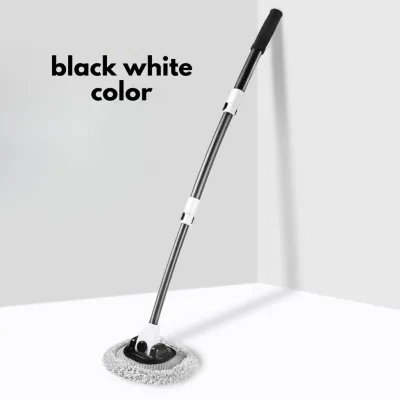
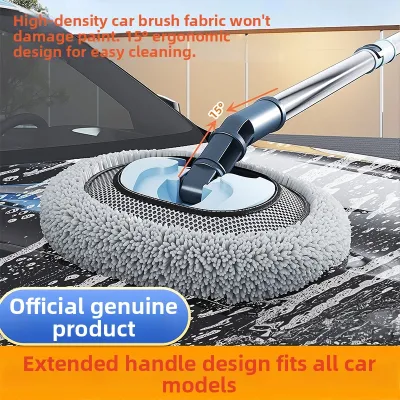
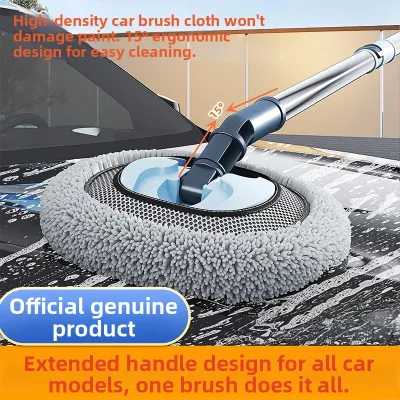
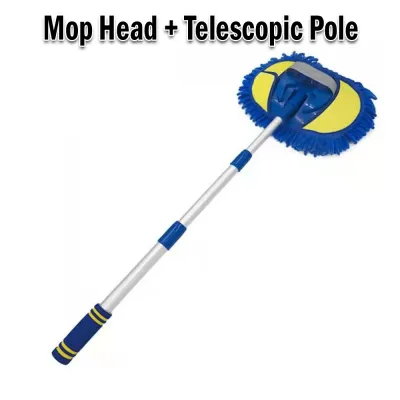
![[SG] Car Wash Mop ✨ Car Shampoo Window Cleaner Car Cloth Car Brush Car Mop](https://img.lazcdn.com/g/p/32f40ca9edbe236ae444a08011af58d0.png_400x400q80.png_.webp)
![[SG SELLER] Car wash mop chenille three-section telescopic special brush soft hair cleaning car washing tool Extendable Pole](https://img.lazcdn.com/g/p/152fda19162c3ab77eddec33adb083ca.png_400x400q80.png_.webp)
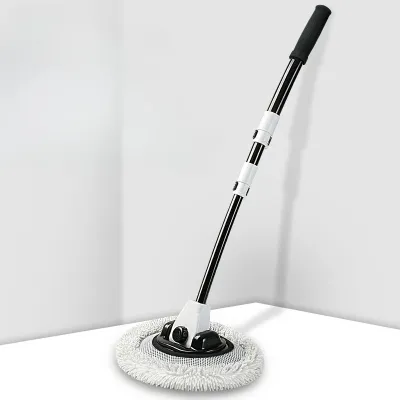
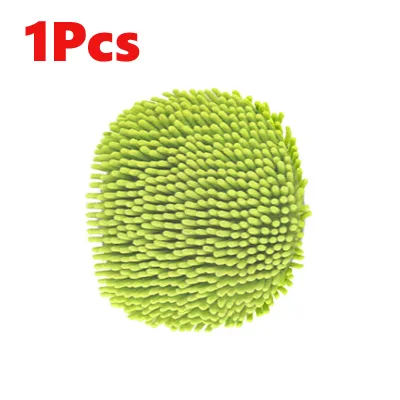
Prices are valid at publication and may change. Please refer to the product page for the latest price.
Match Mop Materials to Your Paint Type
Once you have identified your paint finish, you can match it to the appropriate mop material. Microfiber is the most common synthetic material used in modern car wash mops. It is composed of extremely fine polyester and polyamide fibers that are split to create microscopic hooks. These hooks are highly effective at lifting, trapping, and holding dirt away from the paint surface rather than dragging it across the finish. Chenille microfiber, which features thick, noodle-like strands, is particularly popular because the large surface area of the “noodles” allows dirt to sink deep into the gaps, minimizing contact with the paint. These synthetic options are generally safe for standard clear coats and ceramic-coated vehicles, provided they are kept thoroughly clean.

Natural fibers, such as genuine lambswool, offer a traditional alternative favored by many professional detailers. Lambswool possesses a natural density and softness that provides excellent cushioning against the paint. The fibers are highly effective at drawing light dust and grime away from the surface. However, lambswool requires meticulous maintenance, as it can trap larger debris that is difficult to rinse out, and it degrades quickly if not dried properly. For delicate matte, satin, or single-stage finishes, extreme caution is necessary. Stiff synthetic fibers or poorly maintained mops can act like fine sandpaper on these sensitive surfaces. For these finishes, look for ultra-soft, long-pile microfiber or high-grade lambswool, and avoid any mops with exposed plastic backing or rough stitching.
To evaluate the quality of a car wash mop before use, check the product label for the fiber composition and density, often measured in grams per square meter (GSM) for microfiber products. A higher GSM generally indicates a thicker, more plush pile that offers better cushioning. Physically inspect the mop by running your hand over the fibers; they should feel completely soft without any scratchy or stiff elements. Ensure that the edges and backing material are wrapped in soft fabric or foam to prevent accidental contact between the hard parts of the mop head and your car’s paint.
Evaluate Mop Styles and Handle Designs
The physical design of your car wash mop affects how much control you have over the washing process, which directly impacts paint safety. Hand-held wash mitts provide a high level of tactile feedback, allowing you to feel the contours of the vehicle and adjust your pressure instantly if you encounter stubborn grime. However, reaching the roof, hood, and windshield of larger vehicles like SUVs, multi-purpose vehicles (MPVs), or trucks can be physically challenging with a hand-held mitt. This is especially true when washing cars in restricted spaces, such as the designated wash bays of multi-storey car parks, where maneuvering room may be limited.
Pole-mounted car wash mops solve the reach issue by attaching the wash head to an extendable handle. This design allows you to clean high roofs and wide hoods without straining or leaning against the vehicle’s dusty panels, which can cause accidental scratching. When choosing a pole-mounted mop, look for lightweight aluminum or fiberglass handles that reduce fatigue. The mop head should feature a pivoting mechanism to maintain flat contact with curved body panels, ensuring even pressure distribution.
Consider the weight and water retention of the mop when it is fully saturated. A large, dense mop head can hold a significant amount of soapy water, which is beneficial for lubrication but can make the tool heavy and difficult to maneuver. If a pole-mounted mop becomes too heavy, it is harder to control, increasing the risk of dropping the head onto the ground where it can pick up abrasive dirt, or accidentally striking the vehicle’s bodywork with the hard handle. Choose a size and weight that you can comfortably lift and guide across the paint surface without applying downward force; the weight of the wet mop itself should provide sufficient cleaning pressure.
Apply Safe Washing Practices to Protect Your Paint
Even a soft car wash mop can cause damage if used with poor washing techniques. To protect your paint finish, always implement the two-bucket wash method. Fill one bucket with soapy water and a second bucket with clean water for rinsing. Place a grit guard—a plastic grate that sits at the bottom of the bucket—in both buckets. After wiping a section of the car, rinse the dirty mop in the clean water bucket, rubbing the fibers against the grit guard to release trapped dirt, which settles below the grate. Wring out the mop before dipping it back into the soapy water bucket to load fresh, clean lubrication.
Before making any physical contact with the paint, perform a thorough pre-wash. Use a hose or a pressure washer to rinse away loose dirt, mud, and road salt. In dusty or coastal environments, this step is vital because dry wiping even a small amount of surface dust can cause immediate scratching. Apply a dedicated car wash shampoo formulated for your specific paint type; matte finishes, for example, require specialized shampoos that do not contain gloss-enhancing agents or waxes.
After washing, rinse the mop head thoroughly with clean water to remove all soap residue, which can dry and stiffen the fibers. Hang the mop head to air dry in a clean, dust-free indoor environment away from direct sunlight, as UV rays can degrade synthetic fibers and dry out natural wool. Store the dry mop in a sealed container or bag to prevent airborne dust from settling on it between washes. If you encounter deep scratches, severe paint oxidation, or specialized matte finish staining that does not wash away with gentle pressure, stop immediately and consult a professional detailer rather than attempting to scrub the area harder, which will only worsen the damage.
Frequently Asked Questions (FAQ)
Can I use the same mop for my car's paint and its wheels?
No, you should never use the same wash mop for both your car’s paint and its wheels. Wheels accumulate highly abrasive brake dust, road grime, and small metal particles that can easily become embedded deep within the mop fibers. If you transfer these particles to your vehicle’s delicate paintwork, they will act like sandpaper, causing severe scratching and swirl marks. Always use dedicated, separate tools for wheels and paint. Implementing a simple color-coding system—such as using a blue mop for the paint and a grey mitt for the wheels—is an effective way to organize your gear and prevent accidental cross-contamination.
How often should I replace my car wash mop?
You should replace your car wash mop as soon as you observe physical signs of wear that compromise its safety. Look for matted or frayed fibers, a noticeable loss of plushness, or stubborn debris like small twigs or grit that remains embedded in the material even after a thorough wash. If the backing material begins to tear or the stitching unravels, exposing hard plastic or foam, the tool is no longer safe for paint contact. With regular use and proper maintenance—including prompt rinsing and air-drying—a high-quality microfiber mop head typically remains safe for use for several months, but you should inspect it before every wash.
Is a microfiber wash mitt better than a pole-mounted mop?
Neither tool is universally better; they serve different purposes based on your vehicle’s size and your physical needs. A microfiber wash mitt offers excellent tactile control and maneuverability, making it a highly suitable choice for detailed cleaning around mirrors, grilles, and lower body panels on compact cars. A pole-mounted mop, on the other hand, is highly beneficial for washing larger vehicles like SUVs, vans, or trucks, as it provides the reach necessary to clean high roofs and wide hoods safely without straining. Many detailers use a combination of both: a pole-mounted mop for high, flat surfaces and a hand-held mitt for lower, more intricate areas.
Community discussion
Share your experience or ask a question. Comments are reviewed before publication.