
Maintaining correct tire pressure is one of the most straightforward yet critical aspects of vehicle ownership in Singapore. Whether navigating daily commutes along the Pan Island Expressway (PIE) or preparing for a weekend drive across the Causeway, having a reliable tire pump ensures safety, optimal fuel efficiency, and prolonged tire life. The ideal tire pump depends heavily on your housing type, parking situation, and driving habits.
Quick Guide: Matching the Pump Type to Your Driving Scenario
To choose the right tire pump, you must first understand the three primary categories available to consumers: portable 12V plug-in compressors, cordless battery-powered inflators, and manual floor pumps. Each type operates on a different power delivery system, offering distinct trade-offs in terms of portability, setup speed, and long-term reliability.
Your choice should align directly with where you park your vehicle and how you use it. For instance, drivers living in high-density estates with multi-storey carparks face different spatial and power constraints than those living in landed properties with private driveways.
Products mentioned in this guide
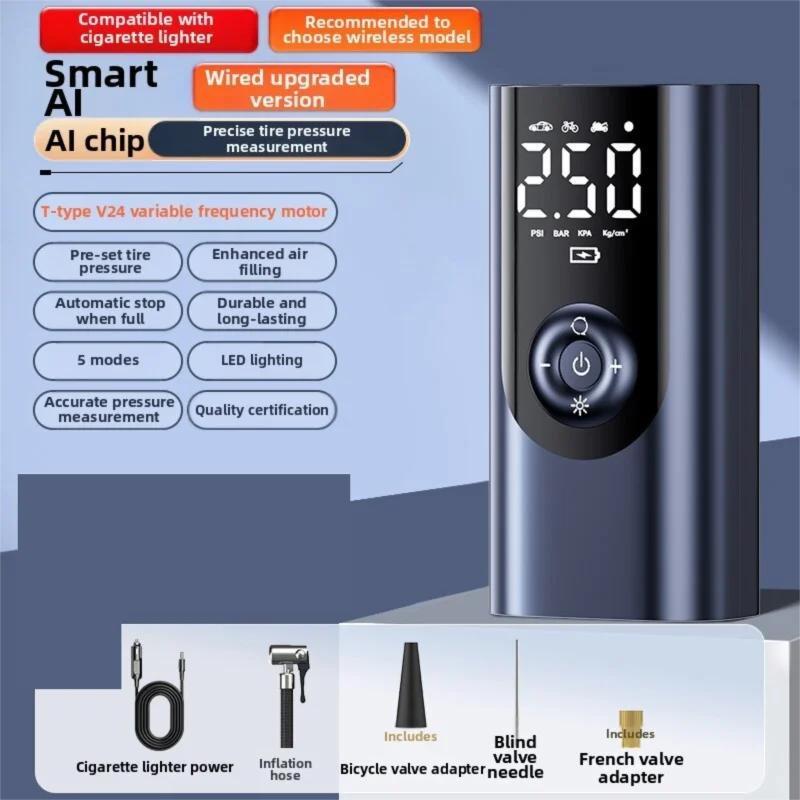
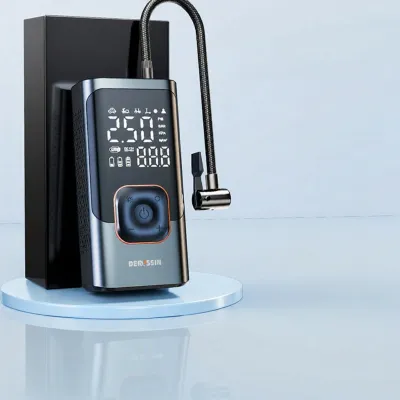
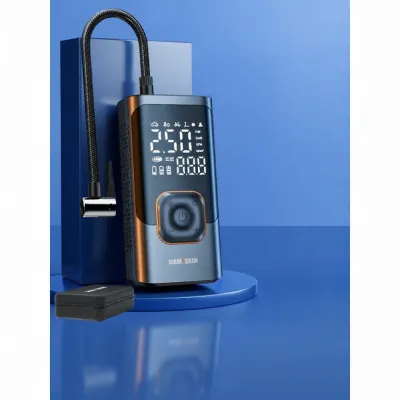
![[SG Stock] Air Pump Car Inflator Compressor Portable Ball Bike Bicycle Rechargeable Basketball Soccer Volleyball Tyre Wheel Tire 12V LED Fast Auto Shut-off Emergency](https://img.lazcdn.com/g/p/cc7d92c566c3860fbbfa1d535cc6f3bb.jpg_400x400q80.jpg_.webp)
Prices are valid at publication and may change. Please refer to the product page for the latest price.
Consider the following rapid decision pathways to identify your ideal match:
- Choose a portable 12V compressor if you frequently drive long distances, such as cross-border trips up the North-South Expressway in Malaysia. These units draw power directly from your vehicle's electrical system, ensuring they are always ready to operate during a roadside emergency without relying on a pre-charged internal battery.
- Choose a cordless battery-powered pump if you park in Housing & Development Board (HDB) multi-storey carparks or basement condominium parking lots. These environments lack accessible power outlets, making a grab-and-go, cable-free device highly convenient for quick monthly pressure top-ups.
- Choose a manual floor pump if you reside in a landed property with dedicated garage space and prioritize mechanical simplicity. These pumps require no electricity, will never suffer from battery degradation or blown fuses, and offer exceptional pressure precision for routine home maintenance.
Ultimately, selecting the right pump involves balancing your access to electrical outlets, your available storage space, and how frequently you intend to check your tire pressures.
Portable 12V Compressors: Reliable Power for Roadside Emergencies
Portable 12V air compressors are the traditional choice for vehicle emergency kits. These devices draw direct current (DC) from your car’s 12V auxiliary power outlet, commonly known as the cigarette lighter socket. Because they rely directly on the vehicle’s electrical system, they completely eliminate the risk of finding yourself with a dead pump battery when you encounter a roadside emergency.

For Singaporean drivers who frequently travel across the border, a 12V compressor is an indispensable safety tool. Driving along the highways of Malaysia exposes you to long stretches of road between service stations. If you experience a slow puncture caused by road debris, a reliable 12V pump allows you to periodically top up the tire’s air pressure, enabling you to safely reach a professional workshop in Johor or Malacca without needing to change to a spare tire on a busy shoulder.
However, these pumps come with specific operational constraints. First, they require the vehicle’s engine to be running during use. Running an air compressor solely on battery power can rapidly drain your car’s starter battery, leaving you stranded with inflated tires but a dead engine. Second, managing the physical power cable can be cumbersome. You must route a three- to four-meter cable through the car doors or windows to reach all four wheels, which can be challenging in tight, narrow parking spaces.
Before purchasing a 12V compressor, consult your vehicle’s owner manual to verify the maximum amperage rating of the 12V accessory port. Most passenger cars limit this port to 10 amperes (120 watts) or 15 amperes (180 watts). If a high-draw compressor pulls more current than the circuit is rated for, it will instantly blow the fuse, disabling the port. Furthermore, modern electric vehicles (EVs) manage their low-voltage systems differently than internal combustion engine vehicles. In some EVs, the DC-DC converter may detect a sudden current spike from an air compressor as an electrical fault and temporarily shut down the accessory circuit to protect the high-voltage battery system.
Cordless Battery-Powered Pumps: Grab-and-Go Convenience for Quick Top-Ups
Cordless, battery-operated tire inflators represent a significant shift in convenience. Powered by internal lithium-ion batteries, these compact devices require no external cords or power connections during use. You simply preset your desired pressure, attach the chuck to the tire valve, and start the inflation process. Many modern units are highly compact, easily fitting into a glovebox or door pocket, and some even double as emergency USB power banks to charge your mobile devices.
This cordless design is particularly advantageous for drivers living in high-density housing such as HDB estates or private condominiums. Multi-storey and basement carparks in Singapore are notoriously tight, with closely spaced parking lots and no accessible public power outlets. Stretching a 12V cable across adjacent parking spaces can block pedestrian paths or neighboring vehicles. A cordless pump allows you to walk around your car and top up all four tires quickly within the confines of your parking lot, without any cables trailing on the concrete floor.
Despite their convenience, cordless pumps require careful management in Singapore’s tropical climate. The interior of a car parked in an open-air carpark under direct sunlight can easily reach temperatures exceeding 60°C. Prolonged exposure to extreme heat accelerates the chemical degradation of lithium-ion batteries, leading to a permanent loss of charge capacity and, in severe cases, battery swelling. To preserve the battery’s lifespan, avoid storing a cordless pump in the glovebox or on the rear parcel shelf. Instead, store it in the boot, which remains slightly cooler, or keep it indoors and only bring it to the car when planning a maintenance check.
Because lithium-ion batteries naturally self-discharge over time, a cordless pump left in the boot for six months may not have enough power to inflate a tire during an emergency. It is critical to establish a routine where you bring the device indoors to charge every three to four months. Additionally, cordless pumps have a limited runtime per charge. While they are perfect for minor pressure adjustments of 2 to 3 PSI across four tires, they may run out of battery before completing the inflation of a completely flat tire.
Floor Pumps: Precision and Speed for Home Garage Maintenance
Manual floor pumps, traditionally associated with bicycles, are an often-overlooked but highly effective option for car tire maintenance. These pumps rely entirely on physical effort, utilizing a large vertical cylinder and a T-handle to compress air with each downward stroke.
While it may seem counterintuitive to manually pump a car tire, passenger car tires actually operate at relatively low pressures (typically 30 to 35 PSI) compared to road bicycles (which can require over 100 PSI). Because car tires contain a much larger volume of air, a high-quality floor pump with a high-volume barrel can transfer a surprising amount of air per stroke. For routine weekly top-ups of 1 to 2 PSI, a manual floor pump can often complete the task faster than waiting for an electronic pump to power up, connect, and cycle through its inflation program.
This option is ideal for homeowners living in landed properties with dedicated driveways or private garages. In these settings, storage space is less constrained, and the pump can be kept easily accessible in a garage cabinet. Floor pumps are completely immune to electrical failures, blown fuses, or degraded batteries. They are always ready for immediate use, making them the most reliable long-term tool for routine tire care.
The primary drawback is physical exertion. Inflating a tire from scratch using a floor pump is a strenuous physical workout that is impractical for many drivers. Additionally, their bulky, rigid frames make them highly impractical to store in a car boot, ruling them out as emergency roadside tools. If you choose a floor pump, ensure it features a durable, heavy-duty steel or aluminum barrel, a secure screw-on or locking thumb-lock chuck, and a highly visible, calibrated pressure gauge mounted at the base or top of the cylinder.
Side-by-Side Comparison: 12V, Cordless, and Floor Pumps
To help you visualize the practical differences between these three options, the table below compares them across key performance, usability, and environmental dimensions:
| Feature / Metric | Portable 12V Compressor | Cordless Battery Pump | Manual Floor Pump |
|---|---|---|---|
| Power Source | Car's 12V DC outlet | Internal rechargeable Li-ion battery | Manual physical effort |
| Best Use Case | Long-distance driving & emergency roadside kits | Quick monthly top-ups in tight parking lots | Routine home maintenance in private garages |
| Inflation Speed | Moderate to fast (depends on motor size) | Moderate (slower on larger tires) | Fast for small top-ups; slow for full inflation |
| Portability & Storage | Compact; fits in boot or under-seat storage | Extremely compact; fits in glovebox or door pocket | Bulky; rigid frame best kept in a home garage |
| Maintenance | Low (keep cable dry and clean) | Medium (requires regular charging and heat protection) | Low (occasional lubrication of piston shaft) |
| Ideal Parking | Open-air carparks, street parking, road trips | HDB multi-storey carparks, basement condominiums | Landed properties, private driveways, garages |
Portable 12V compressors and cordless pumps typically range from S$30 to S$120 depending on features, while high-quality manual floor pumps are available in the S$40 to S$80 price band. Many drivers in Singapore find that combining two different types provides the ultimate peace of mind. For example, you might use a heavy-duty manual floor pump at home for precise, weekly pressure maintenance, while keeping a compact cordless or 12V compressor in your car’s boot strictly for emergency roadside situations.
Essential Features and Safety Checks Before You Buy
When shopping for a tire pump, understanding the technical specifications will prevent you from purchasing an inadequate or unsafe model. Pay close attention to the following key metrics:
- Maximum PSI Rating: Most passenger car tires require between 30 and 35 PSI, but purchasing a pump rated up to 100 or 120 PSI ensures the motor does not operate at its absolute limit, extending its operational lifespan.
- Airflow Rate (CFM or LPM): Measured in Cubic Feet per Minute (CFM) or Liters per Minute (LPM), this metric determines how quickly the pump can move air. A higher flow rate means you spend less time waiting on the side of a busy road.
- Auto-Shutoff Functionality: For digital pumps, this feature allows you to preset your target pressure. The pump automatically stops inflating once the target is reached, preventing dangerous over-inflation.
You must also be aware of the pump’s duty cycle. The duty cycle is the percentage of time an air compressor can safely operate within a given period before it must be turned off to cool down. For example, a budget portable pump might have a 10% duty cycle, meaning it can only run continuously for 3 minutes before requiring a 7-minute cooling period. Ignoring this limit can cause the internal plastic gears to melt, damage rubber seals, or trigger electrical short circuits.
Ensure the pump is compatible with your vehicle’s valves. Standard passenger car tires use Schrader valves. While almost all automotive pumps come with a Schrader chuck, verify that the connector is made of durable materials like brass or reinforced composite. Screw-on chucks provide the most secure, airtight connection, whereas quick-release thumb-lock chucks offer faster attachment but can leak if the internal rubber seal becomes worn.
Before performing any tire inflation, prioritize safety by checking your vehicle’s recommended tire pressure. This information is located on the tire placard pasted on the driver’s side B-pillar (visible when you open the driver’s door) or inside the fuel filler flap. Never use the maximum inflation pressure printed on the tire’s sidewall; this figure represents the maximum pressure the tire can safely withstand under maximum load, not the optimal pressure for your vehicle’s handling, braking, and ride comfort. Additionally, perform a visual inspection of the tire before inflating. Check for embedded objects like nails or screws, deep sidewall cuts, or any bulging. If you detect structural damage, do not attempt to inflate the tire, as the sudden pressure increase could trigger a dangerous blowout.
Frequently Asked Questions (FAQ)
Can I use a portable tire pump to inflate a completely flat tire?
A portable tire pump can inflate a flat tire, but you must exercise extreme caution. If a tire is completely flat, it may have suffered structural damage from being driven on while deflated, or the tire bead may have unseated from the wheel rim. Attempting to inflate an unseated tire with a low-volume portable pump can be dangerous, as air will escape rapidly, and the tire may fail to seal properly. If you suspect the tire has run completely flat, inspect it thoroughly for cuts, punctures, or rim separation. If there is visible damage, do not attempt to inflate it; instead, call a mobile tire recovery service or mount your spare tire to avoid safety hazards.
How does Singapore's hot weather affect cordless tire pump batteries?
Singapore’s tropical climate, characterized by high ambient temperatures and intense sunlight, poses a significant challenge to cordless tire pumps. The interior of a car parked in an open-air carpark can easily exceed 60°C. This extreme heat accelerates the chemical degradation of the internal lithium-ion battery, leading to permanent capacity loss and shortened overall lifespan. In worst-case scenarios, prolonged exposure to high temperatures can cause the battery cells to swell or leak. To protect your cordless pump, do not leave it exposed on the dashboard or parcel shelf. Store it in the boot of your car, which stays cooler, or better yet, keep the device indoors and only bring it to your vehicle when you plan to perform routine maintenance.
Why is my 12V tire pump blowing my car's fuse?
If your 12V tire pump repeatedly blows your car’s fuse, it is likely because the pump’s electrical current draw exceeds the amperage rating of your vehicle’s 12V auxiliary outlet. Many high-performance portable pumps draw between 12 and 15 amperes of current, especially during the initial startup surge when the motor first starts turning against the resistance of the tire’s internal pressure. If your car’s outlet is rated for only 10 amperes, the sudden current spike will instantly melt the fuse to protect the vehicle’s wiring. To prevent this, check your vehicle’s owner manual to confirm the outlet’s limit, ensure your car’s engine is running to provide stable voltage from the alternator, and avoid using thin electrical extension cords that increase electrical resistance and current draw.
Community discussion
Share your experience or ask a question. Comments are reviewed before publication.