
Choosing the right car spray is the most efficient way to protect your vehicle’s exterior from environmental damage while enhancing its aesthetic appeal. However, the market is saturated with different formulations, including traditional carnauba spray waxes, advanced synthetic polymer sealants, and modern silicon dioxide (SiO2) ceramic sprays. Selecting the wrong product can lead to poor durability, wasted effort, or unsightly streaking on your paintwork. To make the correct choice, you must evaluate three primary factors: your paint’s current physical health, your available application time, and your long-term protection goals.
By matching the chemical properties of these sprays to your specific situation, you can avoid common application pitfalls and ensure your car remains protected against harsh UV rays, road grime, and industrial fallout. This guide provides a systematic approach to diagnosing your vehicle’s needs, comparing the three main product categories, and applying them safely to achieve professional-grade results at home.
Quick Diagnostic: Which Car Spray Matches Your Needs?
Before purchasing any car spray, it is helpful to map your personal maintenance habits and expectations to the correct product category. Different sprays are engineered for different lifestyles; a busy daily commuter requires a very different level of protection and application effort than a dedicated weekend hobbyist.
Products mentioned in this guide
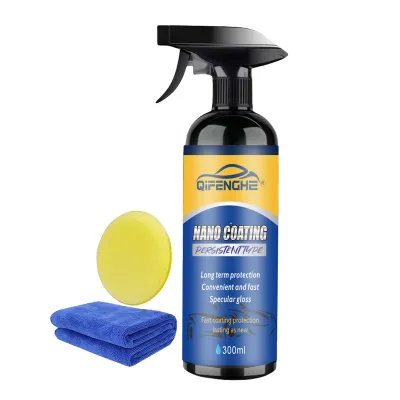
Prices are valid at publication and may change. Please refer to the product page for the latest price.
To help you quickly identify the right path, review this high-level decision matrix. It matches common user profiles with the most suitable spray chemistry based on typical durability, effort, and visual outcomes:
| User Profile | Recommended Car Spray | Key Visual Benefit | Durability Range | Application Effort |
|---|---|---|---|---|
| Weekend Enthusiast<br>Has 15–30 minutes; enjoys frequent detailing. | Spray Wax | Warm, deep, organic gloss | 3 to 6 weeks | Very Low (Simple spray & wipe) |
| Daily Commuter<br>Has 30–60 minutes; wants reliable, low-maintenance protection. | Spray Sealant | Bright, glassy, highly reflective shine | 3 to 6 months | Low (Forgiving application) |
| Detailing Perfectionist<br>Willing to perform extensive paint prep for maximum protection. | Spray Ceramic (SiO2) | Intense hydrophobic beading & self-cleaning | 6 to 12 months | Moderate to High (Requires precise prep) |
While this diagnostic matrix serves as an excellent starting point, you must perform a physical assessment of your vehicle’s paintwork before applying any product. Placing a protective layer over contaminated or damaged paint will not deliver the promised durability and can lock in visual defects, making them harder to correct later.
Step 1: Assess Your Current Paint Condition
To determine if your vehicle is ready for a car spray, you must perform a thorough visual and tactile inspection of the paintwork. This diagnostic process begins with a meticulous wash and dry using a pH-neutral car shampoo. Once the vehicle is completely clean and dry, you can accurately evaluate the state of the clear coat.

Start with the tactile assessment, often referred to as the “plastic bag test.” Place your hand inside a clean, thin plastic sandwich bag or utility bag, and slide your fingertips lightly across the flat panels of the vehicle, such as the bonnet and boot lid. The plastic bag amplifies your sense of touch. If the surface feels perfectly smooth like glass, your paint is free of bonded contaminants. If you feel a rough, sand-like texture, your clear coat has embedded contaminants such as industrial fallout, brake dust, tree sap, or tar. Applying any protective car spray over these contaminants prevents the product from bonding directly to the paint, drastically reducing its lifespan. In this scenario, you must use a clay bar or a synthetic clay mitt with proper lubrication to decontaminate the surface before proceeding.
Next, conduct a visual inspection under direct, bright light. You can use a dedicated detailing inspection light, a high-powered LED torch, or even the bright afternoon sun. Look closely at the paint from various angles to identify any of the following common defects:
- Swirl Marks: Fine, circular spiderweb-like scratches caused by improper washing techniques or automated car washes.
- Deep Scratches: Linear gouges that penetrate the clear coat.
- Oxidation: A dull, milky, or chalky appearance caused by prolonged UV exposure and lack of protection.
It is vital to understand that car sprays—whether wax, sealant, or ceramic—are thin, transparent protective “toppers.” They are not designed to repair, level, or fill physical defects in the clear coat. If you apply a high-gloss spray ceramic or sealant over swirled or oxidized paint, the product will actually amplify those flaws, making the scratches and dullness more visible under a shiny, hardened layer.
If your visual inspection reveals moderate to severe swirl marks, heavy oxidation, or deep scratches, you must stop the DIY process. Applying a spray protectant at this stage is a waste of time and product. Instead, the paint requires mechanical polishing or compound correction to physically level the clear coat and restore clarity. If you do not own a dual-action polisher or lack experience in paint correction, seek professional detailing services to restore the paint’s foundation before you begin a maintenance routine with protective sprays.
Step 2: Define Your Protection Goals and Time Budget
Once your paint is clean, smooth, and free of major defects, you can select a car spray that aligns with your durability expectations and the amount of time you want to spend maintaining your vehicle. Car sprays rely on three distinct chemical foundations: natural carnauba blends, synthetic polymers, or silicon dioxide (SiO2). Each chemical family offers a unique balance of visual finish, longevity, and application difficulty.
There is no single “best” product on the market. Instead, the correct choice depends entirely on matching the product’s chemistry to your specific environment, storage conditions (such as indoor garaging versus outdoor parking), and your personal detailing schedule.
Spray Wax: Quick Gloss for Well-Maintained Paint
Spray waxes are typically formulated with natural carnauba wax, often blended with light synthetic polymers to improve ease of use. These products are designed primarily for speed and aesthetic enhancement. When applied, they deliver a signature “warm” and deep organic glow that excels at masking incredibly minor paint imperfections, giving the vehicle a freshly detailed, wet look.
The primary advantage of a spray wax is its incredibly forgiving application process. It can be applied and buffed off in a matter of minutes, even in less-than-ideal conditions. However, natural carnauba has a low melting point and weak chemical resistance. Under intense UV exposure and frequent tropical rain, a spray wax will degrade rapidly, typically lasting only three to six weeks. It is also easily stripped by harsh detergents or alkaline road grime. This makes spray waxes the ideal choice for automotive enthusiasts who enjoy washing and detailing their cars every few weeks and prioritize a deep, classic show-car shine over long-term durability.
Spray Sealant: Balanced Durability and Ease of Use
Spray sealants utilize engineered synthetic polymers that chemically cross-link with one another to form a highly stable, uniform protective mesh over the clear coat. Visually, sealants produce a very bright, glassy, and highly reflective “cold” shine, which looks exceptionally sharp on metallic and light-colored paintwork.
Because synthetic polymers are highly resistant to heat, UV radiation, and mild acids (such as bird droppings and acid rain), spray sealants offer excellent durability. A single application can easily last between three and six months, even on vehicles parked outdoors. The application process remains highly user-friendly and forgiving, requiring minimal curing time and demonstrating a high tolerance for varying humidity levels. This makes spray sealants the ideal “set-and-forget” option for daily drivers who want robust, reliable protection and excellent water-sheeting capabilities without the meticulous preparation required by ceramic products.
Spray Ceramic: Maximum Hydrophobic Protection
Spray ceramics represent the pinnacle of modern DIY paint protection, utilizing active silicon dioxide (SiO2) nanoparticles. When applied to a clean surface, these nanoparticles cure to form a hard, quartz-like barrier that is highly hydrophobic. This hydrophobic property forces water to bead into tight, round droplets that roll off the surface effortlessly, carrying loose dirt and road dust with them—a phenomenon known as the self-cleaning effect.
An SiO2-infused spray ceramic provides exceptional chemical resistance (withstanding pH levels from highly acidic to highly alkaline) and can protect paintwork for six to twelve months or more. However, this high performance comes with strict application boundaries. The SiO2 molecules must form a direct chemical bond with the bare clear coat. If there is any residual wax, oil, or road film on the paint, the ceramic spray cannot bond, leading to immediate product failure, uneven curing, or severe streaking. Spray ceramics are designed for users who are willing to invest the necessary time in deep decontamination, panel wiping, and precise application to achieve maximum, long-lasting environmental protection.
Step 3: Safe Application and Maintenance Boundaries
Achieving a flawless, streak-free finish with any car spray requires strict adherence to proper application techniques and environmental controls. Regardless of the product category you choose, you must follow a structured preparation and application protocol to prevent paint marring or product failure.
Before applying any spray, ensure the vehicle is parked in a shaded, well-ventilated area. Never apply car sprays in direct sunlight or onto panels that are hot to the touch. High temperatures cause the liquid carrier solvents in the spray to evaporate prematurely, a process known as “flashing.” When a product flashes too quickly, it leaves behind stubborn, cloudy streaks and high spots that are incredibly difficult to buff away without resorting to mechanical polishing. This environmental control is especially critical in hot, humid tropical climates.
To apply the product safely, always use the “two-towel method” with high-quality, clean microfiber towels (ideally with a density of 300 to 350 GSM or higher):
- Preparation: If you are applying a spray sealant or spray ceramic, perform a final wipe-down of the panels using a dedicated panel prep spray or a diluted isopropyl alcohol (IPA) solution (15% to 20% concentration) to strip away any remaining polishing oils or wash-and-wax residues.
- Application: Lightly mist the car spray onto a single panel or a small working section (such as half a door or half a bonnet). Avoid over-applying, as excess product does not add protection; it only creates sticky residue and streaks.
- Spreading: Use your first microfiber towel, folded into quarters, to gently spread the product across the panel in straight, overlapping lines to ensure complete coverage.
- Buffing: Immediately flip to your second, completely dry and clean microfiber towel, and buff the area using light, circular motions to remove any remaining residue and reveal a high-gloss, streak-free finish.
In addition to these steps, you must observe critical safety and compatibility boundaries. Before applying any care product, always check the specific product’s label and the vehicle manufacturer’s care instructions. If instructions conflict, if the treated surface material is unidentified, or if the intended use is not explicitly covered on the product label, stop immediately and consult the manufacturer or a qualified professional detailer.
Be particularly cautious with specialized exterior surfaces. Never apply standard spray ceramics or synthetic sealants over matte paint, satin vinyl wraps, or textured, uncoated plastic trim unless the product label explicitly states it is safe and formulated for those materials. Applying a standard high-gloss product to matte or satin surfaces can cause permanent, uneven blotching or unwanted gloss patches that ruin the flat aesthetic. Furthermore, always respect the manufacturer’s specified curing times; many spray ceramics require 12 to 24 hours of dry, rain-free curing time to fully cross-link and achieve their rated durability.
Frequently Asked Questions (FAQ)
Can I layer a spray ceramic over a spray wax?
No, you should not apply a spray ceramic over an existing spray wax. Silicon dioxide (SiO2) nanoparticles require a completely clean, bare clear coat to establish a strong chemical bond. If you apply a ceramic spray over a wax, the ceramic will bond only to the weak, temporary wax layer beneath it. As the wax naturally degrades over a few weeks, the ceramic layer will wash away with it, destroying its durability. If you wish to layer these products, always apply the spray ceramic first as your base protection, allow it to cure fully according to the manufacturer’s instructions, and then apply a spray wax as a temporary gloss topper later if desired.
How do I know when it is time to reapply my car spray?
The most reliable way to determine if your car spray has degraded is to observe how water behaves on the clean paintwork. When you wash or rinse your vehicle, look at the flat panels and the lower doors. If water beads into tight, round droplets that roll off easily, the protective layer is still active. If the water begins to sheet slowly, pool in large flat patches, or cling to the paint surface, the protectant has depleted. Other physical indicators include a noticeable loss of surface slickness when sliding a clean microfiber towel over the paint, and dirt or road grime adhering more aggressively to the lower panels of the vehicle.
Are spray ceramics as durable as professional ceramic coatings?
No, consumer-grade spray ceramics are not as durable as professional-grade ceramic coatings. While both utilize SiO2 chemistry, spray ceramics are highly diluted, user-friendly formulations designed for rapid spray-and-wipe application, typically offering 6 to 12 months of protection. Professional ceramic coatings contain much higher concentrations of active solids and carrier solvents, requiring meticulous paint correction, precise application techniques, and controlled infrared curing environments. A professional multi-layer coating bonds far more deeply to the clear coat, creating a much thicker, harder barrier that lasts between two and five years. Spray ceramics are excellent for DIY maintenance or as toppers to extend the life of an existing professional coating, but they do not replace the extreme longevity of a true professional application.
Community discussion
Share your experience or ask a question. Comments are reviewed before publication.