
To choose the right car shade umbrella, you must accurately measure your vehicle’s glass dimensions, select the correct structural design for either the windshield or side windows, and verify the material’s UV protection ratings and physical safety features. A proper fit prevents heat buildup under intense sunlight, such as the tropical climate of Singapore, while protecting your interior surfaces from scratches. Checking the deployment mechanism and folded storage size ensures the accessory remains practical for daily use.
Selecting an ill-fitting shade can leave gaps that let in harsh sunlight, or worse, put pressure on your rearview mirror, dashboard screens, and sensitive sensors. By taking a systematic approach to sizing, material evaluation, and design compatibility, you can find a durable car shade umbrella that keeps your cabin cool and protects your vehicle’s interior materials from premature aging.
Measure and Match: Sizing Your Car Shade Umbrella
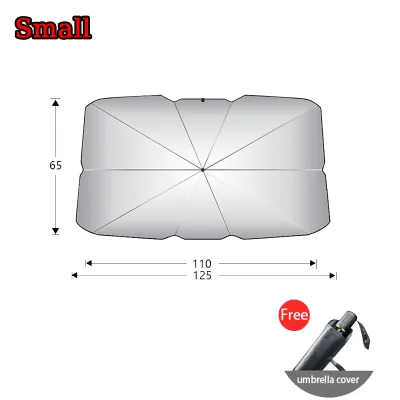
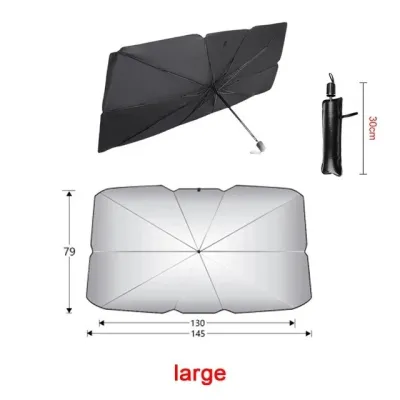
Finding a car shade umbrella that fits your vehicle begins with obtaining precise measurements of your glass surfaces. Relying solely on generic vehicle category recommendations—such as “fits most SUVs” or “standard sedan size”—often leads to a poor fit. Windshield angles, dashboard depths, and the presence of modern safety sensor housings vary significantly between car models, making custom verification essential.
Products mentioned in this guide
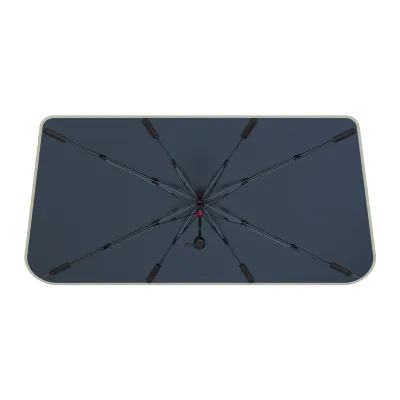
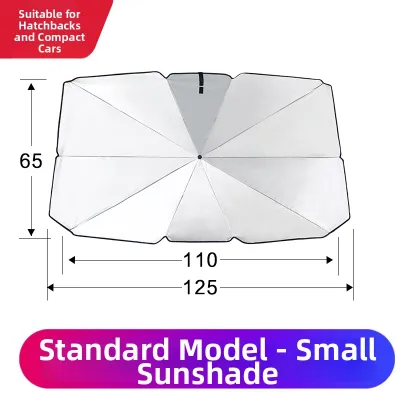
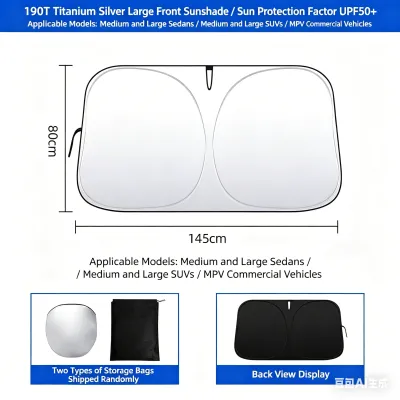
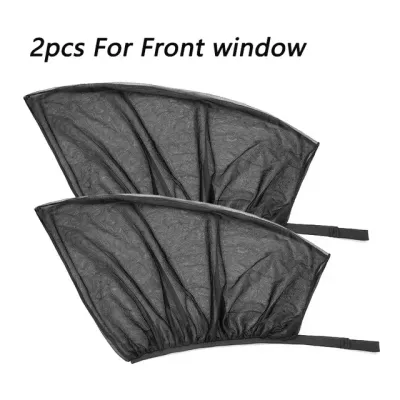
Prices are valid at publication and may change. Please refer to the product page for the latest price.
The most reliable starting point is to check your vehicle owner’s manual or the manufacturer’s official technical specifications for the exact dimensions of your windshield and side windows. If these figures are not readily available, you can easily measure the glass manually using a flexible measuring tape. When measuring the windshield, take three distinct measurements: the horizontal width along the top edge near the roofline, the horizontal width along the bottom edge near the hood, and the vertical height from the base of the dashboard to the top of the glass.
When measuring manually, you must account for the natural curvature of the glass and any interior obstacles. Windshields are rarely flat; they curve outward, which means a straight-line measurement might underestimate the actual surface area of the glass. Additionally, note the position of your rearview mirror, dashcam mounts, and any sensor housing units located behind the mirror. Some car shade umbrellas feature a split-top design or a hook-and-loop strap that wraps around the rearview mirror bracket, which is highly recommended if your vehicle has a bulky sensor console. Furthermore, consider the clearance near the dashboard and the A-pillars. If your car has a deep dashboard, the angle at which the umbrella must be inserted and opened is much shallower, requiring a more flexible frame to avoid scraping the glass during setup.
Once you have your manual measurements, compare them directly against the manufacturer’s stated unfolded dimensions for the car shade umbrella. As a general rule, the shade should be slightly larger than the glass area to ensure adequate overlap and full coverage. However, it should not be so oversized that the frame bends excessively or forces the edges to press hard against the delicate fabric of your vehicle’s A-pillars. A margin of one to two centimeters of overlap is usually sufficient to block out light leaks without putting structural strain on your car’s interior trim.
Windshield vs. Side Window Umbrella Designs
Understanding the structural differences between windshield and side window umbrella designs is crucial for selecting the right accessory for each glass panel. Windshield umbrellas are engineered specifically to cover large, wide, and highly angled glass surfaces. They typically feature a wide, rectangular or trapezoidal canopy supported by a robust, multi-ribbed frame. The handle of a windshield umbrella is designed to extend downward toward the center console or dashboard, often featuring a flexible or bendable joint that allows you to position it safely without putting pressure on your infotainment screen or climate controls.

In contrast, side window shades are designed for smaller, more vertical, and often asymmetrical glass panels. Because side windows vary in shape between the front and rear doors, these shades are generally smaller and may feature specialized shapes to match the sloping roofline of your vehicle. Side window umbrellas or shades rarely use the long, central handle system found in windshield models. Instead, they may utilize shorter, adjustable handles, magnetic frames, or integrated suction mechanisms that allow them to sit flush against the door frame without protruding into the passenger cabin.
Attempting to use a single “universal” umbrella design for both the windshield and side windows is highly impractical and can compromise safety. A windshield-style umbrella is far too large for a side window, and its protruding handle can obstruct the driver’s view of the side mirrors or interfere with the operation of door handles, lock switches, and window controls. Conversely, using small side window shades on a windshield will leave massive gaps, allowing heat and UV rays to penetrate the cabin and heat up the steering wheel and seats.
To achieve optimal thermal protection and maintain a tidy interior, it is best to treat the windshield and side windows as separate zones. Equip your windshield with a dedicated, heavy-duty umbrella shade that matches its rectangular dimensions, and use custom-fit magnetic or tension-fit shades for the side windows. This dual-zone approach ensures that every glass panel is fully covered, maximizing heat rejection while keeping the interior free of awkward, protruding handles that could pose a safety hazard during entry or exit.
Evaluating Shade Materials and Heat Reduction Labels
When shopping for a car shade umbrella, it is easy to get lost in marketing buzzwords promising absolute heat isolation. To make an informed decision, you should look past generic claims and focus on verifiable material specifications and quality labels. The primary indicator of a shade’s ability to block harmful solar radiation is its Ultraviolet Protection Factor (UPF) rating. Look for products that explicitly state a UPF 50+ rating on their packaging or official specification sheets, as this indicates the material blocks a significant portion of UV radiation.
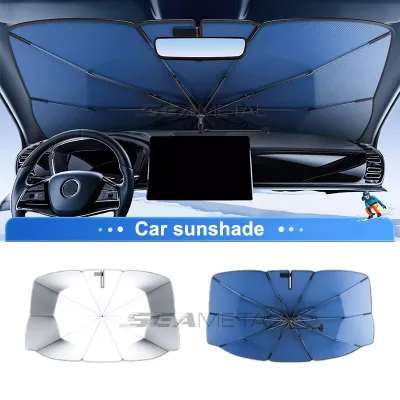
The construction of the canopy material plays a vital role in both heat reflection and durability. High-quality car shade umbrellas often feature a multi-layer construction, typically consisting of a highly reflective outer layer and a light-absorbing inner layer. The outer layer is frequently treated with a specialized coating, such as titanium silver or reflective aluminum, which bounces incoming sunlight away from the vehicle. The inner layer is usually a high-density black cloth that absorbs any residual light, preventing it from bouncing around the cabin. You can verify these claims by checking the manufacturer’s detailed material lists or cross-section diagrams rather than relying on simple product photos.
The frame’s structural materials are just as important as the canopy fabric. The ribs of the umbrella provide the tension needed to keep the shade flat against the glass. Look for frames constructed from high-strength materials like fiberglass or reinforced carbon steel. Fiberglass ribs are highly desirable because they offer excellent flexibility, allowing them to bend slightly without snapping or permanently warping under the intense heat of a parked car. Cheap metal ribs, on the other hand, can become brittle over time or heat up to extreme temperatures, potentially transferring that heat directly to the fabric and causing the protective coatings to degrade prematurely.
It is also important to verify the operating temperature limits and care instructions provided by the manufacturer. The interior of a car parked under direct sunlight in hot regions can reach exceptionally high temperatures. Inferior reflective coatings or cheap adhesives used in low-grade umbrellas can degrade, peel, or emit unpleasant chemical odors when subjected to extreme heat over prolonged periods. Choosing a product with certified heat-resistant materials ensures that the shade remains structurally sound and odor-free, even during the hottest hours of the day.
Finally, pay attention to the density and weave of the fabric. A simple way to check the quality of a shade’s material is to hold it up to a bright light source; a high-quality, multi-layered canopy should block out light completely, showing no visible pinpricks of light through the weave. If the manufacturer provides specifications regarding fabric density (such as thread count or denier ratings), use these metrics to compare different options, prioritizing high-density fabrics that offer superior wear resistance and long-term durability.
Installation, Storage, and Daily Usability Checks
A car shade umbrella is an accessory you will use daily, so its practical usability, installation speed, and storage convenience are just as important as its heat-blocking capabilities. Before purchasing, verify that the umbrella’s structural components are designed with interior protection in mind. The tips of the metal ribs and the joints of the handle must be equipped with soft protective caps, such as silicone, rubber, or thick foam padding. Without these protective elements, the sharp metal edges of the frame can easily scratch your leather dashboard, scuff the steering wheel, or tear the fabric of your A-pillars during deployment.
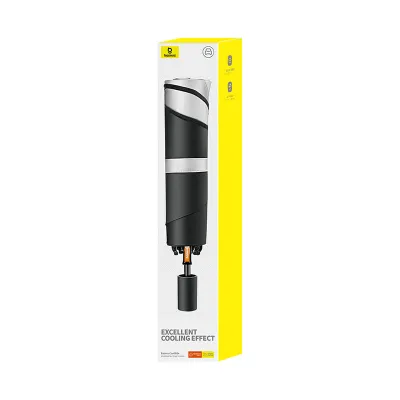
Storage is another critical factor, especially in compact vehicles where cabin space is limited. Check the folded dimensions of the car shade umbrella to ensure it can be stored conveniently when not in use. Ideally, the folded shade should be compact enough to fit inside your glovebox, center console, door side pockets, or the storage pockets behind the front seats. If the umbrella is too bulky when folded, it will end up rolling around the passenger footwell or taking up valuable space in the trunk, making you less likely to use it consistently.
Another critical aspect of daily usability is the ease of folding and packing the shade away. A car shade umbrella that is difficult to fold back into its original shape will quickly become a source of frustration. High-quality models typically come with a durable storage sleeve, often made of synthetic leather or heavy-duty fabric, which protects the folded canopy from damage when stored. Check if the umbrella features a wide fastening strap that secures the folded ribs tightly, making it easier to slide the unit back into its sleeve. If the fastening strap is too thin or uses low-quality hook-and-loop material, it may lose its grip over time, causing the umbrella to spring open unexpectedly in your glovebox or door pocket.
The deployment mechanism should be smooth, intuitive, and easy to operate from the driver’s seat. You should be able to open and secure the umbrella within seconds without requiring excessive physical force or performing awkward maneuvers that could lead to hitting the windshield glass. Look for designs that feature a simple push-button release or a smooth sliding runner that locks securely into place. Additionally, check if the handle has a flexible joint or a telescoping design, which allows you to bend or shorten the handle to rest safely against the center console without blocking your gear shifter or infotainment screen.
Before using the shade for the first time, perform a dry run in a shaded area to familiarize yourself with the deployment angle. Ensure that the umbrella opens smoothly without catching on your rearview mirror or dashcam wires. If your vehicle has sensitive electronic sensors mounted near the rearview mirror, make sure the umbrella’s upper frame does not press tightly against them, as sustained pressure could misalign or damage these delicate components.
Building Your Car Shade Umbrella Shortlist
When you are ready to purchase, building a structured shortlist on your preferred e-commerce platform or online marketplace will help you filter out low-quality options and find the perfect match for your vehicle. Start by filtering search results using your exact windshield measurements rather than relying on broad search terms like “universal car umbrella.” Many reputable sellers categorize their products by specific dimensions (such as Small, Medium, and Large) and provide detailed compatibility charts listing compatible vehicle makes and models.
Next, cross-reference the product descriptions with user-uploaded photos and reviews. While professional product renders can make any shade look flawless, real-world photos from other car owners provide invaluable insights into the actual folded size, canopy opacity, and the quality of the protective tips. Look for reviews from users who drive the same car model as you, as they often share specific feedback regarding how well the handle fits around the center console and whether the shade leaves any gaps around the rearview mirror.
Additionally, prioritize sellers and brands that offer clear return or exchange policies. Because interior layouts, dashboard depths, and windshield angles vary so widely between car manufacturers, there is always a slight chance that a shade might not fit perfectly despite careful measurements. Having a reliable return policy ensures that you can exchange the shade for a different size or handle design without hassle if the initial fit is not ideal for your vehicle’s specific cabin layout.
Finally, compile a comparison list of your top three choices, evaluating them based on material quality, protective features, and storage convenience. Avoid choosing the cheapest option solely based on price, as investing slightly more in a shade with reinforced rib joints, robust silicone protective caps, and a verified UPF rating will save you from potential dashboard damage and provide much better thermal protection over the lifespan of your vehicle.
Frequently Asked Questions (FAQ)
Can I use a windshield umbrella for my side windows?
Using a windshield umbrella for your side windows is not recommended due to significant size mismatches and structural differences. Windshield umbrellas are designed with a wide, rectangular canopy and a long central handle meant to rest on the dashboard. If you attempt to place this large structure against a smaller, more vertical side window, the excess fabric will bunch up, potentially blocking your view of the side mirrors and interfering with door controls, window switches, or door handles. Furthermore, the long handle will protrude directly into the passenger cabin, creating an inconvenient and potentially unsafe obstruction for anyone sitting inside the vehicle. For side windows, it is much safer and more effective to use dedicated side window shades that fit flush against the door frame.
How do I prevent the umbrella handle from damaging my dashboard?
To prevent the umbrella handle from scratching or putting excessive pressure on your dashboard, always check the product for built-in protective features before your first use. High-quality car shade umbrellas feature factory-installed silicone, rubber, or foam caps on the handle base and the tips of the canopy ribs. If your chosen umbrella lacks these protective elements, or if your dashboard is made of highly sensitive leather or soft-touch plastic, you can easily add an extra layer of protection. Place a soft microfiber cloth or a small, dedicated non-slip dashboard mat directly under the handle joint where it rests against the console. Additionally, opt for umbrellas with flexible, bendable, or telescoping handles, which allow you to adjust the angle and length so that the handle rests securely on a hard, non-sensitive surface without putting stress on your infotainment screen or climate control buttons.
Community discussion
Share your experience or ask a question. Comments are reviewed before publication.