
To choose the right car roof box in Singapore, you must balance your vehicle’s physical roof dimensions, your specific cargo needs, and the strict height clearances of local car parks. The ideal selection requires matching the length and width of the box to your vehicle’s roofline while ensuring the combined height of your car, crossbars, and the box remains well under local height limits. Furthermore, you must verify that your vehicle’s roof load capacity can safely support the combined weight of the mounting hardware and your packed gear.
Installing a roof box is an excellent way to expand your vehicle’s carrying capacity for family road trips, staycations, or sporting activities. However, because a roof box alters your vehicle’s aerodynamics, center of gravity, and overall height, making an informed decision is crucial for safety and convenience. By evaluating your specific cargo requirements and matching them with compatible, high-quality mounting hardware, you can enjoy the benefits of extra storage space without compromising road safety or vehicle integrity.
Singapore-Specific Constraints: Parking, Weather, and Aerodynamics
Before purchasing a roof box, you must consider the unique infrastructural and environmental conditions of driving in Singapore. The most critical constraint is vertical clearance. Most Housing & Development Board (HDB) multi-storey car parks (MSCPs) and shopping mall basement parking grates feature a standard clearance limit of 2.1 meters. Some older estates, industrial buildings, or older commercial complexes may have even lower clearances, restricted to 1.9 meters or 2.0 meters.
Products mentioned in this guide
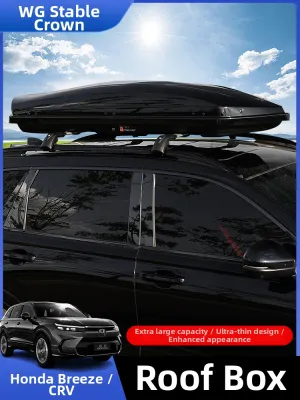
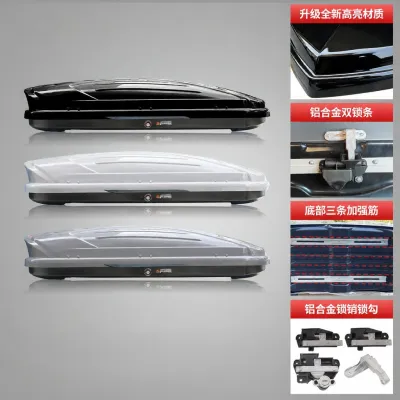
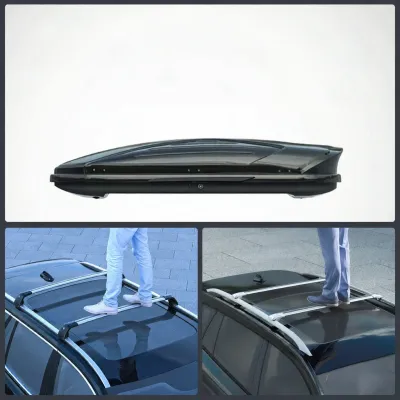
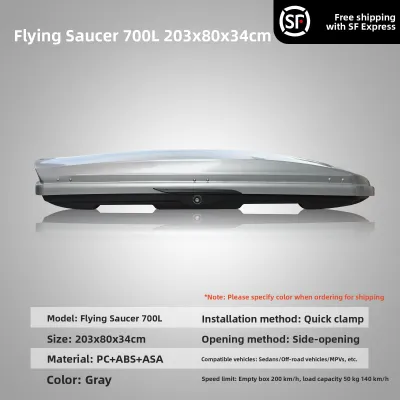
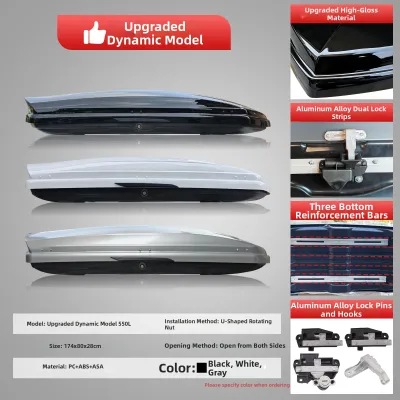
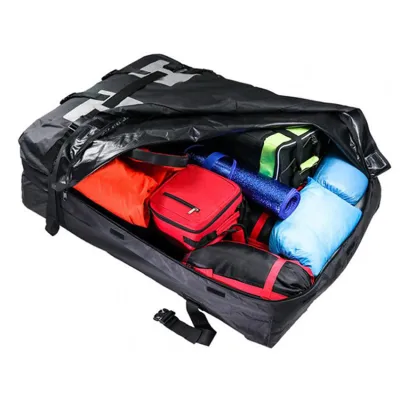
Prices are valid at publication and may change. Please refer to the product page for the latest price.
To avoid catastrophic damage to your vehicle, roof box, and the parking structure, you must physically measure your vehicle’s total height. Do not rely solely on the manufacturer’s specification sheet, as aftermarket suspension modifications, tire wear, and tire inflation levels can alter your car’s actual height. Measure your car from the ground to the highest point of the roof, add the height of your installed roof rack crossbars, and add the external height of the roof box. Always maintain a conservative safety margin of at least 5 to 10 centimeters to account for steep entrance ramps, speed bumps, or vehicle bouncing, which can temporarily reduce your clearance inside a car park.
Singapore’s tropical climate presents another major challenge. The intense equatorial sun delivers high levels of ultraviolet (UV) radiation year-round, which can rapidly degrade low-grade plastics, causing them to become brittle, fade, and crack. When selecting a roof box, prioritize premium materials such as high-grade, UV-stabilized ABS (acrylonitrile butadiene styrene) plastic or ASA (acrylonitrile styrene acrylate) polymer. These materials are engineered to withstand prolonged solar exposure without losing structural integrity.
In addition to extreme heat, Singapore experiences sudden, heavy monsoon downpours. A roof box must feature a highly reliable, weather-resistant sealing system to protect your belongings from water ingress. Look for models with deep overlapping lids, robust rubber gaskets, and secure multi-point locking mechanisms that pull the lid tightly against the base. This design prevents high-velocity rainwater from being forced into the cargo area while driving at expressway speeds.
Aerodynamics play a significant role in your vehicle’s performance and fuel efficiency on expressways like the Pan Island Expressway (PIE) or Ayer Rajah Expressway (AYE). Mounting a large, boxy object on your roof increases aerodynamic drag, which can raise fuel consumption by 10% to 20% and generate noticeable wind noise. Opting for a streamlined, teardrop-shaped roof box helps guide airflow smoothly over the vehicle, minimizing wind resistance, reducing cabin noise, and preserving fuel efficiency during long drives.
Matching Roof Box Shapes and Sizes to Your Cargo
Roof boxes are available in various shapes and sizes, each tailored to specific vehicle types and cargo requirements. Selecting the correct form factor ensures that the box does not interfere with your vehicle’s operations or create unnecessary driving hazards.

Short and Wide Boxes for Hatch Clearance and Bulky Gear
Short and wide roof boxes are highly practical solutions for compact SUVs, multi-purpose vehicles (MPVs), and hatchbacks. On these vehicle types, the rear tailgate swings upward, meaning a long roof box can easily obstruct the hatch. A short box is designed to sit forward on the roof, allowing the tailgate to open fully without contacting the rear of the box. This prevents scratches on your car’s paintwork and avoids putting unnecessary strain on the tailgate’s gas struts.
The wider footprint of these boxes makes them exceptionally well-suited for packing bulky, non-linear items. If you need to transport folding strollers, camping chairs, large suitcases, or soft-sided duffel bags, a wide box provides the necessary volume and depth. These models are highly popular among families who require extra storage space for local outings or weekend trips across the Causeway but do not need to transport exceptionally long sporting equipment.
Long and Narrow Boxes for Aerodynamics and Sports Equipment
Long and narrow roof boxes are designed for sedans, station wagons, and larger SUVs with longer rooflines. Because of their elongated, low-profile shapes, these boxes offer superior aerodynamic efficiency, slicing through the air with minimal resistance. This streamlined profile is highly effective at reducing wind noise, making for a quieter and more comfortable cabin experience during long-distance highway cruising.
These boxes are ideal for carrying long, narrow items such as golf clubs, fishing rod cases, or winter sports gear like skis and snowboards for overseas holidays. A key advantage of a narrow box is that it occupies only a portion of your roof rack’s width. This leaves ample space on the adjacent crossbars to mount other accessories, such as a dedicated bicycle rack or a kayak carrier, allowing you to transport multiple types of recreational gear simultaneously.
Hard-Shell vs. Soft-Sided Carriers for Budget and Security
When choosing between a hard-shell roof box and a soft-sided cargo bag, you must weigh your budget against your security and weather protection needs. Hard-shell boxes, typically constructed from rigid ABS plastic, polycarbonate, or fiberglass, offer the highest level of security. They feature integrated, multi-point metal locking systems that secure the lid at several locations along the frame, making them highly resistant to opportunistic theft. They also maintain their aerodynamic shape regardless of how full or empty they are, ensuring consistent fuel efficiency and minimal wind noise.
Hard-Shell vs. Soft-Sided Comparison
- Security: Hard-shell models feature integrated key locks and rigid walls; soft-sided models rely on zippers and fabric, which can be easily cut.
- Weather Protection: Hard-shell models offer robust, waterproof seals; soft-sided models are water-resistant but can leak during prolonged, heavy monsoon rain.
- Storage Convenience: Hard-shell models require significant storage space when off the car; soft-sided models fold down flat for easy storage in small spaces.
- Aerodynamics: Hard-shell models maintain a sleek, aerodynamic profile; soft-sided models can flap and sag, increasing drag and wind noise.
Soft-sided cargo carriers are lightweight, budget-friendly options that serve well for occasional use. Their primary advantage for Singapore residents is storage convenience; when not in use, they can be collapsed, folded, and stored in a closet or an HDB bomb shelter, occupying minimal space. However, they offer very limited security, as the fabric and zippers can be easily bypassed. Additionally, despite waterproof coatings, soft-sided bags are more prone to water leakage during intense tropical downpours, and their loose fabric can flap violently at high speeds, creating substantial noise and drag.
Roof Rack Compatibility and Vehicle Weight Limits
A roof box cannot be mounted directly to your car’s bare roof or flush roof rails. It requires a compatible set of roof rack crossbars running horizontally across the vehicle. Before purchasing any equipment, you must verify the compatibility of your vehicle, crossbars, and roof box to ensure a safe and secure installation.
Crossbar Requirements
Crossbars come in various profiles, including traditional square bars, aerodynamic wing-shaped bars, and heavy-duty tracks. Square bars are strong and cost-effective but generate more wind noise. Aerodynamic bars are designed to mimic airplane wings, reducing drag and noise significantly. You must ensure that the mounting hardware of your chosen roof box is compatible with the width and thickness of your crossbars.
Most modern roof boxes feature universal mounting systems, such as claw-style clamps or U-bolts, which wrap around the crossbars. Premium quick-release claw systems allow for fast, tool-free installation and removal, adjusting to various crossbar shapes with the turn of a knob. Traditional U-bolt systems are highly secure and economical but require manual tightening with tools, which can be time-consuming. If you have aerodynamic bars with a central T-track slot, you can also look for T-track adapters, which slide directly into the bar’s channel for an exceptionally clean, low-profile, and secure mount.
Vehicle Roof Load Limits
Every vehicle manufacturer specifies a maximum dynamic roof load limit in the owner’s manual. This limit typically ranges from 50kg to 75kg for standard passenger cars, though some larger SUVs can support up to 100kg. The dynamic load limit refers to the maximum safe weight the roof can support while the vehicle is in motion, taking into account the physical forces of braking, cornering, and acceleration.
You must calculate your total roof load using the following formula:
Total Roof Load = Weight of Crossbars + Weight of Empty Roof Box + Weight of Cargo
Never exceed the lowest rated component in your setup. For example, if your vehicle’s manual states a maximum roof limit of 75kg, but your crossbars are only rated to carry up to 60kg, your absolute maximum limit for the combined weight of the empty roof box and your cargo is 60kg. Overloading your roof raises your vehicle’s center of gravity, which can severely compromise handling, increase body roll during cornering, lengthen braking distances, and potentially cause structural damage to your vehicle’s roof pillars.
Mounting Safety and Professional Installation
Because installing roof racks and cargo boxes affects your vehicle’s exterior profile and structural load, safety is paramount. Always read your vehicle’s original operating manual and the manufacturer instructions for both the crossbars and the roof box before attempting installation. If you are unsure about mounting crossbars safely, or if your vehicle requires specific mounting points that are difficult to access, seek professional installation at a reputable automotive workshop in Singapore.
Before every journey, physically check the mounting hardware to ensure all clamps, bolts, and brackets are securely tightened to the manufacturer’s specified torque. If any instructions conflict, if your vehicle’s roof configuration is unidentified, or if your intended use is not covered by the product documentation, stop immediately and consult the manufacturer or a qualified professional.
Maintenance and Storage Tips for Tropical Climates
Proper maintenance and storage are essential to prolonging the lifespan of your roof box and ensuring it remains safe and functional in Singapore’s hot, humid environment.
Cleaning and Care
To clean your roof box, wash both the exterior and interior using only mild soap, lukewarm water, and a soft microfiber cloth or sponge. Avoid using harsh chemical solvents, petrol-based cleaners, or abrasive scrubbing pads. These harsh substances can permanently strip the UV-protective coating from the plastic, leaving it vulnerable to rapid solar degradation, and can scratch the finish, creating micro-fissures where dirt and moisture can accumulate. Always check the applied product’s label and the roof box manufacturer’s care instructions before using any specialized cleaning agent.
Lubrication and Corrosion Prevention
Singapore’s high relative humidity and salt-laden air—particularly if you live or drive near coastal areas like East Coast Park or Pasir Ris—can accelerate the corrosion of metal components. Periodically inspect and lubricate the lock cylinders, hinges, latch mechanisms, and gas struts.
Apply a dry silicone-based lubricant to these moving parts to keep them operating smoothly and prevent seizing. Avoid using heavy, wet greases or WD-40, as these can attract road dust, grit, and sand, forming an abrasive paste that wears down the locking mechanism over time. If any metal parts show signs of rust, clean them gently with a soft brush and apply a rust-inhibiting treatment recommended by the manufacturer.
Storage Solutions for HDB Living
Storing a large, rigid hard-shell roof box can be a challenge in a typical Singapore apartment. When the box is not in use, it is highly recommended to remove it from your vehicle. Leaving an empty roof box mounted permanently on your car unnecessarily increases fuel consumption, subjects the box to constant UV degradation, and limits your access to low-clearance car parks.
Store your roof box in a cool, dry place away from direct sunlight, such as an HDB bomb shelter, a utility room, or a dedicated storage closet. Avoid storing it in hot, unventilated areas like outdoor balconies, as extreme heat build-up can warp the plastic shell over time.
To save floor space, consider mounting specialized wall brackets or a ceiling-mounted pulley hoist system in your storage area, ensuring the weight is securely supported by structural walls. Before closing and storing the box for an extended period, ensure that the interior is completely dry. Any trapped moisture in Singapore’s warm climate will rapidly lead to the growth of mold, mildew, and unpleasant odors, which can ruin the box’s interior lining and any cargo you place inside it later.
Frequently Asked Questions (FAQ)
Do I need to inform my car insurance provider about adding a roof box?
In Singapore, temporary and completely removable accessories like a roof box generally do not require you to formally notify your car insurance provider, as they are treated as temporary cargo carriers rather than permanent vehicle modifications. However, if you install a permanent roof rack system or make structural modifications to your vehicle to accommodate the rack, some insurers may classify this as an aftermarket modification. It is highly recommended to contact your insurance agent or review your policy’s specific terms regarding aftermarket accessories. This ensures that both the mounting hardware and any valuable cargo inside the roof box are adequately covered in the event of an accident, theft, or damage.
Can I open the rear boot of my car with a roof box installed?
Whether you can open your rear boot depends on your vehicle’s roof length, the length of the roof box, and where your crossbars are positioned. To ensure clearance, measure the distance from your front crossbar to the hinge of your open tailgate. Compare this measurement with the rear overhang of the roof box. Many premium roof boxes are designed with pre-drilled, adjustable mounting tracks that allow you to slide the entire box forward on the crossbars. This adjustment helps clear the tailgate’s upward swing, preventing contact with your rear spoiler or glass while keeping the vehicle’s weight distribution balanced.
Are there specific speed limits when driving with a roof box in Singapore?
There are no special legal speed limits for vehicles carrying roof boxes on Singapore roads; you must adhere to the standard posted speed limits, such as 90 km/h on expressways. However, roof box manufacturers always specify a maximum safe operating speed—commonly 130 km/h—for aerodynamic stability and structural safety. This manufacturer limit is highly relevant if you plan to drive up north into Malaysia via the North-South Highway. Always remember that carrying a roof box alters your vehicle’s aerodynamics and center of gravity. This alteration increases sensitivity to crosswinds and can significantly lengthen your braking distances, requiring you to maintain a larger safety gap behind the vehicle ahead.
Community discussion
Share your experience or ask a question. Comments are reviewed before publication.