
Choosing the right car reverse mirror involves balancing a wider field of view with accurate distance perception. Whether you are replacing a cracked side mirror glass or adding a blind spot mirror to navigate tight spaces, understanding specifications like curvature, dimensions, and mounting styles is essential. Making an informed decision ensures you maintain spatial awareness on the road while staying compliant with local vehicle standards.
Understanding Mirror Curvature and Convex Angles
Car reverse mirrors are designed with specific curvatures to help you see vehicles and obstacles behind you. These profiles generally fall into three categories:
- Flat mirrors: These provide a 1:1 reflection with highly accurate distance representation, but they offer a very narrow field of view.
- Standard convex mirrors: These feature a uniform outward curve that compresses the reflected image, allowing you to see a wider area.
- Aspheric (dual-zone) mirrors: These combine both designs, featuring a flatter inner section for accurate distance judgment and a highly curved outer edge to reveal blind spots.
The core trade-off when selecting a curved mirror is the compromise between field of view and distance distortion. Because convex surfaces bend light rays, objects in the mirror will appear smaller and further away than they actually are in reality. This distortion can make lane changes and merging maneuvers deceptive.
Products mentioned in this guide
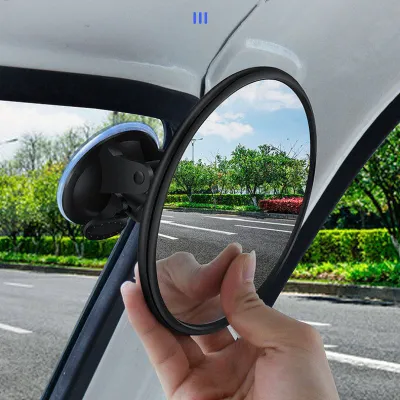
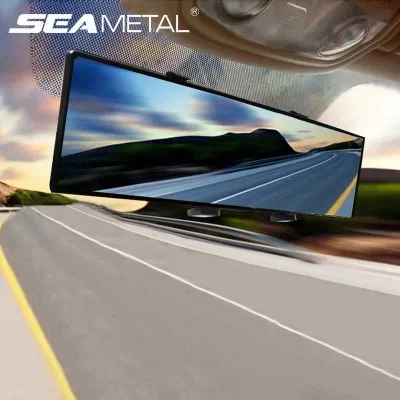
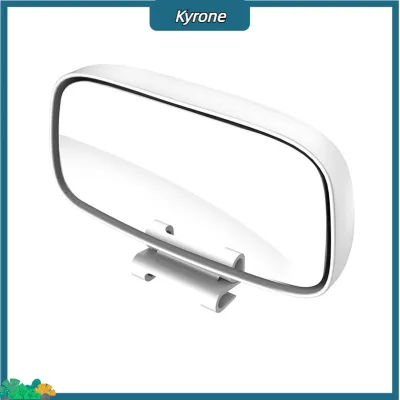
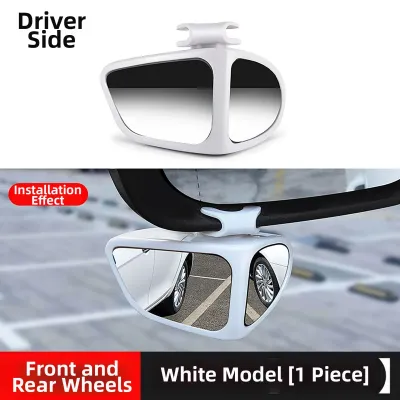
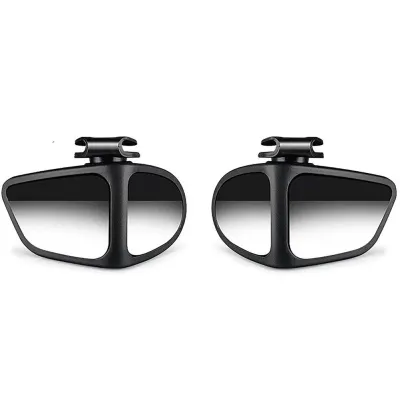
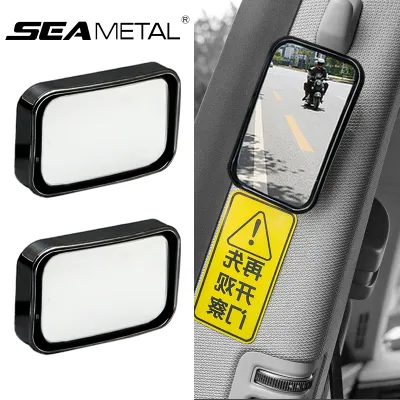
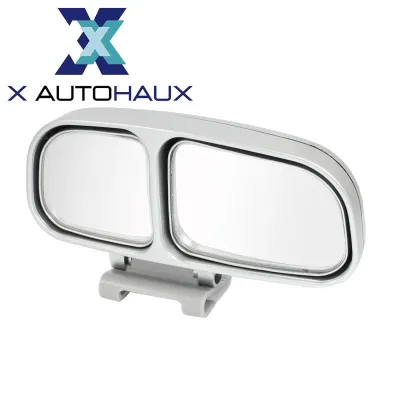
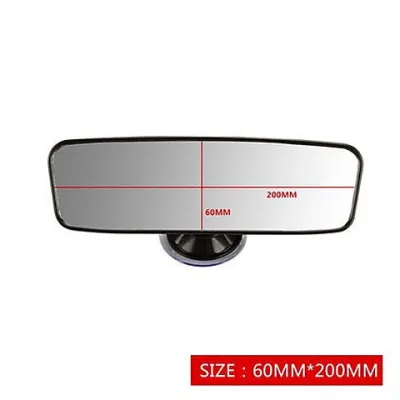
Prices are valid at publication and may change. Please refer to the product page for the latest price.
For safety, avoid using highly curved convex mirrors as the primary glass on the driver’s side if the distortion severely impairs your ability to judge the speed and distance of approaching traffic. If you struggle with spatial awareness or depth perception, prioritize a flatter or dual-zone profile over maximum width. Always consult your vehicle’s manual to verify the factory-specified curvature before installing replacement glass.
Sizing Your Mirror for Optimal Rear Coverage
Selecting the correct physical dimensions is critical whether you are replacing the entire glass assembly or adding an auxiliary blind spot mirror.

For complete replacement glass, never rely solely on generic vehicle category terms or simple length and width measurements. Two vehicles of the same make and model year can feature entirely different mirror housings depending on the trim level, regional market specifications, or integrated technology. You must physically measure the height, width, and diagonal length of your original glass. Additionally, verify the exact shape, paying close attention to the corner radii, slope angles, and any specific notches.
For add-on blind spot mirrors, choose a size that covers your vehicle’s specific blind zones without obstructing the primary mirror’s main line of sight. An oversized auxiliary mirror can block your view of the horizon or adjacent lanes, creating a new safety hazard.
Keep in mind that material names or generic product titles do not guarantee a proper fit. Physical measurement and model-specific verification against the manufacturer’s technical drawings are mandatory steps to ensure compatibility.
Mounting Types and Installation Compatibility
How a mirror mounts to your vehicle determines its stability, resistance to vibration, and ease of installation. Choosing an incompatible mount can lead to poor visibility or a loose part.
Direct glass replacements typically use clip-on or snap-in backing plates. The rear of the mirror glass features a plastic plate designed to snap directly onto the motorized actuator inside the side mirror housing. You must match the original equipment manufacturer (OEM) clip pattern exactly. Even a minor variance in clip shape or positioning will prevent the mirror from locking into place. If your vehicle features heated mirrors or integrated blind-spot sensors, you must also verify that the wiring harness connectors match your vehicle’s original interface.
Add-on blind spot mirrors generally rely on adhesive mounting. These accessories use double-sided automotive tape to bond directly to your existing mirror glass. For a reliable, long-lasting bond, meticulous surface preparation is required. Clean the primary mirror surface with a label-authorized glass cleaner or mild isopropyl alcohol to remove road grime, grease, and wax. Dry the surface thoroughly with a lint-free microfiber cloth before applying the adhesive.
Heavy-duty or towing mirrors often utilize screw-in or bracket mounts. These clamp securely onto the existing mirror housing or door frame and are tightened down with bolts.
A poorly secured mirror can easily detach at highway speeds, creating a dangerous hazard for you and other road users. Always test the mount’s stability by gently shaking the housing before driving. For adhesive mounts, strictly follow the manufacturer’s specified curing time before exposing the vehicle to rain, car washes, or high-speed driving. If your installation involves complex electrical wiring or disassembly of the mirror housing, seek qualified professional installation.
Matching Specifications to Your Driving Environment
Your driving environment should dictate the specifications of your car reverse mirror to ensure optimal safety and convenience.
In Singapore, driving conditions range from high-speed expressways to dense, multi-storey HDB car parks. For frequent expressway driving, where rapid lane changes require precise speed and distance calculations, flatter or dual-zone aspheric profiles are highly recommended on the driver’s side. Conversely, if you frequently navigate tight urban parking spaces, narrow parallel parking lots, or complex multi-lane merging zones, a higher convex angle or a dedicated add-on blind spot mirror helps you spot low-lying curbs and nearby obstacles.
Before purchasing any aftermarket mirror, perform a compliance check. Verify local Land Transport Authority (LTA) regulations regarding mirror modifications, minimum field-of-view requirements, and prohibited obstructions. Non-compliant modifications that cause extreme visual distortion or block critical viewing angles can result in vehicle inspection failures or fines.
To avoid purchasing incompatible parts, always verify these details against your product and vehicle documentation before finalizing your order:
- Exact vehicle make, model, and production year.
- The specific side needed (left-hand side vs. right-hand side).
- The vehicle's steering configuration (Singapore utilizes a right-hand drive configuration, which directly affects mirror angles and driver-side curvature needs).
Frequently Asked Questions (FAQ)
Are highly convex mirrors legal for use on public roads in Singapore?
Yes, provided they do not compromise overall road safety. You must ensure your mirrors comply with current LTA guidelines regarding minimum field of view and distance distortion limits. Any aftermarket mirror modification that severely distorts depth perception, impairs your ability to judge distances safely, or physically obstructs the driver’s view can result in fines and vehicle inspection failures.
How do I safely remove and replace adhesive on add-on blind spot mirrors?
To remove an adhesive-mounted mirror without damaging the primary glass, apply gentle heat using a hairdryer to soften the adhesive backing. Once softened, carefully pry the add-on mirror off using a plastic trim removal tool or a piece of dental floss slipped behind the backing. Clean any remaining residue using a mild, automotive-safe adhesive remover. Ensure the cleaner is labeled safe for glass and will not damage the primary mirror’s plastic housing, heating elements, or specialized anti-glare coatings.
Community discussion
Share your experience or ask a question. Comments are reviewed before publication.