
Choosing the right car handphone mount is critical for safe navigation, especially when driving through Singapore’s complex expressways and busy urban centers. The ideal mount keeps your device stable, within your natural line of sight, and easy to reach without blocking your view of the road. While there is no single “best” mount for every driver, selecting the right type involves balancing your vehicle’s interior layout, your preferred viewing angle, and local road safety regulations. By understanding how different mounting positions interact with your driving posture and your car’s cabin features, you can make an informed decision that enhances both convenience and safety on the road.
Diagnose Your Line of Sight and Driving Posture
Your natural line of sight is the most critical factor when choosing a mounting position. Drivers who prefer eye-level viewing typically benefit from windshield or high-dashboard mounts, as these positions allow you to check navigation directions with minimal eye deviation from the road. This setup leverages your peripheral vision, helping you maintain awareness of traffic flow, pedestrian movements, and changing road conditions. It is particularly useful when navigating unfamiliar routes that require constant visual confirmation of lane changes and upcoming exits.
Conversely, a lower mounting position, such as on an air vent or a lower dashboard section, keeps your windshield completely clear of visual obstructions. While this requires you to look slightly downward to read your map, it eliminates forward-facing clutter, which many drivers find less distracting during night driving or in heavy rain. The trade-off is a slightly longer reaction time when transitioning your gaze between the screen and the road, meaning you must rely more heavily on clear audio prompts from your navigation software.
Products mentioned in this guide
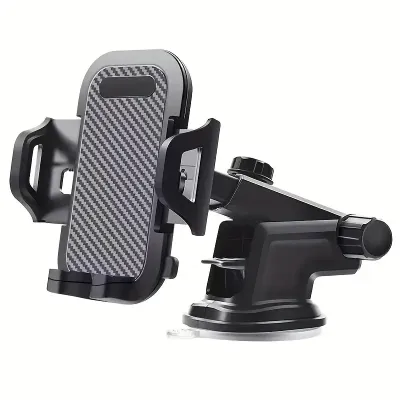
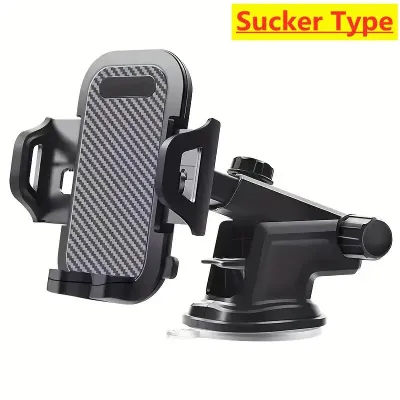
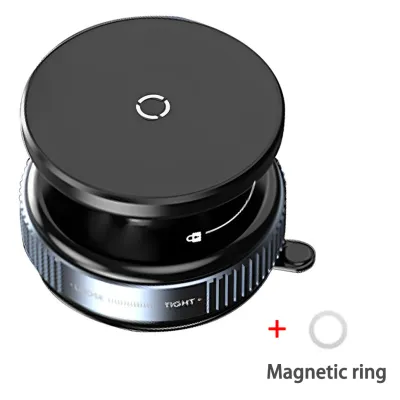
![🇸🇬[Ready Stock] New 360 Rotation Vacuum Suction Cup Phone Holder Foldable Magnetic Magsafe Car Phone Mount for Gym/Mirror/Smooth Surface](https://img.lazcdn.com/g/p/8209a6499e644df04a911de525ca3b30.jpg_400x400q80.jpg_.webp)
Prices are valid at publication and may change. Please refer to the product page for the latest price.
Driving posture and seat adjustment directly dictate your physical reach and ergonomic comfort. Before purchasing a mount, sit in your normal driving position with your hands on the steering wheel. If you have to lean forward, stretch your shoulder off the seat back, or strain your back to touch your phone’s screen, the mount is positioned too far away. A safe mount location allows you to make quick, necessary inputs—such as dismissing a route alert—while maintaining full contact with your seat back, ensuring you remain in complete control of the vehicle.
Your navigation usage pattern also influences the proximity and angle required for your device. If you rely on continuous visual tracking to navigate complex multi-lane junctions, you need a highly stable mount positioned close to your primary field of view. If you primarily depend on voice guidance and only need quick glances for upcoming turns, a more distant or lower placement is perfectly acceptable and keeps your dashboard cleaner. Matching the mount’s position to these habits prevents unnecessary physical strain and keeps your focus where it belongs.
Evaluate Mount Types for Navigation Stability and Angles
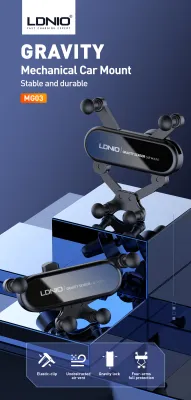
Air Vent Mounts clip directly onto the slats of your car’s air conditioning vents. One of their greatest advantages is proximity; they place your phone within easy arm’s reach and below the dashboard line, keeping your windshield clear. In Singapore’s hot climate, the continuous airflow from the AC vent serves as an active cooling system, preventing your phone from thermal throttling while running demanding GPS apps. However, they block a portion of your cabin cooling, can cause the vent louvers to droop under the weight of heavier modern smartphones, and are incompatible with circular or vertical turbine-style vents.

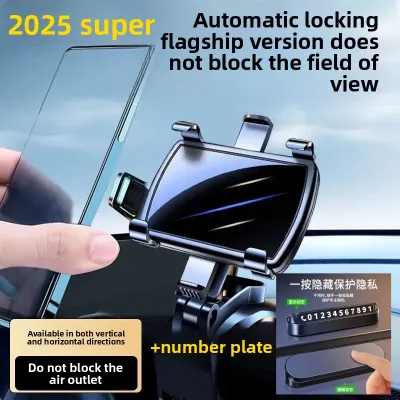
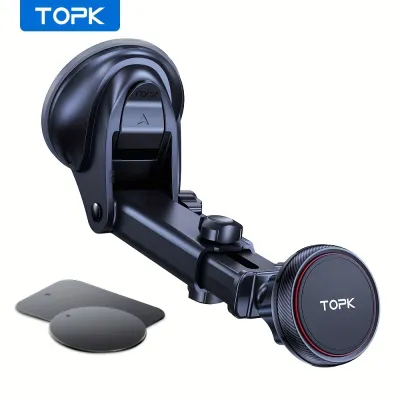
Dashboard Mounts (Adhesive/Suction) offer a highly stable base and flexible placement options, utilizing either a strong adhesive pad or a sticky suction cup on the flat surfaces of your dashboard. They allow you to position your phone at a comfortable semi-eye-level without obstructing your windshield view. The primary drawback is that modern car dashboards often feature curved, textured, or soft-touch materials that prevent a proper vacuum seal or adhesive bond. Over time, exposure to intense tropical sunlight can degrade the adhesive, leading to mount failure or leaving a sticky residue when removed.
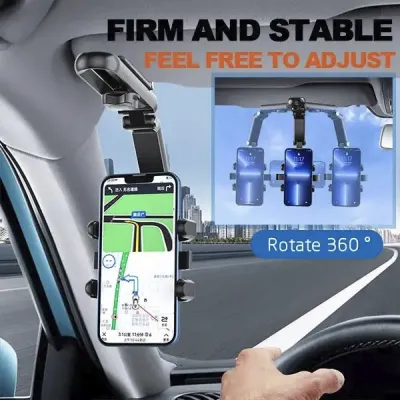
Windshield Mounts (Suction) utilize a heavy-duty suction cup directly on the glass, offering unparalleled stability and a high, eye-level viewing angle. This keeps your navigation map directly in your peripheral vision, making it highly convenient for long-distance driving. However, this high position exposes your phone to direct sunlight, which can rapidly overheat the battery and trigger safety shutdowns. Additionally, a poorly placed windshield mount can create dangerous blind spots, especially around the A-pillars or the central rearview mirror area.
CD Slot Mounts insert a plastic blade directly into your vehicle’s unused CD player slot, tightening mechanically to provide an exceptionally stable, vibration-free platform. Because the CD slot is typically located in the center console, it places your phone at a very convenient height for quick inputs and keeps the windshield and dashboard completely clear. The obvious limitation is that many modern vehicles no longer feature CD players. Furthermore, the mount’s position may block your infotainment screen, backup camera display, or physical climate control buttons.
| Mount Type | Viewing Angle | Stability | Installation Ease | Best Use Case |
|---|---|---|---|---|
| Air Vent | Low to Medium | Medium | Very Easy | Drivers seeking active device cooling and easy reach |
| Dashboard | Medium to High | High | Medium | Cars with flat, hard dashboard surfaces |
| Windshield | High (Eye-Level) | Very High | Easy | Long-distance drivers who prefer eye-level navigation |
| CD Slot | Medium | Very High | Easy | Older vehicles with unused center-console CD players |
Inspect Your Car Interior for Mounting Constraints
Before buying any car handphone mount, physically inspect your vehicle’s air vents to determine compatibility. Standard horizontal, flat slats are highly compatible with most vent clips, whereas circular, vertical, or deeply recessed turbine-style vents require specialized mounting hardware. You should also gently press on the vent louvers to test their stiffness; if they move too freely or feel flimsy, they may not support a heavy smartphone during sharp turns or sudden braking, leading to distracting vibrations or the mount falling off entirely.
Next, evaluate your dashboard’s surface materials and contours. Run your hand over the area where you intend to place the mount; if the surface is curved, heavily textured, or wrapped in soft-touch vinyl or leather, standard suction cups and adhesive pads will fail to secure a reliable grip. For these surfaces, you may need a specialized mounting disc that adheres to the dash first, or you should opt for a vent or windshield mount instead. Be aware that applying strong adhesives to premium leather or soft-touch plastics can cause permanent discoloration or surface damage.
Take note of other interior components that could block your view or interfere with the mount’s articulating arms. Check the position of your steering wheel, physical climate control dials, built-in infotainment screens, and Singapore-specific equipment like the ERP In-vehicle Unit (IU) or the newer On-Board Unit (OBU) touchscreen. Ensure that the mount, when fully extended with your phone attached, does not block these critical interfaces or restrict your access to them, as blocking your vehicle’s built-in safety displays or controls can compromise your driving safety.
Crucially, consult your vehicle’s owner manual to locate all passenger and side-curtain airbag deployment zones. Never place a mount, cable, or phone within or near these zones, which typically include the steering wheel hub, the passenger-side dashboard panel, and the A-pillars. In the event of an accident, a deploying airbag will launch any nearby objects with extreme force, potentially causing severe injury to cabin occupants. Ensuring your mount sits completely outside these safety boundaries is a non-negotiable step before completing your installation.
Verify Road Safety and Legal Compliance in Singapore
Driving in Singapore requires strict adherence to local traffic regulations regarding mobile device usage. Under Section 65B of the Road Traffic Act, it is an offense for a driver to hold any mobile communication device while the vehicle is in motion. To use your phone legally for navigation, it must be securely mounted in a dedicated car handphone mount, allowing you to view maps passively without holding or continuously interacting with the device. Violating this law can result in heavy fines, demerit points, or court prosecution.
The Singapore Traffic Police also enforce strict rules against obstructing the driver’s view of the road. Any mount attached to the windshield or dashboard must not block your direct line of sight through the front windscreen or interfere with your view of the side and rearview mirrors. To remain compliant and pass periodic vehicle inspections (such as at VICOM or STA), position your mount so that it sits below the dashboard line or in a corner that does not compromise your forward vision. A clear, unobstructed windscreen is essential for spotting hazards early.
Airbag safety boundaries must be rigorously respected to ensure the safety of all occupants. Never mount your phone on, over, or immediately in front of any panel marked with “SRS Airbag” or “Airbag.” If you are uncertain about the exact deployment paths of your vehicle’s airbags, consult a qualified automotive professional or refer to your vehicle manufacturer’s official documentation before installing any mounting hardware. Your mount should facilitate safe, hands-free navigation without introducing physical hazards in the event of an emergency.
Frequently Asked Questions (FAQ)
Will a windshield suction mount damage my car's tinted film?
Yes, there is a distinct risk that a heavy-duty windshield suction mount can damage or bubble aftermarket solar control films. The strong vacuum pressure exerted by the suction cup, combined with the weight of the phone and road vibrations, can pull the film away from the glass over time. If your windshield is fitted with premium solar films, it is highly recommended to consult your film installer’s guidelines or opt for a dashboard, vent, or CD slot mount to preserve your film’s warranty and appearance.
How do I prevent my phone from overheating on a dashboard mount?
To prevent your phone from overheating on a dashboard mount, avoid placing it in direct sunlight near the base of the windshield where the greenhouse effect is strongest. You can position the mount closer to an active air conditioning vent to benefit from ambient cabin cooling, or use a mount that features a built-in sunshade or cooling fan. Additionally, removing your phone’s protective case during long drives can help dissipate heat more efficiently while running intensive navigation apps.
Are magnetic mounts safe for modern smartphones and navigation sensors?
Magnetic mounts are generally safe for modern smartphones, as internal flash storage and GPS chips are not affected by consumer-grade magnets. However, the strong magnets used in these mounts can temporarily interfere with your phone’s internal digital compass (magnetometer), which your navigation app uses to determine which direction you are facing when stationary. To ensure accurate orientation, you may need to recalibrate your phone’s compass occasionally, or refer to your phone manufacturer’s specific guidelines regarding magnetic accessories.
Community discussion
Share your experience or ask a question. Comments are reviewed before publication.