
To protect your Proton Emas 7 from harsh environmental elements, you must select a car cover that matches its specific physical dimensions and body shape. The Proton Emas 7 features a distinctive tall crossover and multi-purpose vehicle (MPV) profile, which means standard sedan or hatchback covers will not provide adequate coverage. Choosing the correct size ensures complete protection from bumper to bumper without leaving vulnerable lower panels exposed.
A properly fitted cover acts as a robust shield against intense sunlight, tropical downpours, and airborne debris. Conversely, an ill-fitting cover can cause more harm than good, leading to paint abrasion or moisture retention. By understanding your vehicle’s exact physical footprint and selecting the appropriate fit style, you can preserve its exterior finish for years to come.
Understanding the Proton Emas 7 Body Style and Dimensions
The Proton Emas 7 is designed with a modern, high-roof crossover profile that closely mirrors the spatial characteristics of a compact multi-purpose vehicle (MPV). It features a tall roofline, a relatively long wheelbase, and a boxy rear tailgate designed to maximize interior passenger space. These specific design choices create a unique exterior envelope that standard passenger car accessories cannot accommodate.
Products mentioned in this guide
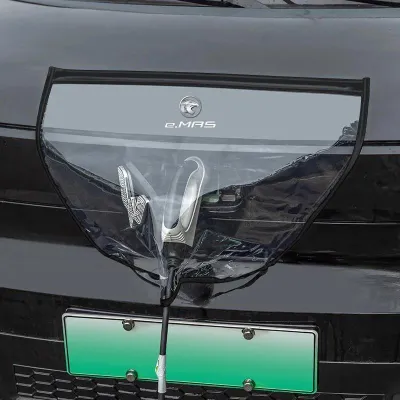
Prices are valid at publication and may change. Please refer to the product page for the latest price.
Standard sedan covers are completely incompatible with this vehicle shape due to their low-slung, elongated patterns. If you attempt to stretch a sedan cover over the Proton Emas 7, the fabric will ride extremely high on the front and rear bumpers, leaving the lower body panels, wheels, and side skirts completely exposed to the elements. The tension on the fabric will also place undue stress on the seams, leading to premature tearing.
Conversely, attempting to use an oversized cover designed for a large three-row MPV or full-sized SUV will result in excess fabric pooling on the ground. This loose material can easily trap rising ground moisture, collect dirt, and act as a sail during high winds. The loose fabric will flap against the vehicle’s body, which can dull the clear coat and leave noticeable swirl marks on the paintwork.
To ensure you select the correct cover, always consult your official Proton Emas 7 owner’s manual or official vehicle registration documents to verify the factory dimensions. Standard specifications for this platform indicate a length of approximately 4,615 mm, a width of 1,901 mm, and a height of 1,670 mm. Checking these official figures prevents you from relying on generic online size estimators that may not account for the vehicle’s height.
Custom Fit vs. Universal Fit: Which is Best for Your MPV?
When choosing a cover for your Proton Emas 7, you must decide between a custom-fit cover and a universal or semi-custom alternative. This decision involves balancing your budget against the level of protection, ease of daily installation, and long-term durability you require. Because of the vehicle’s tall side profile, wind resistance is a critical factor that should heavily influence your choice.

A cover that does not fit securely can easily shift under wind pressure, which is especially problematic in open-air parking lots exposed to coastal breezes. Understanding the distinct differences between these two fit categories will help you choose the option that best matches your parking environment and usage patterns.
Custom-Fit Covers
Custom-fit covers are patterned and manufactured to mirror the exact physical contours of the Proton Emas 7. This tailored design ensures a snug, glove-like fit over every curve of the vehicle, from the sloping front hood to the upright rear tailgate. The precise fit minimizes excess fabric, which significantly reduces the risk of the cover flapping or shifting in the wind.
These premium covers typically feature dedicated, pre-sewn mirror pockets and specific accommodations for the roof-mounted antenna. By housing these protruding exterior components in their own tailored compartments, the cover drapes naturally down to the lower edge of the rocker panels without bunching or stretching. This complete coverage ensures that no part of the lower body is left exposed to dirt or moisture.
The primary trade-off of a custom-fit cover is its higher upfront cost, as specialized manufacturing and lower production volumes command a premium. While generic universal covers can be found for under S$50, high-quality custom-fit covers often range from S$150 to S$300 or more depending on the material’s weatherproofing capabilities. These covers are also highly vehicle-specific, meaning you cannot easily reuse them on another car if you decide to sell your vehicle in the future. However, for long-term outdoor parking in Singapore’s intense tropical climate, the superior protection and security they offer often justify the investment.
Universal and Semi-Custom Covers
Universal and semi-custom covers are mass-produced to fit a wide range of vehicles within a general size class, usually categorized under labels like “Medium SUV” or “Compact MPV.” These options are highly accessible and represent a much more affordable choice for budget-conscious owners or those who only require temporary protection.
The main disadvantage of a universal cover is its generic, loose fit. Because these covers must accommodate various vehicle shapes, they rarely feature dedicated mirror pockets, which forces the fabric to stretch awkwardly over the side mirrors and can cause the cover to ride up along the sides of the vehicle. The lack of a tailored shape also leaves excess fabric that can sag and collect water during heavy downpours.
If you choose a universal option, look for semi-custom models that offer adjustable hem cords or multiple tie-down points to help secure the excess material. Universal covers are highly suitable for vehicles parked in enclosed garages or under carports where wind and rain are minimized. For outdoor parking, they are generally recommended only as a temporary solution due to the increased risk of wind-induced paint wear.
Essential Fit Features to Keep the Cover Secure
Selecting the correct size is only half the equation; you must also ensure the cover features robust securing mechanisms. Taller vehicles like the Proton Emas 7 present a large surface area to lateral winds, making them highly susceptible to shifting if the cover is not anchored properly.
High-quality securing features prevent the cover from lifting, twisting, or blowing away entirely during sudden squalls. When evaluating different products, look for specific design elements that enhance stability and protect the vehicle’s exterior components.
Mirror Pockets and Antenna Accommodations
Dedicated mirror pockets serve as vital anchor points that help keep the front half of the cover aligned and centered. When the side mirrors are snugly housed in these pockets, the cover is much less likely to slide backward or twist when subjected to uneven wind pressure. This structural alignment prevents the fabric from riding up and exposing the lower doors.
The roof-mounted antenna on the Proton Emas 7 also requires careful consideration during the selection process. If your chosen cover does not feature a built-in antenna pocket, you must verify if the antenna can be safely folded down or unscrewed before applying the cover. Forcing a solid, non-accommodating cover over a rigid antenna can puncture the fabric and create a pathway for water to leak onto the roof.
Elastic Hems and Tie-Down Straps
Heavy-duty elastic hems sewn into the front and rear edges of the cover are essential for a secure fit. These elasticized borders allow the fabric to tuck firmly under the front and rear bumpers, wrapping around the lower curves of the tires to prevent wind from getting underneath. This snug grip is your first line of defense against lifting.
For outdoor parking, elastic hems should always be complemented by under-carriage tie-down straps or integrated cable lock systems. These straps run underneath the vehicle’s chassis, securing the left and right sides of the cover together to ensure it remains firmly anchored during severe weather. Look for straps with padded buckles to prevent them from scratching the lower body paint during installation.
How to Measure and Verify the Correct Cover Size
To guarantee a proper fit, you should always take manual measurements of your vehicle rather than relying solely on generic retail compatibility lists. Enlisting a helper and using a flexible measuring tape will ensure you capture accurate dimensions across all three planes of the vehicle.
To measure the length, run the tape horizontally from the furthest point of the front bumper to the furthest point of the rear bumper, keeping the tape parallel to the ground. For the width, measure across the widest part of the vehicle, which is typically from the outer edge of one side mirror to the other. If you plan to fold the side mirrors when parked, take a second width measurement with the mirrors folded to match your actual parking setup.
To determine the height, measure vertically from the ground to the highest point of the roofline. Keep in mind that a car cover should not touch the ground directly; a gap of two to three inches is necessary to prevent the lower hem from absorbing moisture, dirt, and road grime from the pavement.
Once you have these measurements, compare them carefully against the manufacturer’s sizing charts. Look for a cover that offers a slight margin of overlap—ideally two to four inches in length—to allow for a comfortable fit that can be easily tucked under the bumpers without excessive stretching.
Always check the product description for explicit compatibility with the Proton Emas 7 or equivalent platform dimensions, rather than relying on vague “Large” or “Extra Large” marketing labels. If you have installed any aftermarket accessories, such as a roof rack, cargo box, or wind deflectors, you must add these dimensions to your measurements and select a larger size category to prevent excessive tension on the cover’s seams.
Common Sizing Mistakes and How to Avoid Them
Avoiding common errors during the selection and installation process will protect both your car cover and your vehicle’s delicate clear coat. Understanding how incorrect sizing interacts with environmental factors is key to maintaining your vehicle’s pristine condition.
- Buying Too Small: Selecting a cover that is too tight forces the fabric and seams to stretch to their absolute limit, which drastically reduces the lifespan of the material. A tight fit also makes the daily installation and removal process incredibly frustrating, and leaves the lower bumpers and side skirts exposed to dirt and moisture.
- Buying Too Large: An oversized cover results in loose, sagging fabric that easily catches the wind, creating a sail effect that can pull the cover off the vehicle. The constant movement of loose fabric against the vehicle's body acts like a mild abrasive, which can dull the clear coat and leave micro-scratches on the paint over time.
- Ignoring the Vehicle's Condition: Never apply a car cover to a vehicle that is dirty, dusty, or wet. Trapping moisture under the fabric can lead to paint blistering and mold growth, while dust particles trapped beneath a moving cover will act like sandpaper, scratching the paintwork as the wind moves the fabric. Always wash and thoroughly dry your vehicle before covering it.
- Overlooking Material Shrinkage: Many synthetic and natural fibers used in car covers can shrink slightly when exposed to intense heat and repeated wet-dry cycles. Choosing a cover with a slightly generous fit—rather than an exact, skin-tight match—ensures that the cover remains easy to install even after months of exposure to harsh weather.
Frequently Asked Questions (FAQ)
Will a loose car cover scratch my Proton Emas 7's paint?
Yes, a loose-fitting cover can cause significant damage to your vehicle’s paintwork if it is allowed to flap freely in the wind. The constant friction between the moving inner lining of the cover and the vehicle’s clear coat can trap fine dust particles, acting like fine-grit sandpaper and creating micro-scratches or swirl marks.
To minimize this risk, always select a cover that fits snugly, utilize all available tie-down straps to prevent movement, and ensure the vehicle’s surface is completely clean and free of dust before putting the cover on.
Do I need to remove the roof antenna before putting on the cover?
Whether you need to remove the antenna depends entirely on the design of the car cover you purchase. If the cover features a built-in antenna pocket or a reinforced grommet designed for antenna pass-through, you can safely leave the antenna in place.
If you are using a solid cover without these accommodations, you should fold down or unscrew the antenna before installation to prevent the sharp tip from puncturing the fabric or creating an awkward tension point that allows water to pool on the roof.
Community discussion
Share your experience or ask a question. Comments are reviewed before publication.