
Choosing the right blindspot mirror requires balancing shape compatibility, physical dimensions, and convex curvature to suit your specific vehicle. While these small accessories are highly effective at revealing hidden vehicles and motorcyclists, selecting an incorrect size or shape can obstruct your main side mirror, creating new visual hazards. By understanding how to measure your existing glass, evaluate optical distortion, and apply proper placement strategies, you can significantly improve your road safety without compromising your primary field of view.
Why Size, Shape, and Placement Matter
Side mirrors are engineered by vehicle manufacturers to provide a specific, legally mandated field of view directly behind and adjacent to your vehicle. However, standard flat or slightly convex side mirrors naturally leave blind spots—zones where adjacent vehicles, particularly motorcyclists filtering through traffic, disappear from sight. A blindspot mirror acts as a supplementary convex lens, curving outward to capture a wider angle of the road and bringing these hidden zones into your line of sight.
Choosing the wrong accessory, however, introduces serious safety risks. If a blindspot mirror is too large or poorly shaped, it will physically block the primary glass surface, preventing you from accurately judging the distance of vehicles directly behind you. Furthermore, many modern vehicles feature integrated safety systems, such as blind-spot monitoring (BSM) indicator lights, auto-dimming coatings, or heated glass elements. Placing an adhesive accessory over these areas can damage the delicate coatings or render active safety warnings completely invisible.
Products mentioned in this guide
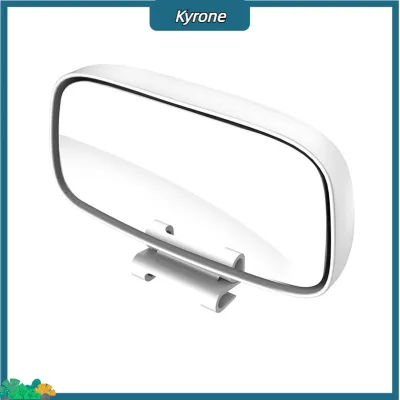
![[SG STOCK]2PCS Blind Spot Mirror Set | Wide Angle Round Convex Rearview Auxiliary Mirrors for Car Reversing & Safety](https://img.lazcdn.com/g/p/b645ffc682f7c80ff3a364723c3a30df.jpg_400x400q80.jpg_.webp)
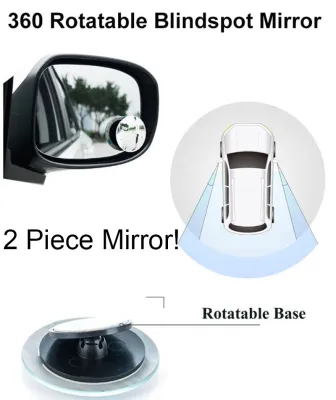
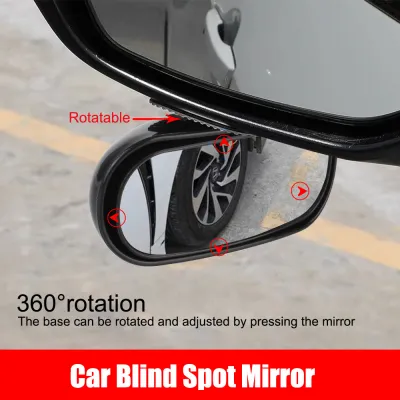
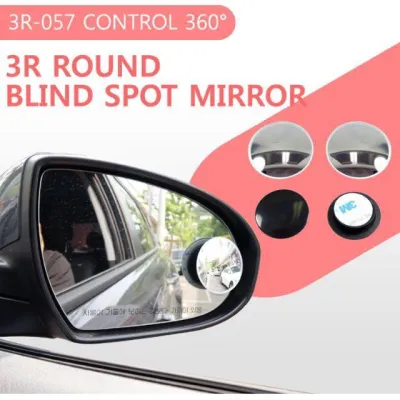
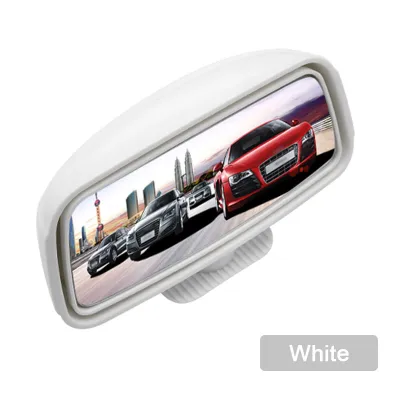
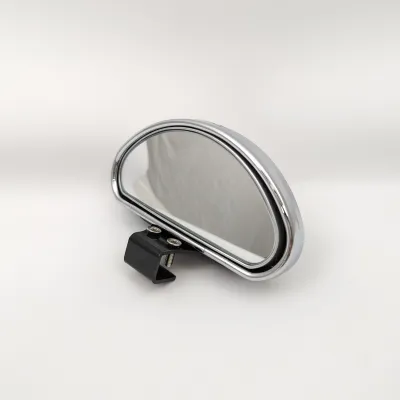
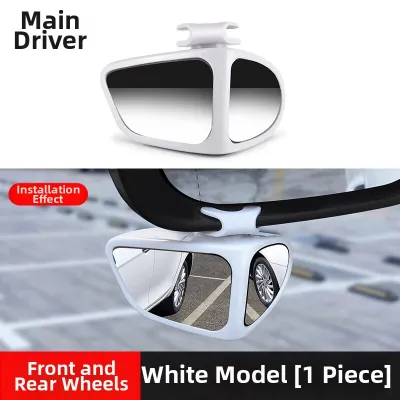
Prices are valid at publication and may change. Please refer to the product page for the latest price.
For drivers in Right-Hand Drive (RHD) markets, mirror configuration requires extra attention. Because you sit on the right side of the vehicle, your physical distance and viewing angle to the left (passenger) mirror are entirely different from your view of the right (driver) mirror. This asymmetry means that a single, uniform placement strategy or mirror size will not perform optimally on both sides. You must select and position these accessories with RHD-specific visual paths in mind to ensure balanced coverage.
Matching Mirror Shape to Your Side Mirror Design
Your vehicle’s side mirrors have a distinct silhouette designed to optimize aerodynamics and visibility. To maintain a cohesive look and prevent unnecessary obstruction, the shape of your auxiliary mirror should physically complement the contours of the original housing.

Round and Oval Mirrors
Round and oval blindspot mirrors are the most traditional and widely compatible options available. Their symmetrical design makes them highly versatile, fitting neatly onto almost any standard, streamlined side mirror housing without clashing with the vehicle’s body lines.
Because they lack sharp corners, round mirrors occupy a highly concentrated footprint on your glass. This compact shape minimizes the risk of blocking critical areas of your main mirror. However, this symmetry is also a limitation: round shapes do not stretch along the edges of your mirror housing, meaning their horizontal sweep is somewhat restricted compared to more specialized, asymmetrical designs.
Fan-Shaped and Shield Mirrors
Fan-shaped, wedge, and shield-style mirrors are specifically engineered to hug the outer or lower corners of modern, teardrop-shaped side mirrors. These designs feature curved inner edges and straight outer edges that align perfectly with the natural taper of your mirror housing.
By utilizing the outer boundary of the mirror glass, fan-shaped accessories maximize your lateral field of view. They extend the reflection further outward into the adjacent lanes, capturing overtaking vehicles earlier than a standard round mirror would. The main trade-off is that their placement is highly restricted; they must be installed in the specific corner they were designed for, and reversing them can completely disrupt your primary view.
Rectangular and Square Mirrors
Rectangular and square blindspot mirrors are designed for larger, blockier side mirrors. These are highly recommended for sports utility vehicles (SUVs), multi-purpose vehicles (MPVs), and commercial vans that feature tall, vertical, or oversized mirror housings.
These angular shapes provide the maximum possible vertical and horizontal coverage, allowing drivers of tall vehicles to monitor both low-lying obstacles (like curbs and short barriers) and adjacent highway lanes simultaneously. However, you should avoid installing rectangular or square accessories on compact sedans or hatchbacks. On smaller vehicles, their bulky corners will aggressively block the primary glass, creating a massive physical blind spot that outweighs any optical benefit.
Determining the Correct Size and Proportion
To ensure your auxiliary mirrors enhance safety rather than compromise it, you must follow the “golden ratio” of mirror proportions. As a professional rule of thumb, a blindspot mirror should occupy no more than 1/4 to 1/3 (25% to 33%) of the main side mirror’s total surface area. Exceeding this threshold severely limits your ability to use the main mirror for high-speed distance judgment.
Before purchasing any accessory, measure the flat surface of your original side mirror glass using a flexible measuring tape. Measure both the maximum horizontal width and vertical height, making sure to exclude the plastic outer bezel. Compare these measurements directly with the dimensions listed on the product packaging. For a standard compact or mid-sized sedan, a round blindspot mirror with a diameter of 50mm (2 inches) is typically the upper limit, whereas larger SUVs can comfortably accommodate 75mm (3 inches) or rectangular variations.
When choosing dimensions, consider the physical thickness and bezel design of the product. Heavy, thick plastic frames surrounding a blindspot mirror add unnecessary bulk without contributing to your field of view. Opting for ultra-thin or frameless glass designs ensures that almost 100% of the accessory’s footprint is dedicated to reflection, giving you a wider view with a smaller physical footprint.
Understanding Curvature and Field of View Trade-offs
All blindspot mirrors rely on a convex shape—meaning the glass curves outward—to compress a wide-angle view into a small space. However, this optical compression comes with a distinct physical trade-off: the higher the degree of curvature, the wider your field of view, but the greater the distance distortion. Under high curvature, objects will appear significantly smaller and much further away than they actually are.
To manage this optical distortion safely, apply a balanced strategy based on your driving position:
- Driver's Side (Right Mirror in RHD): Select a mirror with a lower, milder convex curvature. Because the right-side mirror is close to your eyes, you need accurate distance judgment to safely merge into fast-moving traffic. A flatter convex mirror helps you spot vehicles in your blind spot while maintaining a realistic sense of how close they are.
- Passenger Side (Left Mirror in RHD): You can utilize a slightly higher convex curvature on this side. The left mirror is physically further from your eyes, which naturally narrows your field of view. A more pronounced curve compensates for this distance, helping you sweep a wider lateral area to detect cyclists, motorcyclists, or merging vehicles on the left.
Remember that adapting to convex distance distortion requires conscious practice. You should never rely solely on a blindspot mirror to judge whether a gap in traffic is safe for merging; always use it as an early detection tool, verifying the actual distance in your flat main mirror and via a physical shoulder check.
Optimal Placement Strategies for Right-Hand Drive Vehicles
In Right-Hand Drive vehicles, the driver’s line of sight to the side mirrors is highly asymmetrical. Because of this, placing your blindspot mirrors in identical positions on both sides can lead to poor visibility and blocked fields of view.
For the right-side (driver’s) mirror, the most effective placement is typically the inner-lower corner or the outer-lower corner. Placing the accessory in the inner-lower corner allows you to monitor your rear wheel and the side of your car, which is incredibly useful for parking next to high curbs or navigating tight multi-storey carpark ramps. If your primary concern is highway lane changes, the outer-lower corner is preferred, as it catches vehicles lingering immediately off your rear quarter panel.
For the left-side (passenger’s) mirror, place the accessory on the outer-upper or outer-lower corner. Because the left mirror is further away, your natural viewing angle across the cabin is much narrower. Positioning the blindspot mirror on the outermost edge maximizes the lateral sweep, capturing vehicles that have already pulled alongside your passenger doors.
Regardless of which configuration you choose, you must adhere to a critical safety rule: never place the blindspot mirror in a position that blocks your view of the horizon line or directly behind your vehicle in the main mirror. Always sit in your normal driving position and adjust your main mirrors fully before deciding on the final mounting location for your stick-on accessories.
What to Check Before Buying and Installing
Before purchasing and mounting your new mirrors, perform a series of quick quality and compatibility checks to ensure long-term durability and prevent damage to your vehicle.
Buying Checks
First, verify the vehicle compatibility and mounting requirements. If your side mirrors are equipped with specialized features—such as heated glass, auto-dimming elements, or integrated blind-spot warning lights—ensure the mounting position of the accessory does not cover or interfere with these systems. Check your vehicle’s owner’s manual for any warnings regarding aftermarket attachments on the side mirror glass.
Next, inspect the adhesive backing of the product. High-quality accessories use automotive-grade double-sided acrylic foam tape (such as 3M VHB). This adhesive is specifically formulated to withstand intense tropical heat, high humidity, and heavy rainstorms without peeling or sliding. Additionally, look for mirrors with hydrophobic or rain-repellent glass coatings, which help maintain clear visibility during sudden, heavy downpours.
Installation Prep
To achieve a permanent bond, you must prepare the mounting surface meticulously. Start by washing your side mirrors to remove loose dirt. Next, clean the specific mounting area thoroughly using isopropyl alcohol applied to a clean microfiber cloth. This step is crucial for removing stubborn road grime, wax, and grease residues that prevent the adhesive from bonding. Always check the alcohol product label to ensure it is safe for automotive glass and adjacent plastic trims, and test a small, hidden area first if you are concerned about sensitive coatings.
Once the glass is completely dry, peel the adhesive backing, align the mirror precisely according to your predetermined placement strategy, and press it firmly against the glass. Apply steady, even pressure across the entire surface of the blindspot mirror for at least 30 seconds to activate the pressure-sensitive adhesive.
Curing Time
After installation, the adhesive requires time to cure and establish a maximum bond. Avoid adjusting the mirror angle aggressively, washing your vehicle, or driving in heavy rain for at least 24 hours. Allowing the adhesive to cure fully prevents the mirror from vibrating loose or falling off at high speeds.
Frequently Asked Questions (FAQ)
Do blindspot mirrors replace the need to check over your shoulder?
No, blindspot mirrors are supplementary driving aids and do not replace physical shoulder checks. While they significantly expand your field of view, they introduce visual distortion and cannot completely eliminate all blind spots around your vehicle. A physical head turn remains legally and practically mandatory before initiating any lane change, turn, or merge.
Are frameless blindspot mirrors better than framed ones?
Frameless designs are generally superior for smaller vehicles because they maximize the usable reflective glass area within a compact footprint, offering a sleeker, integrated look. However, their exposed glass edges are slightly more vulnerable to chipping or collecting dirt over time. Framed mirrors provide better edge protection but reduce the active viewing area due to the thickness of the plastic bezel.
How do I safely remove a blindspot mirror without damaging my side mirror?
To safely remove a stick-on mirror, slide a piece of dental floss or high-strength fishing line behind the accessory and use a sawing motion to cut through the adhesive foam layer. To make this easier, apply gentle heat from a hairdryer to soften the glue beforehand. Never use metal scrapers, screwdrivers, or excessive prying force, as this can shatter the glass or damage integrated heating elements. Clean any remaining adhesive residue using a mild, paint-safe automotive adhesive remover, verifying the product label instructions before application.
Community discussion
Share your experience or ask a question. Comments are reviewed before publication.