
Selecting the correct blind spot mirror requires matching its physical shape, size, and mounting system to the specific geometry of your car’s factory side mirrors. A poorly chosen mirror can block your primary rearward vision, fail to adhere to curved glass surfaces, or interfere with power-folding mechanisms. By understanding how different add-on shapes—such as round, oval, rectangular, and fan-shaped—interact with flat, convex, or aspherical side mirrors, you can make an informed purchase that enhances road safety.
Understanding Your Side Mirror's Geometry
Every vehicle manufacturer designs side mirrors with specific curvatures to balance field of view and distance judgment. Before purchasing an add-on blind spot mirror, you must identify whether your host mirror glass is flat, convex, or aspherical. Flat mirrors offer a true-to-life 1:1 reflection but have a narrow field of view, making them prime candidates for blind spot assistance. Convex mirrors are slightly curved to show a wider angle, which means any add-on mirror placed on top must account for this existing curvature. Aspherical mirrors, common on European vehicles, feature a split design where the outer third curves outward aggressively; adding a secondary mirror to this section can distort the view entirely.
Applying a flat-backed adhesive blind spot mirror to a highly curved convex or aspherical host mirror creates a mechanical compatibility issue. Because the contact points do not align, the adhesive tape will only touch the host glass at its outer edges or at a single center point. This minimal contact area significantly increases the risk of the add-on mirror vibrating loose or falling off during highway driving. Furthermore, highly curved host mirrors already compress the reflected image, and stacking another convex lens on top can make distant vehicles appear microscopic and difficult to track.
Products mentioned in this guide
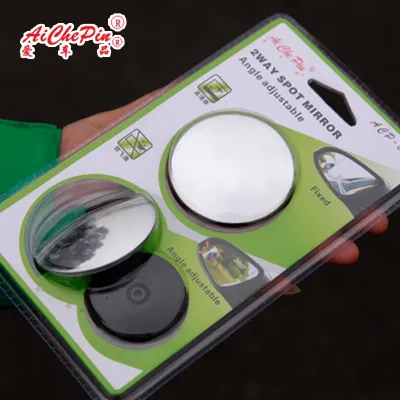
![[SG STOCK]2PCS Blind Spot Mirror Set | Wide Angle Round Convex Rearview Auxiliary Mirrors for Car Reversing & Safety](https://img.lazcdn.com/g/p/b645ffc682f7c80ff3a364723c3a30df.jpg_400x400q80.jpg_.webp)
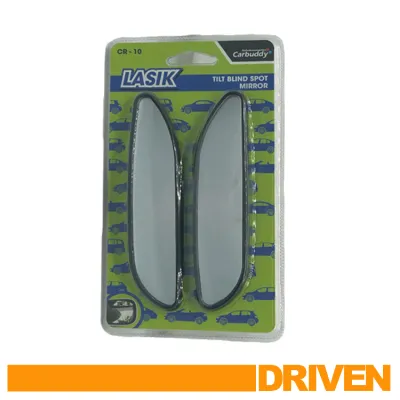
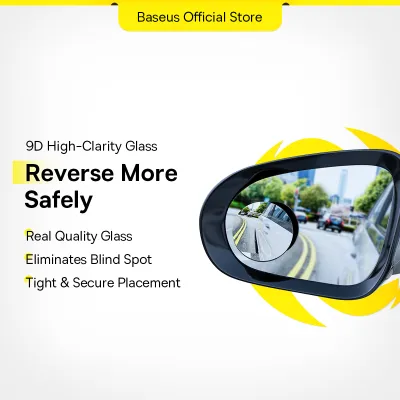
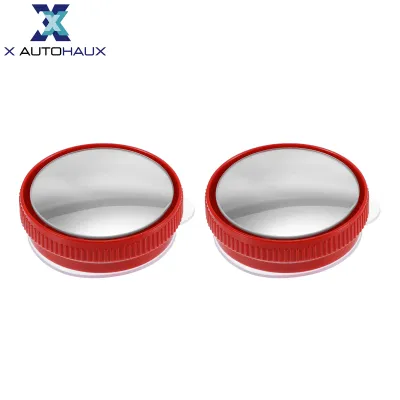
Prices are valid at publication and may change. Please refer to the product page for the latest price.
Preserving your primary rearward visibility is a critical trade-off when installing any exterior accessory. The main side mirror is your primary tool for judging the distance and speed of approaching vehicles. If an add-on mirror is too large for the host glass, it will block essential visual information, trading one blind spot for another. You must select an accessory size that leaves the central and inner portions of your factory mirror completely unobstructed.
Aerodynamic contours and housing bezels also dictate where an add-on mirror can physically sit. Modern side mirrors are sculpted to minimize wind resistance and channel rainwater away from the glass. If an add-on mirror protrudes past the protective plastic housing, it can catch the wind, creating annoying high-pitched whistling noises at speed. Additionally, deep bezels can restrict the movement of the motorized glass plate, meaning a thick add-on mirror might physically strike the inner housing when you attempt to adjust your mirrors electronically.
How to Measure Your Side Mirrors for a Perfect Fit
To ensure your selected blind spot mirror fits without overhanging or blocking critical views, you must take precise physical measurements of your factory side mirrors. Eyeballing the dimensions often leads to purchasing accessories that are either too large to fit within the housing or too small to provide a useful field of view.

Begin by measuring the usable glass height and width of your side mirror. Use a flexible measuring tape or a plastic ruler, and measure only the exposed glass surface. Do not include the outer plastic housing, rubber gaskets, or the raised bezel in your measurements. Take the height measurement at both the innermost edge (closest to the car door) and the outermost edge, as many modern mirrors taper significantly toward the outside. Write down these dimensions in millimeters for the most accurate comparison against product specifications.
Next, check the curvature of your host mirror glass. You can do this by placing a rigid straight edge, such as a small ruler, horizontally across the center of the glass. If the straight edge rocks back and forth, or if you see a visible gap between the ruler and the glass at the outer edges, your mirror is convex. A pronounced gap indicates a high-curvature surface, which means you should avoid rigid, flat-backed adhesive mirrors and instead look for models with flexible adhesive pads or articulated ball-joint mounts that can bridge the curve.
Finally, verify the clearance of your vehicle’s power-folding mirror mechanism. Many modern vehicles feature automatic folding mirrors that retract tightly against the window trim when parked. Sit inside the vehicle, fold the mirrors, and observe the clearance between the glass and the door frame. If you install a thick clip-on mirror or a high-profile adjustable blind spot mirror, it may strike the window trim or rubber seals when folding, which can strain the folding motor or crack the accessory glass. Measure this clearance gap to ensure your chosen accessory does not exceed the available space.
Recommended Blind Spot Mirror Shapes by Host Mirror Profile
Matching the shape of your blind spot mirror to the profile of your host mirror is the most reliable way to maximize your field of view while keeping the installation secure. Different shapes offer distinct trade-offs in terms of adhesive footprint, visual obstruction, and alignment. Always compare the physical dimensions of the accessory against your measured glass area before making a final purchase.
Round and Oval Mirrors
Round and oval blind spot mirrors are the most traditional options available and are highly recommended for compact, teardrop-shaped, or aggressively curved side mirrors. Because these host mirrors often taper to a narrow point at the outer edge, a circular or oval accessory fits naturally into the corner without awkward overhangs. The symmetrical design of a round convex lens provides a wide, panoramic, fish-eye view of adjacent lanes, making it easier to spot motorcycles and low-profile vehicles.
However, round mirrors have distinct spatial limitations. Because they do not have straight edges, they cannot sit flush against the corners of rectangular or square host mirrors, leaving unused triangular gaps of glass around them. If placed poorly, a round mirror can easily encroach into the central viewing zone of a smaller side mirror, blocking your ability to judge the distance of vehicles directly behind you. They are best utilized when kept to a small diameter (typically 50mm or less) and placed in the outermost corner.
Rectangular and Fan-Shaped Mirrors
Rectangular and fan-shaped (or wedge-shaped) blind spot mirrors are ideal for larger, flatter side mirrors commonly found on SUVs, multi-purpose vehicles (MPVs), and commercial vans. A fan-shaped mirror is specifically engineered with two straight edges that form a right angle, allowing it to sit perfectly flush in the outer-bottom or outer-top corner of a rectangular host mirror. This design maximizes the lateral field of view while minimizing the vertical space taken up on the main mirror glass.
The primary limitation of rectangular and fan-shaped mirrors is their rigid backing. Because they cover a larger, elongated surface area, they require a relatively flat host surface to establish a secure adhesive bond. If you attempt to mount a long, rigid rectangular mirror onto an aggressively curved or aspherical side mirror, the ends of the accessory will lift off the glass, allowing moisture and dirt to compromise the adhesive. These shapes should only be chosen if your host mirror has a flat or very mildly convex profile along its outer edges.
Mounting Mechanisms: Adhesives, Suction, and Clip-Ons
Choosing the right mounting mechanism is essential for ensuring your blind spot mirror remains attached through diverse driving conditions. The three primary mounting styles are double-sided adhesive tapes, suction cups, and mechanical clip-ons, each offering unique benefits and structural limitations.
Double-sided acrylic foam tape, such as 3M VHB, is the industry standard for a low-profile, semi-permanent mount. Suction cups offer the benefit of easy removal and adjustment, but they are bulky and rely on a perfect vacuum seal that is difficult to maintain on exterior glass. Mechanical clip-ons attach directly to the outer plastic bezel of the side mirror housing, completely bypassing the glass surface. This makes clip-ons an excellent choice for drivers who want to avoid adhesive residue or those with specialized mirror glass.
In tropical environments like Singapore, characterized by high humidity, heavy monsoon downpours, and intense solar heat, mounting choices require careful consideration. Vehicles parked in open-air HDB or commercial surface carparks can experience mirror surface temperatures exceeding 50°C. This extreme heat causes standard rubber suction cups to degrade, dry out, and lose suction within a few months. Cheap, generic adhesives will also soften and slide under these conditions, especially when exposed to torrential rain. If you choose an adhesive mount, look for high-grade, weather-resistant acrylic foam tapes designed specifically for automotive exterior use.
Safety and compatibility are paramount if your vehicle is equipped with heated side mirrors or auto-dimming (electrochromic) glass. Applying a strong adhesive directly to heated glass can trap heat, leading to uneven thermal expansion that may crack the mirror or damage the internal heating grid. Removing a strongly bonded adhesive mirror from auto-dimming glass can also delaminate the specialized chemical layers, permanently ruining the dimming function. Always consult your vehicle owner’s manual before applying adhesives to these surfaces. If your vehicle features heated or auto-dimming glass, mechanical clip-on mirrors are a much safer alternative.
Optimizing Placement and Field of View
Proper placement of your blind spot mirror is just as important as choosing the right shape. Incorrect positioning can render the accessory useless or, worse, create dangerous visual obstructions in your primary line of sight.
The two most common mounting locations are the outer-top corner and the outer-bottom corner of the host mirror. Placing the blind spot mirror in the outer-top corner is generally preferred for highway driving and frequent lane changes. This position aligns closely with your natural eye level when glancing sideways, allowing you to quickly spot overtaking vehicles in adjacent lanes. Conversely, placing the mirror in the outer-bottom corner is highly effective for urban driving, navigating tight multi-storey carpark ramps, and parallel parking, as it provides a clear view of the rear tire and curb lines.
Under no circumstances should you place a blind spot mirror in the center or along the inner edge of your host mirror. The inner third of your side mirror glass is the most critical zone for depth perception and distance judgment, showing you vehicles that are directly behind or slightly to the side of your car. Blocking this area makes it incredibly difficult to judge gap sizes when merging onto busy expressways. Keep the accessory strictly confined to the outermost edges of the glass.
When shopping, you will encounter both fixed-angle mirrors and adjustable ball-joint mirrors. Fixed mirrors mount flat against the host glass, keeping a very slim profile that minimizes wind resistance and folding interference. However, their viewing angle is locked to the position of the main mirror, which can be problematic if multiple drivers share the vehicle. Adjustable ball-joint mirrors allow you to tilt and swivel the blind spot lens independently of the main glass. While highly versatile, they protrude further from the housing, making them more susceptible to wind vibration and mechanical interference when the side mirrors fold.
Installation and Alignment Best Practices
To achieve maximum adhesive longevity and optimal visibility, follow a systematic installation workflow. Taking shortcuts during the cleaning or alignment phases often results in a mirror that either falls off within weeks or fails to cover your actual blind spots.
Before applying any adhesive, you must prepare the host mirror surface thoroughly. Wash the mirror with automotive soap to remove loose dirt, then dry it completely. Next, apply a small amount of isopropyl alcohol (IPA) to a clean microfiber cloth and wipe down the specific mounting area. This step is crucial for stripping away wax, road film, grease, and glass cleaner residues that prevent adhesive bonding. Avoid using ammonia-based household window cleaners, as they leave behind a thin silicone film that will cause automotive adhesives to fail prematurely.
Always perform a “dry fit” before peeling off the adhesive backing. Cut a small piece of painter’s tape or masking tape, loop it, and temporarily stick the blind spot mirror to your desired location on the host glass. Sit in the driver’s seat in your normal, relaxed driving position. Adjust your main side mirror as you normally would, then look at the temporary blind spot mirror. Have a helper move around the side of your vehicle to ensure the accessory captures them as they transition out of your peripheral vision and main mirror view. Adjust the placement until you find the perfect balance, then mark the spot lightly with a dry-erase marker or tape guide.
For precise calibration, park your vehicle next to a stationary object, such as a concrete pillar in a carpark or a parked car, so that the object sits just outside your peripheral vision. Adjust your main side mirror so that the side of your own car is barely visible in the inner edge. At this point, the stationary object should be completely invisible in your main mirror. Now, adjust your blind spot mirror (if using an adjustable ball-joint model) until the object is clearly centered in its reflection. This calibration ensures there is no visual gap between where your main mirror’s view ends and your blind spot mirror’s view begins.
Once you are satisfied with the alignment, peel the adhesive backing, position the mirror carefully using your marks, and press it firmly against the glass. Apply steady, even pressure across the entire surface of the mirror for at least 30 to 60 seconds to activate the pressure-sensitive adhesive. To allow the chemical bond to cure completely, do not wash your car, expose it to heavy rain, or drive at highway speeds for at least 24 hours after installation.
Frequently Asked Questions (FAQ)
Can I use a blind spot mirror on a heated side mirror?
Yes, but you must take specific precautions. The repeated heating and cooling cycles of a defogging mirror can degrade standard, low-cost adhesives, causing the add-on mirror to fall off over time. Additionally, applying a strong, permanent adhesive directly to the glass can cause localized heat retention, which may damage the underlying heating elements or cause the glass to crack. Always consult your vehicle’s owner’s manual to see if the manufacturer prohibits glass-mounted accessories. If adhesives are discouraged, look for a mechanical clip-on blind spot mirror that attaches securely to the outer plastic housing instead of the glass.
Do blind spot mirrors work effectively at night or in heavy rain?
Blind spot mirrors remain functional in adverse conditions, but they require adjusted driver expectations. Because convex lenses compress the reflected image to provide a wider view, headlight beams from vehicles behind you at night will appear smaller and more concentrated, which can make it harder to judge their exact distance. In heavy rain, water droplets tend to accumulate rapidly on the small surface area of an add-on mirror, distorting the reflection. To maintain clear visibility during wet weather, look for blind spot mirrors featuring a hydrophobic glass coating, or apply a high-quality rain-repellent treatment to the accessory glass regularly.
Community discussion
Share your experience or ask a question. Comments are reviewed before publication.