
Choosing the right 48V battery capacity for your electric motorcycle requires balancing your daily travel distance, the physical dimensions of your bike’s storage compartment, and the specific power demands of your motor. The correct capacity ensures you can complete your journeys without range anxiety while keeping the vehicle’s weight and handling characteristics manageable.
To find the ideal fit, you must first calculate your daily energy consumption in Watt-hours, factor in local riding conditions, and choose a battery chemistry that matches your budget and performance expectations. This guide breaks down the technical specifications, calculations, and safety requirements to help you make an informed decision.
Decoding 48V Systems: Voltage vs. Amp-Hour (Ah) Capacity
When evaluating electric motorcycle batteries, you will regularly encounter two primary metrics: voltage (V) and Amp-hours (Ah). It is critical to understand that these two numbers represent entirely different aspects of your motorcycle’s electrical system.
Products mentioned in this guide
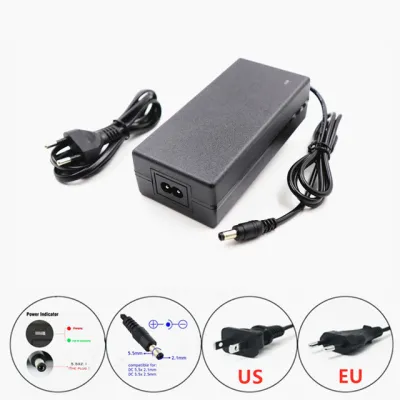
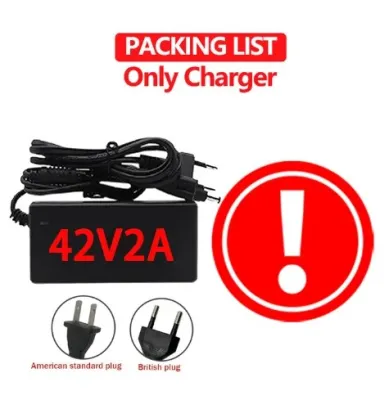
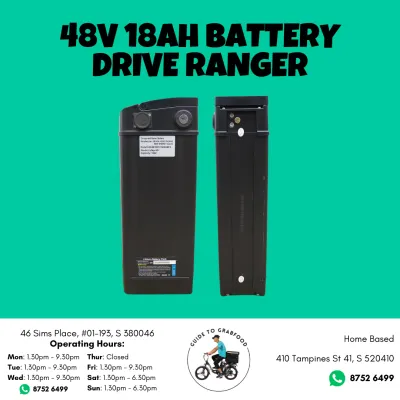
Prices are valid at publication and may change. Please refer to the product page for the latest price.
The voltage rating, which is fixed at 48V for your specific motorcycle, represents the electrical pressure of the system. This value must precisely match the specifications of your motorcycle’s electric motor and controller. Attempting to install a battery with a higher or lower voltage, such as a 60V or 72V pack, without a complete and costly overhaul of the entire drivetrain will destroy the controller or fail to power the motor. Always verify your vehicle’s original documentation to confirm its system voltage before purchasing a replacement.
In contrast, Amp-hours (Ah) measure the electrical charge capacity of the battery, which acts as the physical size of your fuel tank. A higher Ah rating means the battery can store more energy, allowing you to ride longer distances on a single charge. For example, a 30Ah battery theoretically delivers 1 Amp of current for 30 hours, or 30 Amps of current for 1 hour, before depleting.
However, you must distinguish between nominal capacity and actual usable capacity. Every battery has a safety limit regarding how deeply it can be discharged without causing permanent internal damage. Depending on the battery chemistry and the settings of the integrated Battery Management System (BMS), the actual energy you can safely draw during a ride is always lower than the nominal rating printed on the label.
How to Calculate the Exact 48V Capacity for Your Daily Route
To determine the ideal battery capacity for your specific needs, you must translate your daily riding distance into electrical energy requirements. This calculation relies on converting Amp-hours into Watt-hours (Wh), which represents the total energy capacity of the pack.

The fundamental formula to calculate total energy is:
Wh = Voltage (48V) × Capacity (Ah)
For instance, a 48V 30Ah battery pack has a total energy capacity of 1,440 Watt-hours (1.44 kWh).
Next, you need to estimate your motorcycle’s energy consumption per kilometer. For a standard electric motorcycle equipped with a 1,000W motor, average energy consumption typically ranges between 20 Wh/km and 25 Wh/km under normal, flat riding conditions. If you ride a more powerful motorcycle or frequently carry heavy loads, this consumption rate will increase significantly.
To calculate your required capacity, divide your daily round-trip distance by your estimated consumption, then convert it back to Amp-hours. If you need to travel 50 kilometers daily and your motorcycle consumes 25 Wh/km, your total daily energy requirement is 1,250 Wh. Dividing 1,250 Wh by the system voltage of 48V yields a required nominal capacity of approximately 26Ah.
However, real-world riding conditions rarely match theoretical calculations. Several environmental and operational factors will increase your energy consumption and reduce your effective range:
- Rider and Cargo Weight: Carrying a pillion passenger or heavy delivery bags forces the motor to draw more current, accelerating battery depletion.
- Stop-and-Go Traffic: Frequent acceleration from a complete stop requires substantial energy compared to maintaining a constant cruising speed.
- High Ambient Temperatures: In tropical climates like Singapore, consistent ambient temperatures around 30°C to 34°C can impact battery performance. While warmth initially aids chemical activity, prolonged high temperatures accelerate thermal degradation, increase internal resistance, and place higher cooling demands on the battery pack.
Because of these variables, you should never select a battery capacity that exactly matches your calculated daily consumption. Always add a 20% capacity buffer to your final calculation. This safety margin ensures you do not strand yourself during unexpected detours and protects the battery from deep discharge cycles, which significantly extends its overall service life.
Lead-Acid vs. Lithium-Ion: Which 48V Chemistry Fits Your Ride?
The chemistry of your 48V battery dictates its physical weight, lifespan, safety profile, and how much of its stored energy you can actually use on the road. The two primary options available are traditional Lead-Acid (including Sealed Lead-Acid and AGM) and modern Lithium-based chemistries (such as Lithium-ion and Lithium Iron Phosphate, or LiFePO4).
Weight and Handling
Lead-Acid batteries are exceptionally heavy, often weighing three to four times more than a Lithium-based pack of equivalent capacity. This excessive weight is not just an inconvenience; it alters the center of gravity, worsens suspension performance, and increases braking distances. A heavy battery pack places continuous stress on the motorcycle’s frame and rear shock absorbers. Conversely, Lithium-ion and LiFePO4 batteries offer high energy density, providing a lightweight solution that preserves the nimble handling and safety dynamics of your motorcycle.
Usable Capacity and Depth of Discharge (DoD)
The nominal capacity of a battery can be highly misleading when comparing chemistries due to differences in Depth of Discharge (DoD). Lead-Acid batteries should never be discharged below 50% of their total capacity; doing so causes rapid, irreversible sulfation of the lead plates and destroys the battery within months. Consequently, a 48V 40Ah Lead-Acid battery only provides 20Ah of usable capacity. Lithium-ion and LiFePO4 batteries can safely tolerate an 80% to 90% depth of discharge, allowing you to utilize almost the entire rated capacity without damaging the internal cells.
Lifespan and Cycles
Investing in battery chemistry is a balance between upfront cost and long-term durability. Lead-Acid batteries are inexpensive initially but typically survive only 300 to 500 charge-discharge cycles before their capacity degrades to unusable levels. Lithium-ion batteries generally offer 800 to 1,200 cycles, while high-quality LiFePO4 batteries can easily exceed 2,000 to 3,000 cycles before experiencing significant capacity loss. Over several years of daily commuting, Lithium chemistries prove far more cost-effective despite their higher initial purchase price.
Safety and Management
Due to their highly active chemical nature, Lithium-ion and LiFePO4 batteries require an integrated electronic safety system known as a Battery Management System (BMS). The BMS acts as the brain of the battery pack, continuously monitoring individual cell voltages, balancing charges, and tracking temperatures. It prevents dangerous conditions such as overcharging, over-discharging, short circuits, and thermal runaway. Lead-Acid batteries are chemically more stable under abuse and do not require a complex BMS, but they lack the smart protection features that keep modern Lithium packs operating safely.
Recommended 48V Battery Capacities by Riding Profile
Selecting the perfect capacity requires matching your daily routine, cargo needs, and budget to the correct battery specification.
Short-Distance Urban Commuters (20Ah – 30Ah)
If your daily riding consists of short, predictable trips—such as commuting to the nearest transit station, running local errands, or traveling to an office less than 20 kilometers away—a 48V battery with a capacity of 20Ah to 30Ah is highly suitable. This setup typically provides a reliable real-world range of 35 to 55 kilometers on a single charge, depending on your riding style and terrain.
For this profile, a lightweight Lithium-ion pack is highly recommended because it keeps the motorcycle light and easy to park or maneuver in tight urban spaces. While a high-quality AGM Lead-Acid battery pack is a viable budget-friendly alternative, you must ensure your motorcycle’s suspension can handle the extra weight.
Keep in mind that a 20Ah to 30Ah battery has clear performance limitations. It is not designed to support heavy cargo, and carrying a pillion passenger frequently will cause a rapid drop in range, potentially leaving you short of your destination.
Delivery Riders and Long-Distance Commuters (40Ah – 60Ah+)
For commercial delivery riders, courier personnel, or those with exceptionally long daily commutes, a high-capacity battery of 40Ah to 60Ah or more is essential. This capacity range is designed to deliver a continuous, worry-free operating range of 80 to 120+ kilometers, eliminating the need to stop and recharge during a busy work shift.
For these demanding applications, you should strictly choose Lithium-based chemistries, with Lithium Iron Phosphate (LiFePO4) being the premier choice. A 60Ah Lead-Acid battery pack would weigh over 60 kilograms, making the motorcycle dangerously heavy and virtually unrideable. LiFePO4 packs offer superior thermal stability, which is crucial for safety when operating continuously in hot tropical environments.
Additionally, professional riders must ensure their battery and BMS support fast-charging protocols. This allows you to safely top up your battery during lunch breaks using compatible high-current chargers without degrading the cells.
Heavy Cargo or High-Performance Riders (Focus on Discharge Rate)
Riders who regularly carry heavy payloads, navigate steep hills, or operate high-performance electric motorcycles must look beyond simple Amp-hour ratings. A high Ah capacity indicates how long a battery can deliver power, but it does not guarantee that the battery can safely deliver the high current required during hard acceleration or heavy climbs.
You must verify the continuous and peak discharge ratings of the battery’s integrated BMS, measured in Amps (A). If your motorcycle features a high-performance controller rated for a peak draw of 30A, your battery pack must be equipped with a BMS rated for at least 35A to 40A of continuous discharge.
Using a standard, low-draw battery—such as one designed for lightweight electric bicycles—on a high-wattage electric motorcycle will cause severe voltage sag. This triggers the BMS safety cutoff, instantly shutting down your motorcycle mid-ride and potentially damaging the battery cells due to excessive heat generation.
Physical Fitment, BMS, and Safety Checks Before You Buy
Before purchasing a replacement or upgraded 48V battery, you must conduct several technical and physical verifications to guarantee safe, reliable operation. Never assume a battery will fit or work simply because it is labeled as a “48V electric motorcycle battery.”
Dimensional Checks
Start by opening your motorcycle’s battery compartment and measuring its internal dimensions: length, width, and height. You must also account for the physical space required for heavy-gauge power cables, connector plugs, and protective vibration padding. A battery must never be tightly wedged into its compartment; road vibrations can cause the metal frame to rub against the battery casing, leading to catastrophic short circuits.
Connector and Pinout Verification
Inspect the electrical connectors on both your motorcycle’s wiring harness and the new battery. Common high-current connectors include Anderson, Chogori, and XT90 formats. You must verify that the connector types match perfectly and, most importantly, confirm that the positive (+) and negative (-) pinouts are aligned. Reversing the polarity when plugging in a new battery will instantly destroy your controller and can trigger an immediate electrical fire.
Controller Compatibility
Consult your motorcycle’s user manual or inspect the physical label on your motor controller to identify its low-voltage cutoff limit. The controller is programmed to shut down the system when the battery voltage drops below a specific threshold to prevent over-discharge. If your new battery’s BMS has a higher or lower cutoff threshold than your controller, the system may shut down prematurely, leaving you stranded, or fail to protect the battery from permanent cell damage.
Safety Boundary
Modifying your motorcycle’s battery box, bypassing the BMS safety wires, or mixing old and new cells to build a larger pack is extremely dangerous. If the battery capacity you desire cannot physically fit into your motorcycle’s original compartment, do not attempt to force it or mount it externally in an unsecured manner. In such cases, you should consult a qualified motorcycle technician to discuss safe mounting options or consider upgrading to a vehicle designed for larger battery capacities.
Frequently Asked Questions (FAQ)
Can I upgrade my 48V 20Ah battery to a 48V 40Ah battery?
Yes, upgrading your battery capacity from 20Ah to 40Ah is entirely safe and highly beneficial for increasing your riding range, provided the nominal voltage remains exactly 48V. The motor and controller will only draw the current they require, so a higher capacity will not overload your electrical system. However, you must verify that the physical dimensions of the larger 40Ah pack fit securely inside your motorcycle’s battery compartment and that your charger is compatible with the new pack’s chemistry.
How long does a 48V electric motorcycle battery last?
The lifespan of a 48V battery depends heavily on its chemistry and how it is maintained. Traditional Lead-Acid batteries typically last between 1.5 and 2 years, or roughly 300 to 500 charge cycles, before experiencing severe capacity loss. High-quality Lithium-ion or LiFePO4 batteries can easily last 3 to 5 years, or between 1,000 and 3,000 cycles, if they are protected from extreme heat and are not regularly drained down to 0% capacity.
Do I need a special charger for a 48V lithium battery?
Yes, you must use a charger specifically designed for your battery’s precise chemistry and voltage configuration. Lead-Acid and Lithium batteries utilize completely different charging profiles, voltage limits, and safety cutoffs. Attempting to charge a 48V Lithium battery with a standard Lead-Acid charger can bypass the critical protections of the Battery Management System (BMS), leading to severe overcharging, cell damage, and high risks of electrical fire.
Community discussion
Share your experience or ask a question. Comments are reviewed before publication.