
Choosing the right motorcycle straps depends on matching the specific strap mechanism to the physical forces of your scenario. Heavy-duty transport requires rigid, high-tension tie-downs to combat dynamic road forces, while workshop maintenance and parts stabilization demand gentle, adjustable, or hybrid tension systems that prevent cosmetic and structural damage. Selecting the wrong strap can result in bent handlebars, blown fork seals, or catastrophic drops on the road or garage floor.
To build a reliable setup for your garage or service kit, you must understand the mechanical trade-offs between ratchet straps, cam buckles, hybrid designs, and simple elastic cords. Each tool serves a distinct role in securing, stabilizing, or holding components during service and transit.
Understanding Strap Types for Garage and Transit Use
Selecting the correct strap mechanism is the foundation of safe motorcycle handling, whether you are hauling a bike across the island or performing routine maintenance in a tight garage space. The primary options available to riders and mechanics differ significantly in their tension capabilities, locking mechanisms, and material compositions.
Products mentioned in this guide
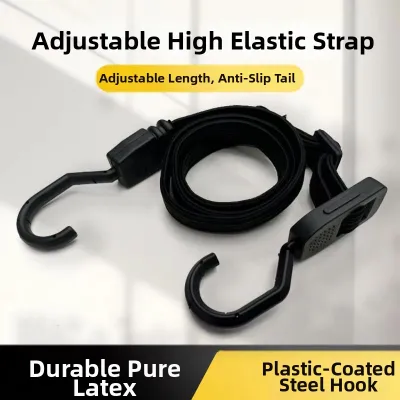
Prices are valid at publication and may change. Please refer to the product page for the latest price.
Ratchet Straps Ratchet straps are the industry standard for high-tension applications. They feature a heavy-duty steel ratcheting mechanism that allows you to mechanically crank down polyester webbing, applying immense holding power. This mechanical advantage makes them indispensable for securing heavy touring bikes or cruisers on a trailer, where wind resistance and road vibrations constantly threaten to shift the load. However, this same mechanical advantage requires extreme caution, as it is easy to apply excessive force that can bend metal components or crush delicate motorcycle parts.
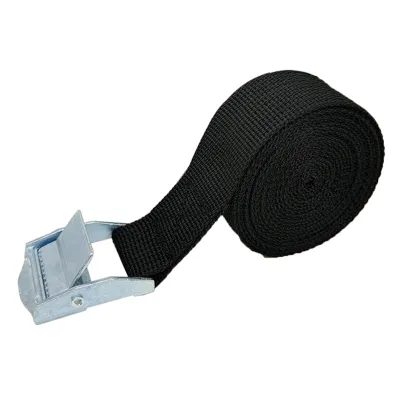
Cam Buckle Straps Cam buckle straps offer a simpler, hand-tensioned alternative. They use a spring-loaded thumb buckle with ridged teeth that grip the webbing when pulled tight in one direction, while allowing for instant release with a press of the lever. Because tension is limited by your physical pulling strength, cam buckles are highly unlikely to over-tighten and damage your motorcycle. This makes them ideal for securing lighter dirt bikes, securing a front wheel to a chock, or fastening luggage for a weekend ride.
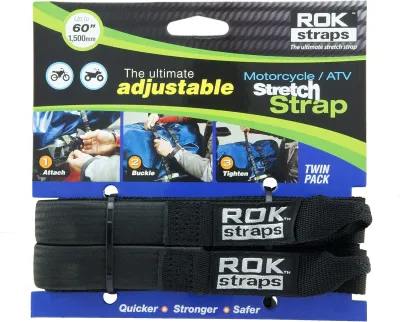
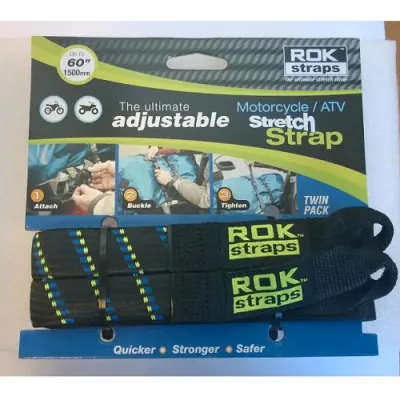
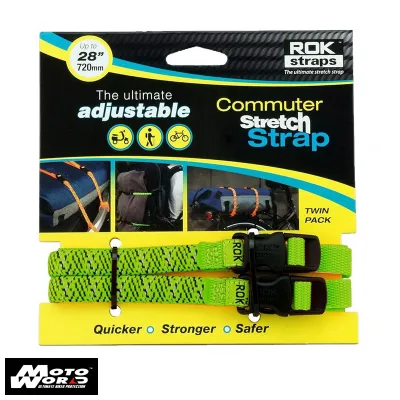
ROK Straps and Hybrid Designs Hybrid designs, most famously represented by ROK straps, combine the best properties of elastic and non-elastic tie-downs. These straps feature a solid, adjustable polyester webbing section paired with a heavy-duty, UV-resistant natural rubber elastic section. When tensioned, the elastic portion stretches slightly to absorb shocks and road vibrations, maintaining a constant, snug grip even if the cargo shifts slightly during transit. This unique combination prevents the strap from going slack, which is a common failure point for rigid straps on bumpy roads.
Bungee Cords Standard bungee cords consist of a loose elastic core wrapped in a fabric sheath, finished with simple metal or plastic hooks. While tempting for quick fixes, bungee cords are strictly light-duty tools and should never be used to secure a motorcycle for transport. Their high elasticity allows too much movement under dynamic loads, and their hooks can easily slip or bend under tension, posing a severe safety hazard to both the motorcycle and surrounding traffic.
Key Label Specs to Verify Before using any strap, you must inspect the manufacturer’s label for critical safety specifications. The two most important values are the Break Strength and the Working Load Limit (WLL). The break strength indicates the point of physical failure under a static load, while the WLL represents the maximum safe weight the strap is rated to support during daily use. As a strict industry safety standard, the WLL is typically rated at one-third of the break strength. Always ensure the combined WLL of your tie-down setup comfortably exceeds the total wet weight of your motorcycle.
Selecting Tie-Downs for Safe Trailering and Transport
Transporting a motorcycle on a trailer or in the bed of a truck introduces dynamic physical forces—such as sudden braking, rapid cornering, and high-speed wind resistance—that demand an uncompromising tie-down strategy. A single failed strap can lead to a catastrophic accident on the highway, making proper hardware selection and correct mounting techniques absolutely vital.

Mandatory Hardware for Highway Transit For highway transit, you must rely on heavy-duty ratchet straps or transport-rated hybrid straps with a certified WLL that matches your bike’s weight class. Lightweight luggage straps or unrated tie-downs are highly susceptible to wind shear and road shocks. Additionally, always look for straps equipped with secure latching hooks (such as carabiner-style hooks) rather than open S-hooks, which can easily unhook if the motorcycle suspension compresses over a large bump and temporarily slackens the strap.
Identifying Approved Anchor Points When securing your motorcycle, you must attach your straps only to structural, load-bearing points. Refer to your motorcycle owner’s manual to locate approved tie-down locations, which typically include the lower triple tree, the main steel frame, or reinforced subframe members. Never attach hooks directly to handlebars, mirrors, plastic fairings, footpegs, or delicate control cables. Attaching straps to these non-structural components can easily bend the metal, crack expensive bodywork, or pinch vital hydraulic lines.
Protecting the Motorcycle with Soft Loops To prevent metal-on-metal contact and protect your bike’s finish, always integrate soft loop extensions into your tie-down routine. A soft loop is a short, heavy-duty webbing strap that loops around a frame member or the triple tree, providing a secure fabric anchor point for the metal hook of your main tie-down strap. This simple addition prevents steel hooks from scratching painted surfaces, gouging anodized aluminum forks, or slipping off smooth metal tubes during transit.
Safety Boundaries and Wheel Chocks It is a common misconception that tie-down straps alone are sufficient to keep a motorcycle upright on a trailer. In reality, straps are designed to stabilize the bike, not to bear its entire vertical weight. A front wheel chock, securely bolted to the trailer bed, is mandatory to lock the front wheel in place and prevent the steering head from twisting. The combination of a solid wheel chock and properly tensioned straps pulling forward and outward creates a stable tripod effect that keeps the motorcycle perfectly upright.
Risk Warning on Suspension Damage Over-tensioning front tie-downs is a frequent cause of costly workshop repairs. When you crank down ratchet straps excessively, you force the front forks to bottom out, which dramatically increases internal hydraulic pressure and can blow out the fork seals. To avoid this, compress the front suspension only to the limit recommended by the manufacturer—typically about one-third of its total travel. This provides enough tension to keep the straps taut while leaving sufficient suspension play to absorb road bumps without damaging the seals.
Holding Bikes and Parts Steady During Workshop Repairs
While transport scenarios focus on resisting high-speed external forces, workshop repairs require straps to solve a different set of challenges: stabilizing the vehicle during heavy wrenching and holding loose components out of the way during disassembly.
Stabilizing the Motorcycle on a Lift When a motorcycle is elevated on a lift table or placed on a rear paddock stand, it can become unstable during high-torque tasks, such as breaking loose a stubborn axle nut or removing a swingarm pivot. To prevent accidental tip-overs, use cam buckle straps or adjustable hybrid straps to tether the frame securely to the lift platform or a nearby workbench anchor. This additional stabilization ensures the bike remains rock-solid, allowing you to work safely without worrying about the bike shifting or falling off its stand.
Securing Loose Components During Teardown During complex maintenance tasks—such as replacing a rear shock, servicing the steering head, or performing an engine rebuild—you will frequently need to remove heavy components without fully disconnecting their associated hoses or wiring harnesses. For example, brake calipers should never be left dangling by their flexible rubber hoses, as this can damage the internal lining. Instead, use adjustable hybrid straps or light cam buckles to suspend the calipers, exhaust systems, or wiring looms safely from the frame or handlebars, keeping them clear of your work area and preventing strain on delicate connections.
Avoiding Ratchet Straps for Delicate Tasks While ratchet straps are excellent for securing a bike on a trailer, they should generally be avoided for delicate workshop tasks. The immense mechanical leverage of a ratchet makes it incredibly easy to accidentally crush fragile plastic fairings, bend radiator fins, or strip threads on aluminum brackets. For general garage maintenance, stick to cam buckle straps or elastic-hybrid straps like ROK straps, which allow you to apply precise, hand-tensioned force and make micro-adjustments without the risk of over-tightening.
Workshop Organization for Efficiency A disorganized workshop leads to frustration and lost time. To streamline your repair process, organize your garage straps by length, type, and color using wall-mounted hooks or dedicated storage bins. This allows you to quickly grab a matching pair of cam buckles for a fork service or a short hybrid strap to hold a wiring harness out of the way, keeping your workspace clean and professional.
Cross-Scenario Compatibility: Can ROK Straps Do It All?
As riders build their toolkits, a common question arises: can a single, versatile strap system handle both daily garage duties and heavy-duty highway transport? Hybrid strap systems, particularly ROK straps, are often praised for their adaptability, but understanding their physical limits is crucial for maintaining safety.
The Mechanical Advantage of Hybrid Designs The primary strength of a high-quality hybrid strap lies in its dual-section design. The solid polyester portion provides a reliable, non-stretch anchor point, while the heavy-duty rubber section acts as a built-in shock absorber. This elastic tension is highly effective at keeping luggage, tail bags, and fuel bladders tightly secured to a rear rack, even when riding over rough terrain or speed bumps. In the workshop, this same elasticity allows you to quickly pull back a fairing or secure a loose wheel without scratching the paint or applying rigid, damaging pressure.
Limitations in Heavy Transport Despite their versatility, hybrid straps have clear physical limitations when it comes to heavy vehicle transport. Because they incorporate an elastic element, they cannot provide the absolute, rigid immobilization required to secure a heavy street bike or cruiser on a trailer at highway speeds. Under sudden, heavy braking or sharp swerving, the elastic section of a hybrid strap can stretch, allowing the motorcycle to tip or shift dangerously. For long-distance transport, heavy touring bikes and cruisers must always be secured using dedicated, high-WLL rigid ratchet tie-downs.
Building a Practical Mixed Kit Rather than searching for a single strap to handle every scenario, the most practical and cost-effective approach is to assemble a specialized, mixed kit.
- For transit and trailering: Keep a dedicated set of heavy-duty, high-WLL ratchet straps equipped with soft loop extensions and locking carabiner hooks. Keep these clean and stored specifically for transport duties.
- For daily use and maintenance: Invest in several pairs of high-quality hybrid straps (such as ROK straps) and light-duty cam buckle straps. These will handle your daily luggage needs, local trailering of light dirt bikes, and a wide variety of stabilization tasks in the workshop.
Inspection, Storage, and Safety Limits for Your Straps
Motorcycle straps are subjected to harsh conditions, including high tension, road grime, friction, and extreme weather. To ensure your straps perform reliably when you need them most, you must establish a strict routine for inspection, storage, and retirement.
Visual Inspection Checklist Before every single use, perform a thorough visual inspection of your straps. Look for the following warning signs:
- Webbing degradation: Check for any signs of fraying, cuts, tears, or loose stitching along the entire length of the strap.
- UV damage: Look for severe color fading, which indicates that the polyester fibers have been weakened by sun exposure.
- Hardware corrosion: Inspect metal ratchets, cam buckles, and hooks for rust, cracks, or bent components that could cause the locking mechanism to fail.
- Elastic wear: For hybrid straps, check the rubber section for dry rot, cracking, or permanent stretching where the elastic no longer retracts fully.
Storage Best Practices for Singapore’s Climate Singapore’s tropical climate—characterized by intense UV radiation, high temperatures, and high humidity—is exceptionally harsh on synthetic webbing and rubber components. To prevent rapid degradation, mold growth, and dry rot, never leave your straps lying in the back of an open truck bed or hanging in a damp corner of your garage. Instead, store your clean, dry straps inside a sealed, shaded plastic container or a dedicated tool chest. If your straps get wet or muddy during a ride, wash them with clean water and mild soap, and allow them to air-dry completely in the shade before storing them.
Clear Retirement Rules Never attempt to repair a compromised strap or continue using one that shows signs of structural wear. Discard a strap immediately if you detect any cut or frayed webbing, a malfunctioning or sticking ratchet mechanism, or a cracked metal hook. The cost of replacing a worn strap is negligible compared to the thousands of dollars in damage—or potential injury—that can result from a strap failure during transport or workshop service.
Frequently Asked Questions (FAQ)
Can I use standard bungee cords to tie down my motorcycle for transport?
No, you should never use standard bungee cords to tie down a motorcycle for transport. Bungee cords are highly elastic and lack a certified Working Load Limit (WLL), meaning they cannot withstand the dynamic forces of highway transit, sudden braking, or high-speed winds. Their light-duty construction allows the motorcycle to sway and bounce, which can easily lead to a tip-over. Furthermore, the simple metal or plastic hooks on bungee cords can easily bend or slip off under tension, posing a serious safety hazard to you and other road users. Bungee cords should only be used for securing lightweight, low-risk items like rain gear or small cargo nets.
How do I prevent tie-down hooks from scratching my motorcycle's paint?
To prevent tie-down hooks from scratching your motorcycle’s paint or damaging its metal finishes, you should always use soft loop extensions. Soft loops are short, heavy-duty fabric straps that wrap around your motorcycle’s frame, triple tree, or subframe, allowing you to attach the metal hooks of your tie-downs directly to the fabric loop rather than the bike itself. If soft loops are unavailable, choose tie-down straps that feature rubber-coated or padded hooks. Additionally, ensure that the path of the tensioned strap does not rub against painted fairings, plastic bodywork, or delicate engine components; if contact is unavoidable, place a thick microfiber cloth or a protective foam pad between the strap and the motorcycle’s surface to absorb friction.
Community discussion
Share your experience or ask a question. Comments are reviewed before publication.