
Maintaining correct tire pressure is one of the most direct ways to ensure vehicle safety, optimize fuel efficiency, and prolong tread life. While service stations offer air compressors, carrying a reliable electrical air pump in your vehicle provides unmatched convenience, especially during unexpected low-pressure warnings or roadside emergencies. Choosing the right pump, however, is not a one-size-fits-all decision; it requires matching the pump’s performance specifications to your vehicle’s specific tire dimensions and structural needs.
To select the ideal unit, you must understand your tire’s volume, determine the required pressure limits, evaluate different power sources, and check your vehicle’s electrical compatibility. A mismatch can result in painfully slow inflation times, blown vehicle fuses, or even a burned-out pump motor. This guide breaks down the essential steps to help you make an informed decision based on your specific driving habits and vehicle setup.
Step 1: Identify Your Tire Size, Type, and Pressure Requirements
Before looking at pump specifications, you must identify the exact requirements of the tires currently fitted to your vehicle. This information is readily available on the tire sidewall, represented by a standardized alphanumeric sequence such as P215/65R16 or 265/70R17. The first number indicates the tire’s section width in millimeters, the second is the aspect ratio (the height of the sidewall as a percentage of the width), and the final number represents the wheel rim diameter in inches. Together, these dimensions dictate the total internal air volume of the tire, which is the single most important factor in determining how much work your pump will have to do.
Products mentioned in this guide
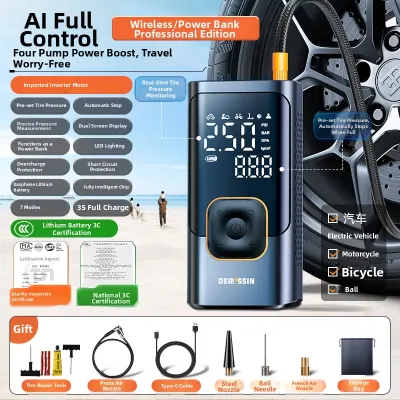

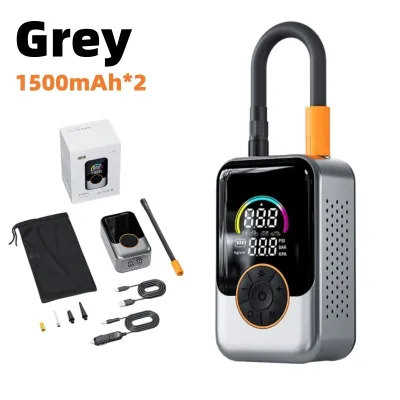

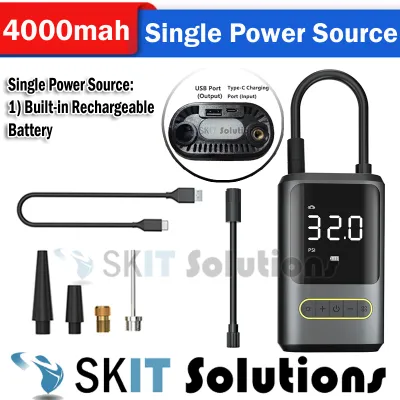
![[SG Seller]Portable Car Electric Inflator portable air pump car electric pump wireless air pump car electric pump汽车充气泵](https://img.lazcdn.com/g/p/11d7062f8a657612c19945cd3cdafcdb.jpg_400x400q80.jpg_.webp)
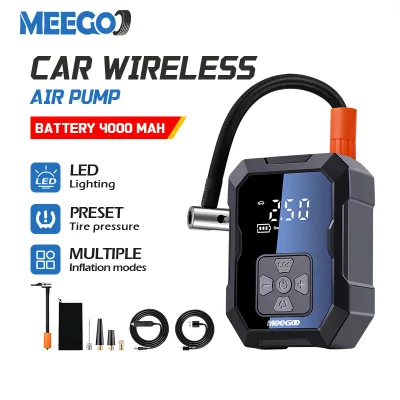
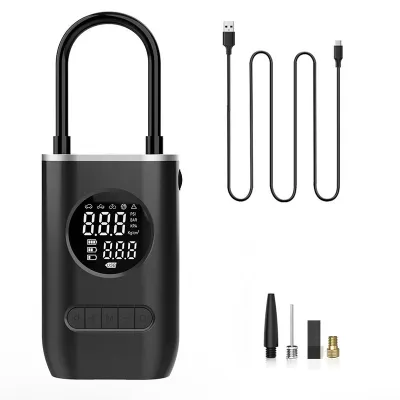
Prices are valid at publication and may change. Please refer to the product page for the latest price.
Different vehicle classes utilize tires with vastly different air volume capacities. Standard passenger sedans and hatchbacks typically have smaller, low-volume tires that require less air displacement to inflate. Conversely, sport utility vehicles (SUVs), multi-purpose vehicles (MPVs), and light commercial trucks use larger, high-volume tires. Off-road or heavy-duty tires contain even more air space. When selecting a pump, remember that inflating a large SUV tire requires moving a significantly larger mass of air than inflating a compact hatchback tire, even if both tires require the exact same target pressure.
To find your vehicle’s correct inflation target, locate the manufacturer’s recommended cold tire pressure placard, which is typically found on the driver’s side door jamb, inside the fuel filler flap, or within the owner’s manual. It is critical to distinguish this recommended pressure from the “Maximum Pressure” printed directly on the tire sidewall. The sidewall figure represents the maximum pressure the tire can safely hold under maximum load, not the daily operating pressure. Over-inflating to this maximum limit reduces traction, accelerates center-tread wear, and creates a harsh, unsafe ride. Always use the vehicle manufacturer’s recommended cold pressure as your target.
Step 2: Match Maximum PSI and Airflow of Your Electrical Air Pump to Your Tires
When shopping for an electrical air pump, the two primary performance metrics you will encounter are maximum pressure (measured in PSI) and airflow rate (measured in Liters per Minute or Cubic Feet per Minute). Understanding how these two specifications interact with your tire type is crucial to avoiding motor strain and ensuring efficient operation.

Most standard passenger cars require a daily operating pressure of 30 to 35 PSI. For these vehicles, almost any consumer-grade pump will have a sufficient maximum pressure rating, as even basic models usually reach at least 80 PSI. However, light commercial vehicles, towing setups, and specialized off-road vehicles often require much higher pressures, sometimes ranging from 50 to over 80 PSI. For these applications, selecting an electrical air pump rated for 100 to 150 PSI is highly recommended. This higher rating ensures the pump’s internal piston and motor do not have to work at their absolute physical limits to reach your target pressure, which significantly extends the tool’s operating lifespan.
While PSI determines the maximum force the pump can exert, the airflow rate—expressed in Liters per Minute (LPM) or Cubic Feet per Minute (CFM)—determines how quickly that air is delivered. A pump with a low airflow rate (e.g., 15 to 20 LPM) is perfectly adequate for topping up a small sedan tire by a few PSI in a couple of minutes. However, if you attempt to inflate a large, flat SUV or MPV tire with a low-airflow unit, the process can easily take 15 to 20 minutes of continuous running. This slow speed is not only inconvenient during a roadside emergency but can also cause the pump’s motor to overheat and fail prematurely.
It is a common misconception that a higher maximum PSI rating translates to faster inflation times. In reality, a pump rated for 150 PSI with a low airflow rate of 18 LPM will inflate a tire much slower than a pump rated for 80 PSI with a high airflow rate of 35 LPM. When matching a pump to larger tires, prioritize a higher LPM or CFM rating over an excessively high maximum PSI. For mid-to-large vehicles, look for a pump that delivers at least 30 to 35 LPM to ensure efficient, safe inflation without straining the motor.
Step 3: Choose the Right Power Source for Your Needs
The power source of your electrical air pump determines where, when, and how easily you can use it. The three most common configurations are 12V DC power, rechargeable cordless batteries, and dual-power AC/DC systems, each presenting distinct trade-offs in terms of portability, reliability, and long-term maintenance.
The 12V DC power configuration is the most common and reliable option for emergency roadside use. These pumps plug directly into your vehicle’s 12V accessory socket or attach directly to the vehicle’s battery terminals using alligator clamps. Drawing power directly from the vehicle’s electrical system ensures that the pump will run as long as your car battery has charge, eliminating the risk of a dead pump battery when you need it most. While cigarette lighter plugs are highly convenient for light-duty pumps, heavy-duty pumps with higher current draws must use direct battery clamps to prevent overloading the vehicle’s internal wiring.
Rechargeable battery-powered, or cordless, models offer exceptional convenience and portability, allowing you to inflate tires without routing long cables around the vehicle. They are also highly versatile for inflating bicycle tires, sports equipment, or camping gear away from your vehicle. However, cordless pumps rely on lithium-ion batteries, which require careful storage. In tropical climates like Singapore, temperatures inside a parked car’s trunk can easily exceed 50°C on sunny days. Prolonged exposure to this extreme heat accelerates battery degradation, reduces overall capacity, and can create safety hazards. If you choose a cordless model, it is best to store it in a temperature-controlled environment at home and place it in the car only when planning long trips.
Dual-power (AC/DC) pumps offer the highest level of versatility by featuring both a 12V DC car plug and a standard household wall plug (which operates at 230V in Singapore). This design allows you to comfortably check and adjust your tire pressures in your home driveway or garage using household electricity, while still retaining the ability to use the 12V plug for emergency roadside top-ups. While dual-power units are typically larger and more expensive than single-source models (often ranging from S$80 to S$150), their adaptability makes them an excellent investment for multi-car households.
Step 4: Evaluate Essential Features and Duty Cycle
Beyond the core power and pressure specifications, several practical features and operational limits dictate how user-friendly, safe, and durable an electrical air pump will be in real-world conditions. Evaluating these features before making a purchase ensures you select a tool that fits your physical vehicle layout and operational expectations.
An automatic shutoff function is one of the most valuable features to look for in a modern inflator. This system allows you to pre-program your desired target pressure using a digital interface; once the pump reaches this exact pressure, it automatically shuts off. This prevents accidental over-inflation, which can damage the tire’s internal structure and compromise road safety. It also allows for hands-free operation, meaning you do not have to kneel next to the tire in a hot, dusty environment while constantly monitoring a manual gauge.
Every electrical air pump has a rated duty cycle, which is the maximum amount of time the pump can run continuously before it must be turned off to cool down. For example, a pump with a 15% duty cycle might be rated for 10 minutes of continuous use followed by a 15-minute cooling period. Small, inexpensive pumps often have very short duty cycles, making them prone to overheating if you try to inflate multiple tires in a single session. Always check the duty cycle specifications, especially if you drive a larger vehicle, and ensure the pump features built-in thermal overload protection, which automatically shuts down the motor if it reaches a dangerous operating temperature.
The physical design of the display and lighting also plays a major role in usability. Digital displays with backlighting are far easier to read accurately than traditional analog dial gauges, particularly in low-light conditions. Additionally, a built-in LED work light is an invaluable safety feature during nighttime emergencies on unlit roads or within dimly lit multi-storey car parks. Look for a pump with a bright, multi-mode LED that includes a flashing hazard or SOS function to alert other motorists of your presence on the roadside.
Finally, do not overlook the physical reach of the unit. You must ensure that the combined length of the 12V power cord and the flexible air hose can comfortably reach from your vehicle’s power outlet to all four wheels. While standard cords are usually sufficient for compact hatchbacks and sedans, longer vehicles such as multi-purpose vehicles (MPVs), station wagons, or large SUVs often require a power cord of at least 3 meters combined with an air hose of 1 meter to avoid stretching or damaging the connections.
Step 5: Verify Vehicle Compatibility and Safety
Before finalizing your purchase, you must perform a few critical compatibility and safety checks to ensure the pump will operate safely with your vehicle’s electrical system and integrate smoothly into your maintenance routine.
First, verify the electrical current draw of the pump against your vehicle’s accessory socket fuse rating. Most vehicle 12V accessory sockets are protected by a 10-ampere (10A) or 15-ampere (15A) fuse, which limits the safe power draw to approximately 120W to 180W. If you purchase a high-performance pump that draws 15A to 20A of current, plugging it into a 10A socket will instantly blow the vehicle’s fuse, leaving you without power and potentially disabling other vehicle accessories. If the pump’s technical specifications indicate a high current draw, ensure it comes equipped with direct battery alligator clamps, or choose a lower-draw model that matches your vehicle’s fuse limits.
Second, check the valve compatibility of the pump’s connector. Standard passenger car tires use Schrader valves, which are the default connector type on virtually all automotive air pumps. However, if you also plan to use the pump for other household items, verify that the package includes the necessary adapters. A brass screw-on connector is generally more durable and secure than a plastic thumb-lock clamp, preventing air leakage during high-pressure operation. If you own road bicycles, ensure a Presta valve adapter is included, and look for standard needle adapters for sports equipment.
Lastly, establish a proper storage and maintenance routine to ensure the pump remains functional over years of ownership. Store the pump, power cables, and hoses neatly coiled inside a protective carrying case to prevent dust accumulation and mechanical damage to the pressure gauge. For corded models, avoid wrapping the cables too tightly, as this can cause internal wire fatigue. For cordless models, set a recurring calendar reminder to check the battery charge level every two to three months; keeping the lithium-ion battery partially charged prevents deep discharge states that can permanently ruin the battery’s capacity.
Frequently Asked Questions (FAQ)
Can I use a standard car electrical air pump for heavy-duty truck tires?
Standard consumer-grade 12V electrical air pumps are generally not suitable for heavy-duty truck or commercial vehicle tires. These large tires require both high operating pressures (often exceeding 80 PSI) and massive air volumes, which standard lighter-powered pumps cannot efficiently deliver. Attempting to use a small passenger-car pump on a large commercial tire will run the motor far past its rated duty cycle, causing severe overheating, potential motor burnout, or blown vehicle fuses. For heavy-duty applications, always select a dedicated high-output compressor that connects directly to the vehicle’s battery terminals and features a high CFM rating and an extended duty cycle.
How often should I check and top up my tire pressure?
You should check and top up your tire pressure at least once a month and always before embarking on long-distance road trips, such as driving up north across the border. Tires naturally lose approximately 1 to 2 PSI of air pressure per month through microscopic permeation through the rubber. Additionally, tire pressure fluctuates with temperature changes; a drop in temperature causes the air inside to contract, lowering the overall pressure. Regular monthly checks using your electrical air pump ensure your vehicle maintains optimal fuel efficiency, predictable handling, and even tread wear, while significantly reducing the risk of a high-speed tire blowout.
Community discussion
Share your experience or ask a question. Comments are reviewed before publication.