
To keep your On-Board Unit (OBU) or In-Vehicle Unit (IU) from sliding across your dashboard, the most effective solution is a high-grade silicone anti-slip cover or a dedicated thermal-resistant dashboard friction mat. Because Singapore’s intense tropical sun can cause cabin temperatures to soar when parked outdoors, standard adhesive pads often melt, while low-grade plastics can degrade and damage your vehicle’s interior. Choosing the right accessory requires evaluating material heat tolerances, verifying the physical dimensions of your specific OBU model, and ensuring the installation does not block critical functional elements like the smart card slot, display screen, or driver line of sight.
By focusing on high-friction, heat-stable materials and proper surface preparation, you can secure your ERP unit without resorting to permanent adhesives that risk tearing or staining your dashboard. This comprehensive guide outlines how to evaluate different anti-slip materials, perform precise compatibility checks, and install your chosen solution safely.
Why Your OBU Slides and What to Look For
Understanding why electronic units slide on a vehicle’s dashboard requires a look at both physics and cabin environments. Dashboards are typically constructed from materials like textured hard plastics, soft-touch polyurethane, or natural leather. These surfaces are often treated with protective interior waxes, silicone-based detailers, or UV protectants during grooming. While these treatments keep the cabin looking pristine, they significantly lower the coefficient of static friction, creating a slick surface where even minor lateral forces can cause unsecured items to slide.
Products mentioned in this guide
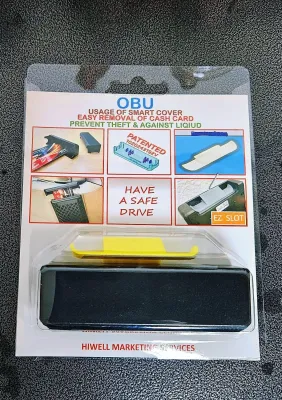
Prices are valid at publication and may change. Please refer to the product page for the latest price.
When you round a bend, accelerate, or brake suddenly, lateral and longitudinal G-forces act on the mass of your OBU. If the static friction between the bottom of the unit and the dashboard surface is insufficient to overcome these inertial forces, the unit breaks free and slides. This movement is not merely an annoyance; a sliding heavy plastic unit can distract the driver, scratch delicate dashboard skins, or even slide into the windshield base, potentially blocking defroster vents or damaging the unit’s wiring.
Singapore’s tropical climate exacerbates this issue by introducing extreme thermal stress. When a car is parked in an open-air carpark under direct sunlight, the greenhouse effect can raise dashboard temperatures well above 60°C. Under these conditions, the standard rubber or plastic feet pre-installed on the bottom of electronic devices can undergo chemical changes. Over time, these materials tend to dry out, harden, or secrete plasticizers—chemical additives used to keep plastics flexible—which create a greasy, slippery film that completely destroys any remaining grip.
To counter these environmental challenges, an effective anti-slip OBU cover or mat must meet three core requirements. First, it must possess high thermal stability to prevent melting, warping, or outgassing under intense heat. Second, it must deliver a high coefficient of friction on a variety of dashboard textures without relying on aggressive chemical adhesives. Finally, it must allow for residue-free removal, ensuring that you can clean or reposition the unit without leaving permanent stains or tearing the dashboard material.
Comparing Anti-Slip Materials for OBU Covers and Mats
When shopping for an anti-slip solution on local ecommerce platforms, you will encounter several primary materials, each with distinct physical properties, advantages, and limitations. Selecting the right material is the most critical decision in ensuring long-term durability and protecting your vehicle’s interior.

Silicone (specifically food-grade or high-consistency silicone rubber) is widely considered the gold standard for automotive dashboard accessories. Silicone polymers feature a highly stable silicon-oxygen backbone that easily withstands temperatures ranging from -40°C to over 200°C without degrading, melting, or losing flexibility. This material provides excellent natural grip on both plastic and leather surfaces. The primary drawback of silicone is its high electrostatic charge, which causes it to act as a magnet for dust, pet hair, and lint. Over time, this accumulation of debris forms a barrier that reduces its grip, though this is easily remedied by washing the mat with mild soap and warm water to restore its original tackiness.
Polyurethane (PU) gel is another popular option, often marketed as “super sticky” or “sticky gel” pads. PU gel pads offer incredible initial grip, allowing them to hold heavy objects even on highly sloped or vertical surfaces. However, PU gel is highly sensitive to ultraviolet (UV) radiation and extreme heat. Under prolonged exposure to direct sunlight on a dashboard, lower-grade PU gel can undergo thermal degradation, turning into a gooey, semi-liquid state. If this occurs, the gel can chemically bond with the dashboard plastic or leather, leaving a stubborn, sticky residue that is incredibly difficult to remove without damaging the underlying surface.
Polyvinyl Chloride (PVC) and standard synthetic rubber mats represent the budget-friendly segment of the market. While functional in milder climates, these materials are highly prone to hardening and cracking when exposed to constant UV light. Furthermore, cheap PVC mats often contain volatile plasticizers that can outgas under heat. This outgassing process releases a fine chemical vapor that condenses on the inside of your windshield, creating a persistent, hazy film that impairs night-time visibility and requires specialized glass cleaners to remove.
Microfiber or felt-lined covers are designed primarily to protect the outer casing of the OBU from scratches and sun damage. While they offer an attractive, premium aesthetic that matches high-end car interiors, these fabrics have virtually no inherent grip on plastic or leather. If you choose a microfiber or felt cover, it must be paired with an integrated silicone under-layer or placed on top of a high-friction silicone dashboard mat to prevent it from sliding. Before purchasing any cover or mat, always check the manufacturer’s product specifications for explicit temperature ratings and look for labels certifying the product as “dashboard-safe” or “non-reactive.”
Sizing and Compatibility Checks for Your OBU Model
Before purchasing an anti-slip cover or mat, you must verify that the accessory is physically compatible with your specific vehicle setup. Singapore’s Electronic Road Pricing (ERP) system utilizes different generations of in-vehicle technology, and a one-size-fits-all approach can lead to functional failures or safety hazards.
The classic In-Vehicle Unit (IU) is a single, relatively bulky piece of hardware mounted either on the windscreen or the dashboard. The newer ERP 2.0 On-Board Unit (OBU) features a multi-piece architecture consisting of an antenna, a processing unit (usually mounted in the passenger footwell or under the dashboard), and a touchscreen display unit mounted on the dashboard or windscreen. Because of these structural differences, you must identify exactly which component you are trying to secure and measure its dimensions precisely.
To ensure a proper fit, use a standard ruler or measuring tape to record the length, width, and height of your dashboard-mounted unit. If you are purchasing a sleeve-style silicone cover, compare your measurements against the internal dimensions listed by the accessory manufacturer. A cover that is too loose will allow the unit to slide around inside the sleeve, defeating the purpose of the accessory, while a cover that is too tight can put undue stress on the unit’s casing or pinch internal wiring connections.
Beyond basic dimensions, you must carefully evaluate the functional clearance of the cover. A properly designed OBU cover must feature precise cutouts that do not obstruct any of the following critical areas:
- The Smart Card Slot: You must be able to insert and remove your NETS Motoring Card, EZ-Link, or CEPAS card smoothly without having to peel back or distort the cover.
- The Display Screen: The cover's bezel must not overlap the edges of the screen, which could block your view of transaction amounts or interfere with touch-sensitive controls on newer ERP 2.0 displays.
- Speaker Grilles: The OBU emits audible beeps and voice announcements to confirm successful ERP transactions or card balance alerts. Covering these grilles will muffle the sound, potentially causing you to miss critical system warnings.
- Ventilation Ports: Some electronic units rely on passive ventilation to dissipate heat. Blocking these vents with a solid cover can lead to thermal buildup and premature component failure.
If you opt for a flat, universal non-slip dashboard mat instead of a form-fitting cover, ensure the mat’s surface area is at least 20% larger than the base of the OBU. This extra surface area provides a stable boundary and prevents the unit from tipping over or sliding off the edges of the mat during spirited driving.
Evaluating Alternative Anti-Slip Solutions
When deciding how to secure your OBU, you have several distinct product categories to choose from, each offering a different balance of stability, aesthetics, and dashboard protection. Evaluating these alternatives will help you select the setup that best matches your driving habits and vehicle interior.
Dedicated silicone OBU covers are custom-molded to wrap snugly around the chassis of specific ERP unit models. These covers provide excellent 360-degree protection against physical scratches, dust, and minor impacts. Because they are designed specifically for the unit, they feature exact cutouts for the card slot and screen. The primary limitation of these dedicated covers is their limited availability; manufacturers typically only produce them for the most common OBU models, meaning drivers of imported vehicles or those with unique configurations may struggle to find a perfect fit.
Universal non-slip dashboard mats offer maximum versatility and are highly cost-effective, typically retailing for under S$15. These flat, textured sheets of silicone or PU gel can be placed anywhere on the dashboard, allowing you to secure not only your OBU but also other small items like sunglasses, keys, or parking coupons. However, because they rely entirely on surface contact for friction, they can shift or warp if placed on highly contoured, curved, or sloped dashboards. They also do not provide any physical protection for the top or sides of the OBU casing.
Adhesive-based solutions, such as double-sided acrylic automotive tape or heavy-duty hook-and-loop (Velcro) fasteners, offer absolute mechanical security. Once bonded, these adhesives will hold the OBU firmly in place through the sharpest turns and hardest stops. However, this security comes with significant risks. The intense heat inside a parked car can cause the adhesive backing to soften and migrate, leaving a sticky, black residue on your dashboard. Furthermore, removing these adhesives later can tear delicate synthetic leather skins, discolor vinyl, or leave permanent chemical stains that severely hurt your vehicle’s resale value.
For many drivers, a combination approach yields the best results. This involves placing your OBU inside a form-fitting silicone cover to protect its casing, and then resting the covered unit onto a high-grip, universal silicone dashboard mat. This dual-layer setup maximizes the coefficient of friction between the unit and the mat, and between the mat and the dashboard, providing exceptional stability without requiring a single drop of permanent adhesive.
Safe Installation and Dashboard Care
To ensure your anti-slip solution performs optimally and does not cause unintended damage to your vehicle’s interior, you must follow a careful installation and maintenance protocol. Proper surface preparation is the single most important factor in achieving a secure grip.
Begin by thoroughly cleaning the area of the dashboard where you plan to place the mat or cover. Over time, dashboards accumulate a layer of dust, airborne oils, and residue from interior cleaning sprays or detailing waxes. These contaminants act as a microscopic lubricant, drastically reducing the friction of any non-slip material. Use a mild, interior-safe automotive cleaner that is explicitly authorized by its manufacturer for use on your specific dashboard material (such as vinyl, plastic, or natural leather). Avoid using harsh household detergents, glass cleaners, or isopropyl alcohol, as these can strip away the dashboard’s protective UV coatings and cause premature drying or cracking.
After cleaning, wipe the area down with a clean, damp microfiber cloth to remove any remaining cleaner residue, and then allow the surface to dry completely. Trapping moisture beneath a solid silicone or PU gel mat can lead to chemical blistering, discoloration, or mold growth on the dashboard surface. Once the area is bone dry, gently press your anti-slip mat or covered OBU onto the dashboard, smoothing out any trapped air bubbles to maximize surface contact.
During the first few weeks of use, monitor the installation closely. Every weekend, lift the mat or cover to inspect the dashboard surface underneath. Look for any early signs of chemical reaction, such as a sticky texture, discoloration, or a faint outline of the mat left on the dashboard. If you observe any of these signs, immediately stop using the accessory, clean the area with a damp cloth, and consult your vehicle manufacturer’s interior care guidelines or an authorized detailing professional.
Finally, always respect critical safety boundaries when positioning your OBU. Never place the unit, its cover, or an anti-slip mat on top of or within the deployment path of any passenger or driver airbags. Consult your vehicle’s owner manual to locate the exact boundaries of these safety systems. An unsecured object resting on an airbag cover can become a dangerous projectile in the event of a collision.
Frequently Asked Questions (FAQ)
Can I use a standard phone anti-slip pad for my OBU?
While a standard phone pad may look similar to an OBU mat, they are generally not designed to handle the unique physical characteristics of an ERP unit. OBUs are typically heavier, have a higher center of gravity, and feature a more rigid plastic base than modern smartphones. A standard phone pad may lack the thickness, surface area, or high-friction texturing required to keep a heavier OBU stable during sudden cornering. Additionally, cheap phone pads are often made of lower-grade polymers that degrade rapidly under direct sunlight, whereas dedicated automotive mats are formulated to withstand extreme dashboard temperatures.
Will leaving an anti-slip mat on the dashboard cause discoloration?
Yes, leaving any object on your dashboard for an extended period can lead to uneven coloration, but this is primarily due to UV exposure rather than chemical damage. The sun’s ultraviolet rays naturally fade and age dashboard materials over time. A mat blocks these UV rays, meaning the dashboard area directly beneath the mat remains protected while the surrounding exposed areas gradually fade. To prevent noticeable color differences, it is highly recommended to periodically remove the mat, clean the dashboard, and apply a high-quality, UV-blocking interior protectant across the entire surface.
Is it legal to mount the OBU on the windshield instead of the dashboard?
In Singapore, the Land Transport Authority (LTA) maintains strict guidelines regarding the placement of in-vehicle units to ensure they do not obstruct the driver’s forward field of vision or interfere with safety systems. While windshield mounting is permitted for certain approved OBU and IU configurations, the unit must be positioned within the designated zones specified in the official installation manual. If you are unsure about the legality or safety of your current mounting position, you should consult an LTA-authorized inspection center or a qualified automotive technician before making any permanent modifications to your setup.
Community discussion
Share your experience or ask a question. Comments are reviewed before publication.