
Selecting a DC to AC power inverter for camping and road trips requires balancing your portable power needs with your vehicle’s electrical capacity. Whether you are planning a weekend getaway to a local campsite or preparing for a long-distance cross-border drive, having a reliable way to charge laptops, run portable fridges, or power camera gear is essential. The right choice depends on understanding your devices’ power requirements, selecting the correct electrical waveform, and ensuring safe installation within your vehicle’s cabin or engine bay.
Using a power inverter allows you to convert the 12V direct current (DC) from your vehicle’s battery into the 230V alternating current (AC) required by standard household appliances. However, not all inverters are created equal, and choosing an incompatible unit can lead to blown fuses, damaged electronics, or a drained car battery. By evaluating your power needs and understanding the technical specifications of different inverter types, you can select a unit that keeps your devices running safely throughout your journey.
Calculating Your Wattage and Outlet Requirements
Before purchasing a power inverter, you must determine the total electrical load you plan to connect to it. Every electronic device has specific power requirements, which are measured in watts. To choose an inverter with sufficient capacity, you need to calculate both the continuous wattage and the peak wattage of all the devices you intend to run simultaneously.
Products mentioned in this guide
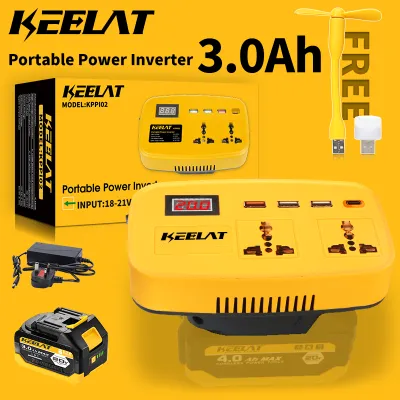
5 Lazada user ratings
👜Portability:Portable 🔧Durability:Built quality is good
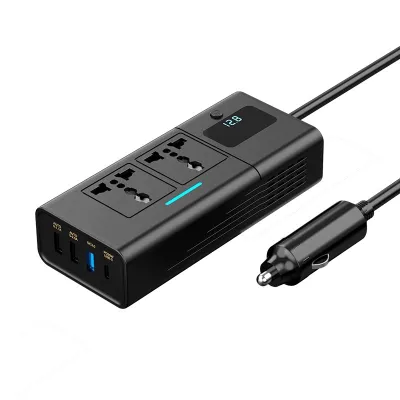
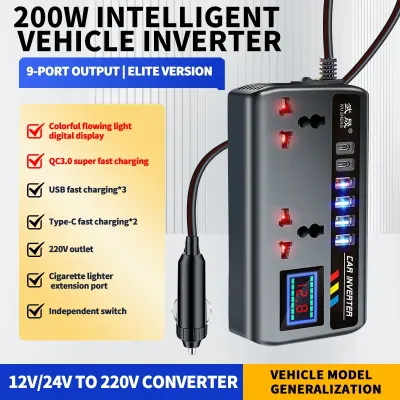
35 Lazada user ratings
Item came as described. Quick test seems to work OK for the USB charging. the Orange USBA shows Fast Charging, but the Type C ports show cha…Read full reviewShow less
Item came as described. Quick test seems to work OK for the USB charging. the Orange USBA shows Fast Charging, but the Type C ports show charging only (little disappointed). Yet to test charing multi devices at same time and the 230V 3 pin power point.
👌Ease of Use:Yes 🔧Durability:Haven't tested yet Compact and portable, Easy to carry in car, hopefully it's works smoothly.
label sticker is abit off, hopefully it is safe to use
Usb output ok, but no 220V AC output.
functional but made cheaply
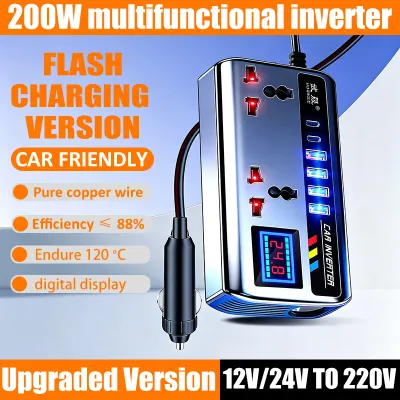
5 Lazada user ratings
I have received the 24V inverter used for the truck. I have tested it and found that it is quite stable with small appliances. The socket ho…Read full reviewShow less
I have received the 24V inverter used for the truck. I have tested it and found that it is quite stable with small appliances. The socket holes are also sufficient.
When traveling by truck, there are also many mobile phones and charging ports needed, so you no longer have to worry about not having enough…Read full reviewShow less
When traveling by truck, there are also many mobile phones and charging ports needed, so you no longer have to worry about not having enough plugs
Solid workmanship, fine workmanship, thick wires, reliable quality, strong adaptability, compact size, very good
The item is intact and undamaged. The logistics is very fast, and it will be used for all shipments
The quality is very good, I bought a few, the charging is fast, safe and reliable
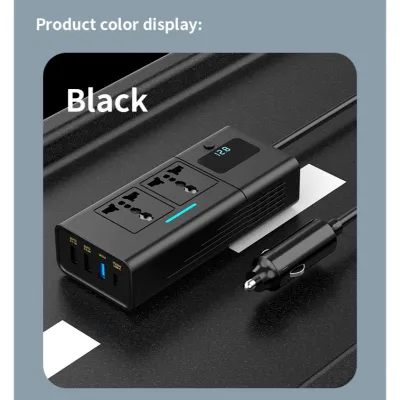
7 Lazada user ratings
Heat dissipation structure good, surface not scalding
Clear digital screen, voltage data visible directly
Ideal for road trip, solves outdoor power trouble
Multiple ports, charge several devices together
Digital display clearly shows real-time voltage
7 Lazada user ratings
Quick delivery. Product as described
17 Lazada user ratings
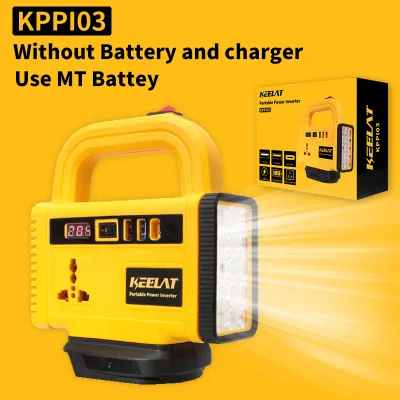
Portable and lightweight, Perfect for camping, High power output, Great for emergency, Fast delivery in SG,
portable inverter can be used for emergency and outgoing. LED is very bright. Tested and working.
Try it on a table fan, Not even half an hour journey, battery flat. Battery Life:very poor
Great! Good product!
Nice product 👍
9 Lazada user ratings
Fast shipping from Singapore, Perfect for camping, Durable lithium battery, Pure sine wave inverter, High power output.
good and fast delivery can buy thanks Yet to try but the sound was gokd and smooth, seems good quality with 2 bettery.
Safety: confident easy for weak battery to charger
Prices are valid at publication and may change. Please refer to the product page for the latest price.
Continuous wattage is the amount of power a device requires to run steadily under normal operating conditions. In contrast, peak or surge wattage is the temporary spike in power required to start up devices with electric motors, compressors, or heating elements. For example, a portable car refrigerator might require only 50 watts of continuous power to run, but it may demand 150 watts or more of peak power for a few seconds when the compressor kicks on. If your inverter cannot handle this initial surge, it will trigger its overload protection and shut down.
To calculate your total simultaneous load, check the power adapters or product labels of your devices. Most electronics list their power specifications directly on the charger brick or the back of the unit. If the label only lists volts and amperes, you can calculate the wattage using a simple formula: multiply the voltage by the amperage (Watts = Volts x Amps). For instance, a laptop charger that outputs 20V at 3.25A requires approximately 65 watts of power. Add up the continuous wattages of all devices you plan to plug in at the same time, and then add a safety margin of at least 20% to account for inverter efficiency losses, which typically range from 10% to 15%.
In addition to total wattage, consider the physical interfaces and outlet types on the inverter. Modern road trips require a mix of power connections. Look for inverters that offer standard AC sockets alongside dedicated USB-A and USB-C Power Delivery (PD) ports. USB-C PD ports are particularly valuable for charging modern smartphones, tablets, and compatible laptops directly, as they bypass the energy loss associated with converting DC power to AC and back to DC through a bulky wall adapter.
Choosing the Right Waveform: Pure Sine Wave vs. Modified Sine Wave
Power inverters convert DC power to AC power using one of two primary waveforms: pure sine wave or modified sine wave. The type of waveform your inverter produces directly impacts the performance, efficiency, and safety of the electronics you plug into it.

Pure sine wave inverters produce an electrical output that closely mimics, or even exceeds, the quality of the utility grid power delivered to your home. This smooth, continuous wave is essential for sensitive electronics that rely on precise timing or clean signals. Laptops, DSLR camera battery chargers, medical equipment like CPAP machines, and audio gear all require pure sine wave power to operate correctly. Running these devices on a clean waveform prevents screen flicker, audio interference, and excessive heat buildup in the device’s internal power supply.
Modified sine wave inverters are a more economical alternative, but they produce a choppy, stepped square wave rather than a smooth curve. While these units are highly capable and cost-effective, they are only suitable for simple resistive loads that do not contain sensitive microprocessors. Basic camp lights, simple heating elements, and older phone chargers can run on a modified sine wave without issue. However, using a modified sine wave with incompatible devices carries significant risks.
When sensitive electronics are powered by a modified sine wave, the choppy electrical signal forces the device’s internal components to work harder. This inefficiency manifests as heat, which can degrade the lifespan of your laptop, camera charger, or portable appliance over time. In some cases, devices may hum loudly, run extremely hot, or fail to turn on entirely. If you plan to charge high-value electronics or run medical equipment during your road trips, investing in a pure sine wave inverter is highly recommended to protect your gear from premature wear.
Connection Methods: 12V Socket vs. Direct Battery Clamps
How you connect the power inverter to your vehicle’s electrical system depends entirely on the wattage you plan to draw. Inverters generally offer two connection methods: a 12V accessory plug (commonly known as the cigarette lighter plug) or direct battery clamps.
For low-wattage applications, connecting the inverter via the vehicle’s cabin 12V accessory socket is the most convenient option. However, these sockets are strictly limited by the vehicle’s internal wiring and fuses. Most vehicle manufacturer specifications limit the cabin 12V socket to a 10-ampere or 15-ampere fuse. Using the formula (12 Volts x 15 Amperes = 180 Watts), the absolute maximum power you can draw from this socket is 180 watts. To prevent blowing your vehicle’s accessory fuse, you should limit continuous draw from a 12V cabin socket to approximately 120 to 150 watts.
If your power requirements exceed 150 watts, you must connect the inverter directly to the vehicle’s battery terminals using heavy-duty battery clamps or ring terminals. This direct connection bypasses the thin cabin wiring and vehicle fuses, allowing the inverter to draw the high currents necessary to power larger appliances like portable fridges, power tools, or small travel kettles. Attempting to run a high-wattage inverter through a cabin socket will immediately blow the vehicle’s fuse and could damage the socket itself.
When using direct battery connections, safety and proper installation are paramount. Always consult your vehicle’s owner’s manual to locate the correct battery terminals and verify if your vehicle has a battery management system that requires specific connection points. Route the heavy-gauge cables carefully through the vehicle’s firewall or engine bay, ensuring they are secured away from moving engine parts, sharp metal edges, and high-heat areas that could melt the insulation. Additionally, ensure the inverter unit itself is placed in a well-ventilated area inside the cabin or cargo space, as high-power inversion generates substantial heat that must be dissipated.
Evaluating Safety Protections and Build Quality
Because a power inverter handles high currents and voltages, evaluating its built-in safety features and physical construction is critical to protecting both your vehicle’s electrical system and your connected devices.
A reliable power inverter must include a comprehensive suite of electronic protections. Look for units that explicitly list over-voltage, under-voltage, overload, short-circuit, and thermal shutdown protections. Under-voltage protection is especially important; it monitors your vehicle’s battery voltage and automatically shuts down the inverter if the battery drops below a safe threshold, ensuring you still have enough charge to start your engine. Overload and short-circuit protections prevent damage to the inverter and your vehicle’s wiring if a connected device malfunctions or draws too much current.
Physical build quality and thermal management are equally important indicators of a reliable inverter. High-wattage inversion naturally generates heat, and keeping the internal components cool is vital for maintaining efficiency and preventing thermal shutdown. Look for inverters housed in rugged, heat-dissipating aluminum or metal casings rather than cheap plastic. Additionally, verify that the unit features an active cooling fan. The most advanced units utilize smart cooling fans that only activate or increase speed when the inverter reaches a specific temperature or load threshold, which helps minimize fan noise during quiet camping nights.
Finally, always verify that the inverter carries recognized safety certifications on its product label or manufacturer documentation. Certifications such as CE, FCC, or RoHS indicate that the device has undergone testing to meet safety and electromagnetic interference standards. Avoid unbranded or generic inverters that lack clear safety labeling, as they may lack critical internal fuses or use substandard components that pose a fire hazard.
Building Your Conditional Shortlist for the Road
To choose the right power inverter for your specific travel needs, you can categorize your options based on your typical camping or road trip scenarios. This allows you to match your power requirements with the correct inverter specifications.
If your road trips primarily involve charging smartphones, tablets, and basic camp lights, a compact, low-wattage modified sine wave inverter is highly suitable. These units typically range from 100 to 150 watts, connect directly to your vehicle’s 12V cabin socket, and are highly portable. They are budget-friendly, with prices often starting around S$30 to S$50, making them an excellent choice for casual travelers who do not need to power sensitive or high-wattage electronics.
For digital nomads, families, or overlanders who need to run laptops, camera gear, portable refrigerators, or small household appliances, a high-wattage pure sine wave inverter is necessary. These units generally range from 300 to 1000 watts or more and require direct battery connections. While they are larger and require more careful installation, they provide clean, stable power that protects your high-value electronics and ensures reliable operation in remote locations.
Before making a final purchase, establish a pre-purchase verification routine. Check your vehicle’s alternator capacity, which is typically listed in your owner’s manual or on the alternator itself, to ensure it can supply the current required by your chosen inverter without straining your vehicle’s charging system. Additionally, measure the physical dimensions of the inverter and plan its mounting location to ensure it fits securely, receives adequate ventilation, and allows for safe cable routing.
Frequently Asked Questions (FAQ)
Will a power inverter drain my car battery if the engine is off?
Yes, a power inverter will drain your vehicle’s battery if the engine is turned off. Even when no devices are plugged into the inverter, the unit itself draws a small amount of standby current (known as idle draw) to keep its internal circuits active. When you plug in and charge devices, the rate of battery drain increases significantly.
To prevent a dead battery, you can estimate your runtime based on your vehicle battery’s reserve capacity and the total wattage of your connected devices. As a general rule, avoid running high-wattage appliances for more than 10 to 15 minutes without starting the engine to let the alternator recharge the battery. For peace of mind, ensure your inverter features a built-in low-voltage alarm and automatic shut-off function, which will disconnect power before the battery drops below the level required to start your vehicle.
Can I use a power inverter while driving across borders?
Yes, you can use a vehicle power inverter while driving across borders, such as traveling from Singapore into Malaysia. The inverter relies entirely on your vehicle’s 12V DC electrical system, which remains constant regardless of your geographic location. The AC output voltage of the inverter (typically 230V for units purchased in Singapore and neighboring regions) will match the standard plug types and voltages of the devices you brought from home.
However, if you plan to plug your AC devices into local wall outlets at your destination later in the trip, you must verify that those devices support the local grid voltage. While the inverter itself works consistently in your vehicle, your household chargers must be dual-voltage compatible if you transition them from vehicle power to a local hotel or campsite grid.
Why does my inverter shut off when I plug in my device?
If your power inverter suddenly shuts off when you plug in a device, it is usually due to the activation of one of its built-in safety protections. The most common cause is an overload trigger, which occurs when a device’s initial startup or surge wattage exceeds the inverter’s peak capacity. This is common with motorized appliances or devices with large capacitors.
Other potential causes include a significant voltage drop due to loose 12V connections, corroded battery terminals, or using power cables that are too thin for the current being drawn. Additionally, if the inverter is placed in an enclosed space without proper ventilation, it may trigger a thermal shutdown to prevent overheating. To troubleshoot, disconnect the device, check all electrical connections, ensure the vehicle’s engine is running to maintain proper voltage, and verify that the inverter’s cooling vents are completely unobstructed.
Community discussion
Share your experience or ask a question. Comments are reviewed before publication.