
Swirl marks and micro-scratches are almost always self-inflicted during the vehicle washing process. When you slide a wash mitt across your vehicle’s paint, any dirt, dust, or road grime left on the surface can act like sandpaper if it is not properly suspended and isolated. The car wash mitt serves as the critical interface between your hand, the lubricating car shampoo, and the vehicle’s clear coat. To protect this surface, a wash mitt must do more than simply hold soapy water; it must safely trap abrasive contaminants deep within its fibers, away from the paint. Choosing the right tool requires looking past marketing buzzwords and understanding the core material specifications—specifically, Grams per Square Meter (GSM), pile density, and fiber blend ratios—that dictate paint safety and performance.
Why Microfiber Specifications Dictate Paint Safety
During a standard wash, the primary cause of clear coat scratches is not the washing motion itself, but the friction generated by dragging abrasive particulates across the paint surface. Road grit, industrial fallout, and fine dust act as tiny abrasives. If your wash media does not have the capacity to absorb these particles and lift them away from the contact zone, they remain trapped between the wash tool and the clear coat, scoring the paint with every pass.
Your wash mitt acts as the critical interface that manages this risk. It must hold a massive volume of soapy lubrication to reduce friction while simultaneously using its fiber structure to draw dirt deep into its pile. Without this dual action, even the most expensive car shampoo cannot prevent wash-induced marring.
Products mentioned in this guide
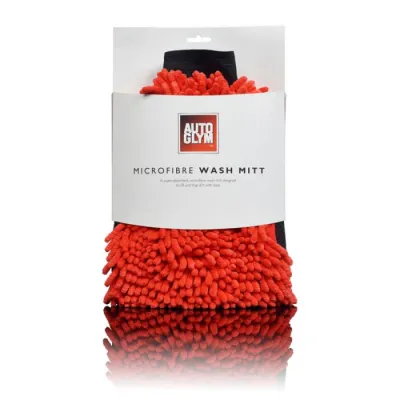
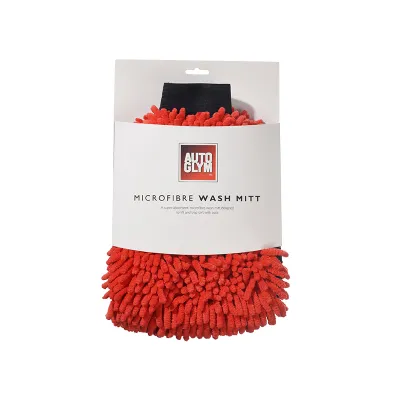

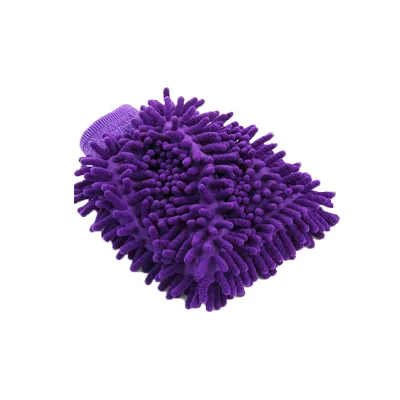
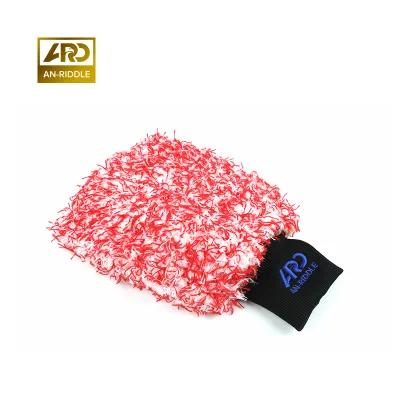
Prices are valid at publication and may change. Please refer to the product page for the latest price.
Visual thickness alone is an unreliable indicator of a mitt’s safety. Many low-grade mitts appear fluffy but lack the underlying material density to prevent bottoming out under hand pressure. To ensure true paint safety, you must evaluate the technical specifications of the microfiber: its GSM, pile structure, and fiber blend. These specifications reveal how the mitt will perform under pressure and how effectively it will protect your vehicle’s finish.
Decoding GSM: Weight, Absorbency, and Cushioning
GSM, or Grams per Square Meter, is the standard metric used to measure the weight and density of microfiber fabric. In the detailing industry, GSM is more than a quality label; it is a direct indicator of material volume and water-holding capacity. When a wash mitt has a higher GSM, it contains more physical microfiber material per square unit. This translates directly into a higher capacity to absorb water and shampoo solution, creating a thick, lubricating cushion between the mitt’s backing and your vehicle’s clear coat. This fluid cushion is vital because it minimizes the friction generated as you glide the mitt across the panels, allowing the soapy solution to lift dirt safely.

However, the relationship between GSM and performance is not entirely linear. A very high GSM mitt (typically 500 GSM and above) will hold a massive volume of water, making it exceptionally heavy when wet. While this provides excellent lubrication and cushioning for heavily soiled vehicles, it can also lead to user fatigue and make the mitt more difficult to maneuver around intricate areas, such as grille slats, side mirrors, and door handles. Conversely, a lower GSM mitt (around 300 to 400 GSM) is lighter, easier to wring out, and highly agile. These lighter mitts are often preferred for quick maintenance washes on vehicles with only light dust or water spots, where a massive water reservoir is not strictly necessary.
When shopping for a car wash mitt, it is crucial to verify the GSM through official manufacturer specifications rather than relying solely on visual thickness. Some low-quality manufacturers use hollow-core fibers or loose weaving techniques to make a mitt look and feel incredibly plush and thick, while the actual material weight remains low. These “faux plush” mitts lack the dense fiber network required to hold sufficient water and can compress completely under light hand pressure, exposing your paint to the hard backing of the mitt or the pressure of your fingers. Always seek out reputable detailing brands that explicitly state their true GSM ratings.
Pile Density and Length: Trapping Dirt Away from the Paint
While GSM tells you how much microfiber material is present, pile length and pile density explain how that material is structured. Pile length refers to the physical height of the individual microfiber strands or loops extending from the backing material, while pile density describes how tightly packed those strands are across the surface of the mitt. Understanding the interplay between these two factors is key to choosing a mitt that effectively isolates dirt rather than dragging it across your paintwork.
Deep, long-pile wash mitts (often featuring long “chenille” caterpillars or long, loose microfibers) are designed with a specific mechanical goal: to pull larger dirt particles and road grit deep into the recesses of the fabric, far away from the paint surface. As you wipe, the long fibers wrap around the debris, lifting it off the clear coat and suspending it within the deep channels of the pile. However, this deep-trapping capability comes with a trade-off. Because these long-pile mitts hold onto debris so effectively, they require meticulous rinsing in your wash bucket to release those trapped particles. If you do not thoroughly agitate a long-pile mitt against a grit guard during the rinse phase, those abrasive particles can remain embedded in the deep fibers, ready to scratch your vehicle during the next pass.
Short, dense-pile mitts, on the other hand, feature tightly packed, shorter fibers that provide a very uniform and consistent contact patch with the vehicle’s surface. These mitts excel at removing fine film, road grime, and light dust, and they are significantly easier to rinse clean in a bucket because the dirt has fewer deep crevices to hide in. This makes them highly efficient for frequent maintenance washes. To assess pile quality before purchasing, you can perform a simple tactile and visual inspection. Gently run your fingers through the fibers to check for uniform distribution; there should be no bald spots or uneven patches. Additionally, part the fibers down to the base backing. If you can easily see the underlying fabric backing with minimal effort, the pile density is low, meaning the mitt will compress easily and offer less protection under hand pressure.
Fiber Blends: The Role of Polyester and Polyamide
Microfiber is not a single material, but a synthetic blend of two primary polymers: polyester and polyamide. The ratio of these two components determines the physical characteristics of the wash mitt, including its softness, structural durability, water absorption capacity, and ability to release dirt. When reading product labels, you will typically see these blends expressed as a ratio, such as 80/20 or 70/30.
Polyester is the structural workhorse of microfiber. It is highly durable, resistant to stretching and tearing, and inherently hydrophobic, meaning it does not absorb water into its actual fiber structure. Instead, polyester excels at scrubbing and releasing dirt. Because polyester fibers do not hold onto water or debris chemically, they allow trapped dirt to slide off easily when the mitt is dunked and agitated in a rinse bucket. However, polyester on its own is relatively stiff and lacks the extreme softness required to guarantee scratch-free performance on delicate clear coats.
Polyamide, which is a form of nylon, is the component responsible for softness and water absorption. Polyamide is highly hydrophilic and can absorb several times its weight in water through capillary action. It is also incredibly soft to the touch, making it the critical ingredient for protecting sensitive automotive finishes, including soft factory clear coats, delicate ceramic coatings, and gloss black trim. A higher polyamide content, such as a 70/30 blend (70% polyester and 30% polyamide), represents a premium, ultra-soft configuration that provides maximum paint safety and liquid retention. An 80/20 blend is also highly common and offers a great balance, providing slightly better durability and easier dirt release at a generally lower price point.
To ensure you are purchasing a high-quality tool, always check the physical material tag or the manufacturer’s detailed product specifications for the exact blend ratio. Beware of generic marketing terms like “premium grade microfiber” or “extra soft fibers” that do not disclose the actual percentage of polyamide. Cheap, low-grade mitts often use a 100% polyester composition or a very low polyamide ratio (such as 90/10), which can feel scratchy to the touch and will degrade rapidly after a few wash cycles, losing their softness and risking clear coat marring.
Edge Construction and Stitching: The Hidden Scratch Risks
When evaluating a car wash mitt, it is easy to focus entirely on the plush face of the fabric while ignoring the edges, cuffs, and internal seams. However, these structural areas are frequent culprits for inflicting deep, linear scratches on a vehicle’s bodywork. If a wash mitt features rough stitching or hard synthetic edges, a single accidental swipe where the edge of the mitt contacts the paint can ruin hours of careful detailing work.
Edgeless wash mitts or those with internal seams offer the highest margin of safety. By tucking the seams inside the mitt, manufacturers ensure that only the soft, plush microfiber pile can ever make contact with the vehicle’s panels. If a mitt does feature external bound edges, those bindings must be constructed from soft, non-abrasive materials. Look for edges bound with high-quality silk, satin, or dedicated soft microfiber piping. Avoid mitts with rough cotton bindings or exposed, stiff nylon threads, as these materials can easily scratch delicate clear coats, especially when dry or under pressure.
The cuff and wrist opening of the mitt also require careful inspection. The cuff should be made of a durable, soft, and flexible elastic material that holds the mitt securely on your hand without slipping off when wet and heavy. However, this elastic must not be so tight that it creates hard pressure points, and it must be recessed or covered by the microfiber pile so that if your wrist accidentally brushes against the vehicle’s paint during a sweep, the elastic or stitching does not scratch the surface.
Finally, run your hand inside to check the interior construction. Look for any hard plastic manufacturing tags, stiff paper care labels, or rough internal seams. If you find a care tag inside, carefully snip it off close to the seam using a pair of sharp scissors before your first use, ensuring no sharp, melted plastic edges are left behind to press against the paint through the thin backing of the mitt.
Matching Mitt Specifications to Your Washing Routine
Selecting the perfect microfiber car wash mitt is not about finding a single “best” option, but rather matching the mitt’s physical specifications to your specific vehicle condition, paint protection setup, and washing environment. For example, a vehicle driven daily through tropical downpours and muddy construction zones in Singapore requires a very different washing approach than a garage-kept weekend sports car protected by a professional ceramic coating.
To help you select the right tool, refer to the following decision matrix:
| Wash Scenario | Recommended GSM | Recommended Pile | Recommended Blend | Primary Benefit |
|---|---|---|---|---|
| Heavy Dirt / Tropical Road Grime | High (450–600 GSM) | Long, plush pile (or Chenille) | 80/20 or 70/30 | Maximum water cushioning and deep dirt suspension |
| Weekly Maintenance Wash | Medium (350–450 GSM) | Medium, dense pile | 80/20 | Lighter weight, easy rinsing, and rapid dirt release |
| Ceramic Coated / Delicate Show Cars | Ultra-High (500+ GSM) | Ultra-soft, dense pile | 70/30 | Maximum softness, high lubrication, and gentle contact |
For optimal results, consider adopting a multi-mitt strategy during your washing routine. Using a single mitt for the entire vehicle increases the risk of cross-contamination, as heavy road grime from the lower sections of the car can easily be transferred to the delicate upper panels. A safer method is to dedicate a highly plush, premium 70/30 blend mitt exclusively for the clean upper panels (roof, hood, and trunk lid). For the lower rockers, bumpers, and wheel arches—which accumulate the heaviest, most abrasive road grit—switch to a separate, highly durable, and easily rinsed mitt or a dedicated set of wash pads.
Additionally, always cross-reference your chosen wash mitt and washing technique with the care instructions provided by your vehicle’s Paint Protection Film (PPF) or ceramic coating manufacturer. Some advanced self-healing films and ceramic coatings have specific friction thresholds and require highly lubricated, soft-touch wash media to maintain their hydrophobic properties and optical clarity over time.
Washing and Maintaining Your Microfiber Mitts
A premium microfiber car wash mitt is an investment in your vehicle’s appearance, but its paint-saving properties will quickly degrade if it is not properly maintained. Microfiber is a highly specialized synthetic material, and washing it incorrectly can permanently damage the delicate fiber structure, turning a soft, safe wash tool into a scratch-inducing hazard.
The most critical rule of microfiber care is to never use fabric softeners or liquid bleach. Fabric softeners work by coating fibers with a thin, water-resistant layer of chemicals to make them feel soft. On a microfiber mitt, this chemical coating completely clogs the microscopic channels between the polyester and polyamide strands, destroying the mitt’s absorbency and its ability to trap dirt. Bleach, on the other hand, is highly corrosive and will break down the synthetic polymers, causing the fibers to shed, become stiff, and lose their structural integrity.
Always wash your microfiber mitts separately from other household laundry, especially cotton towels or clothing. Cotton sheds lint constantly during a wash cycle. Because microfiber carries a natural static charge and is designed to trap microscopic particles, it will act like a magnet for cotton lint. Once cotton fibers become embedded in your microfiber wash mitt, they are incredibly difficult to remove and will severely compromise the mitt’s softness and performance.
When washing, use a dedicated microfiber detergent or a mild, dye-free, and fragrance-free liquid laundry detergent. Avoid powder detergents, as un-dissolved soap granules can become trapped within the dense pile of the mitt and scratch your paint during the next wash. Wash the mitts in cold or warm water; never use hot water. Because microfiber is made of polyester and polyamide (essentially plastics), high temperatures can actually melt or deform the microscopic tips of the fibers, causing them to fuse together and become hard and scratchy.
For drying, the safest method is to hang the mitt to air dry in a clean, dust-free indoor environment. If you prefer to use a clothes dryer, set it to the “air fluff” or lowest possible heat setting. Just as with hot wash water, excessive dryer heat will melt the fiber tips. Once dry, store your clean mitts in a sealed plastic bin or a zip-top bag to prevent them from collecting airborne dust and contaminants while sitting on your garage shelves.
Over time, even the most meticulously cared-for mitt will reach the end of its safe lifespan. Inspect your mitt regularly for signs of permanent degradation. If you notice matted fibers that no longer fluff up after washing, persistent musty odors, or embedded grit and tiny twigs that refuse to wash out, it is time to retire the mitt from paint duty. These retired mitts should never be thrown away; instead, repurpose them for less sensitive tasks, such as cleaning dirty exhaust tips, engine bays, suspension components, or wheels.
Frequently Asked Questions (FAQ)
Can I use a microfiber wash mitt on ceramic coated cars?
Yes, a high-quality microfiber wash mitt is highly recommended for washing ceramic-coated vehicles. Ceramic coatings are extremely durable but can still suffer from micro-marring and swirl marks if subjected to abrasive washing techniques. To protect your coating, choose a mitt with a high polyamide content (such as a 70/30 blend) for maximum softness, and ensure you use a pH-neutral, coating-safe car shampoo that provides excellent lubrication. Always rinse the mitt thoroughly using the two-bucket method or a dedicated grit guard to prevent dragging any trapped dirt across the slick ceramic surface.
How often should I replace my car wash mitt?
There is no strict calendar timeline for replacing a car wash mitt, as its lifespan depends entirely on how frequently it is used and how well it is maintained. Instead, replacement should be based on physical indicators of wear. You should retire your mitt from paintwork immediately if you observe matted or flattened fibers that do not recover their plushness after washing, if the fibers feel stiff or scratchy to the touch, or if there are deeply embedded contaminants (such as tar, sap, or metal particles) that cannot be rinsed out. For a hobbyist detailing a personal vehicle weekly, a premium mitt typically lasts between 30 to 50 washes before needing retirement.
Is a thicker mitt always better for preventing scratches?
No, a thicker mitt is not universally safer for your vehicle’s paint. While a thicker, higher GSM mitt provides a larger water reservoir and greater physical cushioning, it also becomes significantly heavier and harder to maneuver when fully saturated. If a thick mitt has low pile density, it can easily compress under hand pressure, allowing your fingers or the mitt’s backing to press directly against the paint. A truly safe wash mitt requires a careful balance: sufficient GSM for water retention, high pile density to prevent compression, and long enough fibers to pull dirt away from the surface, all combined with proper, low-pressure washing techniques.
Community discussion
Share your experience or ask a question. Comments are reviewed before publication.