
Selecting the right glass coating for your home car detailing toolkit requires balancing chemical durability, application difficulty, and the specific environmental conditions of your workspace. A high-quality glass coating does more than just repel rain; it chemically bonds with the silica in your car’s glass to create a hydrophobic barrier that improves wet-weather visibility, reduces wiper wear, and makes cleaning road grime significantly easier. However, because these products range from user-friendly spray sealants to highly sensitive liquid ceramic formulations, making the wrong choice can lead to unsightly streaks, wiper chatter, or premature coating failure. To find the ideal product, you must evaluate key technical specifications, assess your own detailing experience, and understand the preparation steps required to ensure a successful bond.
Understanding Glass Coating Types for Home Use
To make an informed decision, you must first distinguish between the primary categories of glass coatings available for consumer application. The two most common options are professional-grade liquid ceramics, which feature a high concentration of silicon dioxide (SiO2), and consumer-focused spray sealants or hybrid polymer coatings. Each category presents distinct trade-offs regarding application complexity, flash time, and expected longevity, meaning the right choice depends heavily on your working environment and patience.
Liquid ceramic coatings represent the more durable end of the spectrum. These formulations rely on active SiO2 solvents that cross-link with the glass surface, creating a semi-permanent, glass-like barrier. While they offer the longest-lasting hydrophobic protection, they require a meticulous application process. The flash time—the brief window during which the solvent evaporates and the coating begins to cure—is highly sensitive to ambient temperature and humidity. If you do not buff away the excess product within this precise window, you risk leaving permanent high spots, which are cloudy, dark patches that can only be removed by machine polishing.
Products mentioned in this guide
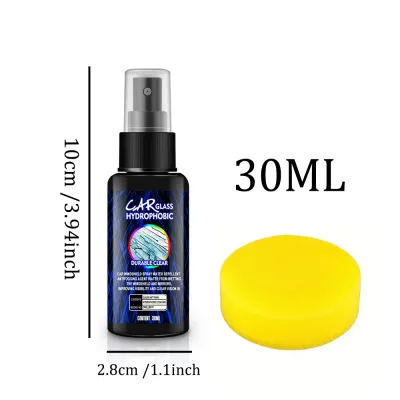
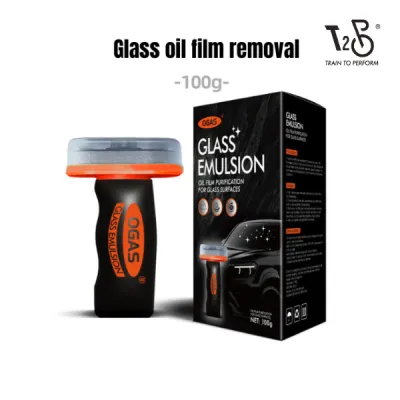
Prices are valid at publication and may change. Please refer to the product page for the latest price.
In contrast, spray-on sealants and hybrid polymer coatings are designed for rapid application and forgiving tolerances. These products typically use synthetic polymers or diluted SiO2 suspensions that can be sprayed directly onto the glass and buffed off with minimal effort. While their flash times are highly flexible and they carry almost no risk of permanent high spots, their chemical bond is weaker. Consequently, they require more frequent reapplication to maintain their hydrophobic properties, making them better suited for routine maintenance rather than long-term protection.
Before purchasing any product, always check the manufacturer’s label for specific surface compatibility. Some formulations are optimized exclusively for windshields, where they must withstand the constant friction of wiper blades. Others are formulated for side windows, rear glass, or side mirrors, where water sheeting is more critical than friction resistance. Applying a product designed solely for side glass onto a windshield can lead to severe wiper skipping, noise, and accelerated wear.
Key Specifications to Evaluate Before Buying
Evaluating a glass coating requires looking past generic marketing claims like “waterproof” or “ultra-slick” and focusing on verifiable technical specifications. The most reliable indicator of a coating’s water-repellent capability is its hydrophobic performance, which is measured by the water beading contact angle and the sheeting speed. A high-quality coating typically boasts a water contact angle greater than 100 degrees, meaning water droplets form tight, round beads that easily roll off the glass under wind pressure. Sheeting speed, on the other hand, dictates how quickly flat sheets of water drain off the surface, which is particularly important for maintaining visibility during heavy downpours when driving at lower speeds.

Another common specification found on product labels is hardness, often represented by the pencil hardness scale (such as 9H). It is crucial to interpret these claims correctly: a 9H rating on the pencil scale indicates resistance to scratching from materials of equivalent hardness, such as fingernails, wash mitts, or dirty wiper blades. It does not mean the glass is suddenly impervious to stone chips, road debris, or heavy impacts. Understanding this distinction prevents unrealistic expectations regarding physical protection and helps you focus on the coating’s true benefit, which is minimizing micro-scratches during routine maintenance washes.
Durability expectations must also be analyzed with a critical eye. While manufacturers provide estimated lifespans on their packaging, these figures are typically based on ideal laboratory conditions. In real-world environments, factors such as UV exposure, the use of harsh chemical windshield washer fluids, and the physical friction of wiper blades will degrade the coating. When comparing products, look for formulations that explicitly state resistance to high-pH car wash soaps and environmental contaminants, as these will maintain their integrity longer under typical driving conditions.
Finally, prioritize optical clarity and UV resistance specifications. Because the coating sits directly in your line of sight, any visual distortion can compromise safety, especially during night driving or in heavy rain. High-quality formulations use optical-grade carriers that cure completely transparently, preventing the hazing or glare that inferior products can cause when hit by oncoming headlights. Additionally, UV inhibitors within the coating help protect the underlying glass and interior plastics from sun damage, which is a valuable benefit in sunny, tropical climates.
Matching the Coating to Your Skill Level and Toolkit
Your choice of glass coating should align closely with your detailing experience, the time you can dedicate to the project, and the tools you have at home. If you are new to car detailing or lack a covered garage, spray-on, wipe-off formulations are the most practical choice. These products require nothing more than a clean glass surface and a few high-quality microfiber towels. They allow you to work quickly, minimizing the risk of dust settling on the wet coating, and can be applied successfully even in less-than-perfect outdoor conditions.
If you opt for a traditional liquid ceramic coating, you must be prepared for a much more demanding application process. This method requires specialized application tools, including suede microfiber cloths wrapped around foam applicator blocks, which ensure an even, thin layer of product is laid down. You must also possess the patience to monitor flash times closely, watching for the coating to “sweat” or turn into a rainbow-like haze before leveling it with a secondary buffing towel. Failing to level the coating properly can ruin the optical clarity of your windshield, requiring abrasive glass polishing to correct.
Safety is another critical factor when working with professional-grade coatings. Many liquid ceramic formulations contain strong solvents and volatile organic compounds (VOCs) that emit harsh chemical fumes during application. Before opening the bottle, review the safety warnings on the label. You will need to work in a well-ventilated area, preferably a garage with open doors or active extraction fans, and wear chemical-resistant nitrile gloves to protect your skin from irritation. If you cannot provide these working conditions, a milder polymer-based spray sealant is the safer and more appropriate choice.
Preparation and Application Requirements
The performance and longevity of any glass coating depend almost entirely on the quality of the surface preparation. Applying a coating directly to dirty or contaminated glass will result in poor bonding, leading to premature failure within weeks. To prepare the surface correctly, you must perform a thorough decontamination process. Start by washing the glass with a dedicated glass cleaner or a strip-wash shampoo to remove surface dirt. Next, use a detailing clay bar along with a suitable lubricant to pull out embedded contaminants like industrial fallout, tree sap, and overspray.
Following claying, glass polishing is highly recommended to remove stubborn water spots, mineral deposits, and old road film. A specialized glass polish containing cerium oxide or mild abrasives can be applied by hand or with a dual-action polisher to restore absolute clarity to the surface. Once polished, the glass must be wiped down with an isopropyl alcohol (IPA) prep spray or a dedicated panel wipe. This step is crucial because it removes any remaining polishing oils, waxes, or surfactants, leaving a completely bare, chemically clean surface that allows the coating to bond directly to the silica.
Environmental conditions during application are equally important. Always check the manufacturer’s recommended ambient temperature and humidity ranges before starting. In warm, highly humid environments, such as those found in tropical regions like Singapore, the flash time of liquid coatings can be cut in half. High humidity accelerates the evaporation of the carrier solvents, meaning you must work in smaller sections and buff off the residue much faster than you would in a cooler, drier climate. Working in direct sunlight must be avoided at all costs, as it heats the glass and causes the coating to cure instantly, making leveling nearly impossible.
Finally, factor in the required curing time before using the vehicle. Most high-durability coatings require a minimum of 12 to 24 hours of dry curing time, during which the vehicle must not be exposed to rain, moisture, or morning dew. Exposing a fresh coating to water before it has fully cross-linked can weaken the bond and ruin its hydrophobic properties. If you do not have access to a covered garage or carport where the vehicle can sit undisturbed, you should opt for a quick-curing spray sealant that allows for immediate outdoor exposure.
Frequently Asked Questions (FAQ)
Can I apply a windshield coating to side windows and mirrors?
Yes, most glass coatings can be applied to side windows and mirrors, but you must verify this by checking the product label first. Windshields experience constant physical friction from wiper blades, meaning windshield-specific coatings are engineered to resist mechanical abrasion. Side windows and mirrors do not face this friction, so they can benefit from coatings that focus purely on maximum water sheeting. However, some specialized windshield coatings contain friction-reducing agents that may cause optical hazing or rainbow effects on side mirrors, where viewing angles are different. Always consult the manufacturer’s instructions to ensure the formula is safe for all glass surfaces on your vehicle.
How do I know if the glass coating has failed or worn off?
The most obvious sign that a glass coating has failed is a distinct change in water behavior on the surface. When the coating is fresh, water will bead into tight, spherical droplets and roll off the glass effortlessly at speed. As the coating wears off, you will notice the water beads flattening out, taking on a wider contact angle, or clinging to the glass in flat sheets. Additionally, you may notice that road film, bug splatter, and water spots begin to accumulate more rapidly and require physical scrubbing to remove, whereas a healthy coating allows these contaminants to wash away with a simple rinse.
Community discussion
Share your experience or ask a question. Comments are reviewed before publication.