
Selecting the right convex mirror is a practical way to minimize blind spots and improve your overall road awareness. However, finding the perfect fit requires balancing mirror size, curvature radius, and mounting compatibility. By understanding these key specifications, you can expand your field of view without distorting your depth perception or blocking your vehicle’s primary side mirrors.
Understanding Mirror Size and Field of View
Larger mirror surface areas naturally capture a wider angle of the surrounding lanes, making them highly useful for larger vehicles like sport utility vehicles (SUVs), vans, or trucks. However, on compact cars or motorcycles, an oversized convex mirror can crowd the existing glass housing. This blocks the standard flat reflection you rely on for normal depth perception, creating a new hazard while trying to eliminate an old one.
Consider your typical driving environment when choosing a size. Navigating tight multi-storey carparks or merging onto busy expressways requires quick, reliable blind-spot checks. A small, discreet circular mirror—often around 50mm in diameter—is usually sufficient for passenger cars, as it fits neatly into the outer corner of the side mirror without creating excessive visual clutter.
Products mentioned in this guide
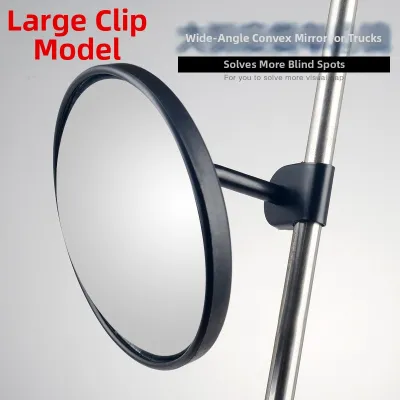
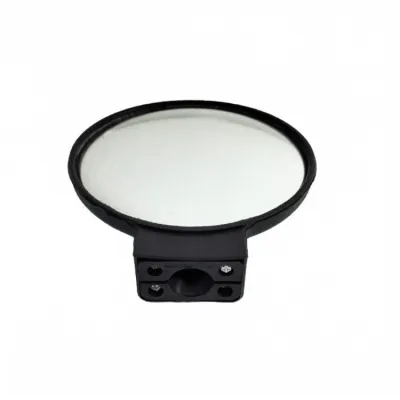
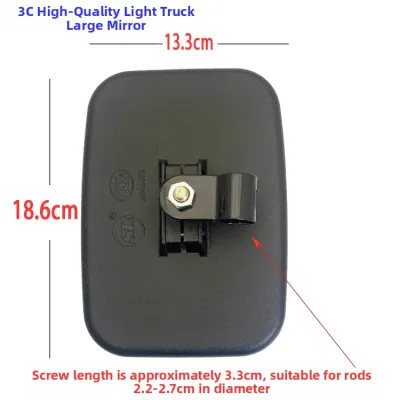
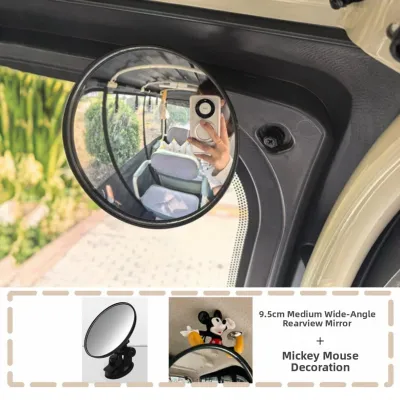
Prices are valid at publication and may change. Please refer to the product page for the latest price.
Be mindful of the physical trade-offs associated with larger attachments. A mirror that is too large can catch the wind, increasing aerodynamic drag or causing the entire side mirror assembly to vibrate at highway speeds. It can also physically restrict the movement of motorized mirror glass, potentially straining the internal adjustment motors over time.
Decoding Curvature Radius for Distance Perception
The curvature of a convex mirror is typically defined by its radius of curvature, often designated by an “R” value such as R1000 or R1500. A smaller radius number indicates a more pronounced curve. While a highly curved surface significantly widens your field of view to reveal hidden vehicles, it also makes objects appear much smaller and farther away than they actually are.

When shopping, check the product packaging or manufacturer specifications for these curvature ratings. If the rating is not explicitly listed, look for focal length indicators or clear labels indicating whether the mirror is designed for wide-angle blind spot coverage or mild wide-view enhancement. Choosing a moderate curvature helps strike a safer balance between a wider view and realistic distance judgment.
Adapting to this visual distortion requires conscious practice. The classic warning that objects are closer than they appear is especially true for aftermarket convex attachments. Drivers should always verify the actual distance of an overtaking vehicle by combining a quick glance at the convex mirror with a physical shoulder check and a look through the primary flat mirror before changing lanes.
Selecting the Correct Mounting Type for Your Vehicle
Choosing how the mirror attaches to your vehicle is critical for both durability and safety. The most common mounting styles include double-sided adhesive pads, suction cups, and mechanical clip-on brackets. Each method has specific compatibility requirements that you must verify before making a purchase.
Adhesive-backed mirrors are highly popular because they stick directly onto the existing glass surface. Before buying, check that your original mirror glass is completely flat in the intended mounting area and free of hydrophobic coatings that might prevent the adhesive from bonding. For clip-on or bracket-mounted options, inspect the thickness and shape of your side mirror’s outer plastic housing to ensure the clamps can grip securely without cracking the trim.
Evaluate how well the mounting method resists vibrations at high speeds. A loose suction cup or a weak adhesive pad can cause the convex mirror to shake, rendering the reflected image blurry and useless. In tropical climates with high humidity and intense sun exposure, standard adhesives can degrade, so choosing automotive-grade, heat-resistant acrylic tape is essential to prevent the mirror from falling off mid-journey.
Installation Safety and Alignment Checks
Proper installation ensures the mirror performs its job without damaging your vehicle’s original components. Begin by thoroughly cleaning the host mirror surface using an isopropyl alcohol wipe to remove road grime, grease, and wax. Allow the surface to dry completely before applying any adhesive to ensure a secure, long-lasting bond.
Position the convex mirror so that it targets your specific blind spot—typically the lower outer corner of your side mirror—without blocking your primary view of the adjacent lane. If you are using an adjustable, swivel-mounted convex mirror, gently press it into place and fine-tune the angle while sitting in your normal driving position.
Safety must remain your top priority during installation. If your vehicle features power-folding mirrors, integrated turn signals, heated glass, or advanced driver assistance systems (ADAS) like blind spot monitoring sensors embedded in the glass, check your vehicle manual first. Stop the installation immediately if the mounting bracket or adhesive placement interferes with these electronic components, and consult a qualified automotive technician to find a compatible alternative.
Frequently Asked Questions (FAQ)
Are convex mirrors legal for use on public roads in Singapore?
Yes, auxiliary blind spot mirrors are generally legal on public roads in Singapore, provided they do not compromise safety. You must ensure that the installation does not obstruct your forward vision, block the primary function of your mandatory rear-view mirrors, or project dangerously beyond the physical width of your vehicle. Always verify that any aftermarket modification complies with the latest Land Transport Authority (LTA) guidelines regarding vehicle dimensions and mirror visibility.
Can I use a convex mirror on the driver's side?
Yes, you can install a convex mirror on the driver’s side, but you must use caution. Because the driver’s side mirror is closer to your eyes, the distance distortion caused by a convex surface is much more noticeable than on the passenger side. Evaluate whether adjusting your original driver’s side mirror outward—using the standard side-mirror setup method—can eliminate the blind spot before deciding to add an auxiliary convex mirror.
Community discussion
Share your experience or ask a question. Comments are reviewed before publication.