
Selecting the right car cup holder phone mount requires balancing two distinct sets of dimensions: your vehicle’s center console layout and your smartphone’s physical profile. While these mounts offer a convenient, drill-free way to keep navigation maps within your line of sight, a poor fit can lead to distracting vibrations, blocked gear shifters, or a mount that slips out of place during sudden stops. To secure a perfect fit, you must systematically measure your cup holder’s depth and diameter, evaluate the expansion range of the mount’s base, and verify that the cradle can accommodate your phone with its protective case attached. Taking these steps beforehand ensures your device remains stable and your driving controls stay completely unobstructed.
Measure Your Car's Cup Holder and Console Clearance
Before browsing product listings, grab a tape measure to assess the physical dimensions of your vehicle’s cup holder. Start by measuring the inner diameter at the widest point, as well as the usable depth from the bottom of the well to the top lip of the console. Many modern vehicles feature tapered cup holders that narrow toward the bottom, meaning a mount with a wide, non-adjustable base might sit too high or tilt awkwardly. Note whether your cup holder is a simple cylindrical shape or if it features contoured edges, integrated rubber tabs, or removable dividers. These internal features can interfere with the expansion pads of a mount base, requiring a base that can expand unevenly or bypass the tabs entirely.
Beyond the cup holder itself, you must evaluate the surrounding console clearance to prevent the mount from interfering with vital driving functions. Sit in the driver’s seat and shift through all gear positions, paying close attention to how close your hand or the gear lever comes to the cup holder area. Check the path of the mechanical or electronic parking brake, and ensure that a tall mount neck will not block access to your climate control dials, infotainment screen, or center armrest storage compartment. If your vehicle has dual cup holders arranged in tandem, measure the distance between them to ensure that installing a phone mount in one does not render the adjacent holder completely unusable.
Products mentioned in this guide
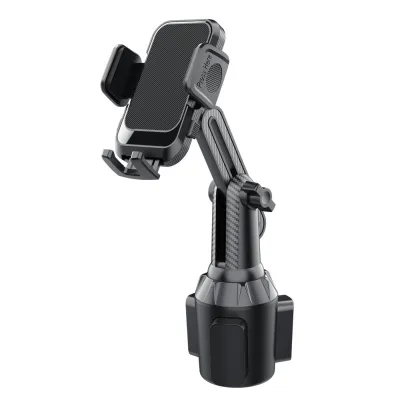
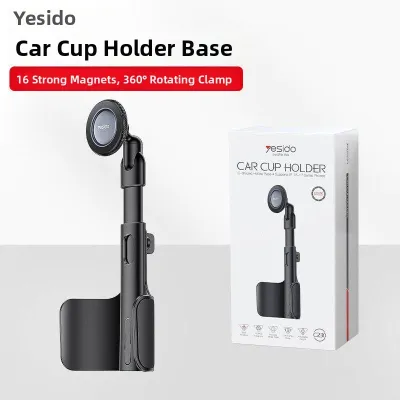
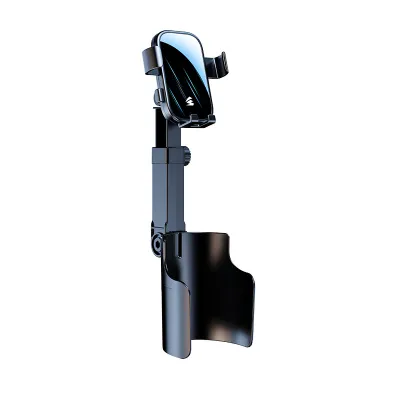
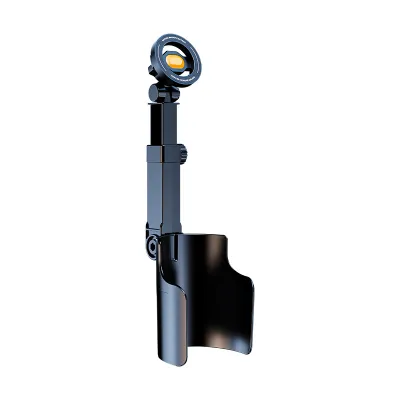
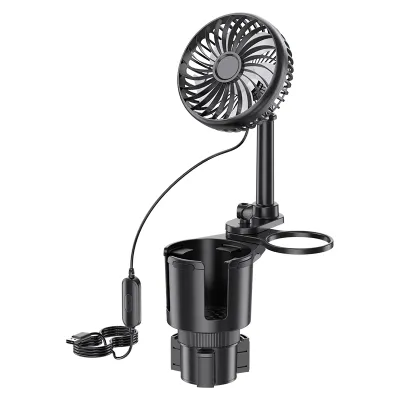
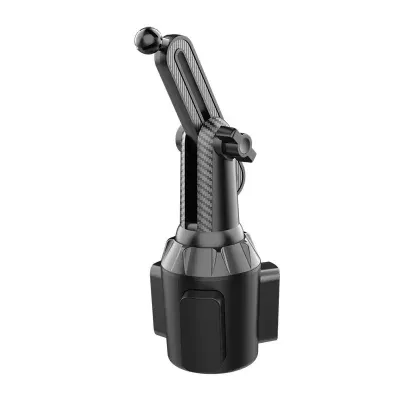
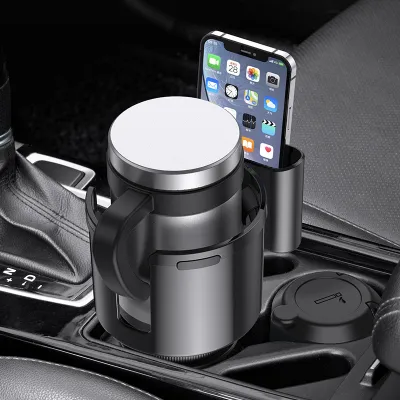
Prices are valid at publication and may change. Please refer to the product page for the latest price.
Match the Mount Base to Your Cup Holder Dimensions
Once you have your vehicle’s measurements, compare them against the expansion specifications of potential mount bases. Most high-quality cup holder mounts utilize an adjustable base mechanism to achieve a snug, rattle-free fit. The most common design is the twist-lock mechanism, where rotating the upper collar of the base drives out three or four expansion pads horizontally. Other designs feature push-button or spring-loaded systems that offer rapid installation but may provide less fine-tuned tension control. Always verify the manufacturer’s specified minimum and maximum expansion diameters; if your cup holder is 80 millimeters wide, ensure the mount’s maximum expansion limit is at least 85 to 90 millimeters to guarantee a secure, pressurized grip.

The material and texture of the expansion pads also play a critical role in stability and console protection. Look for bases equipped with thick, anti-slip silicone rings, rubberized pads, or high-density foam spacers. These soft contact points prevent the hard plastic of the mount from scratching your vehicle’s interior trim while absorbing road vibrations that cause the mount to loosen over time. Some manufacturers include removable expansion sleeves or adhesive-backed spacers in the box to help adapt the base to exceptionally large or oddly shaped cup holders. If your vehicle’s cup holder features deep contours or integrated dividers, a base with independently adjusting pads is highly recommended to conform to the irregular inner walls.
Select a Cradle for Your Phone Size and Case
The upper portion of the mount must be equally compatible with your specific smartphone and its daily protective casing. Many drivers make the mistake of checking only their phone’s bare dimensions, forgetting that rugged cases, wallet folios, or integrated grip rings add significant width and depth. Use a ruler to measure your phone’s total width and thickness with its case fully installed. When reviewing mount specifications, look for the maximum clamp opening width and the maximum depth of the cradle’s side arms. A standard mechanical cradle with side-gripping arms should have a depth rating that exceeds your cased phone’s thickness by at least a millimeter or two to ensure the arms can wrap securely around the front edge of the device.
Consider the style of the cradle and how it interacts with your phone’s physical buttons and ports. Side-grip clamps with quick-release buttons are highly adjustable, but you must verify that the clamping pads do not press directly against your phone’s volume or power buttons, which can trigger accidental restarts or emergency calls. Bottom-support feet provide excellent vertical stability, but they must feature a wide center cutout to allow your charging cable to plug in cleanly without bending the wire at a harsh angle. If you prefer a magnetic mounting system, ensure the magnetic force is rated to hold the total weight of your heavy device and case, and verify that the metal plate placement does not block wireless charging capabilities or obstruct the rear camera lenses.
Evaluate Neck Adjustability and Driving Sightlines
The connection between the base and the cradle determines both the viewing angle and the overall stability of your phone while driving. You will generally choose between a flexible gooseneck and a rigid, multi-jointed telescopic arm. Flexible goosenecks, constructed from wrapped aluminum or steel, allow you to bend the mount into highly customized shapes to clear physical obstacles in the console. However, longer goosenecks are inherently more susceptible to engine vibrations and road bumps, which can cause the phone screen to shake distractingly. Rigid arms with locking mechanical joints offer superior stability on uneven roads, though they provide slightly less fluid adjustability and require manual tightening of plastic or metal collars.
Regardless of the neck style, safety must remain your primary consideration when positioning the mount. The extended height of the mount should position your phone within your peripheral vision without blocking your forward view of the road, side mirrors, or the vehicle’s instrument cluster. Crucially, consult your vehicle’s owner’s manual to identify the exact deployment zones for all dashboard and knee airbags. The phone and mount neck must never be positioned where an inflating airbag could launch the device toward an occupant or pin the mount against your body. Ensure the ball joint at the back of the cradle offers a full 360-degree rotation with a secure locking ring, allowing you to switch between portrait mode for navigation and landscape mode for passenger entertainment while keeping the screen angled away from direct sunlight to minimize glare.
Common Fitment and Sizing Mistakes to Avoid
One of the most frequent fitment errors is ignoring the cumulative bulk of specialized phone accessories. Rugged multi-layer cases, rear-mounted wallet pouches, and pop-up finger grips often push a phone’s thickness far beyond the capacity of standard cradles, leading to a loose grip that can fail during sudden braking. Always measure the thickest point of your phone assembly rather than relying on the manufacturer’s base phone specifications. Additionally, avoid forcing a non-expandable or oversized mount base into a tapered or shallow cup holder. Forcing a tight fit can crack the delicate plastic liners of your center console or damage the internal spring-loaded tabs designed to hold cups.
Another common mistake is overextending a flexible gooseneck to its absolute physical limit. Bending a long neck into a high, dramatic arch creates a long lever arm that amplifies every minor road vibration, resulting in an unreadable, shaking screen and putting excessive leverage on the mount’s base. If you require significant height to bring the phone closer to your line of sight, opt for a rigid, heavy-duty telescopic mount with a reinforced base rather than a thin, highly flexible gooseneck. Finally, never ignore local road safety regulations regarding dashboard obstructions; ensure your chosen mounting position complies fully with local laws governing device placement in vehicles.
Frequently Asked Questions (FAQ)
Will a cup holder mount fit if my car has a shallow cup holder?
A shallow cup holder presents a significant stability challenge because it cannot deeply support the mount’s center of gravity, especially when holding a heavy smartphone. Before purchasing, check the product specifications for the minimum required cup holder depth, which is typically around 50 to 60 millimeters. If your console’s well is shallower than this requirement, an expandable base may not have enough vertical surface area to grip securely, causing the mount to tip over during turns. In such cases, you should consider alternative mounting solutions, such as dashboard adhesive mounts, windshield suction mounts, or heavy-duty air vent clips, which do not rely on console depth for stability.
Can I use a cup holder mount with a thick battery or wallet case?
Yes, but you must select a cradle specifically designed with extra-deep side clamps or an adjustable bottom shelf. Standard cradles often feature a maximum depth capacity of 12 to 15 millimeters, which is easily exceeded by rugged battery cases or thick leather wallet folios. Look for heavy-duty cradles that explicitly advertise a depth capacity of 20 millimeters or more, and verify that the side arms curve inward enough to hook over the front edge of your thick case. Alternatively, high-strength magnetic mounts with heavy-duty plates can work, provided the metal plate can be adhered directly to the exterior of the thick case rather than sandwiched underneath it.
Community discussion
Share your experience or ask a question. Comments are reviewed before publication.