
Knowing when your tyre tread depth is too low is one of the most critical aspects of vehicle maintenance. Your tyres are the only point of contact between your vehicle and the road, making their condition vital for steering, cornering, and stopping. When the tread wears down, your vehicle loses its ability to grip the road surface effectively, especially during wet weather.
To determine if it is time for a replacement, you must measure the remaining tread depth. While the absolute legal minimum tread depth in Singapore is 1.6 millimetres, safety experts strongly recommend planning a replacement once the tread wears down to 3 millimetres. Driving on tyres below this threshold significantly compromises your safety, particularly during sudden tropical downpours.
Why Tyre Tread Depth Matters for Your Safety
The primary function of tyre tread is to channel water away from the contact patch between the rubber and the road. When driving on wet roads, the grooves in the tread act as escape routes for water. If the tread depth is sufficient, the tyre can maintain direct contact with the asphalt, ensuring stable handling and responsive braking.
Products mentioned in this guide
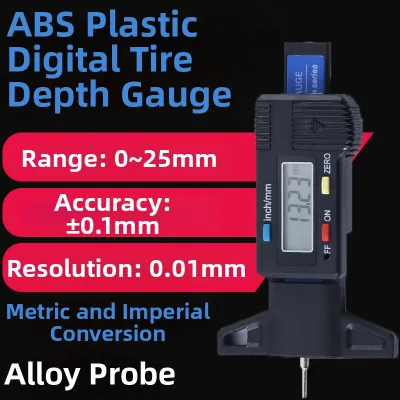
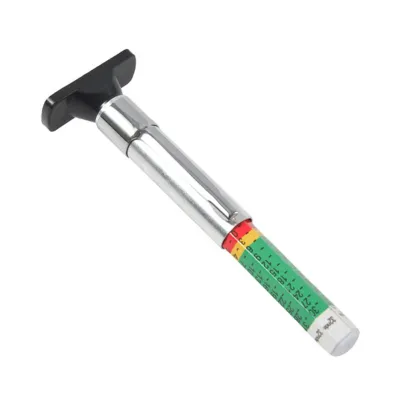
![[SG 🚚] Depth Color Car Tire Tool Measures Gauge Motors Tester Imperial Gage Tyre](https://img.lazcdn.com/g/p/10c9000d599f3d965113a863ec86805f.jpg_400x400q80.jpg_.webp)



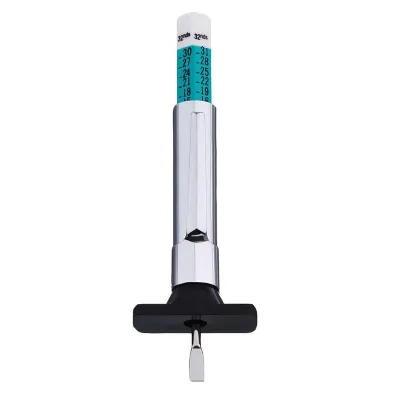
Prices are valid at publication and may change. Please refer to the product page for the latest price.
As tyres wear down, the depth of these grooves decreases, reducing the volume of water they can displace. When the tread is too shallow, water can build up beneath the tyre faster than it can be evacuated. This causes the tyre to lose contact with the road and float on a thin film of water, a dangerous phenomenon known as hydroplaning or aquaplaning. During a hydroplaning event, you lose steering and braking control, leaving the vehicle sliding helplessly.
In addition to hydroplaning risks, reduced tread depth drastically increases your vehicle’s braking distance. On wet surfaces, a tyre with worn tread requires significantly more road distance to come to a complete stop compared to a new tyre. This delay in stopping time can be the difference between a safe halt and a severe collision.
There are also strict legal and financial consequences to consider. In Singapore, operating a motor vehicle with a tyre tread depth below 1.6 millimetres is a legal offence. If you are caught driving with bald tyres, you may face stiff fines and demerit points. Furthermore, if you are involved in an accident and your tyres are found to be below the legal limit, your motor insurance provider may invalidate your policy, leaving you personally responsible for all repair costs and third-party liabilities.
3 Reliable Ways to Check Your Tyre Tread Depth
Monitoring your tyre tread depth does not require advanced mechanical skills. You can easily perform regular checks using three reliable methods to ensure your vehicle remains roadworthy and safe.

The first and most convenient method is locating the built-in Tread Wear Indicators (TWI). Tyre manufacturers mold these small, raised rubber bars into the bottom of the main tread grooves around the circumference of the tyre. To find them, look for small arrows, triangles, or the letters “TWI” printed on the outer sidewall. If the surrounding tread blocks have worn down to the same level as these raised bars, your tyres have reached the 1.6-millimetre limit and must be replaced immediately.
For a more precise and objective measurement, you should use a dedicated tyre tread depth gauge. These tools are available in both manual and digital formats from automotive supply shops or online marketplaces. To use the gauge, push the measuring probe into one of the main tread grooves, ensuring you do not place it directly on top of a raised TWI bar. Press the base of the gauge flat against the tyre tread block and read the measurement. It is important to take multiple readings across the inner, center, and outer sections of the tyre, as well as at different points around the wheel, to check for uneven wear.
If you do not have a gauge on hand, you can perform a quick visual check using a local coin. In Singapore, a Singapore 1-dollar coin can serve as a helpful reference tool. The brass-plated outer ring of a 1-dollar coin is approximately 2 millimetres wide. When you insert the coin into the main tyre groove, observe how much of the outer ring is covered. If the entire outer ring remains fully visible, your tread depth is likely under 2 millimetres, signaling that it is time to arrange for a replacement. Keep in mind that the coin test is only a rough estimate and should always be verified with a proper gauge.
Warning Signs Your Tyres Need Immediate Replacement
While tread depth is a primary indicator of tyre health, it is not the only factor. You must also inspect your tyres for physical defects and wear patterns that compromise safety, regardless of how much tread remains.
Uneven wear patterns are a common warning sign that requires immediate attention. If you notice that the inner or outer edges of your tyres are wearing down much faster than the center, your vehicle’s wheel alignment is likely out of specification. Center wear, on the other hand, typically indicates chronic over-inflation, while wear on both outer shoulders suggests under-inflation. Scalloped or cupped dips in the tread often point to worn suspension components or unbalanced wheels. These uneven patterns reduce the tyre’s contact patch and require professional diagnosis.
You must also carefully inspect the tyre sidewalls for structural damage. The sidewall sustains the weight of the vehicle and absorbs road impacts, making any structural compromise highly dangerous. Look closely for cracks, cuts, bulges, or blisters. Cracks are often a sign of dry rot, which occurs as the rubber compounds degrade over time. Bulges or blisters indicate that the internal structural cords have ruptured, allowing air pressure to push through the outer rubber layer. A tyre with a sidewall bulge is at extreme risk of a sudden blowout and must not be driven on.
Finally, consider the chronological age of your tyres. Rubber compounds naturally degrade and harden over time due to exposure to heat, sunlight, and oxygen, even if the vehicle is rarely driven and the tread looks deep. You can determine the age of your tyres by checking the DOT code printed on the sidewall. This code ends with a four-digit number; for example, “1222” indicates the tyre was manufactured in the 12th week of 2022. As a general safety rule, tyres that are more than five to six years old should be inspected annually by a professional, and most manufacturers recommend replacing tyres once they reach ten years of age, regardless of remaining tread.
What to Do Next: Maintain, Rotate, or Replace?
Once you have completed your inspection, you must decide on the appropriate course of action based on your findings. Taking the correct steps will help you maximize tyre life while ensuring your safety on the road.
If your tyres show healthy, even tread depth above 4 millimetres, you should focus on routine maintenance to extend their lifespan. Regular tyre rotation is key to achieving even wear across all four wheels. Because front tyres experience greater forces from steering and braking, they tend to wear out faster than rear tyres. Rotating your tyres every 8,000 to 10,000 kilometres helps distribute this wear evenly.
If your inspection reveals uneven wear patterns, you should seek professional wheel alignment and balancing services. A qualified technician can adjust your vehicle’s suspension geometry to ensure the tyres contact the road at the correct angle, preventing premature wear and restoring stable handling.
If your measurements show that the tread depth has reached 1.6 millimetres, or if you detect any sidewall bulges or deep cracks, you must purchase replacement tyres immediately. Driving on compromised tyres poses a severe safety hazard to you and other road users.
Tyre replacement, mounting, wheel balancing, and wheel alignment are critical safety tasks that must always be performed by a qualified professional at a professional workshop. Incorrectly mounted tyres or improper wheel balancing can lead to severe vibrations, uneven wear, and compromised vehicle handling, which increases the risk of accidents. Always refer to your vehicle’s original owner’s manual or the tyre placard located on the driver’s door pillar to verify the exact tyre dimensions, load index, and speed rating required for your specific vehicle model before purchasing replacement tyres.
Frequently Asked Questions (FAQ)
Can I replace just one or two tyres instead of all four?
While replacing all four tyres simultaneously is the ideal scenario for balanced handling, it is not always strictly necessary. If you must replace only two tyres, the new pair should always be installed on the rear axle, regardless of whether your vehicle is front-wheel drive or rear-wheel drive. Placing the tyres with deeper tread on the rear helps maintain vehicle stability and prevents dangerous oversteer or fishtailing on wet roads. Replacing only a single tyre is generally discouraged unless the opposite tyre on the same axle is nearly new, as mismatched tread depths can cause uneven braking and pulling. For All-Wheel Drive (AWD) vehicles, you must consult your owner’s manual, as many AWD systems require all four tyres to have identical tread depths to prevent mechanical damage to the drivetrain.
How often should I check my tyre tread depth?
You should perform a visual inspection of your tyres at least once a month, combined with a physical tread depth measurement using a gauge. It is also highly recommended to check your tyres before embarking on long-distance road trips, such as driving across the border, where sustained high speeds put extra stress on the rubber. Additionally, make it a habit to inspect your tread depth before the onset of heavy monsoon seasons, when maximum wet grip is essential for navigating waterlogged roads safely. Integrating these quick checks with your monthly tyre pressure adjustments is an easy way to ensure your vehicle remains safe and efficient.
Community discussion
Share your experience or ask a question. Comments are reviewed before publication.