
Your tyre tread depth is the primary indicator of whether your vehicle can safely grip the road, especially during sudden tropical downpours. If your tread depth has worn down to 1.6 mm or lower, your tyres are legally bald and require immediate replacement to pass vehicle inspections and maintain basic road safety. However, waiting until this absolute legal limit is highly risky; most safety experts and manufacturers recommend planning a replacement once the tread wears down to 3 mm to prevent a severe loss of wet-weather traction.
Understanding how to monitor your tyres ensures you can make informed decisions before booking a service or purchasing replacements. While some drivers search for “tyre thread depth” when looking up maintenance tips, the correct technical term is tread depth, which refers to the depth of the rubber grooves that channel water away from the contact patch. Regularly checking this measurement is one of the simplest and most effective ways to keep your vehicle safe on the road.
How to Measure Your Tyre Tread Depth Accurately
To get a clear picture of your tyre health, you do not need specialized mechanical training. The most straightforward built-in tool is the Tread Wear Indicator (TWI). These are small, raised rubber bars molded into the bottom of the main longitudinal tread grooves. To locate them, look at the outer sidewall of your tyre for a small triangle, the letters “TWI”, or a brand logo. These symbols point directly to where the indicators sit across the width of the tyre. When the surrounding tread blocks wear down to be perfectly flush with these raised bars, your tyre has reached the legal wear limit of 1.6 mm and must be replaced immediately.
Products mentioned in this guide
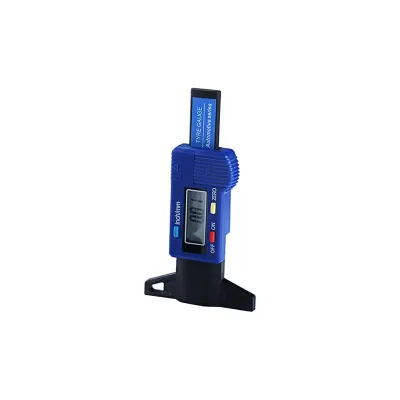
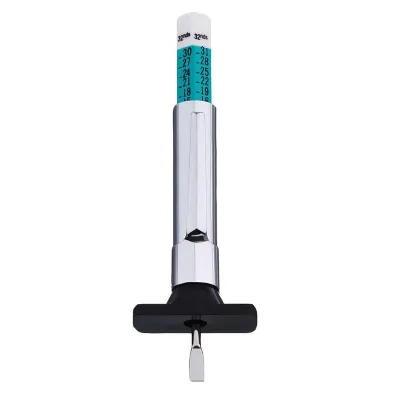
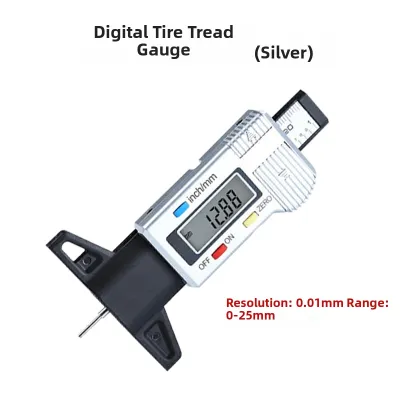
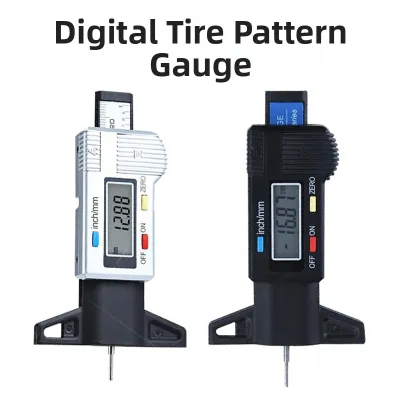

![[SG 🚚] Depth Color Car Tire Tool Measures Gauge Motors Tester Imperial Gage Tyre](https://img.lazcdn.com/g/p/10c9000d599f3d965113a863ec86805f.jpg_400x400q80.jpg_.webp)

Prices are valid at publication and may change. Please refer to the product page for the latest price.
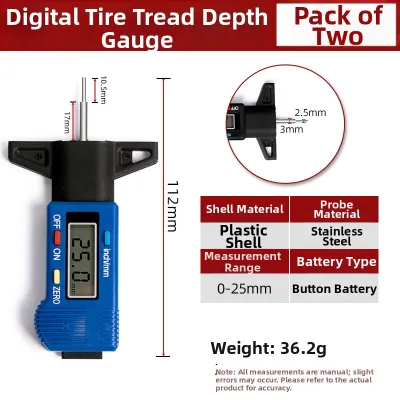
For a precise and numerical measurement, using a dedicated tyre tread depth gauge is the most reliable method. These inexpensive tools are available in both manual slide and digital formats. To use one, insert the narrow metal probe of the gauge into the deepest part of the main tyre grooves, press the flat base of the tool firmly against the surrounding tread block, and record the reading. It is vital to take measurements at multiple points across each tyre—specifically the inner edge, the center, and the outer edge—as uneven wheel alignment can cause one side of the tyre to wear out much faster than the rest.
If you do not have a dedicated gauge on hand, a quick visual check can be performed using a standard coin. In Singapore, placing a one-dollar coin into the main grooves of your tyre can serve as a rough preliminary guide. The current series of the one-dollar coin features a distinct brass-plated outer ring. If you insert the coin into the groove and the outer ring is fully visible, your tread depth is likely under 3 mm, indicating that your tyres are losing their wet-weather effectiveness. While this coin test is highly convenient for a quick inspection, it is not a substitute for the precise millimetre readings provided by a proper gauge.
Understanding Tread Depth Limits and Safety Risks
In Singapore, the Land Transport Authority (LTA) enforces a strict legal minimum tread depth of 1.6 mm across the entire width of the tyre’s tread pattern. During periodic vehicle inspections at authorized centers, inspectors use calibrated gauges to verify this measurement. Driving on tyres that fall below this legal threshold not only risks an inspection failure but also compromises your safety and can lead to legal penalties.

Despite the 1.6 mm legal limit, tyre manufacturers and safety organizations strongly recommend replacing tyres when they reach 3 mm. The performance difference between 3 mm and 1.6 mm of tread is substantial, particularly when stopping on wet surfaces. As the rubber wears down, the volume of the grooves decreases, which drastically reduces the tyre’s capacity to disperse water from the road surface.
This reduction in water clearance leads directly to hydroplaning, a dangerous phenomenon where a layer of water builds up between the tyre and the road surface. When this happens, the tyre loses all physical contact with the asphalt, leaving the driver with zero steering or braking control. In a tropical climate characterized by sudden, torrential rainstorms, maintaining a tread depth closer to the 3 mm threshold is essential to ensure your vehicle can safely navigate standing water and ponding on the roads.
Beyond Depth: Other Critical Signs of Tyre Wear
Measuring the depth of your tread is only one part of a comprehensive tyre safety check. Even if your tyres have plenty of remaining tread, structural damage can make them incredibly dangerous to drive on. Regularly inspect the inner and outer sidewalls for any visible bulges, bubbles, or deep cuts. A sidewall bulge indicates that the internal structural cords of the tyre have ruptured, often due to hitting a pothole or scraping against a kerb. This weakens the tyre’s integrity and can lead to a sudden, catastrophic blowout at high speeds.
Uneven wear patterns across the tread surface are another critical sign that your vehicle requires attention. If you notice that the inner shoulder of the tyre is completely bald while the outer shoulder has deep tread, your vehicle’s wheel alignment is likely out of specification. Other patterns, such as “feathering” or diagonal cupping, can point to worn suspension components or unbalanced wheels. Addressing these mechanical issues promptly is crucial; otherwise, any new tyres you install will suffer the same premature wear.
Finally, you must consider the age of the rubber compound. The intense tropical heat and high humidity in Singapore accelerate the natural degradation of rubber, causing it to harden and develop micro-cracks over time. You can check the age of your tyres by looking at the DOT code on the sidewall, which ends in a four-digit number representing the week and year of manufacture. For example, a code ending in “1222” means the tyre was manufactured in the 12th week of 2022. Even if a tyre has been driven very little and retains deep tread, the rubber compound loses its flexibility and grip after five to six years, making replacement necessary for safety.
Next Steps: Replacing and Choosing Your New Tyres
If your inspection reveals that your tyres are worn or damaged, the next step is planning their replacement. Ideally, replacing all four tyres at the same time ensures consistent handling, braking, and traction across both axles. If your budget or circumstances require replacing only two tyres, always have the new pair installed on the rear axle. Having fresher tread on the rear wheels is critical for maintaining vehicle stability and preventing dangerous oversteer or fishtailing on wet, slippery roads.
When selecting new tyres, look for models specifically optimized for wet grip and warm climates. Summer tyres or performance touring tyres feature tread patterns with wide circumferential grooves designed to channel away massive volumes of water quickly. Avoid winter or specialized all-season tyres designed for cold climates, as their softer rubber compounds wear down rapidly on hot asphalt and do not offer optimal performance in year-round tropical conditions.
Once you have selected your new tyres, ensure they are fitted by a professional service center. Proper installation must include wheel balancing to eliminate high-speed steering vibrations, as well as a comprehensive wheel alignment. A precise alignment ensures that your new investment contacts the road at the correct angles, maximizing tyre life, fuel efficiency, and overall driving safety.
Frequently Asked Questions (FAQ)
How often should I check my tyre tread depth?
You should perform a visual and physical check of your tyre tread depth and overall condition at least once a month. It is also highly recommended to conduct a thorough inspection before embarking on long-distance road trips, such as driving up the North-South Highway, where sustained high speeds place much greater stress on your tyres.
Can I just replace one damaged tyre instead of the whole set?
Replacing a single tyre is only advisable if the opposite tyre on the same axle is nearly brand new and has minimal wear. If there is a significant difference in tread depth between the left and right tyres, it can cause uneven braking, pull the vehicle to one side, or interfere with modern anti-lock braking (ABS) and traction control systems. If the opposite tyre is partially worn, it is always safer to replace them as a pair.
Community discussion
Share your experience or ask a question. Comments are reviewed before publication.