
Finding the correct replacement for a damaged car front mirror requires systematic verification before you make a purchase. Whether you are replacing an exterior wing mirror or an interior rearview mirror, compatibility depends on a combination of physical dimensions, electrical configurations, and regional driving standards. To ensure a perfect fit, you must decode your vehicle’s identification number, verify the mounting footprint, match the wiring harness pin count, and confirm that the replacement is designed specifically for right-hand drive vehicles.
Gather Your Vehicle's Exact Specifications for a Car Front Mirror
The term “car front mirror” can refer to two distinct components: the exterior side mirrors (often called wing mirrors) mounted near the front A-pillars, or the interior rearview mirror attached to the front windshield. Because automotive manufacturers frequently update these parts during a vehicle’s production run, relying solely on your car’s make and model is rarely sufficient to guarantee a match.
To establish a reliable baseline, locate your vehicle’s 17-character Vehicle Identification Number (VIN), which is typically visible through the bottom of the front windshield on the driver’s side or printed on the chassis plate inside the door jamb. A VIN decoder will reveal the precise build specifications of your vehicle, including the exact trim level and production date.
Products mentioned in this guide
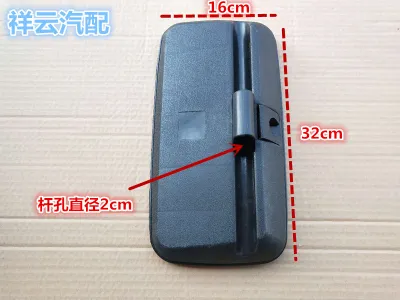
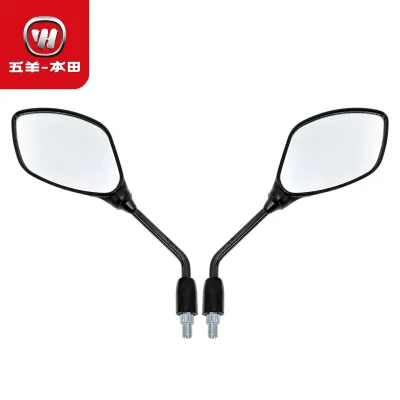
Prices are valid at publication and may change. Please refer to the product page for the latest price.
Trim levels are critical because base models and premium packages often use entirely different mirror assemblies. For instance, a base trim might feature manual-folding glass with no heating elements, while a premium trim of the same model year might include power-folding capabilities, integrated turn signals, and blind-spot sensors.
Furthermore, check the exact month and year of production. Manufacturers often introduce mid-cycle facelifts or minor technical updates halfway through a model year. These updates can alter the shape of the mirror housing, change the internal wiring harness, or modify the mounting brackets, meaning two cars from the same model year could require completely different replacement parts.
Verify Physical Fitment and Mounting
Before purchasing any replacement component, you must ensure that the physical structure of the new mirror matches your vehicle’s mounting points. Attempting to force an incompatible mirror onto your car can damage the door panel, crack the windshield, or result in a loose mirror that vibrates excessively at highway speeds.

Check the Mounting Base and Bolt Pattern
For exterior wing mirrors, physical compatibility begins behind the interior door panel. To inspect this area, you must safely remove the plastic interior door sail panel—the triangular trim piece directly opposite the mirror on the inside of the door. Use a plastic trim removal tool to avoid scratching the paint or snapping the delicate retaining clips.
Once the panel is removed, look closely at the mounting base shape, the number of mounting studs, and the specific spacing of the bolt pattern. Some vehicles use a three-bolt triangular configuration, while others rely on a two-bolt setup with alignment pins. Compare these physical characteristics and the overall footprint of the replacement unit against your original mirror to ensure it will sit flush against the door skin without leaving gaps that could let water enter the door cavity.
For interior rearview mirrors, the mounting mechanism is attached directly to the front windshield. Inspect the mounting bracket to identify whether your vehicle uses a slide-on button mount, a wedge mount, or a direct screw-on bracket. You should measure the dimensions of the metal base plate glued to the windshield, as aftermarket or universal mirrors often require specific adapters to slide securely onto the existing factory button.
Confirm Right-Hand Drive Orientation and Mirror Curvature
Because Singapore is a Right-Hand Drive (RHD) market, you must pay close attention to the driving orientation of the donor or replacement vehicle. Exterior side mirrors are not symmetrical; they are engineered with specific housing angles and glass curvatures tailored to the driver’s seating position.
In an RHD vehicle, the driver’s side (right) mirror glass is typically flat or slightly curved to provide an accurate, undistorted view of traffic to the rear, while the passenger’s side (left) mirror uses a convex curvature to maximize the field of view. Additionally, the plastic housing of the right-hand mirror is angled differently to allow the driver to adjust the glass within its functional range.
If you mistakenly install a mirror designed for a Left-Hand Drive (LHD) vehicle, you will find that the glass cannot be adjusted far enough inward to see the lane beside you. This creates severe, dangerous blind spots that compromise your safety on the road and will cause your vehicle to fail the periodic inspections required by local road safety authorities.
Match the Electronic Connectors and Features
Modern side mirrors are highly integrated electronic components. Ensuring that the electrical connections match perfectly is essential to prevent system malfunctions, blown fuses, or diagnostic error codes.
Count the Connector Pins and Inspect the Wiring Harness
Before disconnecting any electrical components, refer to your vehicle’s manual and disconnect the car battery to prevent accidental short circuits. Once the power is disconnected, unplug the mirror’s wiring harness from the door module.
Count the exact number of metal pins inside the male and female connectors. Mirror plugs vary widely, ranging from simple 3-pin connectors for basic power glass adjustment to complex 12-pin or 16-pin connectors that manage multiple advanced functions. A replacement mirror must have the exact same pin count and plug shape as the original unit.
Do not rely on adapters or attempt to splice wires to make an incompatible plug fit. Modern automotive electrical systems are highly sensitive, and incorrect wiring can damage the body control module, leading to expensive repairs that can easily exceed S$1,000 at a qualified workshop.
Identify Advanced Features Like Blind Spot Monitoring and Auto-Dimming
Take inventory of the specific electronic features integrated into your original mirror assembly. These features dictate the complexity of the replacement part you need to source. Key features to check include:
- Heated Glass: Identified by a small defrost icon on the mirror glass.
- Power Folding: The ability of the mirror housing to fold inward automatically when the car is locked.
- Auto-Dimming (Electrochromic): Glass that darkens automatically to reduce glare from headlights behind you.
- Integrated Turn Signals: LED indicator strips built into the outer plastic housing.
- Puddle Lamps: Downward-facing lights on the bottom of the housing that illuminate the ground.
- Blind Spot Monitoring (BSM): A warning icon that lights up on the glass when a vehicle is in your blind spot.
Installing a replacement mirror with fewer features than your original setup will result in a permanent loss of those functions. Conversely, installing a mirror with more features than your vehicle’s factory wiring supports is a waste of money, as the extra features will remain non-functional. Furthermore, advanced features like BSM systems often rely on radar sensors or cameras that require professional calibration using specialized diagnostic tools to ensure they operate safely.
Cross-Reference the OEM Part Number
The most reliable method to guarantee absolute compatibility is to match the Original Equipment Manufacturer (OEM) part number of your original mirror. This alphanumeric code is unique to the exact specification, color, and feature set of your vehicle’s factory-installed part.
To find the OEM part number, you will usually need to remove the mirror assembly or carefully pop out the mirror glass using a plastic pry tool. The number is typically stamped on the plastic backing plate of the glass, molded into the inner plastic housing, or printed on a paper label affixed to the mounting base.
Once you have located this number, you can enter it into official manufacturer parts catalogs or search reputable automotive databases. If you are purchasing an aftermarket replacement, reputable manufacturers will list the compatible OEM numbers that their product is designed to replace. Always read the seller’s detailed compatibility notes and verify that your exact OEM number is listed, rather than relying on generic product titles that claim to fit all models within a broad year range.
Final Pre-Purchase Verification and Compliance Checks
Before finalizing your purchase, verify the seller’s return and exchange policies. Electrical components and painted exterior parts are frequently subject to strict return limitations. Ensure that the seller allows returns if the part is found to be incompatible upon physical inspection, and clarify who is responsible for return shipping costs.
In Singapore, vehicle modifications are strictly regulated by the Land Transport Authority (LTA). While replacing a damaged mirror with an identical OEM or certified aftermarket equivalent is considered a standard maintenance repair, installing non-standard mirrors can lead to compliance issues.
Adding aftermarket mirrors with unauthorized modifications—such as excessively bright LED indicators, non-compliant integrated cameras, or custom housings that alter the vehicle’s width dimensions—can violate LTA guidelines. Non-compliant exterior components can result in a failed vehicle inspection, fines, and may even void your automotive insurance coverage in the event of an accident. If you are unsure about the installation process or the compatibility of a specific electronic mirror, always consult a qualified automotive technician or an authorized service center before proceeding.
Frequently Asked Questions (FAQ)
Can I install a left-hand drive (LHD) side mirror on my car in Singapore?
No, you should not install an LHD side mirror on a vehicle in Singapore. Because Singapore is an RHD market, LHD mirrors are engineered with different housing angles and glass curvatures meant for drivers sitting on the left side of the vehicle. Installing an LHD mirror will severely restrict your field of view, create dangerous blind spots, and fail to comply with LTA safety regulations.
Will an incompatible mirror trigger a dashboard warning light?
Yes, installing an incompatible mirror can trigger dashboard warning lights or system errors. Modern vehicles utilize CAN bus communication networks to monitor the electrical resistance and functionality of components. If the replacement mirror has a different pin configuration, incorrect resistance values for heated elements, or lacks the correct sensors for systems like Blind Spot Monitoring, the vehicle’s diagnostic system will likely flag a fault code and disable the associated safety features.
Community discussion
Share your experience or ask a question. Comments are reviewed before publication.