
Singapore’s tropical climate presents a unique set of challenges for any vehicle accessory, particularly those designed to influence the cabin’s sensory environment. When you step into a car parked under the midday sun, the immediate wave of heat is a stark reminder of how intense the local microclimate can be. For drivers using Vanzo car perfumes, understanding how this relentless heat and high humidity interact with fragrance formulations is key to setting realistic expectations and getting the best value from your purchase.
The performance of any car air freshener is fundamentally governed by the laws of thermodynamics and evaporation. In Singapore, where ambient temperatures regularly exceed 30°C and cabin temperatures can climb much higher, the rate at which fragrance oils transition from liquid or gel into vapor accelerates dramatically. This guide breaks down the physical mechanisms at play, details what you can realistically expect from different Vanzo product formats, and provides actionable strategies to help you prolong the lifespan and optimize the scent strength of your car perfume.
Understanding Tropical Climate Impacts on Car Fragrances
To understand how your car perfume behaves, it helps to look at the science of evaporation. Fragrance formulations are complex mixtures of volatile organic compounds, categorized into top, middle, and base notes based on their molecular weight and volatility. Under normal, temperate conditions, these compounds evaporate at a graduated, predictable rate, providing a balanced scent profile over several weeks. However, high ambient heat introduces thermal energy that forces these molecules to vaporize much faster, often causing the lighter top notes to dissipate rapidly and leaving the heavier base notes to carry the scent profile prematurely.
Products mentioned in this guide
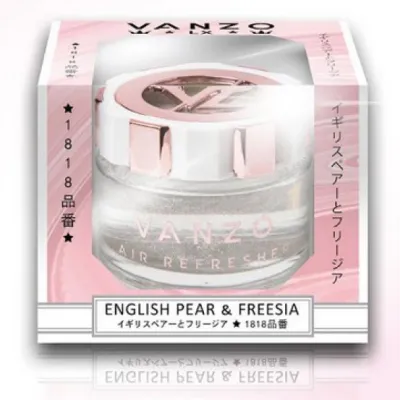
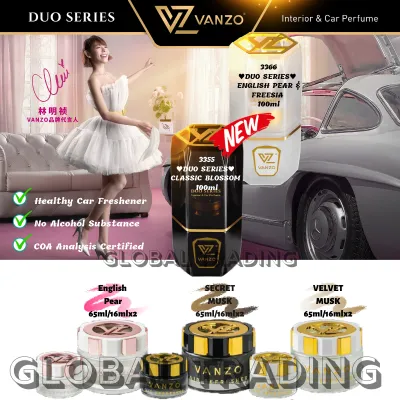

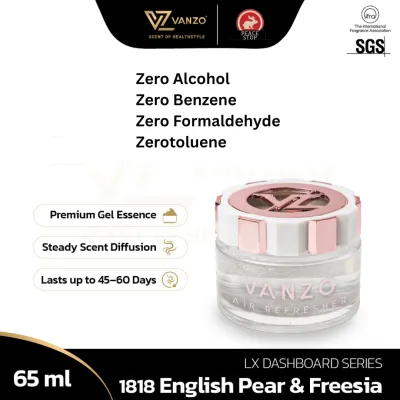
![[NEW] VANZO Duo Series New Generation Sterilizing Air Freshener REED DIFFUSER★NEW FRAGRANCES★HOTEL & PERFUME FRAGRANCES](https://img.lazcdn.com/g/p/3adffcf00607989cf9a5e6eb3a710a15.png_400x400q80.png_.webp)
Prices are valid at publication and may change. Please refer to the product page for the latest price.
Humidity plays an equally significant role in how we perceive these fragrances. Singapore’s relative humidity frequently hovers above 80%, meaning the air is already heavily saturated with water vapor. This moisture-laden air can alter the dispersion of fragrance molecules, sometimes making heavier, sweeter scents feel thick and cloying, while lighter, citrus-based scents may struggle to cut through the heavy air. Furthermore, high humidity can affect the physical medium holding the fragrance, particularly if it relies on a porous material to diffuse the scent.
The contrast between a parked car and an active, air-conditioned cabin further complicates this dynamic. When your car is parked in an open-air lot, it acts like a greenhouse, trapping solar radiation and raising internal temperatures to oven-like levels. This extreme heat causes rapid, uncontrolled off-gassing of the perfume, filling the sealed cabin with highly concentrated vapor. Once you start the engine and turn on the air conditioning, the temperature drops rapidly, and the relative humidity inside the cabin decreases. This sudden cooling slows down the evaporation rate, but the pre-existing concentration of scent can initially feel overwhelming before the ventilation system circulates the air.
What to Expect from Vanzo Car Perfumes in Singapore
When using Vanzo car perfumes in Singapore, you should expect a shorter functional lifespan compared to the estimates provided for temperate climates. Manufacturers typically test and rate their products under standardized laboratory conditions, often calibrated to a stable 20°C to 25°C with moderate humidity. In the local tropical environment, the accelerated evaporation rate means that a unit rated for up to several weeks in cooler climates may only deliver optimal performance for a significantly shorter period. Adjusting your expectations beforehand prevents disappointment and helps you budget for refills more accurately.

Different Vanzo product formats react uniquely to Singapore’s thermal stress. Gel-based air fresheners utilize a solid or semi-solid matrix to suspend fragrance oils. Under high heat, this matrix gradually shrinks as both the moisture and the fragrance compounds evaporate. If exposed to extreme, direct sunlight on the dashboard, the gel can dry out prematurely, forming a hard, non-porous crust on the surface that locks in the remaining fragrance and prevents it from diffusing.
Liquid diffusers and hanging bottles rely on capillary action, drawing liquid fragrance up through a wooden lid, cotton wick, or porous paper. High temperatures increase the rate of absorption and evaporation, meaning the liquid level will drop much faster. If the wood or wick becomes oversaturated due to rapid thermal expansion, it can lead to dripping or pooling of the concentrated oil.
Vent clips are designed to utilize the active airflow of your car’s air conditioning system. Because they are positioned directly in the path of cooled, dehumidified air during your drive, their evaporation rate is highly regulated while the car is running. However, when the car is parked in the sun, the vent clip is still subjected to the overall cabin heat, meaning some passive evaporation will still occur.
Over time, constant exposure to extreme heat cycles can cause chemical degradation of the fragrance oils, altering the original scent profile. You might notice the fragrance smelling slightly sour, metallic, or simply different from when it was first opened. Additionally, regular drivers are highly susceptible to olfactory adaptation, commonly known as scent fatigue. If you feel your car perfume has lost its strength, it is often helpful to ask a passenger who does not ride in your car daily for their honest feedback before assuming the product is completely depleted.
Strategic Placement to Maximize Longevity and Scent
Where you choose to position your Vanzo car perfume has a direct impact on how long it lasts and how evenly the scent is distributed. The dashboard and the area immediately behind the front windshield are the most common placement choices, but they are also the most hostile environments in the vehicle. Direct sunlight passing through the windshield creates a localized hotspot where temperatures can far exceed the general cabin temperature. Placing a gel or liquid unit here subjects it to maximum thermal stress, accelerating evaporation and increasing the risk of material degradation.
Utilizing your car’s air-conditioning vents is one of the most effective ways to balance scent distribution with heat protection. Vent clips allow the fragrance to be actively dispersed only when the blower is active, ensuring that you get the maximum benefit of the scent while you are actually in the car. Because the air exiting the vents is cooled, it helps maintain a stable, moderate evaporation rate, preventing the fragrance from becoming overpowering or burning through its lifespan too quickly.
When placing your car perfume, safety must always be your primary consideration. Never position any accessory on or near the steering wheel hub, the passenger-side dashboard panel, or the roof pillars where SRS airbags are housed. In the event of a collision, the rapid deployment of an airbag can turn a perfume bottle or clip into a high-velocity projectile, risking severe injury to occupants. Additionally, avoid mounting liquid diffusers directly above sensitive electronic components, infotainment screens, or porous leather surfaces, as accidental spills or slow drips can cause permanent cosmetic or functional damage.
Maintenance and Storage Tips for Tropical Conditions
To preserve the quality and longevity of your car perfume, you must take active steps to manage your vehicle’s internal temperature. Utilizing a high-quality, reflective front windshield sunshade whenever you park in open-air lots is one of the simplest and most effective measures. By blocking direct solar radiation, a sunshade can significantly lower the peak temperature of your dashboard and cabin, directly reducing the thermal stress on your air freshener. Installing solar control window films that comply with Land Transport Authority guidelines also helps block infrared heat throughout the day.
Proper storage of unopened Vanzo products or backup refills is equally important. It can be tempting to store spare units in the glovebox or center console for convenience, but these enclosed spaces still absorb and retain significant heat when the car is parked. Instead, store your spare refills in a cool, dark, and dry place inside your home, such as a pantry or closet, until you are ready to install them. This prevents the fragrance oils from degrading or leaking before they are even opened.
Rather than relying on a strict calendar schedule to replace your car perfume, learn to read the physical cues of the product. For gel-based variants, once the gel has shriveled to a fraction of its original size, cracked, or turned a dark, discolored hue, it is time for a replacement. For liquid diffusers, when the liquid level falls below the reach of the wick or the wooden cap becomes completely dry and faded, the unit will no longer diffuse scent effectively and should be swapped out.
Choosing the Right Vanzo Variant for Your Driving Habits
Selecting the most suitable Vanzo product depends heavily on your daily parking routine and driving habits. If you are fortunate enough to have sheltered parking at both your home and workplace—such as a basement or multi-storey carpark—your vehicle’s cabin is shielded from the worst of the midday heat. In this scenario, gel-based or liquid-based dashboard units will perform exceptionally well, offering a consistent, long-lasting scent profile without the risk of rapid, heat-induced depletion.
Conversely, if your daily routine involves parking in open-air surface lots with constant exposure to the sun, you should opt for formats that offer greater control over evaporation. Vent clips with adjustable scent control sliders are highly recommended for these conditions, as they allow you to restrict airflow and minimize passive evaporation when the car is parked. Alternatively, you can choose compact formats that can be easily moved to a shaded cup holder or door pocket when you leave the vehicle.
Before purchasing, always take a moment to inspect the product packaging and labels for specific temperature limits, installation instructions, and safety warnings. Different product lines may have unique mounting requirements or orientation restrictions designed to prevent leakage under thermal expansion. Matching the product design to your specific environmental conditions ensures a much more satisfying and cost-effective fragrance experience.
Frequently Asked Questions (FAQ)
Does leaving Vanzo car perfume in a hot car cause it to leak or damage the interior?
Under extreme heat, the air and liquid inside a sealed car perfume container will expand. If a liquid diffuser is filled to the absolute brim, mounted at an angle, or subjected to severe thermal expansion, this pressure can force the fragrance oil out through the seals or oversaturate the porous wooden cap, leading to leaks. While Vanzo designs its containers to withstand typical automotive heat, physical limits still apply. Because car fragrance oils contain concentrated solvents and essential oils, any leakage onto plastic dashboards, leather upholstery, or painted trims can strip finishes, cause swelling, or leave permanent stains. If a spill occurs, immediately wipe the area with a clean, damp microfiber cloth, and then clean it thoroughly with a mild interior cleaner to neutralize the residue before it can bond with the surface.
Will the scent become overpowering when the car has been parked in the sun?
Yes, it is highly common for the scent to feel overpowering when you first enter a car that has been sitting in the sun. The intense heat inside the sealed cabin causes a rapid buildup of vaporized fragrance molecules, concentrating the scent in the stagnant air. To manage this, do not immediately turn on your air conditioning with the windows closed. Instead, open the doors or roll down the windows for a minute to allow the hot, scent-heavy air to escape and fresh air to circulate. If you are using a vent clip, you can slide the adjustment mechanism to the closed position before leaving your car, or temporarily place dashboard units in a lower, shaded compartment like a cup holder to minimize heat-induced offgassing while parked.

Community discussion
Share your experience or ask a question. Comments are reviewed before publication.