
Singapore’s tropical climate presents a unique set of challenges for maintaining a fresh, odor-free vehicle cabin. With year-round relative humidity frequently exceeding 80% and intense solar radiation that can turn a parked car into a high-temperature oven, passive air-purifying accessories must work twice as hard as they would in temperate regions. While a charcoal deodorizer car accessory is a highly popular, chemical-free solution for managing cabin odors, its performance is deeply affected by these extreme environmental factors.
Understanding how high heat and humidity alter the physical properties of activated or bamboo charcoal is essential for keeping your vehicle’s interior smelling clean. By learning the science behind adsorption, recognizing the physical signs of a saturated deodorizer, and establishing a regular tropical maintenance routine, you can maximize the lifespan and efficiency of your charcoal bags.
How Singapore's Heat and Humidity Impact Charcoal Absorption
To understand how tropical weather affects a charcoal deodorizer car product, it is necessary to look at how these accessories function. Unlike synthetic air fresheners that use heavy perfumes to chemically mask unpleasant smells, charcoal operates via passive adsorption. Activated or bamboo charcoal contains a vast network of microscopic pores that act as physical traps, attracting and holding volatile organic compounds (VOCs), gaseous pollutants, and moisture molecules through weak intermolecular forces.
Products mentioned in this guide

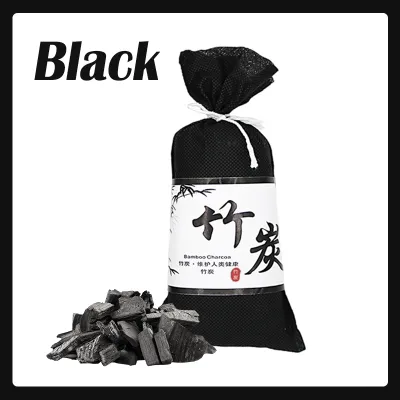

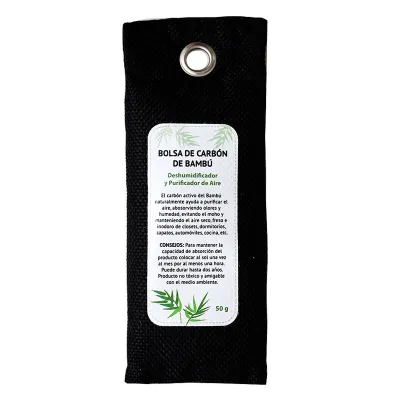
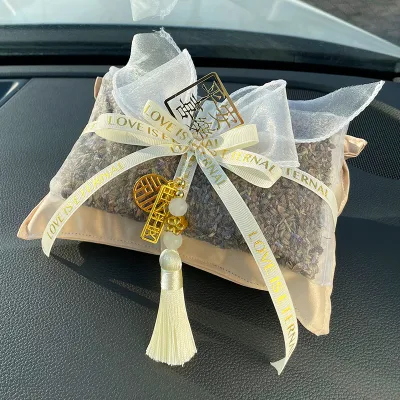

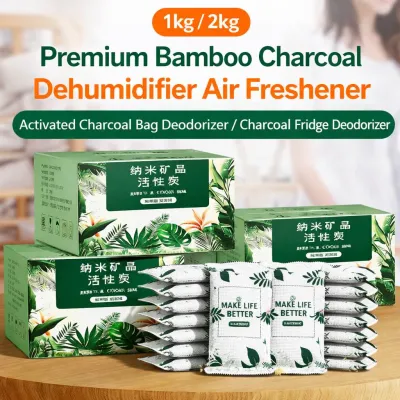
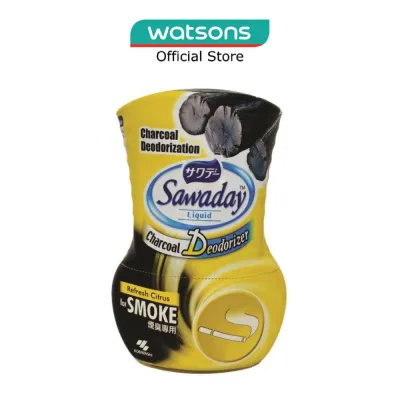
Prices are valid at publication and may change. Please refer to the product page for the latest price.
In Singapore’s highly humid environment, the ambient air is constantly saturated with water vapor. Because charcoal is highly hygroscopic, it naturally draws in this airborne moisture alongside odor-causing compounds. This creates a highly competitive environment within the microscopic pores. Water molecules quickly crowd out and occupy the active sites on the charcoal’s surface, significantly reducing the remaining surface area available to trap actual odor molecules. Consequently, a deodorizer exposed to constant high humidity will lose its odor-absorbing capacity much faster than one used in a dry climate.
Extreme cabin heat further complicates this process. When a vehicle is parked under direct sunlight in Singapore, interior temperatures can easily climb past 60°C. This intense thermal energy acts directly on the saturated charcoal, increasing the kinetic energy of the trapped molecules. If the charcoal has already reached its holding capacity, this extreme heat can trigger a process known as desorption, or off-gassing. During desorption, the weak physical bonds holding the trapped odors and moisture to the pore walls break down, causing the deodorizer to release previously absorbed smells and dampness back into the stagnant cabin air.
Because of these competing physical processes, the effectiveness of a car charcoal bag naturally fluctuates throughout the day as cabin temperatures and humidity levels swing. It is also important to recognize that while charcoal is an excellent tool for daily air maintenance, it is a passive medium. It cannot serve as a substitute for resolving active, severe moisture issues, such as a leaking air-conditioning evaporator, clogged cabin air filters, or rainwater pooling beneath the carpet from a degraded door seal.
Signs Your Charcoal Deodorizer is Saturated or Failing
Rather than relying on arbitrary expiration dates printed on product packaging, car owners should use physical and sensory checks to determine when a charcoal deodorizer has reached its limit. Because local humidity accelerates saturation, a visual and tactile inspection is the most reliable way to assess the current state of the charcoal media.

Start by physically handling the deodorizer bag to check its weight and texture. As charcoal absorbs moisture, it becomes noticeably heavier than it was when first unpacked. Gently squeeze the bag; if the charcoal granules inside feel clumped, hard, or doughy rather than loose and free-flowing, the inner media has become deeply saturated with water. This clumping indicates that the pores are completely filled, preventing any further air filtration.
Sensory changes within the cabin are another clear indicator of saturation. Pay close attention to the air quality when you first enter your vehicle after it has been parked in the sun, particularly when you first switch on the air conditioning. If you notice a sudden wave of musty, damp, or stale food odors—often referred to as the “hot car” smell—that does not dissipate after a few minutes of driving, the charcoal has likely begun to off-gas. This indicates that the deodorizer is no longer acting as a sink for odors but is instead contributing to the cabin’s air quality issues.
In Singapore’s tropical climate, you should perform these physical and sensory checks at least once a month. While manufacturers in temperate countries often claim their products can last up to two years without attention, high ambient humidity means a car deodorizer can reach temporary saturation in as little as four to six weeks. The exact rate of saturation depends heavily on your daily passenger load, how often you drive during rainy monsoon periods, and whether food or drinks are frequently consumed inside the vehicle.
It is equally crucial to differentiate between a temporarily saturated deodorizer and an active, underlying odor source. If you notice a persistent, localized smell—such as a sour odor near the passenger footwell or a chemical scent from the air vents—take the time to inspect the cabin thoroughly. Check for damp spots under the floor mats, inspect the cabin air filter for debris, and look for signs of mold growth. A passive charcoal bag cannot neutralize a continuous source of decay or moisture, and attempting to resolve such issues solely with a deodorizer will result in rapid, permanent failure of the product.
How to Recharge and Maintain Charcoal Deodorizers in a Tropical Climate
Fortunately, the adsorption process is highly reversible. You can easily restore a saturated charcoal deodorizer’s performance through a simple maintenance process known as “recharging.” Recharging uses thermal energy and natural ultraviolet (UV) radiation to break the physical bonds between the carbon pores and the trapped moisture or odor molecules, allowing them to escape and leaving the charcoal clean and ready to use again.
To safely and effectively recharge your charcoal deodorizer, follow these step-by-step instructions:
- Remove the bag from the vehicle: Never attempt to recharge a charcoal bag by leaving it on your car's dashboard with the windows rolled up. The trapped moisture and odors will simply evaporate into the closed cabin and settle back onto your seats, headliner, and carpets.
- Expose to direct sunlight: Place the deodorizer bag outdoors in an unshaded area that receives direct, intense sunlight, such as a balcony, patio, or open-air carpark floor. Direct sunlight is essential, as window glass can filter out the UV rays needed to help clear the pores.
- Leave for several hours: Allow the bag to sit in the sun for at least two to three hours. This gives the heat enough time to penetrate deep into the center of the charcoal mass.
- Flip the bag halfway through: Turn the bag over after the first hour and a half to ensure that both sides receive equal heat and solar exposure, promoting uniform drying and desorption.
- Allow to cool: Before returning the bag to your car, let it sit in a shaded, dry indoor area until it cools down to room temperature. This prevents warm, moisture-seeking air from immediately saturating the hot charcoal.
In Singapore’s climate, you must adjust your maintenance schedule to account for the high humidity. Rather than waiting for the multi-month intervals suggested by global brands, aim to recharge your charcoal bags bi-weekly, or even weekly during the wet monsoon seasons. This proactive approach prevents the charcoal from reaching a state of deep, stubborn saturation where odors become difficult to clear.
When positioning and handling your deodorizer, always prioritize safety and material care. First, check the applied product’s label and your vehicle manufacturer’s interior care instructions. Never place a charcoal bag directly onto delicate leather upholstery or soft-touch plastic surfaces without a protective barrier, such as a small tray or a dry microfiber cloth. Under extreme cabin heat, some lower-quality outer bags can transfer heat or leak fine carbon dust, which can permanently stain or discolor sensitive automotive materials.
Additionally, ensure the deodorizer is placed in a secure location where it cannot slide or roll. A loose charcoal bag placed on the floor or dashboard can easily slide under the brake pedal or become a dangerous projectile during sudden braking or an emergency maneuver. Secure it using built-in straps, place it in a dedicated mesh pocket, or wedge it firmly under a seat where its movement is restricted.
Even with meticulous maintenance, charcoal deodorizers have a finite lifespan. You will eventually need to replace the unit when the outer fabric begins to fray, tear, or leak dust, or if the charcoal inside has degraded into a fine, muddy paste that no longer dries out. If a bag fails to eliminate mild cabin odors even after a full afternoon of direct sun exposure, its physical pore structure has become permanently clogged with heavy, non-volatile compounds, indicating that it is time for a replacement.
Choosing and Positioning Charcoal Deodorizers for Humid Conditions
When the time comes to replace your car’s deodorizer, selecting a product specifically suited to tropical conditions can make a significant difference in how long it remains effective. The physical design of the deodorizer plays a major role in how well it handles high humidity.
Start by evaluating the packaging and material of the outer bag. The charcoal must be enclosed in a highly breathable, durable fabric that allows for rapid air and moisture exchange. Natural materials like linen, cotton, or high-density, multi-layer non-woven fabrics are ideal because they feature a loose weave that lets air pass freely while containing fine charcoal dust. Avoid any products packaged in thick synthetic sleeves, plastic casings with minimal ventilation slots, or decorative covers that restrict airflow, as these designs will severely limit the charcoal’s ability to interact with the cabin air.
Next, consider the physical form factor of the charcoal. Deodorizers are generally available in three main styles, each with distinct characteristics:
- Loose Granules: Typically packaged in soft linen bags, loose granules offer the highest surface-area-to-volume ratio. This design allows for rapid moisture and odor adsorption, making it the most effective option for highly humid cabins.
- Solid Carbon Blocks: These are dense, molded blocks of charcoal. While highly durable and dust-free, they have a lower active surface area compared to loose granules, meaning they adsorb odors more slowly in stagnant air.
- Hanging Sachets: Small and convenient, these are designed to hang from headrests or grab handles. While they offer excellent air exposure, they must be hung securely to prevent them from swinging and distracting the driver or damaging interior trim.
Strategic placement is key to maximizing the performance of your chosen deodorizer. To work efficiently, charcoal requires active air circulation. Position your deodorizer bags in areas where cabin air naturally flows, such as directly beneath the front seats (near the under-seat air vents) or close to the center console. Avoid placing them in deep, enclosed, or stagnant areas like the glove compartment, tight door pockets, or the bottom of the spare wheel well in the boot, as the lack of airflow in these pockets will render the charcoal largely ineffective.
Finally, consider using multiple smaller bags rather than a single large one. In a typical passenger car, distributing three or four smaller 100g to 200g charcoal bags throughout the cabin is far more effective than relying on one massive 500g bag. Placing smaller bags under the driver’s seat, the front passenger seat, and on the rear parcel shelf ensures more uniform humidity control and faster, localized odor adsorption across the entire interior space.
Frequently Asked Questions (FAQ)
Is It Safe to Use a Hairdryer or Oven to Recharge Charcoal?
You should strongly avoid using high-heat household appliances like kitchen ovens, toaster ovens, or microwaves to speed up the recharging process. The outer bags of car deodorizers are typically made of natural fibers or synthetic blends that can easily scorch, melt, or ignite at typical oven temperatures, presenting a severe fire hazard. Microwaves are equally dangerous, as they can cause localized superheating and spark fires within the dry carbon structure.
While a hairdryer set to a low, cool air setting can help dry out superficial surface moisture on the outer bag, it lacks the deep-penetrating heat and essential UV radiation required to clear the microscopic pores deep within the charcoal mass. To ensure both safety and effectiveness, always stick to natural, direct sunlight as your primary method for recharging charcoal deodorizers.
Activated Charcoal vs. Bamboo Charcoal: Which Handles Humidity Better?
Activated charcoal and bamboo charcoal differ primarily in their internal pore structure and manufacturing processes. Activated charcoal undergoes physical or chemical activation at extremely high temperatures, which creates an incredibly dense network of micro-pores. This gives it an exceptionally high surface area per gram, allowing it to adsorb gaseous odors and volatile organic compounds very rapidly. Bamboo charcoal, while also porous, is produced through a simpler carbonization process that results in a wider mix of macro-, meso-, and micro-pores.
In Singapore’s highly humid environment, both materials are highly susceptible to moisture saturation. While activated charcoal’s dense micro-pores make it highly efficient at trapping odors initially, those same tiny pores can clog very quickly when exposed to dense water vapor. Bamboo charcoal’s slightly larger average pore size allows it to manage moisture absorption and release somewhat more progressively. Ultimately, neither material is immune to tropical humidity, and both require the same regular bi-weekly sun-recharging routine to remain functional. Rather than focusing solely on the material type, prioritize buying products with highly breathable packaging and committing to a consistent maintenance schedule.

Community discussion
Share your experience or ask a question. Comments are reviewed before publication.