
Selecting the right bicycle light set is not as simple as choosing the highest number on the packaging. To ride safely and legally, you must match your light’s brightness to your specific riding environment. As a general rule, a front light of 100 to 300 lumens is sufficient for well-lit city streets, while dark park connectors require 300 to 800 lumens. Technical off-road trails demand 800 to 2,000 lumens or more.
Focusing solely on raw brightness can lead to rapid battery drain, wasted money, and dangerous glare that blinds oncoming traffic. Understanding the relationship between light output, beam shape, and local regulations will help you choose a balanced setup that keeps you visible and safe on every ride.
Decoding Lumens and Lux: What the Brightness Numbers Mean
When shopping for a bicycle light set, you will primarily see brightness advertised in lumens. Lumens measure the total amount of visible light emitted by a source in all directions. While a high lumen count indicates a powerful light source, it does not tell you how effectively that light is projected onto the path ahead.
Products mentioned in this guide
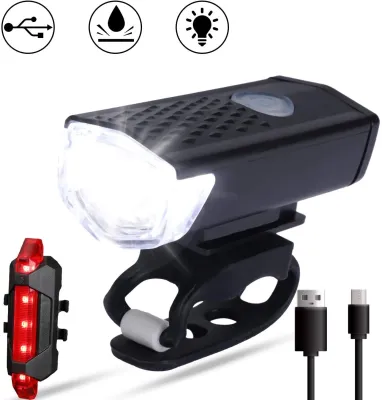
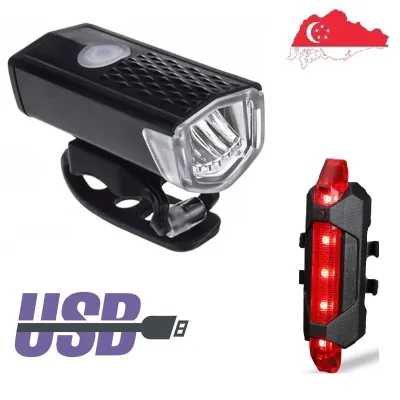
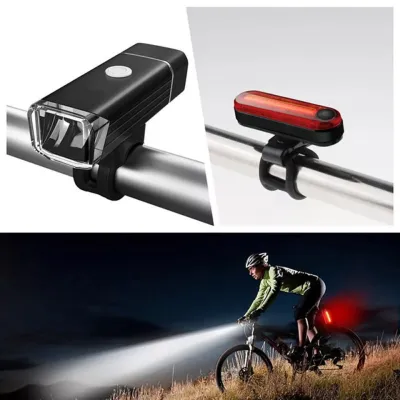
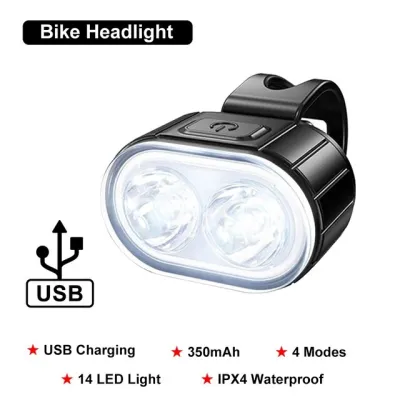
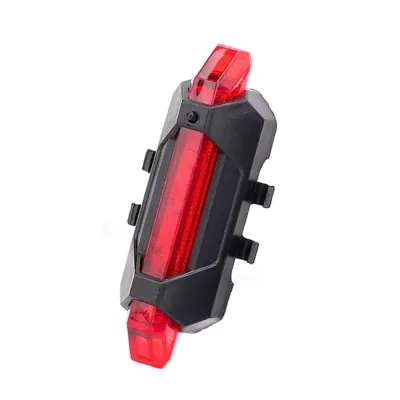
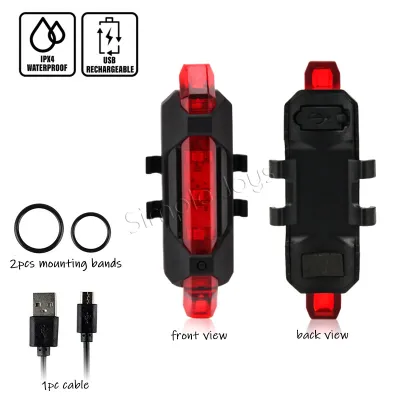
Prices are valid at publication and may change. Please refer to the product page for the latest price.
This is where lux becomes important. Lux measures light intensity over a specific surface area; one lux equals one lumen per square meter. A light with high lumens but a poorly designed lens will scatter light widely, resulting in low lux on the ground. Conversely, a well-engineered light with lower lumens can use a focused lens to deliver high lux exactly where your eyes need it.
Additionally, you must distinguish between peak lumens and sustained lumens. Many manufacturers advertise a peak or “burst” lumen rating, which the light can only maintain for a few minutes before thermal throttling kicks in to prevent overheating. For realistic performance, always look for the rated or sustained lumen output, which represents the continuous brightness level the light can maintain over a typical ride.
Matching Lumens to Your Riding Environment
The ideal brightness for your bicycle light set depends heavily on ambient light levels and your riding speed. Faster riding requires a brighter light with a longer throw, giving you adequate time to react to obstacles. Before purchasing, you must also consider local traffic regulations regarding active mobility. In Singapore, the Land Transport Authority (LTA) mandates that cyclists use a white light on the front and a red light or reflector on the rear during hours of darkness, and these lights must be positioned to avoid dazzling other road users.

Urban Commuting on Well-Lit Streets
When commuting through heavily illuminated urban areas, such as major roads in downtown Singapore, your primary safety objective is “to be seen” by motorists, pedestrians, and other cyclists rather than to light up a dark road. The streetlights already provide sufficient ambient illumination for you to see the pavement clearly.
For these well-lit environments, a front light output of 100 to 300 lumens is perfectly adequate. Using a light within this range prevents you from blinding oncoming traffic while ensuring you remain highly visible. Opt for a light set that features dedicated daytime running modes or pulsing patterns. These modes draw less power, significantly extending your battery life, and create a distinct visual signature that helps drivers spot you in busy urban traffic.
Unlit Paths and Shared Park Connectors
If your route includes mixed-use paths, coastal routes, or the Park Connector Network (PCN), ambient lighting can become sparse or non-existent. In these darker zones, your light set must transition from a beacon to a pathfinder, allowing you to actively see the ground ahead.
For unlit paths, look for a front light that delivers between 300 and 800 lumens. This range provides enough illumination to spot sudden hazards such as potholes, wet leaves, stray branches, and pedestrians walking in low-light areas. When riding on shared paths, a balanced beam pattern is essential. You need enough lateral spread (flood) to monitor the path edges, combined with enough forward reach (spot) to react at moderate speeds, all while keeping the beam angled downward to avoid casting glare directly into the eyes of oncoming joggers or other cyclists.
Off-Road Trails and Mountain Biking
Off-road trail riding and mountain biking present the most demanding conditions for any bicycle light set. Technical dirt trails, dense foliage, and unpredictable terrain like roots, rocks, and sudden drops require maximum visibility to navigate safely at speed.
For trail riding, you will need a high-output system ranging from 800 to 2,000+ lumens. Because trail obstacles can appear from any angle, a single handlebar light is rarely sufficient. Most off-road riders utilize a dual-light setup: a wide flood beam mounted on the handlebars to illuminate the immediate ground and trail boundaries, paired with a focused spot light mounted on their helmet. The helmet light is crucial because it projects light wherever you look, allowing you to see through tight corners and prepare for obstacles before your bike frame turns.
Crucial Specs Beyond Lumens: Beam Pattern and Safety
A high lumen rating is useless if the light is directed into the sky or concentrated into a tiny, unusable spot. Beam pattern design dictates how safely and efficiently a light performs in the real world.
- Flood Beams: These cast a wide, short-range wash of light, making them ideal for slow-speed navigation, trail riding, and maximizing side visibility in urban areas.
- Spot Beams: These focus light into a narrow, long-range beam, allowing you to see far down the road when riding at high speeds.
- Shaped Beams (Cut-off Lines): Premium commuter lights often feature a shaped beam with a sharp upper cut-off line, similar to automotive headlights. This design directs all light downward onto the road surface and prevents it from rising into the eyes of oncoming traffic.
To prevent blinding others, always mount your front light parallel to the ground or angled slightly downward. Even a moderate 400-lumen light can cause temporary blindness to an oncoming cyclist if angled too high.
Furthermore, consider the direct relationship between high lumens and battery consumption. Running a light at its maximum output drains the battery rapidly. When evaluating a bicycle light set, check the manufacturer’s runtime specifications at your required operating brightness rather than just the maximum setting. A light that can run for four hours at a sustained 400 lumens is far more useful for daily commuting than one that runs for only 45 minutes at a peak 1,000 lumens.
Common Brightness Mistakes to Avoid
One of the most common mistakes is purchasing an excessively high-lumen light for casual city commuting. While a 1,500-lumen light might seem like a premium upgrade, using it on public roads at full power is counterproductive. It wastes battery life, generates excessive heat that can degrade the internal electronics, and creates a safety hazard by blinding oncoming drivers and pedestrians.
Another frequent error is relying on cheap, unbranded lights that advertise astronomical lumen ratings, such as “5,000 lumens” at an incredibly low price. These claims are almost always unverified peak metrics or outright fabrications. These lights often lack proper thermal management, meaning they will quickly overheat and dim, or suffer from poor optical design that scatters light inefficiently.
Remember that a well-engineered 400-lumen light from a reputable manufacturer, featuring a high-quality reflector and lens, will consistently outperform a cheap “1,000-lumen” light. Investing in quality optics ensures that every lumen produced is directed precisely where it is needed to keep you safe on the road.
Frequently Asked Questions (FAQ)
Is a higher lumen count always better for a bicycle light set?
No, a higher lumen count is not always better. Excessive lumens on public roads or shared paths can blind oncoming traffic, pedestrians, and other cyclists, creating dangerous riding conditions. High-lumen lights also drain batteries much faster and generate more heat. The best light set is one that matches your specific riding environment with an appropriate beam pattern and sufficient runtime.
Do I need a separate rear light if my front light is very bright?
Yes, a rear light is absolutely essential and cannot be replaced by a bright front light. Front lights are designed to illuminate your path and make you visible from the front, whereas rear lights (which must be red) make you visible to motorists and other road users approaching from behind. Using both lights is a basic safety requirement and is legally mandated in many jurisdictions, including Singapore.
How does weather affect the lumens I need?
Rain, wet asphalt, and fog significantly reduce visibility because water droplets scatter light and wet roads absorb it rather than reflecting it back to your eyes. In wet or foggy conditions, you may need a slightly higher lumen output to maintain the same level of visibility. However, to prevent back-glare in heavy fog, you should angle your light further downward and use a steady, low-intensity beam rather than a high-power flashing mode.
Community discussion
Share your experience or ask a question. Comments are reviewed before publication.