
Grasse car perfumes are highly sought after by drivers who want a premium sensory experience on their daily commutes. Inspired by or directly sourced from the historic perfume capital of Grasse, France, these air fresheners utilize sophisticated essential oil blends rather than cheap, synthetic single-note chemicals. They offer layered olfactory profiles, often featuring top notes of citrus or lavender, heart notes of rose or jasmine, and rich base notes of cedarwood, amber, and musk.
However, when these premium products are imported into Singapore’s tropical climate, their performance characteristics change. Standard product longevity claims—often promising 60 to 90 days of continuous fragrance—are typically based on temperate climate testing. In those regions, ambient temperatures average a mild 15°C to 22°C with moderate humidity. In contrast, Singapore experiences consistent year-round ambient temperatures of 31°C to 33°C, with relative humidity levels frequently hovering between 80% and 100%.
This persistent heat and moisture drastically accelerate the rate of evaporation. When a vehicle is parked outdoors, solar radiation turns the cabin into a greenhouse, with internal temperatures easily climbing past 60°C. Under these conditions, volatile fragrance compounds evaporate at an exponential rate. Consequently, Singaporean motorists should expect a compressed lifespan for their car perfumes. While a liquid-based Grasse perfume might last two months in Europe, it may only deliver three to four weeks of optimal fragrance in a car parked regularly in open-air carparks. Understanding this difference helps set realistic expectations and guides better purchasing and placement decisions.
Products mentioned in this guide
![[Local InStocks 2days Delivery] Bullsone Grasse Diffuser Blackberry & Cherry/Grapefruit/Pure Cotton Aroma](https://img.lazcdn.com/g/ff/kf/Sacb589cd6b794d9c971257c703170f3eY.jpg_400x400q80.jpg_.webp)
Prices are valid at publication and may change. Please refer to the product page for the latest price.
How Heat and Humidity Change Your Fragrance Profile
To understand why your car perfume behaves differently in the tropics, it is helpful to look at the chemistry of fragrance evaporation. Perfumes are formulated using a pyramid of notes with varying degrees of volatility. Top notes are the lightest and most volatile; they are designed to provide the initial burst of scent. Heart notes emerge next to form the core of the fragrance, while heavy base notes linger the longest.
In Singapore’s intense cabin heat, this delicate balance is disrupted. When your car sits under the sun, the extreme heat causes the highly volatile top notes—such as bergamot, lemon, or light marine accords—to flash off almost immediately. Within just a few days of opening a new bottle, these refreshing notes may disappear entirely. This leaves behind only the heavier, denser base notes like patchouli, vanilla, or musk. As a result, the fragrance profile can feel flat, heavy, or overly sweet, lacking the complex progression intended by the perfumer.
High relative humidity further complicates how we perceive the scent. Moisture-laden air binds with the dispersed fragrance molecules, preventing them from circulating freely throughout the cabin. Instead of a subtle, well-distributed aroma, the scent can become concentrated in pockets of stagnant air. In high-humidity conditions, heavy fragrance notes can feel cloying and suffocating, potentially causing headaches or olfactory fatigue during long drives along the Pan Island Expressway (PIE) or Central Expressway (CTE).
Furthermore, Singaporean drivers subject their car interiors to severe thermal cycling. Every day, a car transitions from a baking-hot parking lot to a cool, air-conditioned cabin running at 20°C to 22°C, only to return to extreme heat once parked again. This constant, dramatic temperature fluctuation breaks down the chemical stability of both natural essential oils and synthetic carriers. Over time, this thermal stress can cause the perfume to oxidize, leading to a distorted, chemical, or metallic smell that bears little resemblance to the original fragrance.
Choosing the Most Climate-Resilient Perfume Format
When shopping for a Grasse car perfume in Singapore, selecting the right physical format is just as important as choosing the scent itself. Different formats interact uniquely with heat, humidity, and cabin airflow, directly affecting both scent longevity and vehicle safety.

Liquid Perfumes and Diffusers
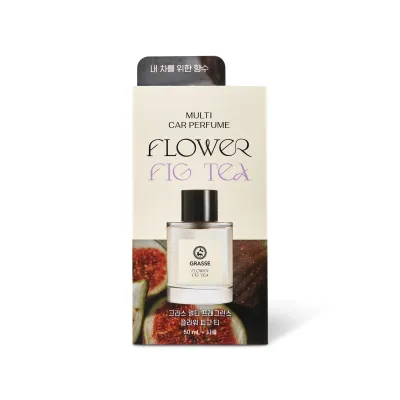
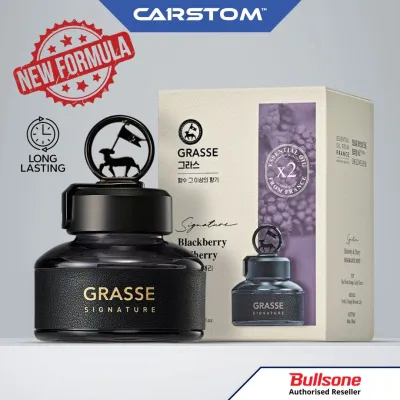
Liquid car perfumes, including wooden-cap diffusers and hanging glass bottles, are popular for their strong scent throw and elegant appearance. In these designs, the liquid perfume is absorbed into a porous wooden lid or dispersed via a reed, allowing the fragrance to evaporate continuously into the cabin. While this provides a highly noticeable and premium aroma, it is the most vulnerable format to Singapore’s tropical climate.
The high ambient heat causes liquid formats to evaporate at an extremely rapid pace, significantly shortening their lifespan. Additionally, liquid perfumes are highly susceptible to thermal expansion. As the air and liquid inside the bottle heat up, internal pressure increases, which can force the liquid to leak or seep through the cap. This poses a major hazard: car perfume formulations often contain strong solvents, alcohol, or concentrated oils that are highly corrosive. If this liquid drips onto your dashboard, center console, or leather seats, it can permanently dissolve soft-touch plastics, strip protective coatings off infotainment screens, or stain and crack premium upholstery.
Before installing any fragrance product, always check the applied product’s label and your vehicle manufacturer’s care instructions for interior materials. If the instructions conflict, the interior material is unidentified, or the specific use is not covered, stop and consult the vehicle manufacturer or a qualified professional detailer before proceeding. Always verify that the container features a secure, leak-proof mounting mechanism and check your car’s manual to ensure it is placed away from sensitive electronic components.
Solid Gels and Ceramic Diffusers
For drivers seeking a more stable and low-maintenance option, solid gel air fresheners and porous ceramic diffusers offer excellent climate resilience. Solid gels use a polymer or gelling agent to trap the fragrance oils, allowing them to release slowly as the gel exposed to air gradually shrinks. Ceramic diffusers work by absorbing fragrance oils into a baked clay or ceramic element, which then releases the scent through passive evaporation.
Because the fragrance molecules are physically bound within a solid matrix, these formats are much less susceptible to rapid, heat-induced flash-off. They provide a highly consistent, subtle release of scent over a longer period, making them ideal for Singapore’s stable high temperatures. However, they are not entirely immune to the climate. Prolonged exposure to extreme heat can cause solid gels to dry out prematurely, lose their elasticity, or even melt into a sticky residue. Ceramic diffusers are highly durable and pose zero risk of leakage, but their scent throw can weaken over time as the porous surface accumulates dust or cabin moisture, requiring periodic replacement or re-saturation with fresh oil.
Vent Clips and Hanging Cards
Vent clips and hanging cardboard cards represent two very different approaches to fragrance delivery, each with distinct advantages and trade-offs in a tropical environment. Vent clips are active diffusers that rely on the car’s air conditioning system to disperse the scent. When the AC is turned off, the lack of airflow significantly reduces the rate of evaporation, effectively “pausing” the fragrance release while the car is parked in the sun.
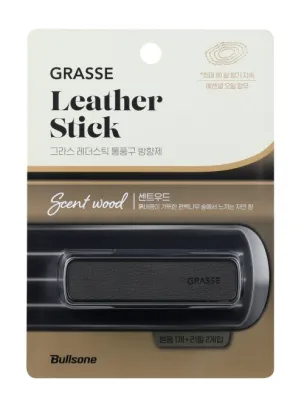
This active-only mechanism makes vent clips highly efficient, often outlasting passive liquid diffusers by several weeks. However, you must ensure the clip mechanism is compatible with your vehicle’s specific vent design to prevent scratching the delicate plastic louvers or blocking air distribution. Hanging cards, on the other hand, are passive, low-cost options that hang from the rearview mirror or grab handles. While highly convenient, they have the shortest lifespan in Singapore’s climate. The thin cardboard quickly becomes saturated with ambient humidity, which dampens its ability to hold and throw scent. Within a week or two of exposure to the humid air, the card’s fragrance is often completely depleted, making it a less cost-effective long-term solution.
Safe Placement and Care to Protect Your Car and Scent
Proper placement of your Grasse car perfume is critical not only for maximizing its lifespan but also for protecting your vehicle’s interior from costly damage. In Singapore, a car parked in an open-air lot under the midday sun acts as a thermal trap. Cabin temperatures can easily exceed 60°C to 70°C, while the dashboard surface itself can reach temperatures hot enough to cause physical burns.
- Avoid the Dashboard: First and foremost, never place liquid perfumes, gel canisters, or aerosol-based air fresheners directly on the dashboard or in areas exposed to direct sunlight. The intense heat and UV radiation will rapidly degrade the chemical structure of the perfume, causing it to lose its scent within days. More importantly, extreme heat can cause plastic or glass containers to crack, warp, or leak. A single drop of spilled perfume oil on a hot dashboard can strip the matte finish off the plastic or cause expensive leather wrapping to bubble and peel.
- Optimal Shaded Placement: Instead, opt for shaded, lower areas of the cabin where temperature fluctuations are less severe. Shaded cup holders in the center console, door side pockets, or the space underneath the front seats are excellent locations. These areas remain significantly cooler than the dashboard and are shielded from direct UV rays, allowing the perfume to evaporate at a much more controlled, predictable rate.
- Vent Clip Best Practices: If you use a vent-clipped Grasse perfume, install it on a vent that you use regularly but avoid placing it on the center vents directly facing the driver or front passenger. Blasting concentrated fragrance directly into your face can lead to olfactory fatigue—where your nose becomes desensitized to the scent—or cause eye and throat irritation. Placing it on a side vent or adjusting the vent louvers slightly away from your face ensures a pleasant, diffuse aroma throughout the cabin.
- Environmental Maintenance: You can also take proactive steps to lower your car's internal temperature, which indirectly preserves your perfume. Always use a high-quality, reflective front sunshade when parking outdoors. This simple accessory can lower cabin temperatures by up to 15°C, reducing the thermal stress on your perfume and your car's interior materials. Additionally, when returning to a hot car, open all the doors or roll down the windows for a full minute to let the trapped hot air escape before turning on the air conditioning. This rapidly cools the cabin and prevents the sudden thermal shock that can destabilize your perfume's chemical bonds.
Observable Signs Your Car Perfume Has Degraded
Rather than relying on a generic calendar timeline to decide when to replace your Grasse car perfume, you should learn to recognize the physical and olfactory signs of degradation. Singapore’s harsh climate can cause products to expire well before their official shelf life or advertised duration.
- Visual Indicators: Regularly inspect your car perfume for physical changes. For liquid formats, look for signs of discoloration, such as a clear liquid turning dark yellow, brown, or cloudy. This indicates that the essential oils have oxidized due to UV exposure and heat. You may also notice a separation of layers, where the fragrance oils detach from the carrier solvent, appearing as oily droplets floating on top. For solid gels, severe shrinkage, cracking, or a tough, rubbery texture indicates that the moisture and fragrance carriers have completely evaporated, leaving behind an inactive polymer block.
- Olfactory Indicators: Your nose is the most reliable tool for detecting a degraded perfume. If the scent suddenly turns sour, rancid, or excessively sharp, the chemical bonds of the fragrance oils have broken down. A strong, medicinal, or purely alcoholic smell upon entering the car is another clear sign of oxidation. When a perfume reaches this state, it will no longer provide a pleasant aroma and should be discarded immediately to prevent headaches or respiratory discomfort.
- Check the Packaging: Always check the product packaging for the manufacturer's expiration date or the Period After Opening (PAO) symbol, which is typically represented by an open jar icon with a number followed by an "M" (e.g., 6M for six months). Keep in mind that these estimates are calculated under ideal storage conditions. In Singapore's tropical environment, the actual usable lifespan of the product once opened will almost always be shorter than the printed estimate, making regular visual and olfactory checks essential.
Frequently Asked Questions (FAQ)
Does running the air conditioning extend the life of car perfume?
Running your vehicle’s air conditioning has a dual, contrasting effect on the longevity of your car perfume. On one hand, the AC lowers the cabin temperature and reduces relative humidity, which directly slows down the natural thermal evaporation of the perfume oils and protects the chemical formulation from heat-induced degradation. On the other hand, the active airflow generated by the AC blower forces air over the perfume diffuser, dispersing the fragrance molecules into the cabin at a much faster rate than passive evaporation.
To optimize both scent throw and product lifespan, the key is balance. If you use a vent clip, avoid running your air conditioning blower at maximum speed for extended periods, as this will deplete the fragrance rapidly. Instead, use a moderate fan setting and utilize the recirculate mode on your climate control system. Recirculating the air keeps the cooled, scented air inside the cabin rather than constantly venting it outside, allowing you to enjoy a consistent fragrance level while maximizing the lifespan of your Grasse car perfume.

Community discussion
Share your experience or ask a question. Comments are reviewed before publication.