
Using a portable air blower to dry your vehicle after a wash is an appealing way to avoid contact scratches and speed up your detailing routine. By utilizing high-velocity air to sweep water off the paint, you eliminate the friction associated with dragging a towel across the clear coat, which is the primary cause of unsightly swirl marks and micro-scratches. However, when evaluating the Hoto blowvac for car drying, the short answer is that it is an exceptionally useful auxiliary tool for targeted crevice drying, but it cannot completely replace a high-quality microfiber drying towel for the entire exterior of your vehicle.
While compact cordless blowers offer incredible convenience and freedom of movement, they operate under different physical constraints than dedicated, high-power commercial car dryers. Understanding these limitations—and learning how to integrate the device into a smart, hybrid drying workflow—is the key to achieving a flawless, spot-free finish without exhausting your battery or your patience.
Assessing the Blower Capabilities for Exterior Drying
To understand how the Hoto blowvac performs on a wet vehicle, it is essential to distinguish between two key aerodynamic metrics: air volume, measured in Cubic Feet per Minute (CFM), and air velocity, measured in miles per hour or meters per second (m/s). Dedicated commercial car dryers utilize massive, mains-powered AC motors to produce both high velocity and high volume. This combination allows them to move entire sheets of water off a car’s hood in a single pass. In contrast, portable multi-tool blowers like the Hoto blowvac are designed for versatility, utilizing a compact, battery-powered brushless motor. They generate impressive air velocity through narrow nozzles, which is highly effective for localized tasks, but they lack the massive volumetric flow rate (CFM) required to clear large flat panels quickly.
Products mentioned in this guide
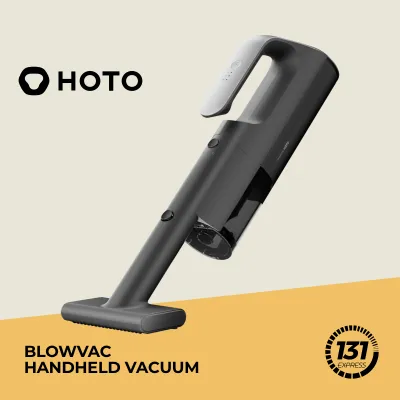
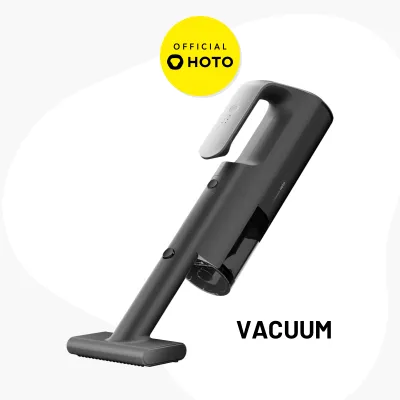
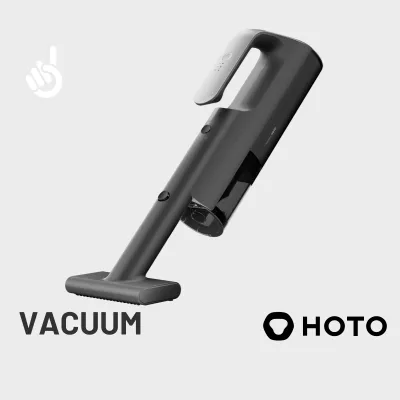
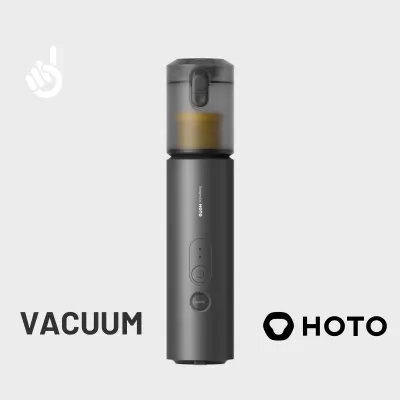
Prices are valid at publication and may change. Please refer to the product page for the latest price.
Before attempting to dry your vehicle, you must check your specific Hoto blowvac model’s labeled airspeed, motor type, and battery capacity. Hoto produces several variations of compact blowers and multi-use vacuums, and their performance profiles vary. Models equipped with high-efficiency brushless motors running at high RPMs will deliver the static pressure necessary to shear water droplets off a surface, whereas lower-tier brushed motor models may struggle to push water that has bonded to an unprotected clear coat. Additionally, check the battery watt-hour (Wh) rating; operating the device continuously on its highest speed setting draws maximum current, which rapidly depletes smaller lithium-ion battery packs.
Local environmental factors also play a critical role in how you should deploy this tool. In Singapore’s tropical climate, high ambient heat and intense humidity create a challenging environment for car detailing. While high humidity slightly slows down the natural evaporation rate of water, the intense heat radiating from automotive panels accelerates it dramatically. If your drying process is too slow, standing water droplets will evaporate directly on the paint, leaving behind mineral deposits. These minerals, commonly referred to as water spots, can quickly etch into the clear coat if left untreated. Because a compact blower takes longer to clear broad surfaces, relying solely on it in hot conditions increases the risk of these spots setting before you can finish the job.
Step-by-Step Guide to Air-Drying Your Car
To get the most out of your portable blower while safeguarding your vehicle’s paint, you must follow a systematic approach. This step-by-step sequence ensures maximum efficiency and prevents common detailing mishaps.

Preparation
First, verify that your Hoto blowvac is fully charged before you begin washing the vehicle. Lithium-ion batteries experience a voltage drop as they deplete, which directly reduces the motor’s RPM and resulting airspeed. Next, ensure the vehicle has been thoroughly washed and rinsed. This is a critical safety boundary: if any loose dirt, road grime, or abrasive grit remains on the paint, high-velocity air can lift and drag those particles across the clear coat, causing micro-marring. Always perform a meticulous rinse to ensure a perfectly clean surface.
Execution Sequence
Always work from the highest points of the vehicle downward, allowing gravity to assist the water movement. Start with the roof, then move to the windshield, glass surfaces, hood, trunk, upper side panels, and finally the lower rocker panels. Hold the blower nozzle at a 30- to 45-degree angle relative to the paint surface. Avoid pointing the nozzle directly down at a 90-degree angle, as this flattens the water droplets and splatters them rather than pushing them forward. Use steady, overlapping sweeping motions to guide the water off the edges of each panel.
Crevice Focus
Once the broad sections are managed, transition the blower to the vehicle’s notorious water traps. Direct the concentrated airflow into the side mirror housings, door handles, window weatherstripping, fuel filler door, headlight and taillight seams, and the front grille mesh. These areas trap water that gradually drips out long after you have finished drying, leaving unsightly run lines down your clean paint. The high static pressure of the compact nozzle easily dislodges this trapped water.
Verification
Conclude the process by walking around the vehicle to inspect your work. Look closely at large flat panels for any remaining water beads that could dry into spots. Check the bottom edges of the doors, the rear license plate recess, and the lower bumper areas for any fresh drips that have run down from the crevices you just cleared, and wipe them away immediately.
Hoto Blowvac vs. Microfiber Towels: Can It Replace Them?
When deciding whether a portable blower can completely replace traditional microfiber drying towels, a direct comparison of their strengths and weaknesses reveals distinct trade-offs in speed, safety, and physical capability.
On large, flat panels such as the hood, roof, and doors, a high-quality, heavy-duty twisted-loop microfiber towel is vastly more efficient than a compact blower. A large detailing towel can absorb and clear a massive volume of water in a single, effortless swipe taking only a few seconds. To clear the same surface area with the Hoto blowvac, you must meticulously sweep the narrow stream of air back and forth, which can take several minutes per panel. In hot weather, this time differential is the difference between a spot-free finish and a panel covered in dried mineral rings.
However, the blower holds a massive advantage when it comes to intricate areas and paint safety. Dragging a towel over emblems, badging, and complex grilles is not only ineffective but can also snag towel fibers and cause micro-scratches on the soft plastics surrounding these components. Furthermore, towels cannot reach the water hidden deep inside window seals or behind side mirror glass. The Hoto blowvac clears these areas completely touch-free, eliminating friction-induced wear on your paint and preventing post-wash drips.
Your vehicle’s surface tension also dictates the blower’s effectiveness. If the paint is bare and lacks protection, water will “sheet” and cling to the surface in flat pools. A compact blower lacks the volumetric power to push these heavy sheets of water off the car. Conversely, if your vehicle is protected with a high-quality wax, paint sealant, or ceramic coating, the water will bead up into tight, high-contact-angle droplets. These hydrophobic beads have very little surface tension holding them to the paint, allowing even a compact blower to slide them off the surface with ease.
Given these realities, the most efficient and safest method is a hybrid approach. Use a plush microfiber drying towel to quickly sweep away the bulk of the water on the large flat panels, preventing rapid evaporation. Immediately follow up with the Hoto blowvac to blow out the crevices, door jambs, side mirrors, wheels, and lug nuts. This combination delivers the speed of towel drying with the drip-free perfection of air drying.
Common Mistakes and Paint Safety Boundaries
Operating any high-velocity air tool near automotive paint requires adherence to basic safety boundaries to prevent accidental damage to your vehicle’s finish or the tool itself.
One of the most common mistakes is pointing the blower nozzle too close to the ground, gravel driveways, or dirty garage floors. The powerful air stream can easily kick up sand, small pebbles, and road grit. If these abrasive particles are drawn into the air current or ricochet off the floor onto your wet paint, they can act like a miniature sandblaster, leaving deep scratches in your clear coat. Always maintain a safe distance from the ground and keep the air stream directed upward and away from loose debris.
Thermal and battery management are also critical when using compact cordless devices. Running a high-RPM brushless motor continuously on its maximum speed setting generates significant internal heat. The Hoto blowvac is equipped with built-in thermal protection to prevent damage to the motor and battery cells. If the handle of the device becomes excessively hot, or if the thermal protection triggers an automatic shutdown, do not attempt to force the tool back on. Stop immediately and allow the device to cool down in a shaded area. Always have a backup drying towel ready so you can finish drying your car before the standing water dries on the panels.
Before you turn on the blower, always inspect the air intake grill and the internal filter. If the device has been stored in a dusty garage or car boot, the filter may have accumulated loose dust, lint, or pet hair. Turning on the device without checking can result in these particles being blasted directly onto your clean, wet vehicle, ruining your wash job and potentially scratching the paint. Clean or clear the intake filter regularly to ensure only clean air is projected onto your car.
Maximizing Efficiency for a Spot-Free Finish
To optimize your drying routine and get the best possible performance out of your compact blower, you can employ a few professional detailing techniques that minimize standing water before you even turn on the tool.
- The Sheeting Method: During your final rinse, remove the spray nozzle from your garden hose to leave an open end. Run a gentle, low-pressure stream of water starting at the top of the vehicle and moving down. If your paint has active hydrophobic protection, this slow-moving body of water will attach to the standing water and pull it down off the panels as it drains, leaving only a few scattered droplets behind. This drastically reduces the volume of water you need to clear with your blower or towel.
- The Touch-Up Towel: Keep a clean, dry, medium-sized microfiber towel draped over your shoulder while using the blower. As you blast water out of window seals, side mirrors, and emblems, use the towel to instantly catch and wipe up the displaced water before it has a chance to run down onto already-dried panels.
- Intake Maintenance: After every detailing session, take a moment to clear any lint or debris from the blower's intake filter. Store the device in its protective case in a cool, dry place out of direct sunlight. In hot climates, storing lithium-ion batteries in a cool environment is essential for preserving their long-term capacity and overall lifespan.
Frequently Asked Questions (FAQ)
Can the Hoto Blowvac completely replace microfiber drying towels?
No, it cannot completely replace microfiber towels for full-car drying. While it is highly effective at clearing water from crevices, wheels, and emblems, its limited air volume (CFM) means drying large flat panels like the hood and roof takes too long. In warm climates, this slow pace increases the risk of water spotting. A hybrid approach using a towel for flat surfaces and the blower for crevices yields the best results.
Is the blower strong enough to clear water from side mirrors and grilles?
Yes, portable blowers are exceptionally effective for these specific tasks. The concentrated, high-velocity airflow easily penetrates tight gaps, honeycomb grilles, badging, and side mirror housings, forcing out trapped water that towels cannot reach. This prevents annoying drips from running down your clean paint after you drive away.
Will the battery last long enough to dry an entire SUV?
It is unlikely that a single battery charge will last long enough to dry an entire SUV if you attempt to dry every panel with the blower alone. Running the device continuously on its highest speed setting drains the battery quickly. For larger vehicles, you should consult your specific model’s manufacturer specifications for high-speed runtime, and rely on a hybrid drying method to conserve battery power for the crevices.
Community discussion
Share your experience or ask a question. Comments are reviewed before publication.