
Customising your Honda HR-V is an exciting way to make this popular crossover stand out on the road. Among the various exterior modifications available, adding a spoiler is one of the most effective ways to alter the vehicle’s profile and express your personal style. However, choosing the right accessory involves more than just picking an appealing design. You must consider how the spoiler interacts with the HR-V’s distinct body lines, verify exact fitment across different model generations, and ensure the installation complies with local road safety regulations. This guide breaks down the primary spoiler styles available for the Honda HR-V, compares common materials, and outlines the essential compatibility and safety checks you need to perform before purchasing.
Main Spoiler Styles for the Honda HR-V
When exploring aftermarket options for your Honda HR-V, you will generally find three primary spoiler designs. Each style offers a distinct visual impact and alters the vehicle’s rear profile in a unique way.
Hatch lip spoilers are subtle, low-profile extensions that adhere directly to the trailing edge of the tailgate. Often referred to as ducktail spoilers, they offer a refined, factory-style upgrade. They do not drastically alter the vehicle’s silhouette but add a clean, sporty edge to the rear. Because they sit flush against the bodywork, they are highly aerodynamic and rarely interfere with rear visibility or automated car washes.
Products mentioned in this guide
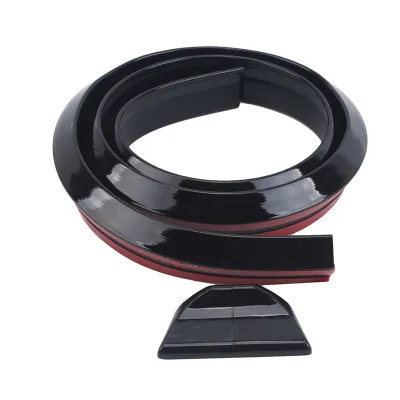
Prices are valid at publication and may change. Please refer to the product page for the latest price.
Roof spoilers are positioned at the very top of the rear windshield, extending the vehicle’s roofline backward. This style is particularly popular for crossovers and hatchbacks like the HR-V because it complements the sloping rear glass. A well-designed roof spoiler can make the vehicle look longer and lower, enhancing its athletic stance. Many aftermarket roof spoilers are designed to mimic or enhance the factory roof spoiler that comes on higher trim levels.
Rear wings are designed for drivers seeking a more aggressive, track-inspired aesthetic. These designs stand off the tailgate using pedestals or mounting brackets, creating a distinct gap between the wing blade and the vehicle body. While less common on standard crossovers, they make a bold visual statement. However, because they are physically larger and catch more wind, they require robust mounting solutions and careful consideration of rear-view obstruction.
How to Choose the Right Style for Your HR-V
Selecting the right spoiler style requires balancing your personal aesthetic goals with the practical realities of daily driving and the existing design of your vehicle.

The Honda HR-V features a coupe-like crossover silhouette, characterized by a sweeping roofline and a sharply angled rear hatch. When choosing a spoiler, consider how it will alter these lines. A subtle lip spoiler preserves the elegant, understated nature of the vehicle, while a roof spoiler accentuates the sloping roofline. An elevated rear wing, on the other hand, introduces sharp, aggressive angles that contrast with the factory curves.
While a large wing might look striking, it can introduce practical challenges. Consider your daily driving habits. A very tall or wide spoiler can obstruct your view through the rear-view mirror, making parking and lane changes more difficult. Additionally, if you regularly use automated car washes with spinning brushes, larger wings or poorly secured spoilers run a high risk of getting snagged and damaged.
Spoilers are typically manufactured from one of three materials, each with distinct trade-offs:
- ABS Plastic: This is the most common material for aftermarket spoilers. It is lightweight, relatively inexpensive, and highly durable. ABS spoilers are usually injection-molded, ensuring a precise fit. They are typically sold in a primed state requiring painting, or pre-painted to match common factory color codes.
- Polyurethane: Known for its flexibility and impact resistance, polyurethane is less prone to cracking than rigid plastics. However, it is heavier than ABS and requires meticulous preparation and priming before painting to ensure the paint adheres properly over time.
- Carbon Fiber: For a premium, high-tech look, carbon fiber spoilers offer exceptional strength-to-weight ratios. They feature a distinctive woven pattern and are usually finished with a clear, UV-resistant gloss coat. While they do not require painting, they are significantly more expensive and require high-quality UV protection to prevent yellowing under intense sunlight.
Compatibility, Installation, and Safety Checks
Before committing to a purchase, you must perform several critical checks to ensure the spoiler is compatible with your vehicle, safe to install, and compliant with local regulations.
Honda has produced multiple generations of the HR-V, with major design shifts occurring over the years. For instance, the second-generation HR-V has completely different tailgate dimensions and curves compared to the third-generation model. Even within the same generation, minor trim differences or regional variations can affect fitment. Always verify your vehicle’s exact model year, generation, and chassis code using the vehicle’s registration documents or VIN plate before ordering a part. Never rely solely on generic product titles.
Spoilers are secured using either automotive-grade double-sided adhesive tape or mechanical fasteners like bolts and screws. Adhesive mounting is non-invasive, requires no drilling, and preserves the factory metalwork, making it a popular choice for lightweight lip and roof spoilers. However, the surface must be meticulously cleaned and prepped for the adhesive to bond securely. Mechanical mounting involves drilling holes into the tailgate. While this provides maximum structural security for larger wings, it carries a risk of rust if the drilled holes are not properly sealed and treated. It can also void portions of your vehicle’s structural or paint warranty.
In Singapore, vehicle modifications must comply with Land Transport Authority (LTA) guidelines. According to local regulations, any aftermarket spoiler or body kit must not have sharp edges or corners that could pose a hazard to road users. Furthermore, the spoiler must not protrude beyond the lateral sides or the extreme front or rear of the vehicle. It must also not obstruct the driver’s view or block any safety equipment, including the high-mount stop lamp. Ensure any spoiler you select complies with these dimensions to avoid failing periodic vehicle inspections.
While installing an adhesive-backed lip spoiler is a manageable weekend project for many DIY enthusiasts, certain scenarios demand professional expertise. If the spoiler requires drilling into the metal or composite tailgate, precise alignment is critical; a single misaligned hole can ruin the panel. Furthermore, if the spoiler features an integrated LED brake light, the wiring must be safely spliced into the vehicle’s electrical system. For these complex tasks, or if the mounting surface is uneven, it is highly recommended to consult a qualified professional body shop to ensure a secure, watertight, and road-legal installation.
Your Pre-Purchase Decision Checklist
To ensure a smooth purchasing and installation process, use this structured checklist before finalizing your order:
- Verify Vehicle Specifications: Locate your HR-V's chassis code and model year. Cross-reference these details with the seller's compatibility list to guarantee a precise physical fit.
- Choose Your Style and Material: Select between a subtle hatch lip, an extended roof spoiler, or an aggressive rear wing. Decide whether ABS plastic, flexible polyurethane, or premium carbon fiber best fits your aesthetic goals and budget.
- Determine the Finish: Decide if you want to purchase a pre-painted spoiler that matches your Honda paint code or a primed spoiler that you will take to a local workshop for custom painting.
- Calculate the Total Budget: Factor in the cost of the spoiler itself, shipping fees, paint matching, and professional installation. In Singapore, professional installation and painting services typically range from S$100 to S$300 depending on the complexity of the job.
- Review Seller Policies: Confirm that the seller offers a clear return policy or fitment guarantee in case the part arrives damaged or does not align correctly with your vehicle's body panels.
- Check Regulatory Compliance: Ensure the spoiler's dimensions do not exceed your HR-V's factory width or length, and that it will not block your rear-view visibility or the high-mount brake light.
Frequently Asked Questions (FAQ)
Do I need to drill holes to install a Honda HR-V spoiler?
It depends entirely on the style and weight of the spoiler. Many low-profile lip spoilers and roof spoilers are designed to be secured using only high-strength, automotive-grade double-sided adhesive tape. This method requires no drilling and is completely reversible. However, larger, heavier rear wings or high-profile spoilers that experience significant wind resistance at highway speeds typically require drilling and bolting to ensure they remain securely attached to the vehicle.
Will adding a spoiler improve my HR-V's fuel efficiency or downforce?
For a daily-driven crossover like the Honda HR-V, aftermarket spoilers are almost purely cosmetic. While high-end sports cars use spoilers to generate measurable aerodynamic downforce at high speeds, the speeds encountered during typical daily commuting and highway driving are not high enough for a spoiler to noticeably alter the vehicle’s handling or fuel economy. The primary benefit is a customized, sporty appearance.
Can I install a spoiler myself, or should I hire a professional?
If you are installing a lightweight, adhesive-only lip or roof spoiler, you can generally complete the installation yourself. The process requires thorough surface cleaning with isopropyl alcohol, precise alignment, and firm pressure. However, if the spoiler requires drilling into the tailgate, custom paint matching, or wiring an integrated third brake light, you should have the work performed by a professional body shop to prevent rust, water leaks, and electrical issues.
Community discussion
Share your experience or ask a question. Comments are reviewed before publication.