
Selecting the ideal rear spoiler for your Honda Fit requires a clear understanding of your vehicle’s specific generation, body shape, and trim level. Because the Honda Fit (also known as the Honda Jazz in various authorized dealer channels) has evolved across four distinct generations since its debut, exterior accessories are rarely universally compatible. A spoiler designed for a third-generation model will not align with the hatch contours of a second-generation variant, making precise identification your very first step.
Beyond aesthetics, a rear spoiler must integrate seamlessly with your vehicle’s overall aerodynamic profile and any existing body kit elements. In markets like Singapore, where tropical weather conditions and strict regulatory frameworks dictate vehicle modifications, your choice of materials and installation methods carries significant legal and practical weight. By matching the right style to your specific chassis code, you ensure a clean, secure fit that enhances your hatchback’s sporty appeal without risking fines or structural damage.
How to Verify Spoiler Fitment for Your Honda Fit
Relying solely on your vehicle’s registration year is one of the most common mistakes when shopping for a honda fit body kit or rear spoiler. Model years frequently overlap during transitional periods, and parallel-imported units may feature minor regional variations in body panels. To guarantee a perfect fit, you must identify your car’s exact chassis code, which is stamped on the vehicle identification number (VIN) plate typically located on the door pillar or inside the engine bay.
Products mentioned in this guide
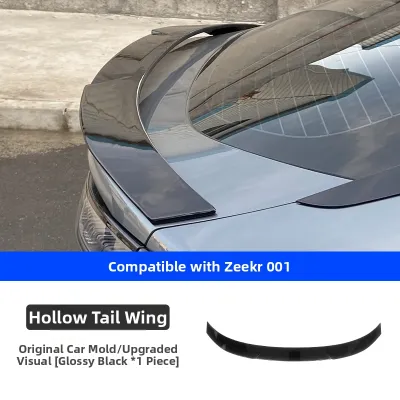
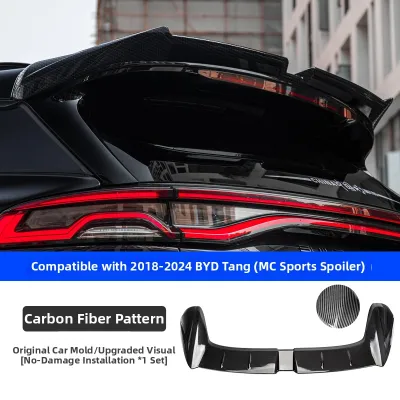
Prices are valid at publication and may change. Please refer to the product page for the latest price.
The Honda Fit’s lineage is divided into four primary chassis families: the first-generation GD (produced from 2001 to 2008), the second-generation GE (2007 to 2013), the third-generation GK (2013 to 2020), and the fourth-generation GR/GS (2020 to present). Each of these generations features completely unique tailgate geometries, glass curvatures, and mounting points. For instance, a spoiler contoured to wrap around the rounded glass of a GE hatch will leave massive gaps or fail to mount entirely on the angular, sharply creased tailgate of a GK model.
Furthermore, trim levels introduce distinct physical variations that directly affect exterior compatibility. Sportier trims, such as the highly popular RS (Road Sailing) variant, often come equipped with factory-installed tailgate extensions, aggressive rear bumpers, and unique side skirts. Standard hatchback trims, on the other hand, feature clean, unadorned tailgates. If your Fit is a standard trim, installing an RS-style spoiler may require drilling new mounting holes or replacing the entire upper hatch trim, whereas upgrading an existing RS spoiler requires components specifically designed to utilize the factory mounting points.
Before finalizing any purchase, always cross-reference the product specifications with your vehicle’s exact chassis code and trim designation. Avoid relying on broad category terms like “universal hatchback spoiler,” as these rarely align with the precise contours of the Fit’s rear hatch. If you are integrating a spoiler as part of a comprehensive body kit, consult a specialized automotive styling workshop or the component manufacturer to verify that the spoiler does not interfere with the rear bumper extensions or side skirts.
Recommended Spoiler Styles for 1st and 2nd Gen Honda Fit (GD & GE)
The first-generation (GD) and second-generation (GE) Honda Fit models are celebrated for their space-efficient, rounded “one-motion” silhouette. To complement these softer, bubble-like body lines, the most visually cohesive styling choices are subtle lip spoilers and low-profile roof-line extensions. These designs, often referred to as duckbill or Spoon-style spoilers, extend the roofline slightly rearward, adding a touch of sportiness without disrupting the car’s original proportions.

Subtle roof-line extensions mount directly to the top edge of the rear hatch, creating a clean, integrated appearance that mimics high-end factory packages. These spoilers are lightweight and present minimal aerodynamic drag, making them ideal for daily commuting. For owners seeking a slightly more pronounced look, mid-rise spoilers that sit flush against the rear glass offer a balanced compromise, providing a defined rear edge that frames the hatchback’s tail lights beautifully.
In contrast, large, aggressive GT wings or highly elevated pedestal spoilers are generally mismatched for the GD and GE generations. These oversized wings require robust mounting points that the lightweight hatch frames of early Fit models were not designed to support. At highway speeds, the downforce and wind resistance generated by an oversized wing can flex the thin sheet metal of the tailgate, potentially leading to permanent warping, paint cracking, or water seal failure around the rear window.
Before mounting any aftermarket spoiler to an older GD or GE model, a thorough inspection of the vehicle’s rear hatch is essential. Over years of exposure to Singapore’s humid tropical climate, moisture can accumulate under factory seals, leading to hidden rust. Inspect the paint integrity along the upper edge of the tailgate and around the rear glass. If any bubbling, rust, or clear coat peeling is present, these issues must be professionally repaired and treated before applying adhesives or drilling holes, as mounting a spoiler over compromised paint will inevitably lead to adhesion failure or accelerated corrosion.
Best Rear Spoiler Designs for 3rd Gen Honda Fit (GK) and RS Variants
The third-generation (GK) Honda Fit marked a dramatic shift toward a more aggressive, angular design language, characterized by deep character lines and a sculpted rear profile. This generation is highly receptive to exterior modifications, with a wide array of styling options ranging from conservative daily-driver enhancements to race-inspired track aesthetics. For standard GK models, flush-mount lip spoilers and modest mid-rise wings are excellent choices, as they preserve rearward visibility and maintain the vehicle’s practical utility.
For owners of the sportier GK RS variant, or those installing a full RS-style honda fit body kit, more aggressive high-rise and tiered wing designs are highly popular. These multi-piece or elevated wings flow seamlessly with the RS’s deeper rear bumper and pronounced rear diffuser. Tiered wings, which feature an upper aerodynamic element supported by side endplates, elevate the spoiler into the clean airflow passing over the roof, creating a distinct, track-ready silhouette that matches the energetic character of the RS trim.
When selecting a spoiler for the GK generation, material composition is a critical factor that directly impacts long-term durability. High-quality ABS (Acrylonitrile Butadiene Styrene) plastic is the industry standard for daily-driven vehicles. ABS is highly impact-resistant, lightweight, and possesses excellent dimensional stability, meaning it will not warp, sag, or crack under the intense heat and UV exposure of Singapore’s tropical sun. Additionally, ABS plastic accepts paint exceptionally well, ensuring a flawless color match with your vehicle’s factory finish.
Fiberglass (often labeled as FRP or Fiber Reinforced Plastic), while often cheaper and easier to manufacture in complex shapes, is significantly more brittle and prone to structural degradation over time. Fiberglass spoilers are highly susceptible to spiderweb cracking in the gel coat when subjected to minor vibrations or temperature fluctuations. Furthermore, poor-quality fiberglass components often require extensive sanding, filling, and priming by a professional paint shop to achieve a smooth surface, which can quickly erase any initial cost savings. For a daily-driven Honda Fit, investing in a high-quality ABS or genuine carbon fiber spoiler is always the more cost-effective choice in the long run.
4th Gen Honda Fit (GR/GS) Spoiler Options and Body Kit Integration
The fourth-generation (GR/GS) Honda Fit introduces a clean, minimalist, and highly modern aesthetic that departs from the sharp angles of its predecessor. The rear design of the GR/GS is characterized by smooth surfaces and a refined, rounded tailgate. Consequently, the most effective spoiler styles for this generation are sleek, integrated lip spoilers that flow naturally from the roofline, preserving the vehicle’s sophisticated, aerodynamic focus.
These modern lip spoilers are designed to look like an organic extension of the vehicle’s sheet metal, adding a subtle shadow line above the rear glass without appearing tacked-on. When paired with a complete exterior styling package, such as a front under-spoiler, matching side skirts, and a subtle rear bumper apron, these spoilers help lower the car’s visual center of gravity. This cohesive integration creates a premium, sporty stance that enhances the GR/GS’s clean design language.
However, modifying the exterior of a modern fourth-generation Fit requires careful attention to the vehicle’s advanced onboard technology. Modern GR/GS models are equipped with an array of safety systems, including high-definition rear-view cameras, parking sensors, and a high-mount third brake light integrated near the top of the rear glass. When selecting and positioning an aftermarket spoiler, you must verify that the component does not obstruct the camera’s field of view or cast a shadow over parking sensors, which can trigger false collision warnings or degrade driver assistance functions.
Furthermore, the high-mount stop light must remain completely visible to vehicles traveling behind you. Many aftermarket spoilers feature cutouts specifically designed to accommodate the factory third brake light, while others incorporate an integrated LED light bar that must be professionally wired into the vehicle’s electrical system. Any electrical work associated with an integrated brake light must comply with original-vehicle wiring standards to prevent short circuits, dashboard warning lights, or potential warranty voiding on your vehicle’s electrical harness.
Singapore LTA Compliance and Safe Installation Practices
In Singapore, all vehicle modifications are strictly regulated by the Land Transport Authority (LTA) to ensure public safety and roadworthiness. Before purchasing or installing any rear spoiler or honda fit body kit, it is vital to understand the legal boundaries to avoid costly fines, mandatory de-registration risks, or failed periodic inspections. Under LTA guidelines, aftermarket spoilers are generally permissible without prior approval, provided they adhere to strict safety and dimensional parameters.
First and foremost, any installed spoiler must be securely mounted to the vehicle’s structure to prevent it from detaching at high speeds, which poses an extreme hazard to other road users on expressways like the PIE or East Coast Parkway. The spoiler must not feature any sharp edges, pointed protrusions, or aggressive angles that could cause injury to pedestrians or cyclists in the event of a collision. Additionally, the spoiler must not extend beyond the lateral width of the vehicle’s bodywork, nor should it extend past the rear bumper’s outermost vertical plane.
Height limits are also strictly monitored; the spoiler must not protrude excessively above the vehicle’s original roofline, and it must not obstruct the driver’s clear rearward vision through the rear-view mirror. When it comes to installation, owners must choose between high-strength automotive adhesive tape (such as 3M VHB) and mechanical drilling. While small, lightweight lip spoilers can be safely secured using premium double-sided tape paired with an adhesion promoter, larger mid-rise or high-rise wings generate substantial aerodynamic lift and drag, making mechanical bolting absolutely mandatory.
For any spoiler requiring drilling, professional installation at an authorized workshop is highly recommended. Improper drilling can compromise the structural integrity of the tailgate, create entry points for water leaks during heavy tropical downpours, and lead to rapid rust formation on bare metal edges. A professional installer will apply rust-inhibiting primers to any newly drilled holes, utilize waterproof rubber grommets, and ensure the spoiler is perfectly centered and torqued to specification. If you are uncertain about the legality or structural safety of a specific spoiler design, always consult an LTA-authorized vehicle inspection center or a reputable workshop before carrying out the modification.
Frequently Asked Questions (FAQ)
Can I install a Honda Fit rear spoiler myself using double-sided tape?
Small, lightweight lip spoilers and subtle duckbill extensions can be safely installed as a do-it-yourself project using high-quality, automotive-grade double-sided tape. However, success depends entirely on meticulous surface preparation. The mounting area on the hatch must be thoroughly cleaned with isopropyl alcohol to remove all wax, grease, and road grime, and an adhesion promoter should be applied to ensure a permanent bond. Furthermore, the tape requires a curing period—typically 24 to 48 hours in dry conditions—before the vehicle is driven at high speeds or exposed to rain. For larger mid-rise, high-rise, or tiered wings, adhesive tape alone is highly unsafe; these larger structures must be mechanically bolted to the hatch to withstand highway wind loads and prevent the spoiler from detaching.
Does a rear spoiler actually improve the Honda Fit's fuel efficiency?
For the vast majority of Honda Fit models driven under normal daily conditions, an aftermarket rear spoiler will not provide a measurable improvement in fuel efficiency or aerodynamic downforce. These vehicles are designed primarily for urban efficiency, and the speeds at which rear spoilers begin to generate functional aerodynamic downforce—typically above 100 km/h—are rarely sustained during typical city driving. Most aftermarket spoilers are styled purely for aesthetic enhancement. In fact, installing an excessively large, poorly designed, or improperly angled wing can actually increase the vehicle’s aerodynamic drag, forcing the engine to work harder at expressway speeds and consequently reducing your overall fuel economy. To maintain optimal efficiency, stick to sleek, low-profile lip spoilers that preserve the car’s original aerodynamic profile.
Community discussion
Share your experience or ask a question. Comments are reviewed before publication.