
Honda’s continuously variable transmission (CVT) systems rely on highly specialized fluids to maintain hydraulic pressure, lubricate moving parts, and provide the precise friction required for steel belts and pulleys. If you are looking at designations like HCF-2 or CVTF, you are viewing proprietary Honda specification codes rather than generic oil grades. Selecting the correct fluid is one of the most critical maintenance decisions you can make for your vehicle’s longevity.
Using an incompatible fluid in a CVT can lead to immediate performance issues and eventual transmission failure. Because these transmissions operate under high pressure and rely on specific friction coefficients to prevent belt slippage, even minor variations in fluid chemistry can cause severe internal damage. Understanding what these codes mean and how to verify your vehicle’s requirements is the first step toward protecting your investment.
Decoding Honda CVT Fluid Codes: HCF-2 vs. CVTF
Unlike engine oils, which use universal industry standards like SAE or API classifications, transmission fluids are governed by proprietary manufacturer specifications. Honda’s CVT fluid codes represent distinct internal performance standards tailored to specific transmission designs. These codes are not interchangeable, as each generation of Honda’s CVT technology features unique mechanical tolerances and material compositions.
Products mentioned in this guide
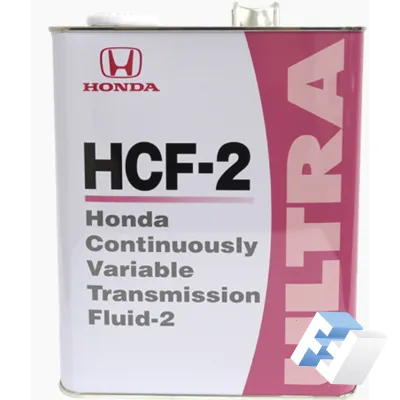
![Honda HCF-2 Hcf2 4L CVT Transmission Oil Fluid [Authentic] Made in Japan](https://img.lazcdn.com/g/p/6c4125c8419182eea55e52c3c19fca52.jpg_400x400q80.jpg_.webp)
![[JWEAUTO] Honda HCF-2 CVT Continuously Variable Transmission Fluid HCF-2](https://img.lazcdn.com/g/p/8fdfaa2d16b69918ecf7b98c3d4c3771.jpg_400x400q80.jpg_.webp)
Prices are valid at publication and may change. Please refer to the product page for the latest price.
The differences between codes like CVTF (associated with earlier Honda CVT generations) and HCF-2 (developed for newer designs) lie in their chemical formulations. Newer CVT structures utilize different steel belt configurations and pulley surface treatments that require specific friction modifiers. These modifiers ensure that the belt grips the pulleys firmly without slipping, while still allowing smooth ratio transitions under varying driving loads.
Relying on a generic bottle labeled simply as “CVT Fluid” from an online marketplace or auto parts store carries significant risk. Universal CVT fluids attempt to bridge the gap between many different manufacturer specifications, which often results in a compromise in viscosity or friction characteristics. To maintain the precise hydraulic pressures and friction levels engineered by Honda, you must match the exact specification code required for your specific model year.
How to Find the Exact Fluid Requirement for Your Car
To identify the exact fluid specification your vehicle requires, consult the official owner’s manual. Navigate to the “Maintenance” or “Specifications” section, where you will find a dedicated table listing all fluid capacities and required designations. This document provides the definitive manufacturer recommendation, overriding any general advice you might find online.

If you do not have access to the physical owner’s manual, look for physical indicators directly inside the engine bay. Locate the transmission dipstick handle or the transmission fluid filler cap. Manufacturers frequently print or stamp the required fluid designation, such as HCF-2, directly onto these components to prevent servicing errors.
For vehicles purchased pre-owned, or those with an unverified service history, verifying the specification through an authorized dealer is highly recommended. By providing your Vehicle Identification Number (VIN), the dealer can look up the exact transmission model installed in your car and confirm the correct fluid type. This step eliminates any ambiguity caused by mid-year production changes.
Avoid relying solely on online forums or generic retail catalogs when purchasing transmission fluid. While these platforms can offer general guidance, they frequently overlook regional model variations or specific trim differences. Always cross-reference any third-party recommendation with your vehicle’s official documentation or dealer database before performing any service.
What Happens If You Use the Wrong CVT Fluid
Introducing the incorrect fluid into a CVT alters the friction characteristics between the steel belt and the pulleys. If the friction coefficient is too low, the belt will slip, leading to a loss of power, engine revving without acceleration, and physical wear on the metal contact surfaces. Over time, this slippage generates fine metal debris that can clog internal fluid passages.
Viscosity differences also play a critical role. An incorrect fluid viscosity can disrupt the hydraulic pressure control system, which relies on precise fluid thickness to actuate the pulleys. This disruption often manifests as delayed gear engagement, harsh shifting, or a failure to change ratios, particularly under the high thermal stress of stop-and-go traffic in tropical climates like Singapore.
Mixing different generations of Honda CVT fluids, such as topping up an HCF-2 system with older CVTF, introduces chemical incompatibility risks. The additives in different fluid generations are formulated to work together; mixing them can cause the additives to degrade prematurely. This chemical breakdown reduces the fluid’s ability to dissipate heat, accelerating the wear of internal bearings and seals.
If you experience unusual noises, transmission shuddering, slipping, or a dashboard warning light after a fluid change, stop driving the vehicle immediately. Continued operation with incorrect fluid can turn a simple correction into a catastrophic mechanical failure. Seek a professional inspection and have the vehicle towed to a qualified service center to prevent further damage.
Pre-Purchase and Verification Checklist
Before purchasing any transmission fluid, inspect the product label for explicit compatibility statements. Look for text that clearly states the fluid meets or exceeds the specific Honda designation, such as “Meets Honda HCF-2 specifications.” Avoid products that use vague language like “recommended for use in most Honda vehicles” without naming the exact specification code.
While genuine Honda original equipment manufacturer (OEM) fluids offer guaranteed compatibility, some reputable third-party brands produce compliant alternatives. If you choose a third-party fluid, verify their compatibility claims against your owner’s manual and ensure the manufacturer provides a written guarantee of compliance. When in doubt, sticking to genuine OEM fluids is the safest path to preserve your vehicle’s warranty.
Physical packaging inspection is another essential step in verifying fluid quality. Ensure that the bottle’s safety seals are completely intact and show no signs of tampering. Additionally, check the manufacturing or batch date printed on the bottle; transmission fluids can degrade if stored in substandard conditions for extended periods, so using relatively fresh stock is always preferable.
Finally, maintain a detailed service log by keeping all purchase receipts and recording the exact brand, specification, and batch numbers of the fluid used. This documentation is invaluable for future maintenance tracking and supporting any potential warranty claims. Because transmission servicing requires precise procedures, always consult your vehicle’s workshop manual or have the fluid exchanged by a qualified professional.
Frequently Asked Questions (FAQ)
Can I use standard ATF in a Honda CVT?
No, you must never use standard Automatic Transmission Fluid (ATF) in a Honda CVT. Standard ATF is formulated for traditional automatic transmissions that utilize planetary gear sets and wet clutch packs, which require entirely different frictional properties. Using ATF in a CVT will result in immediate belt slippage, severe overheating, and rapid, catastrophic destruction of the transmission’s internal components.
Is it safe to mix HCF-2 with older Honda CVTF?
No, it is not safe to mix HCF-2 with older Honda CVTF formulations. These fluids are engineered with distinct chemical profiles and viscosity levels designed for different generations of transmission hardware. If you are unsure which fluid is currently in your transmission, or if you need to top up the system, the safest course of action is to perform a complete drain and refill using the single, correct fluid specified in your owner’s manual.
Community discussion
Share your experience or ask a question. Comments are reviewed before publication.