
Upgrading the exterior of a Honda Civic FC sedan often centers on finding the right aerodynamic accent to complete its profile. Whether you prefer a subtle factory-style enhancement or an aggressive track-inspired statement, the market offers distinct spoiler categories tailored to different visual goals. This guide breaks down the primary spoiler styles available for the Civic FC, helping you evaluate materials, installation methods, and fitment requirements to choose the design that best suits your aesthetic vision and daily driving needs.
Choosing the right spoiler involves understanding how each style alters the car’s silhouette, how the materials handle daily wear, and what the installation process entails. By matching your styling goals with the correct product specifications, you can ensure a durable, legally compliant, and visually cohesive upgrade.
Exploring the Main Spoiler Types for the Civic FC
The Honda Civic FC sedan features a sleek, fastback-like roofline that tapers gently into a short rear decklid. This distinctive shape makes it an excellent canvas for various spoiler designs, each offering a different level of visual volume and styling direction.
Products mentioned in this guide
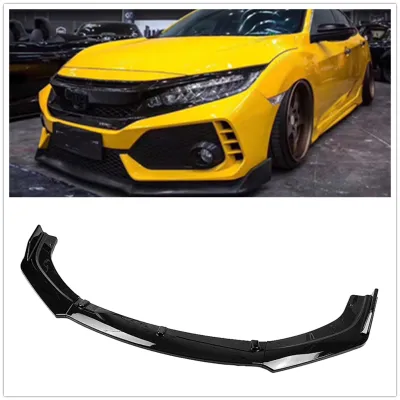
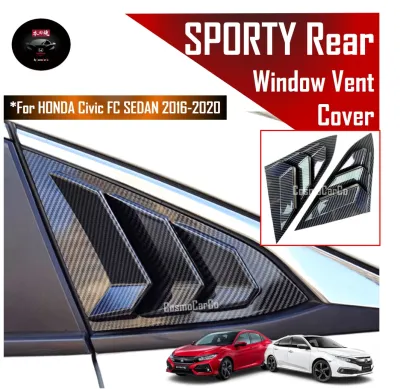
Prices are valid at publication and may change. Please refer to the product page for the latest price.
Lip spoilers represent the most understated category available for the Civic FC. These spoilers sit flush against the trailing edge of the trunk lid, extending the rear profile slightly outward rather than upward. Often designed to mimic factory options like those found on the Civic Si or OEM accessory packages, lip spoilers offer a clean, integrated look. They are perfect for drivers who want to enhance the car’s natural lines without drawing excessive attention or disrupting the vehicle’s original design language.
Trunk lid or duckbill spoilers offer a more pronounced, upward-swept profile. Unlike a simple lip, a duckbill spoiler covers a larger portion of the upper trunk surface and kicks upward at a sharper angle. This design creates a muscular, swept-back appearance that visually elongates the rear of the car. Duckbill spoilers are highly popular in modern street styling because they bridge the gap between subtle OEM styling and aggressive track wings, adding significant visual attitude without the height of a pedestal mount.
GT and pedestal wings are high-profile, track-inspired statements designed for maximum visual impact. These wings are elevated above the trunk lid on vertical stands or pedestals, placing the aerodynamic blade directly into the airflow over the roofline. Pedestal wings can range from moderate factory-style wings to large, adjustable GT wings made of carbon fiber. This style completely transforms the silhouette of the Civic FC, giving it an unmistakable motorsport-inspired presence that stands out in any crowd.
Aligning Spoiler Designs With Your Aesthetic Vision
Selecting the right spoiler style is not just about what looks good on a shelf; it is about how the accessory complements your overall vehicle build and daily driving environment. Aligning your choice with a specific aesthetic theme ensures a cohesive and balanced look.

For clean and understated daily drivers, low-profile lip spoilers are the ideal choice. A daily commuter needs to navigate tight parking spaces, multi-story garages, and professional environments where an overly aggressive wing might feel out of place. A subtle lip spoiler adds a touch of sportiness while preserving excellent rearward visibility through the back window. It maintains the factory elegance of the Civic FC, making it a tasteful upgrade that enhances the car’s lines without compromising practical usability.
If your vehicle features an aggressive street or stance build, a duckbill or blade-style spoiler is often the perfect match. These builds typically involve lowered suspensions, wider aftermarket wheels, and perhaps a front lip or side skirt extensions. A duckbill spoiler adds the necessary visual weight to the rear of the car, balancing the lower, wider stance. It emphasizes the width of the rear fenders and flows seamlessly into the Civic FC’s sharp body lines, creating a highly customized, aggressive street aesthetic.
For track-day enthusiasts or those pursuing a performance-oriented theme, a pedestal or GT wing is the ultimate finishing touch. This style signals a focus on high-speed stability and functional aerodynamics. When paired with other motorsport-inspired modifications like a rear diffuser, lightweight racing wheels, and a front splitter, an elevated wing completes the track-ready look. It is a bold choice that suits owners who want their Civic FC to project a serious, performance-first attitude.
Comparing Common Spoiler Materials and Finishes
Aftermarket spoilers for the Civic FC are manufactured from several different materials, each offering distinct characteristics regarding durability, weight, ease of painting, and maintenance. Understanding these differences is key to making a lasting investment.
ABS plastic is the most common material used for daily-driven spoilers. Acrylonitrile butadiene styrene is highly flexible, impact-resistant, and capable of absorbing minor bumps without cracking. Because it is injection-molded, ABS spoilers offer highly consistent dimensions and smooth surface finishes that closely mimic OEM factory parts. They are typically supplied in gloss black, matte black, or a primed finish ready for color-matching, making them a reliable and low-maintenance option for everyday use.
FRP, or fiber-reinforced plastic (commonly known as fiberglass), is another popular material, especially for custom or replica designs. FRP is highly rigid and can be molded into complex, sharp shapes that are difficult to achieve with plastic. However, fiberglass is more brittle than ABS and is more prone to cracking under physical stress or sudden impacts. FRP spoilers also require more preparation work before installation; they often have minor surface imperfections that must be sanded, primed, and professionally painted to achieve a high-quality finish.
Carbon fiber weaves represent the premium end of the aftermarket spectrum. Made from carbon fiber fabric reinforced with epoxy resin, these spoilers are incredibly lightweight and offer a distinct, high-tech woven pattern. When purchasing a carbon fiber spoiler, it is essential to verify that it features a high-quality, UV-resistant clear coat. In tropical climates like Singapore, intense sunlight and high humidity can cause lower-quality resins to yellow, fade, or delaminate over time. Regular maintenance, such as applying a UV-blocking wax or ceramic coating, is highly recommended to protect the finish.
Weighing Installation Methods: Adhesive vs. Drilling
How a spoiler attaches to your Civic FC’s trunk lid affects not only the installation difficulty but also the reversibility of the modification and the long-term safety of your vehicle.
High-strength automotive adhesive tape, such as 3M VHB, is the preferred mounting method for lightweight lip and duckbill spoilers. This method requires no drilling, making it completely reversible if you ever decide to return the car to its factory state. However, adhesive strength depends entirely on meticulous surface preparation. The trunk lid must be thoroughly cleaned with isopropyl alcohol to remove all wax, grease, and contaminants. The tape must be applied in dry conditions, pressed firmly along the entire mounting surface, and allowed to cure fully—typically for 24 to 48 hours—before exposing the vehicle to highway speeds or wet weather.
Drilling and bolting is a permanent installation method required for larger pedestal wings and GT wings. Because these wings experience significant wind resistance and physical leverage at speed, adhesive tape alone cannot safely secure them. Drilling into the trunk lid requires precise measurement, marking, and center-punching to ensure the holes align perfectly with the wing’s mounting brackets. To prevent rust and water leaks, any bare metal exposed by drilling must be treated with a rust-inhibiting primer, and high-quality rubber gaskets or silicone sealant must be applied around the bolt holes during final assembly.
Safety must always be your primary concern when modifying your vehicle’s exterior. Before drilling or mounting any spoiler, check the underside of the trunk lid for structural reinforcements, internal wiring harnesses for the license plate lights or reverse camera, and the trunk release mechanism. Incorrectly placed holes can damage critical electrical systems or weaken the trunk’s structural integrity. Furthermore, because a detached spoiler poses a severe hazard to other road users at high speeds, seeking qualified professional installation is strongly advised for any wing that requires mechanical drilling or complex alignment.
Essential Fitment and Compatibility Checks Before Buying
Before purchasing a spoiler for your Honda Civic FC, performing a few essential compatibility checks will save you time, money, and frustration.
First, ensure you are purchasing a spoiler designed specifically for the FC sedan body style. The tenth-generation Civic lineup includes both the FC sedan and the FK hatchback. Because the rear profiles, trunk contours, and glass angles of these two models are completely different, a spoiler designed for an FK hatchback will not physically fit the trunk lid of an FC sedan. Always double-check the manufacturer’s fitment notes to confirm the product is tailored to the sedan platform.
Second, take note of any pre-facelift versus facelift variations. While the overall trunk shape of the Civic FC remained consistent throughout its production run, factory trim packages and pre-existing spoiler mounting holes can vary. If your Civic FC came equipped with a factory trunk spoiler, removing it will leave exposed mounting holes. You must verify whether your chosen aftermarket spoiler will cover these existing holes, or if you will need to budget for professional bodywork to fill, sand, and repaint the trunk lid.
Finally, consider local road regulations and guidelines before finalizing your purchase. In Singapore, the Land Transport Authority (LTA) enforces strict rules regarding aftermarket vehicle attachments. Any installed spoiler must be securely fastened to the vehicle, must not have sharp edges or projections that could injure pedestrians, and must not extend beyond the lateral width or overall length of the car. Additionally, the spoiler must not obstruct your rearward vision or block the high-mount third brake light. Verifying these details beforehand ensures your modified Civic FC remains safe, stylish, and fully compliant on the road.
Frequently Asked Questions (FAQ)
Will adding a spoiler void my vehicle's warranty?
Installing an aftermarket spoiler will not automatically void your entire vehicle warranty. Under standard automotive warranty terms, a dealership can only deny a warranty claim if they can prove that the aftermarket part or its installation directly caused the failure in question. For example, if you drill into the trunk lid to mount a wing and accidentally damage the wiring harness for the reverse camera, the repair for that electrical issue will not be covered under warranty. However, unrelated components, such as your engine or suspension, will remain fully covered under your original warranty terms.
Do I need to repaint a primer-finished spoiler?
Yes, a primer-finished spoiler must be painted before final installation. Primer is not designed to be a final topcoat; it is a porous base layer intended to help paint adhere to the underlying plastic or fiberglass. If left unpainted, the primer will absorb moisture, dirt, and UV radiation, leading to rapid degradation of the material and an unsightly, chalky appearance. To ensure a durable and attractive finish, the spoiler should be sanded, color-matched to your Civic FC’s paint code, and finished with a high-quality, UV-resistant clear coat.
Community discussion
Share your experience or ask a question. Comments are reviewed before publication.