
Evaluating whether the HJC V10 motorcycle helmet is worth its price tag in Singapore requires looking past its striking neo-retro aesthetic and diving deep into its practical performance, safety credentials, and long-term ownership costs. For local riders navigating hot, humid weather and strict road safety regulations, a helmet is more than a style statement—it is a critical piece of protective equipment. Because retail prices, distributor promotions, and specific model-year packages can fluctuate, determining the true value of this helmet involves a systematic assessment. By verifying its physical specifications, testing its real-world comfort, and calculating the total cost of ownership, you can make an informed decision that aligns with your budget and riding habits.
Defining Your Budget and Value Priorities
Before evaluating any specific helmet model like the HJC V10, you must establish what “good value” means for your daily riding style. A daily commuter weaving through traffic along the Pan Island Expressway (PIE) has vastly different requirements than a weekend leisure rider. To build a practical decision framework, start by separating your non-negotiable safety features from optional comfort upgrades. Must-have features include valid, legally recognized safety certifications and a highly secure retention system, such as a double D-ring closure. Nice-to-have extras, such as integrated sun shields, premium interior fabrics, or intricate graphic designs, should be treated as secondary factors that justify a higher price point only if your primary safety needs are fully met.
Setting a realistic baseline budget for a mid-tier helmet prevents you from overspending on marketing hype while ensuring you do not compromise on protection. Mid-tier helmets typically offer a balance of advanced shell materials and refined aerodynamics without the premium price tag of professional racing gear. When evaluating this segment, be prepared to navigate specific trade-offs. For instance, you might accept a slightly heavier fiberglass or polycarbonate shell in exchange for superior impact absorption, enhanced shell durability, or a more accessible price point. Understanding these trade-offs beforehand allows you to assess whether the HJC V10’s design choices represent a fair compromise for your hard-earned S$.
Products mentioned in this guide
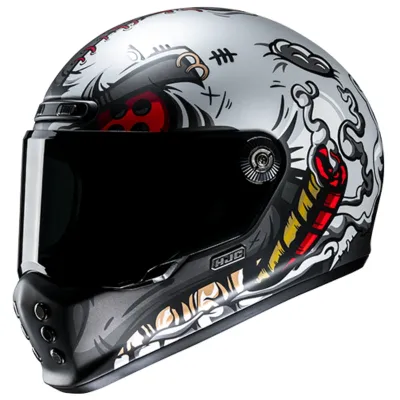
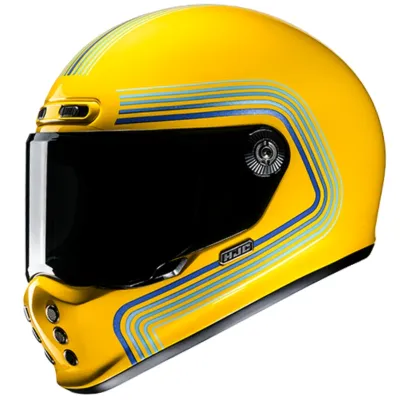
Prices are valid at publication and may change. Please refer to the product page for the latest price.
Core Specifications to Verify Before Buying
To determine if a helmet delivers genuine value, you must look closely at its technical foundation. Verifying the physical construction, safety ratings, and ventilation design ensures you are paying for actual engineering rather than brand prestige.

Safety Standards and Build Quality
The primary function of any motorcycle helmet is energy management during an impact, making safety certifications your first point of verification. When inspecting the HJC V10, look for official certification markings on the rear of the shell or sewn into the chin strap. In Singapore, road-legal helmets must comply with local Land Transport Authority (LTA) standards, which typically require a valid PSB test sticker. Additionally, check for international standards such as the latest ECE 22.06 certification or DOT ratings. These certifications guarantee the helmet has undergone rigorous testing for impact absorption, penetration resistance, and structural integrity under various conditions.
Next, examine the manufacturer’s label to verify the shell material. Helmets in this category often utilize fiberglass composite shells, which offer an excellent strength-to-weight ratio compared to basic thermoplastic or polycarbonate alternatives. A lighter shell reduces neck fatigue during long rides, while a robust composite structure distributes impact forces more efficiently. Finally, do not overlook the manufacturing date, which is usually printed on a white tag underneath the comfort liner or stamped onto the EPS (expanded polystyrene) foam. Because the shock-absorbing EPS liner naturally degrades over time due to environmental exposure and ambient humidity, verifying a recent production date ensures you receive the full usable lifespan of the helmet.
Visor, Ventilation, and Extras
Singapore’s tropical climate demands exceptional optical clarity and efficient airflow. Begin your inspection by operating the visor mechanism; it should move smoothly through its detents and seal tightly against the eyeport gasket to keep out heavy rain during sudden downpours. Check if the visor is equipped with mounting pins for a Pinlock anti-fog insert. In high-humidity environments, temperature differentials between the inside and outside of the shield cause rapid fogging, making a Pinlock-ready visor an essential safety feature rather than a luxury accessory.
Airflow is equally critical for rider comfort and alertness. Examine the ventilation layout of the helmet, focusing on the chin bar vents and forehead intakes. Because retro-styled helmets like the HJC V10 often prioritize clean, classic lines, you must verify that the physical vent openings are deep enough to channel air directly to your scalp. Look at the exhaust ports at the rear to ensure warm, moist air has a clear path to escape. Additionally, check the helmet’s specifications regarding a drop-down sun visor. If the model does not feature an integrated internal sun shield, you must factor in the convenience and cost of swapping to a tinted outer shield or wearing UV-blocking sunglasses during bright daytime commutes.
Evaluating Comfort and Daily Usability
A helmet’s value drops significantly if it is too uncomfortable to wear for more than thirty minutes. Assessing the interior design and daily usability features ensures the helmet remains a practical companion for your daily journeys.
Start by examining the interior lining. The cheek pads and crown liner must be fully removable and washable to combat the buildup of sweat, hair oils, and road grime common in Singapore’s hot weather. Look for moisture-wicking, quick-drying fabrics that actively pull sweat away from your skin to prevent bacterial growth and unpleasant odors. While handling the interior, check for the presence of an Emergency Quick Release System (EQRS). This safety feature allows emergency medical personnel to easily slide the cheek pads out of a secured helmet, minimizing unnecessary neck movement during a critical rescue scenario.
Furthermore, evaluate how well the interior accommodates your personal gear. If you wear prescription glasses or sunglasses, look for dedicated eyewear channels molded into the temple areas of the EPS liner. Without these grooves, the helmet’s snug fit can press the frames painfully against your temples. If you plan to use an intercom system for navigation or group rides, inspect the ear pockets. They should be deep enough to house aftermarket Bluetooth speakers comfortably without pressing against your ears, and there should be sufficient routing space for wiring and microphone placement.
Calculating the True Cost of Ownership in Singapore
The retail price of a helmet is rarely the final amount you will spend. To determine if the HJC V10 fits your budget, you must calculate the total cost of ownership, including local market factors and necessary accessories.
If you are purchasing the helmet online from international e-commerce platforms, remember to calculate potential shipping fees, currency conversion charges, and import taxes. For items imported into Singapore, Goods and Services Tax (GST) applies, which can quickly close the price gap between overseas sellers and local brick-and-mortar shops. Buying locally from an authorized dealer might carry a slight premium, but it often includes immediate product availability, the opportunity to try the helmet on for fit, and a reliable local warranty.
Next, account for the cost of essential add-ons. If the helmet does not come packaged with a Pinlock anti-fog lens, you will need to purchase one separately, which can add a noticeable amount to your initial outlay. Similarly, if you require a dark smoke or mirrored visor for daytime riding, check the local retail price for genuine replacement shields. These small additions can significantly inflate your total expenditure.
Finally, consider the long-term support and availability of spare parts. Over years of daily use, parts like visor ratchets, chin curtains, and comfort liners will wear out. Choosing a brand with a strong, established distribution network in Singapore ensures you can easily source replacement parts locally. If spare parts are difficult to find, a minor component failure could force you to retire the entire helmet prematurely, destroying its long-term value.
Comparing the HJC V10 Against Alternatives
To put the HJC V10’s value into perspective, you must compare its specifications directly against other helmets in the same price bracket. Avoid relying on brand loyalty or subjective marketing claims; instead, focus on objective, verifiable metrics.
Begin by comparing the shell materials and weight specifications of competing models. A fiberglass composite helmet generally offers better value than a thermoplastic model at a similar price point due to its superior strength-to-weight ratio. Compare the safety certifications as well; a helmet certified under the newer, more stringent ECE 22.06 standard represents a higher baseline of protection than one certified only under older standards.
Additionally, evaluate the out-of-the-box value by comparing the included accessories. Some manufacturers bundle premium extras—such as a Pinlock insert, a breath guard, a chin curtain, or a high-quality fleece-lined helmet bag—directly in the box. If a competing helmet includes these items as standard while the HJC V10 requires you to purchase them separately, the competitor may offer better overall value despite a slightly higher initial retail price. Finally, assess the local dealer support for each brand. A helmet backed by a reputable local distributor with a clear warranty claim process and a steady stock of spare parts provides peace of mind that overseas-only brands cannot match.
Making Your Final Purchasing Decision
Ultimately, the HJC V10’s value is entirely dependent on how well it fits your head and your specific riding habits. No amount of premium features or stylish design can compensate for a poorly fitting helmet.
Before making any financial commitment, it is absolutely essential to visit a physical motorcycle gear shop in Singapore to try the helmet on in person. Put the helmet on, secure the chin strap, and wear it for at least ten to fifteen minutes. Check for localized pressure points, particularly on your forehead and temples, which can quickly escalate into severe headaches during a ride. Ensure the cheek pads offer a firm, supportive “cheek squeeze” without pushing your jaw into an uncomfortable position, and move your head from side to side to check for excessive neck strain or movement.
Do not proceed with the purchase if the helmet lacks verifiable safety certifications, shows any signs of prior handling or damage, or if the total calculated cost of ownership exceeds your budget. If you find that the physical specifications, safety standards, and local support network align perfectly with your primary use case—whether that is daily urban commuting or weekend touring—and the helmet fits your head shape perfectly, then the HJC V10 represents a highly justifiable investment in your road safety.
Frequently Asked Questions (FAQ)
Is the HJC V10 suitable for wearing glasses?
To verify if the HJC V10 is suitable for your eyewear, you should physically inspect the interior comfort liner for dedicated glasses grooves. These channels are designed to prevent the helmet’s EPS foam from pressing the arms of your glasses against your temples. Because head shapes and glasses frames vary widely, the most reliable method is to bring your specific riding or prescription glasses to a local shop and test them inside the helmet. Slide the frames in while wearing the helmet to ensure they sit comfortably on your nose without bending or creating painful pressure points over time.
How often should I replace this helmet?
As a general industry standard, you should replace your motorcycle helmet every five years from its first date of use, or seven years from its manufacturing date, whichever comes first. Over time, the protective EPS foam liner naturally degrades and loses its ability to absorb impacts effectively, even if the helmet has never been involved in a crash. Additionally, you must replace the helmet immediately if it experiences any significant impact, shows visible signs of structural degradation—such as a cracked outer shell, crumbling EPS foam, or loose interior padding—or if the retention strap system becomes frayed or compromised.
Community discussion
Share your experience or ask a question. Comments are reviewed before publication.