
The helloleiboo inflator is a budget-focused, entry-level portable tire inflator that has become a common sight on various online marketplaces in Singapore. For local drivers seeking a cheap, compact backup tool for occasional tire pressure top-ups, it offers basic, straightforward functionality. However, its performance, duty cycle, and long-term durability are modest compared to premium automotive brands.
While it can easily handle standard emergency inflation for small to mid-sized hatchbacks and sedans, you should verify its exact specifications before purchasing. Crucial metrics such as battery capacity (for cordless variants), maximum output pressure (PSI), and duty cycle must align with your vehicle’s requirements. It is best suited as an occasional roadside emergency backup rather than a high-frequency workshop tool. If you drive a larger vehicle, such as a mid-sized SUV, a commercial van, or a car with high-pressure run-flat tires, relying on an entry-level unit requires careful verification of its performance limits to avoid overheating or incomplete inflation.
Critical Specifications to Compare Across All Models
When evaluating any portable tire inflator, looking past marketing claims and focusing on core technical specifications is essential. Comparing these metrics directly allows you to understand how a budget-friendly option like the helloleiboo inflator stacks up against more expensive alternatives.
Products mentioned in this guide
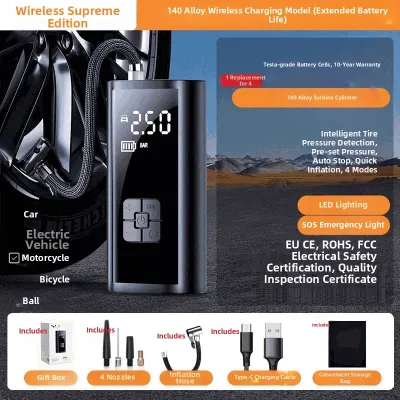
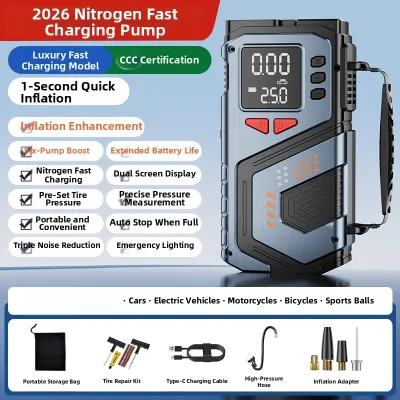
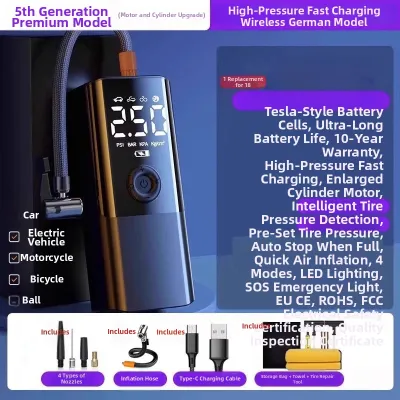
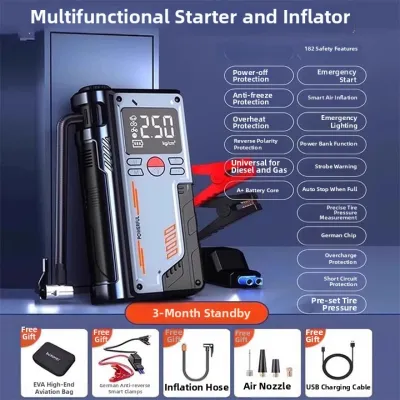
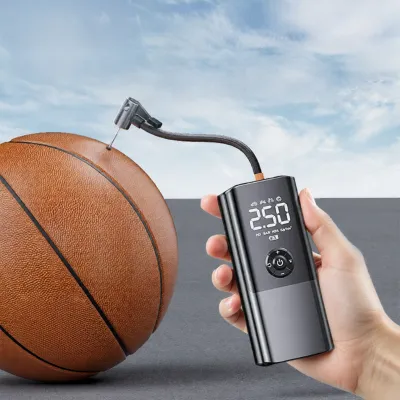
Prices are valid at publication and may change. Please refer to the product page for the latest price.
Power Source: Corded 12V vs. Cordless Lithium-Ion
Portable inflators generally fall into two categories based on how they draw power, each presenting distinct operational trade-offs:
- Corded 12V DC Inflators: These units plug directly into your vehicle's auxiliary power outlet (the cigarette lighter socket). They offer the distinct advantage of unlimited runtime, as they draw power directly from your car's alternator while the engine is running. This eliminates the risk of a dead battery when you need to inflate a tire on the side of the road. However, you are physically limited by the length of the power cord and the air hose. You must ensure the combined length is sufficient to reach from your dashboard outlet to all four wheels, which can be challenging on longer station wagons, multi-purpose vehicles (MPVs), or large sports utility vehicles (SUVs).
- Cordless Lithium-Ion Inflators: These models rely on internal rechargeable batteries, offering unmatched portability and convenience. They are highly practical in tight Singaporean housing estate (HDB) multi-storey carparks, where maneuvering a long cord around closely parked vehicles can be frustrating. They also double as versatile pumps for bicycles, motorcycles, and sports equipment. The primary drawback is battery management. Lithium-ion batteries naturally discharge over time and can degrade rapidly if left in a hot car boot, potentially leaving you without power during an emergency.
Airflow Rate and Maximum Pressure
Airflow rate, typically measured in liters per minute (L/min) or cubic feet per minute (CFM), determines how quickly the compressor can fill a tire. A standard budget-friendly inflator typically delivers between 15 to 25 L/min. This speed is sufficient for minor pressure top-ups, but inflating a completely flat passenger car tire can take anywhere from 8 to 15 minutes. High-performance models often deliver 35 L/min or more, cutting inflation times in half.
Maximum pressure, measured in pounds per square inch (PSI) or kilopascals (kPa), indicates the structural limit of what the pump can inflate. While standard passenger cars in Singapore typically require cold tire pressures between 30 to 35 PSI (approximately 210 to 240 kPa), certain light commercial vehicles, road bicycles, and heavy SUVs require much higher pressures. Ensure the inflator you choose can comfortably exceed your vehicle’s recommended pressure rating without straining its motor.
Duty Cycle and Thermal Management
The duty cycle is the amount of time an air compressor can operate continuously before it must be turned off to cool down. Budget inflators often have a strict 10-minute duty cycle, requiring a 10-to-15-minute rest period afterward.
In Singapore’s tropical climate, ambient temperatures regularly exceed 30°C, accelerating heat buildup within the compressor’s small motor. Without robust thermal management—such as internal cooling fans, heat-dissipating aluminum cylinders, or automatic thermal shutdown sensors—a small plastic-bodied inflator can quickly overheat. This can melt internal gears or damage rubber seals, leading to permanent pressure loss or complete mechanical failure.
Auto-Shutoff and Gauge Accuracy
Modern portable inflators rely on digital pressure sensors to monitor inflation in real time. An auto-shutoff feature allows you to preset your target pressure; the device then automatically stops pumping once that threshold is reached, preventing dangerous over-inflation.
However, the accuracy of these digital gauges varies significantly. Premium models often feature calibrated sensors accurate to within +/- 0.5 to 1 PSI. Budget-tier models may have a variance of +/- 2 to 3 PSI. This discrepancy might seem minor, but uneven tire pressures across an axle can lead to accelerated tire wear, reduced fuel efficiency, and compromised handling during sudden braking on wet expressways.
What to Expect from the Helloleiboo Inflator
To make an informed decision, you must look closely at the physical construction, included accessories, and post-purchase support structure of the helloleiboo inflator. Because it targets the budget segment, certain design choices reflect its lower price point.

Build Quality and Materials
The helloleiboo inflator features a primarily plastic outer casing, making it lightweight and highly portable, though less resilient to impact than metal-reinforced alternatives. If dropped onto a concrete carpark floor, the plastic housing is susceptible to cracking.
When inspecting the unit, pay close attention to the air hose and connector. Budget models often use a standard rubber hose covered in a braided nylon sleeve. The connector at the end of the hose is a critical point of evaluation:
- Brass Screw-On Chucks: These provide a highly secure, leak-free connection to the tire's Schrader valve, though they can become extremely hot to the touch during operation.
- Quick-Release Thumb Locks: These are faster to attach and detach but are often constructed from plastic or low-grade alloys on budget units, making them prone to air leaks or physical breakage over repeated use.
Accessory Inclusions
Most helloleiboo packages include a standard array of nozzle adapters. These typically consist of a narrow needle for inflating sports balls, plastic cone adapters for inflatable pool toys, and occasionally a Presta valve adapter for road bicycle tires.
Before purchasing, confirm whether the package includes a dedicated storage bag or protective case. Storing a portable inflator loose in your car boot exposes the air hose to sharp objects and allows dust to accumulate inside the air intake, which can cause premature wear on the internal piston.
Warranty and After-Sales Support
One of the most significant differences between budget online-exclusive brands and established automotive names is the warranty structure. The helloleiboo inflator is primarily sold by third-party merchants on regional e-commerce platforms.
Consequently, buyers in Singapore often have to rely on basic platform-guaranteed return windows, which typically last only 7 to 15 days. If the unit experiences an electrical short or mechanical failure after three months of storage, securing a replacement or finding a local physical repair center is highly unlikely. You must weigh the initial cost savings against the risk of having to replace the entire unit out-of-pocket if it fails prematurely.
How It Compares to Established Market Alternatives
To understand where the helloleiboo inflator fits in the wider market, it is helpful to compare it against three distinct tiers of portable tire inflators available to Singaporean drivers.
Premium Automotive Brands
Established automotive accessory brands, such as Michelin or Osram, design heavy-duty consumer inflators engineered for long-term reliability. These units are typically constructed with robust internal metal gears, high-accuracy digital pressure transducers, and superior thermal insulation.
- Advantages: Highly accurate pressure gauges, longer continuous run times (often 15 to 20 minutes), and reliable thermal protection systems. Crucially, these brands are backed by local distributors and physical retail partners in Singapore, meaning you can access genuine 1-to-2-year warranties and physical customer service centers in industrial estates like Ubi, Toh Guan, or Sin Ming.
- Trade-off: These units are significantly more expensive, often costing two to three times more than a budget marketplace alternative.
Tech and Lifestyle Brands
Tech-oriented brands like Xiaomi or Baseus have popularized highly compact, cordless, pocket-sized tire inflators. These devices feature minimalist designs, bright LED screens, and convenient USB-C charging ports, often doubling as emergency power banks for mobile phones.
- Advantages: Exceptional portability, easy storage in a glove compartment or motorcycle under-seat storage, and highly intuitive digital user interfaces. They are ideal for urban commuters who need to maintain tire pressures on motorcycles, e-scooters, bicycles, or standard passenger cars.
- Trade-off: Their ultra-compact size limits the physical volume of the compressor cylinder. Consequently, their airflow rate is relatively low, making them slow to inflate a completely flat car tire, and their battery capacity may only cover one or two full tire inflations before requiring a recharge.
Heavy-Duty and Off-Road Compressors
For drivers who frequently travel across the border for off-road excursions in Malaysia, standard consumer-grade inflators are inadequate. Heavy-duty portable compressors, such as those from ARB or Viair, are designed for demanding environments.
- Advantages: High airflow rates (often exceeding 50 to 70 L/min), 100% duty cycles for continuous operation, and heavy-gauge power cables that connect directly to the vehicle's 12V battery terminals using heavy-duty alligator clips.
- Trade-off: These units are bulky, heavy, expensive, and completely lack the plug-and-play simplicity of consumer-tier devices. They are unnecessary for standard city driving but essential for off-road tire deflation and reinflation cycles.
Decision Framework: Which Inflator Should You Choose?
Your choice of a portable tire inflator should depend on your specific driving profile, vehicle type, and how much you value local warranty support.
Choose the Helloleiboo (or Similar Budget Options) If:
- You drive a standard compact sedan, hatchback, or city car.
- You primarily use petrol station air pumps for regular tire maintenance and only want a low-cost emergency backup tool stored in your boot.
- You are comfortable verifying technical specifications manually and accept the limited warranty support associated with budget e-commerce purchases.
Choose an Established Automotive Brand If:
- You require guaranteed gauge accuracy to maintain optimal handling and fuel efficiency.
- You plan to use the inflator frequently or want a highly reliable tool for long-distance driving, such as cross-border road trips up the North-South Highway.
- You value the peace of mind that comes with a local Singapore warranty and physical customer support centers.
Choose a Compact Tech Brand If:
- You prioritize minimalist design, cordless convenience, and easy storage in a glove box or door pocket.
- You need a multi-purpose device to maintain pressures across various personal mobility devices, such as road bicycles, motorcycles, or e-scooters, alongside your car.
- You prefer charging your devices via standard USB-C cables rather than relying on a 12V car socket.
*
Verify Specifications First If:
- You drive a heavy SUV, a commercial van, or a vehicle equipped with large run-flat tires. These vehicles demand larger volumes of air and higher pressures, which can easily overwhelm entry-level compressors, causing them to overheat or fail mid-inflation.
Safe Operation and Maintenance for Portable Inflators
Operating any portable air compressor involves high pressures and electrical energy. To ensure personal safety and protect your vehicle’s components, you must adhere to proper operational guidelines.
Before inflating, always check your vehicle manufacturer’s recommended cold tire pressure. This information is located on the tire placard sticker on the driver’s door jamb (B-pillar) or inside the fuel filler cap, as well as in your owner’s manual. Do not use the maximum pressure printed on the tire sidewall; that figure represents the maximum pressure the tire structural casing can safely withstand, not the correct inflation pressure for your specific car.
When operating the compressor, monitor its run time closely. If the manufacturer specifies a 10-minute continuous limit, stop the unit and allow it to cool down completely before moving to the next tire. Never touch the brass connector or the metal cylinder head immediately after use, as these components can reach temperatures high enough to cause severe skin burns.
For cordless units, battery storage requires careful attention in Singapore’s climate. Avoid storing lithium-ion battery devices in direct sunlight or in a vehicle parked in an open-air carpark for extended periods. High cabin temperatures can accelerate battery self-discharge, degrade overall battery health, and in extreme cases, pose a safety hazard. Store the unit in a shaded area of your boot, or bring it indoors to charge and store during periods of prolonged non-use.
Frequently Asked Questions (FAQ)
Can a portable inflator like the helloleiboo handle run-flat tires?
Run-flat tires feature heavily reinforced, stiff sidewalls designed to support the vehicle’s weight even when completely devoid of air. Because of this structural rigidity, inflating a completely flat run-flat tire requires a compressor that can deliver consistent pressure over a sustained period.
While a budget inflator can handle minor pressure top-ups on a run-flat tire, inflating one from zero pressure can easily exceed the device’s duty cycle and thermal limits. If a run-flat tire has completely unseated from the wheel rim (lost its bead), a low-flow portable inflator will not be able to generate the sudden volume of air required to reseat the tire. In this scenario, you should call for professional roadside assistance rather than attempting to inflate it yourself.
Is it safe to leave a cordless tire inflator in my car in Singapore's heat?
Leaving any device containing a lithium-ion battery inside a closed car parked under direct sunlight in Singapore carries inherent risks. On a typical afternoon, interior cabin temperatures can easily climb past 60°C. Prolonged exposure to such extreme heat degrades the battery’s internal chemistry, leading to reduced capacity, swelling, and a shortened overall lifespan.
To minimize these risks, store cordless inflators in the coolest parts of the vehicle, such as deep inside the boot or underneath the passenger seats, away from direct sunlight. If you must park in open-air carparks regularly, consider using a small thermal-insulated bag to store the device, or opt for a corded 12V DC model that does not contain an internal lithium-ion battery.
Community discussion
Share your experience or ask a question. Comments are reviewed before publication.