
Choosing between a halogen bulb and an LED upgrade for your vehicle’s exterior lights requires looking beyond simple brightness claims. While LEDs are often associated with modern styling and energy efficiency, the optimal choice for your fog lights or daytime running lights (DRLs) depends heavily on your vehicle’s specific housing design, electrical architecture, and local road regulations. Neither technology is universally superior for every application; a bulb that performs exceptionally well in a dedicated projector housing may create hazardous glare or poor visibility when installed in a reflector housing designed for a halogen bulb. To make an informed decision, you must evaluate how these bulbs interact with your vehicle’s existing components, compare packaging specifications, and verify local transport authority guidelines.
What to Check on the Packaging: Halogen Bulb vs LED Specs
When comparing a halogen bulb to an LED alternative, the specifications printed on the packaging provide critical clues about compatibility and performance. However, interpreting these numbers requires understanding how different technologies operate. For instance, wattage ratings on halogen packaging indicate actual power consumption, whereas LED packaging often lists both actual wattage and a “halogen equivalent” wattage. To avoid overloading your vehicle’s wiring, always verify the actual power draw of the bulb rather than relying on equivalent ratings.
Luminous flux, measured in lumens, indicates the total amount of light emitted by the bulb. While a higher lumen rating suggests a brighter light, the actual visibility on the road depends on how effectively your vehicle’s light housing focuses that light. Additionally, pay close attention to the color temperature, which is measured in Kelvin (K). Halogen bulbs typically emit a warm yellow-white light ranging from 3,000K to 4,300K, which provides excellent contrast in poor weather. LED bulbs often range from 5,000K to 6,500K, producing a cool white or slightly blue light that mimics daylight but can behave differently under specific atmospheric conditions.
Products mentioned in this guide
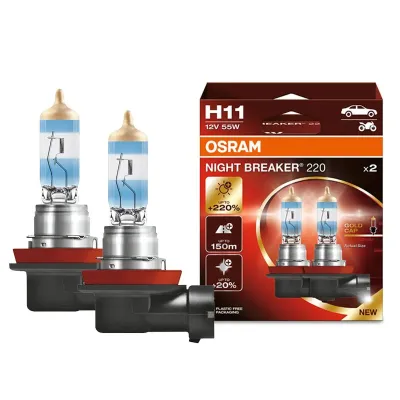
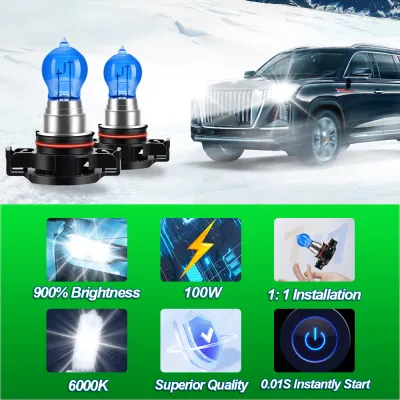
Prices are valid at publication and may change. Please refer to the product page for the latest price.
Physical dimensions and base types are equally critical. A standard halogen bulb has a precise filament placement that aligns perfectly with the focal point of the housing. LED bulbs, which use surface-mounted diodes, must mimic this filament placement to prevent distorted beam patterns. Check the packaging for exact base designations, such as H11, HB4, or H8, and verify that the physical dimensions of the LED bulb—including any integrated cooling fans or heat sinks—will fit within the clearance limits of your vehicle’s light assembly.
Fog Light Performance: What to Look for in Your Housing
Fog lights serve a highly specific safety function: they illuminate the road surface immediately in front of the vehicle and along the edges without reflecting light back into the driver’s eyes. Achieving this requires a sharp horizontal cutoff and minimal upward light scatter. When installing a replacement bulb, the design of your fog light housing—whether it is a reflector or a projector system—determines how the light is distributed.

Reflector housings designed for a halogen bulb rely on the omnidirectional light output of a thin wire filament. Because LED chips are directional and mounted on a flat circuit board, installing an LED bulb in a halogen reflector housing can disrupt the focal point. This misalignment often results in uncontrolled light scatter, which reduces visibility in heavy rain or fog and blinds oncoming drivers. If your vehicle uses reflector fog lights, a high-quality halogen bulb remains a reliable choice for maintaining the intended beam pattern. Projector housings, which use a lens to focus the light, are generally more forgiving of LED upgrades, but you must still verify that the bulb’s light-emitting elements align with the projector’s internal shield.
Another physical factor to consider is heat generation. Halogen bulbs generate significant heat, which radiates forward through the lens. In colder climates or during heavy downpours, this heat helps melt snow, clear ice, and evaporate internal condensation from the light housing. LED bulbs, conversely, run cool at the front but generate substantial heat at the base, which is dissipated backward via heat sinks or fans. If you install LEDs in your fog lights, you may notice that the lenses do not clear condensation as quickly as they would with halogen bulbs.
DRL Suitability: Managing Heat and Power Draw
Daytime Running Lights (DRLs) are designed to make your vehicle more visible to other road users during daylight hours. Because DRLs operate continuously whenever the engine is running, they place a constant demand on your vehicle’s electrical system and light housings. This continuous operation makes power consumption and thermal management primary considerations when choosing between a halogen bulb and an LED.
Halogen bulbs used as DRLs draw more power from the alternator, which can slightly increase the overall electrical load on the vehicle. Over thousands of hours of continuous daytime operation, this constant power draw and the associated heat can accelerate the degradation of the plastic housing, causing the lens to yellow or become brittle. LED bulbs draw significantly less power, reducing the load on your alternator and generating virtually no forward heat, which helps preserve the integrity of the plastic housing over time.
However, the heat generated at the rear of an LED bulb must be managed carefully. DRL housings are often compact and tightly sealed to prevent moisture ingress. If an LED bulb with a large heat sink or an active cooling fan is installed in a confined space, the trapped heat can degrade the LED driver and shorten the lifespan of the bulb. Before choosing an LED for your DRLs, inspect the space behind the light assembly to ensure there is sufficient clearance for heat dissipation. Additionally, ensure the LED bulb is not excessively bright; DRLs should provide visibility without creating distracting glare for oncoming traffic during bright daylight or overcast conditions.
Legal Compliance and Electrical Safety Checks
Before purchasing or installing any aftermarket lighting components, you must address the safety boundaries and legal requirements of your region. Modifying exterior vehicle lighting can affect your vehicle’s road legality and safety certification. Many transport authorities, including those in Singapore, have strict regulations regarding aftermarket LED conversions. Installing an LED bulb into a housing originally designed and certified exclusively for a halogen bulb is often prohibited on public roads because of the risk of glare and improper beam alignment. Always consult your local transport authority guidelines and your vehicle’s original documentation before making any modifications.
From an electrical standpoint, modern vehicles use sophisticated monitoring systems to detect bulb failures. Because LED bulbs draw significantly less current than halogen bulbs, your vehicle’s electronic control unit may interpret the lower power draw as a burnt-out bulb. This can trigger dashboard error lights, rapid blinking, or complete bulb shutdown. To resolve this, you may need to install additional components such as CANbus decoders or load resistors. These components mimic the electrical resistance of a standard halogen bulb, but they also generate substantial heat and must be mounted securely to metal surfaces away from plastic parts and wiring harnesses.
Because vehicle electrical systems are complex and critical to safety, any modification carries risks. Incorrectly installed wiring, poorly secured resistors, or incompatible bulbs can lead to electrical shorts, blown fuses, or damage to expensive control modules. If you are unfamiliar with automotive electrical systems, or if your vehicle requires complex disassembly to access the light housings, stop and consult a qualified auto electrician. Professional installation ensures that all components are mounted safely, wired correctly, and aligned to prevent hazardous glare on public roads.
How to Decide: Conditional Choice Guide
To determine whether a halogen bulb or an LED is the right choice for your vehicle’s fog lights or DRLs, evaluate your specific vehicle setup, driving conditions, and local regulations. Use the following conditional guidelines to make your decision:
Choose a halogen bulb if:
- Your vehicle uses reflector housings for its fog lights, and you want to maintain a precise, glare-free beam pattern in poor weather.
- You prioritize strict legal compliance and want to avoid the risk of failing vehicle inspections due to aftermarket LED conversions.
- You prefer a simple, plug-and-play installation without the need to mount external load resistors or CANbus decoders.
- You drive in conditions where forward-radiating heat is necessary to clear condensation or frost from the light lenses.
Choose an LED bulb if:
- Your vehicle has dedicated projector housings or factory-approved LED-compatible assemblies that can safely focus the light.
- You want to reduce power consumption and heat degradation in your DRL housings during continuous daytime operation.
- You have verified that aftermarket LED upgrades are fully compliant with local road regulations in your jurisdiction.
- You are prepared to install necessary electrical accessories, such as CANbus decoders, to manage system compatibility.
Before making any purchase, always check your vehicle’s owner’s manual to confirm the exact bulb fitment code, and inspect the physical clearance behind your light housings to ensure a safe and secure fit.
Community discussion
Share your experience or ask a question. Comments are reviewed before publication.