
Choosing between the GYEON Q²M Silk Dryer and other premium car drying towels comes down to verifying how their specific material structures, edge designs, and weave patterns match your vehicle’s paint sensitivity and your local climate conditions. In environments with high humidity and intense sun, such as Singapore, drying a vehicle quickly is essential to prevent rapid water evaporation from leaving stubborn mineral spots on the clear coat. While the GYEON Silk Dryer is highly regarded for its synthetic twist-loop fibers and smooth edge design, determining if it justifies its premium price tag requires evaluating its physical specifications against alternative plush or waffle-weave microfiber options. By focusing on observable material characteristics, care requirements, and structured testing methods, you can make an informed decision that protects your automotive investment.
Core Design and Material Differences to Verify
When comparing premium drying towels, the first physical attribute to inspect is the edge construction. Many standard microfiber towels feature stitched edges using polyester thread, which can become stiff over time and potentially scratch delicate clear coats. The GYEON Silk Dryer utilizes a smooth, silk-like edge banding designed to minimize friction as the towel glides across the vehicle’s surface. When shopping, check the product label or manufacturer specifications to verify whether the edges are laser-cut, suede-wrapped, or bound with soft silk-style synthetic material, as this directly impacts safety on soft paint finishes.
The weave pattern is another critical variable that dictates how a towel interacts with water and paint. The GYEON Silk Dryer features a twist-loop microfiber design, where the fibers are bundled and twisted into loops. This structure increases the surface area available for water collection without creating the high friction associated with long, plush fibers. In contrast, many traditional premium towels use a plush open-pile weave or a waffle-weave pattern. Waffle-weave towels are excellent for glass and light duty but may lack the water-holding capacity of a twist-loop design, while plush towels can sometimes drag on the paint if they are not sufficiently lubricated.
Products mentioned in this guide
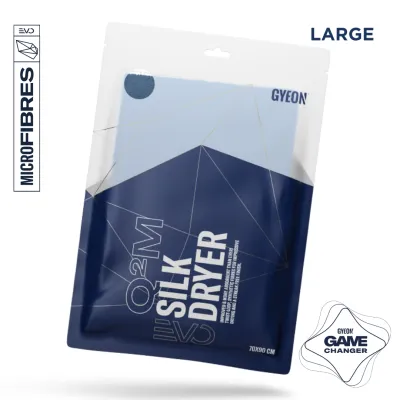
Prices are valid at publication and may change. Please refer to the product page for the latest price.
To ensure the towel is suitable for your specific vehicle size, you must verify its weight, measured in grams per square meter (GSM), and its physical dimensions. A higher GSM generally indicates a denser, heavier towel that can hold more water, but it also means the towel will take longer to dry after washing—a significant consideration in humid tropical climates. Check the manufacturer’s packaging for the exact GSM rating, which typically ranges from 400 to over 1000 for premium drying towels. Match the towel’s dimensions to your vehicle type; a compact hatchback may only require a medium-sized towel, whereas a large sports utility vehicle (SUV) or multi-purpose vehicle (MPV) will necessitate a larger format or multiple towels to complete the job without saturated streaks.
Drying Performance and Paint Safety Checks
Evaluating water absorption performance without relying on unverified marketing claims requires a systematic approach. You can assess a towel’s actual water retention capacity by conducting a controlled home weigh-test. Weigh the towel dry using a standard kitchen scale, submerge it completely in water, let the excess drip off naturally for thirty seconds without wringing, and weigh it again. The difference between the wet and dry weights provides a reliable, observable metric of its maximum absorption capacity, allowing you to compare different brands on an objective basis.

Paint safety is paramount, especially when dealing with modern, thin clear coats that are highly susceptible to micro-marring and swirl marks. Before every use, thoroughly inspect the towel’s surface for any trapped debris, such as tiny twigs, grit, or dried polish residue, which can act like sandpaper when dragged across the paint. The twist-loop design of the GYEON Silk Dryer is engineered to pull water away from the surface, but its tight loops can occasionally trap small particles more firmly than open-pile plush towels. Gently shaking the towel out and running a clean hand over the surface before it touches your vehicle is a simple but vital safety check.
The technique you use to dry your vehicle also dictates which towel structure is safest. For highly sensitive paintwork, the “pat-dry” method—where you lay the towel flat on a section of the vehicle and gently press down without sliding it—is the safest way to remove water. If you prefer the “drag” method, where you pull the towel across the flat panels by its corners, a twist-loop towel like the GYEON Silk Dryer is highly effective because it glides with minimal resistance. Always consult the product’s care label and your vehicle manufacturer’s detailing guidelines to determine if using a dedicated drying aid or quick detailer spray is recommended to provide extra lubrication during this process.
Maintenance, Durability, and Care Requirements
Maintaining the performance of a premium microfiber towel requires strict adherence to specific washing and care protocols. Microfiber is composed of a polyester and polyamide blend that is highly sensitive to heat and chemical additives. Always review the manufacturer’s washing instructions on the care label before cleaning. As a general rule, wash premium towels at low temperatures, typically not exceeding 30 or 40 degrees Celsius, to prevent the synthetic fibers from melting or fusing together, which permanently ruins their softness and absorbency.
The choice of detergent is critical for preserving the capillary action of the microfiber loops. Use a dedicated microfiber wash liquid or a mild, liquid detergent that is completely free of perfumes, dyes, and optical brighteners. Under no circumstances should you use fabric softeners or bleach. Fabric softeners coat the microscopic fibers with a water-repellent chemical layer, which severely degrades the towel’s ability to absorb water. Bleach will break down the polyamide structure over time, leading to premature shedding and fiber degradation.
After washing, inspect the towel thoroughly for signs of wear, such as edge fraying, loose threads, or a stiffening of the fibers. Air drying in a clean, dust-free indoor environment is highly recommended, especially in warm climates. If you choose to use a clothes dryer, select the lowest heat or “air fluff” setting to avoid heat damage. Once dry, store the towel in a sealed plastic container or a dedicated drawer to prevent cross-contamination from airborne dust, garage grime, or overspray from other automotive chemicals, ensuring it remains pristine for your next wash cycle.
Price-to-Value Evaluation and Decision Framework
When evaluating the price-to-value ratio of the GYEON Silk Dryer, consider the initial purchase price in S$ relative to its expected operational lifespan. Premium towels often command a higher upfront cost, sometimes ranging from S$25 to over S$50 depending on the size and retailer. However, a high-quality towel that is properly maintained can withstand dozens of wash cycles without losing its structural integrity, making it more cost-effective over time than cheaper, low-grade alternatives that must be replaced frequently due to shedding or loss of absorbency.
To decide which towel fits your routine, apply a conditional decision framework based on your specific detailing priorities. Choose the GYEON Silk Dryer if you prioritize a lightweight towel with a smooth, silk-banded edge that glides effortlessly over ceramic-coated surfaces and you prefer the dragging drying technique. The twist-loop weave is exceptionally efficient at clearing standing water from well-protected paintwork. Conversely, choose alternative plush, high-GSM towels if your vehicle has uncoated, highly sensitive paint where maximum cushioning is required, or if you need a heavier towel with higher bulk water capacity to dry multiple large vehicles in a single session without needing to wring the towel out.
Before making a purchase, verify current stock and pricing through authorized local automotive detailing retailers. Due to the popularity of premium car care brands, counterfeit products or highly marked-up listings can sometimes appear on general online marketplaces and e-commerce platforms. Purchasing directly from established, authorized distributors ensures you receive an authentic product with the correct material composition and manufacturing quality, protecting both your wallet and your vehicle’s delicate clear coat.
Frequently Asked Questions (FAQ)
Can I use a drying aid with the GYEON Silk towel?
Yes, you can use a drying aid, but you must verify compatibility by checking the product labels of both the towel and the chemical spray. Some heavy spray waxes or sealants can leave residues that clog the tight twist-loop fibers of the GYEON Silk towel, reducing its absorbency over time. If you use a drying aid, select a lightweight, water-based quick detailer or gloss enhancer designed specifically to assist with drying, and ensure you wash the towel promptly after use with a dedicated microfiber cleaner to remove any chemical buildup.
How do I know when it is time to replace a premium drying towel?
You should replace or repurpose your premium drying towel when you observe clear signs of physical degradation. These include a noticeable reduction in water absorption capacity, persistent stiffness in the fibers even after washing with a dedicated microfiber restorer, or visible fraying along the silk edges. If the towel begins to lint or leave streaks on your vehicle’s glass and paint, it has reached the end of its life as a primary drying tool. At this stage, downgrade the towel for less sensitive tasks, such as cleaning door jambs, engine bays, or wheels, to maximize its utility.
Community discussion
Share your experience or ask a question. Comments are reviewed before publication.