
Quick Answer: Matching the Cleaner to Your Interior Material
Selecting the correct interior cleaner for your vehicle depends entirely on the specific materials lining your cabin. Using the wrong formulation can lead to permanent discoloration, altered textures, or degraded protective coatings.
Choose GYEON Leather Cleaner if your primary cabin surfaces consist of genuine coated leather, synthetic leather, or vinyl. These surfaces require a formulation designed to lift oils and dirt without stripping the delicate factory topcoat.
Choose GYEON Fabric Cleaner if your vehicle features woven cloth seats, textile door inserts, or carpeted floor mats. This formula is engineered to penetrate woven fibers, break down embedded grime, and release stains for extraction.
Products mentioned in this guide
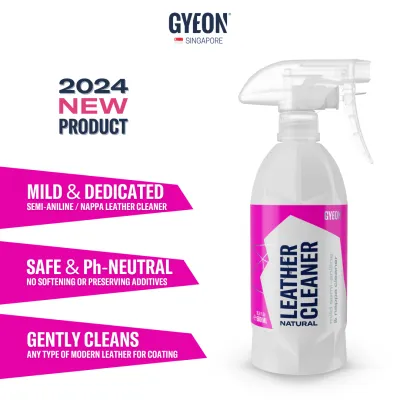
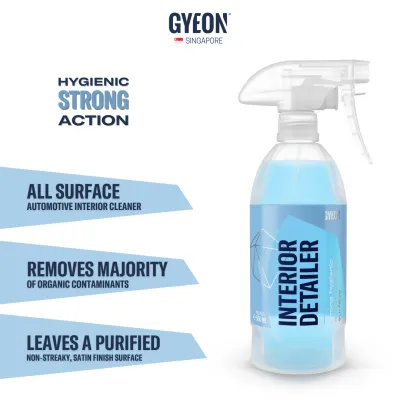
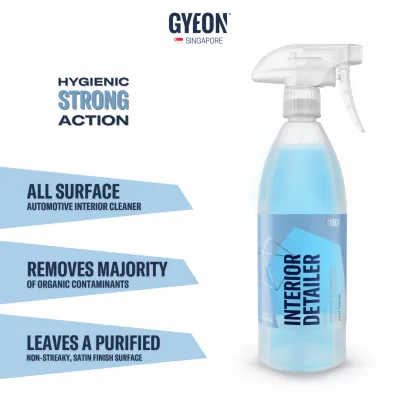
Prices are valid at publication and may change. Please refer to the product page for the latest price.
Always verify your material types before application, especially when dealing with mixed-material seats, Alcantara, or uncoated aniline leather. These specialty surfaces require dedicated care protocols and specific product label verifications to avoid irreversible damage.
Step 1: Identify Your Exact Interior Materials
Before purchasing or applying any interior detailing product, you must accurately identify every material surface in your cabin. Modern automotive interiors frequently blend multiple material types across seats, door cards, and dashboards, making a single-product approach risky.

Start by consulting your vehicle owner’s manual or checking the original manufacturer build sheet. These documents specify whether your seats are upholstered in genuine leather, synthetic alternatives like leatherette or vinyl, or woven polyester fabrics.
If documentation is unavailable, perform visual and tactile checks to determine the material. Coated leather typically feels smooth, slightly cool, and has a subtle, non-uniform grain pattern. Synthetic leather often presents a highly uniform grain pattern and may feel slightly more rubbery or plastic-like. Woven fabrics are easily identified by their visible thread patterns, loops, and textile texture.
Specialty materials require extra caution. Alcantara and micro-suede have a distinct, velvety nap that reacts poorly to standard leather or aggressive fabric cleaners. Uncoated aniline leather is highly porous and will absorb liquids rapidly, leading to dark stains.
If you cannot confidently identify a material, or if the surface is heavily worn, cracked, or peeling, stop immediately. Consult a professional automotive detailer or your local dealership before applying any chemical cleaner to prevent worsening the damage.
Step 2: Evaluate GYEON Leather Cleaner for Your Seats
GYEON Leather Cleaner is formulated specifically to address the unique maintenance needs of modern automotive leather. Most modern car leather is finished with a thin, protective polyurethane topcoat that shields the underlying hide from wear and UV damage.
This cleaner is designed to lift surface dirt, body oils, and light stains from coated leather, synthetic leather, and vinyl surfaces. In hot and humid climates like Singapore, sweat and body oils accumulate rapidly on seats, making regular cleaning essential to prevent the topcoat from breaking down prematurely.
When using this product, always read the specific product label to verify the correct application instructions. Different versions of the cleaner may require specific dilution ratios or dwell times depending on the level of soiling. The label will also guide you on compatible agitation tools, such as soft-bristle leather brushes or microfiber applicators.
Observe strict safety boundaries when working with leather cleaners. Do not apply these formulations to uncoated aniline leather, suede, or raw fabric, as they can cause staining or alter the texture.
Additionally, take care to keep liquid cleaners away from electronic seat controls, seatbelt buckles, and the perforated seams of heated or ventilated seats. Excess moisture seeping into these areas can cause electrical faults or damage underlying foam cushions.
Step 3: Evaluate GYEON Fabric Cleaner for Textiles
GYEON Fabric Cleaner is engineered to tackle the distinct challenges of maintaining woven textiles, cloth upholstery, and carpets. Unlike smooth leather, fabric surfaces feature deep, porous weaves that trap dust, spilled liquids, and outdoor grime deep within the fibers.
This formulation works by penetrating the textile fibers to loosen and suspend dirt, allowing it to be wiped away or extracted. It is highly effective for restoring the appearance of cloth seats and heavy-use floor carpets that endure daily foot traffic.
Before application, carefully review the product label for instructions regarding agitation and extraction. Fabric cleaning often requires a firm-bristle textile brush to work the cleaner into the weave, followed by a clean microfiber towel or a wet-dry vacuum extraction system to remove the suspended dirt.
Pay close attention to recommended drying times. In humid environments, wet fabric can remain damp for extended periods, creating an ideal environment for mold, mildew, and musty odors to develop. Ensure adequate ventilation and allow the cabin to dry completely before closing the doors.
Keep in mind the limitations of fabric cleaners. They are not formulated for leather conditioning or hard plastic trim, and using them on these surfaces may leave a dull residue. Avoid over-saturating seat foam, as excess liquid can degrade the structural integrity of the cushion over time.
Handling Edge Cases: Alcantara, Perforated Leather, and Mixed Trim
Many modern vehicles feature complex interior designs that combine different materials on a single seat or door panel. Handling these edge cases requires a systematic approach to prevent cross-contamination and material damage.
Alcantara and micro-suede require specialized care. These materials are synthetic textiles but have a delicate, brushed nap that mimics suede. Standard fabric cleaners can be too aggressive, flattening the nap or leaving sticky residues. Always check the GYEON product label to confirm if the formulation is explicitly approved for Alcantara, or opt for a dedicated micro-suede cleaner.
Perforated leather seats present a unique physical challenge. The small ventilation holes allow liquids to pass directly through the leather and pool in the underlying heating elements, cooling fans, or foam padding. To clean these safely, never spray product directly onto the seat. Instead, apply a small amount of cleaner to a soft brush or microfiber towel, work it into a light foam, and gently clean the surface using minimal moisture.
Mixed-material seats, such as those with leather bolsters and fabric center inserts, require careful zoning. Map out your cleaning process and work on one material at a time. Use painter’s tape to mask off delicate boundaries if necessary, ensuring that leather cleaner does not oversaturate adjacent fabric panels, and fabric cleaner does not dry on finished leather.
Step 4: Spot Testing and Safe Application Protocol
Regardless of the cleaner you choose, establishing a safe application workflow is the best way to protect your vehicle’s interior from unexpected chemical reactions.
Always perform a spot test in an inconspicuous area before cleaning highly visible surfaces. Suitable test spots include the underside of a headrest, the lower portion of a door card, or the rear section of a seat cushion. Apply a small amount of the cleaner, agitate gently, and wipe it dry.
Observe the test area closely. Stop immediately and wipe the surface clean with a damp microfiber towel if you notice any signs of discoloration, stiffness, dye transfer onto your towel, or peeling of the factory finish. If the test area dries clean and retains its original texture and color, you can proceed with the full application.
Use only the application tools recommended on the product label. Soft-bristle detailing brushes are ideal for agitating leather pores and fabric weaves safely, while high-quality, tagless microfiber towels prevent scratching delicate plastics or clear coats.
Work in small, manageable sections rather than spraying down the entire cabin at once. This prevents the cleaning solution from drying on the surface, which can leave unsightly water spots or chemical rings that are difficult to remove.
Frequently Asked Questions (FAQ)
Can I use GYEON Fabric Cleaner on Alcantara seats?
Alcantara is a delicate synthetic microfiber that requires specialized maintenance to preserve its soft, suede-like texture. Standard fabric cleaners are often too harsh and can flatten the nap or leave behind residues that attract dirt. You should check the specific GYEON product label to verify if it is explicitly approved for Alcantara surfaces. If it is not listed, use a dedicated Alcantara and micro-suede cleaner to avoid altering the material’s unique feel.
Is it safe to use leather cleaner on synthetic vinyl trim?
Many cleaners formulated for coated leather are safe to use on synthetic vinyl trim because both materials share similar polyurethane-based protective coatings. However, you must always verify compatibility by reading the product label before application. Avoid using leather cleaners that contain heavy oils, waxes, or conditioners on hard vinyl dashboards or textured plastics, as these ingredients can leave a greasy, dust-attracting film.
How do I clean perforated leather seats without damaging the electronics?
To clean perforated leather safely, never spray any liquid cleaner directly onto the seat surface. Spraying directly allows liquid to seep through the perforations, potentially damaging underlying seat heaters, ventilation fans, or electronic sensors. Instead, spray the cleaner onto a soft-bristle brush or a microfiber towel first, work it into a dry foam, and gently clean the leather. Wipe the area dry immediately with a clean microfiber towel to prevent moisture from pooling in the holes.
Community discussion
Share your experience or ask a question. Comments are reviewed before publication.