
Selecting the right motorcycle lubricant requires understanding how viscosity behaves under different operating conditions. Gulf Master (gulfmaster) motorcycle oils are formulated in several viscosity grades, such as 10W-30, 10W-40, and 20W-50, to cater to different engine designs and riding environments. These numbers represent the oil’s flow rate at cold startup and its resistance to thinning at peak operating temperatures. Choosing the correct grade ensures that your engine components remain protected against friction, heat, and wear.
Decoding the Numbers: What Viscosity Grades Actually Mean
The alphanumeric codes printed on motorcycle oil bottles are established by the Society of Automotive Engineers (SAE) to classify oil thickness and flow capability. These ratings are crucial because engine oil does not remain at a constant thickness; it thins out as it heats up and thickens as it cools. Multi-grade oils are engineered to handle these temperature swings, ensuring the engine remains protected during both initial startup and high-RPM operation.
In a multi-grade oil rating like 10W-40, the first number followed by the letter “W” stands for “Winter.” This number indicates the oil’s flow characteristics and pumpability at low temperatures. A lower number before the “W” means the oil remains more fluid in cold conditions, allowing it to circulate quickly through the engine during startup to prevent metal-on-metal wear before the engine warms up.
Products mentioned in this guide
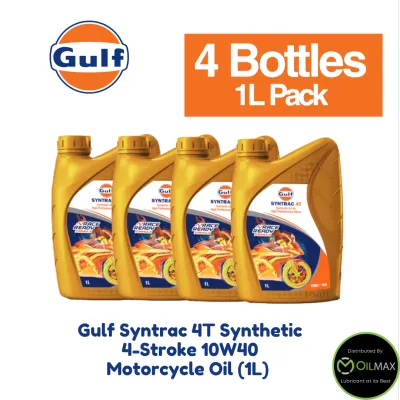
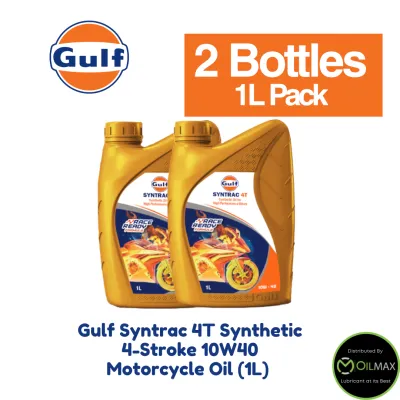
Prices are valid at publication and may change. Please refer to the product page for the latest price.
The second number, such as the “40” in 10W-40, represents the oil’s kinematic viscosity at 100 degrees Celsius, which is the standard operating temperature for most internal combustion engines. A higher second number indicates a thicker, more viscous oil at high temperatures. This thickness is vital for maintaining a strong protective film over moving parts when the engine is running hot and under heavy load.
Modern motorcycles rely on multi-grade oils because they contain specialized polymer additives known as viscosity index improvers. These polymers expand as the oil heats up, counteracting the natural tendency of oil to thin out. This technology allows a single oil to flow like a thin oil during cold starts while protecting like a thicker oil at high operating temperatures.
Typical Gulfmaster Viscosity Ranges and Their Riding Profiles
Motorcycle oil lines, including premium offerings like the Gulfmaster range, feature several common viscosity grades tailored to specific riding styles and engine designs. Because product availability and formulations can change over time, riders should always verify the exact specifications on the physical product label or through official retail channels before purchasing.

An oil rated at 10W-30 is typically formulated for modern, highly efficient engines with tight internal clearances. This lower-viscosity profile reduces internal drag within the engine, promoting better fuel economy and rapid oil circulation during initial startup. It is commonly recommended for modern commuters and smaller-capacity scooters that prioritize efficiency.
The 10W-40 grade is widely considered the versatile standard for the motorcycle industry. It strikes an excellent balance between low-temperature flow and high-temperature protection, making it suitable for a broad spectrum of motorcycles, from daily commuter bikes to high-performance sport models. It provides a robust protective barrier under standard riding conditions without causing excessive drag.
For heavy-duty applications, older engines, or high-mileage motorcycles, a thicker oil like 20W-50 is often preferred. The higher base viscosity provides a thicker protective cushion for engines with wider internal clearances or those prone to oil consumption. This grade is highly effective at maintaining oil pressure and preventing oil film breakdown under extreme heat and heavy loads.
Matching Viscosity to Singapore’s Tropical Climate and Traffic
While the cold-start rating of an oil is critical in freezing climates, Singapore’s consistent tropical climate shifts the focus entirely to high-temperature stability. With ambient temperatures regularly hovering above 30 degrees Celsius and high humidity year-round, motorcycles locally do not experience true cold-weather starts. Instead, the primary challenge is managing extreme operational heat.
This environmental heat is severely compounded by dense urban traffic and frequent stop-and-go riding. Delivery riders and daily commuters navigating congested expressways experience prolonged idling and low-speed travel, which significantly limits natural airflow cooling. Under these conditions, engine and oil sump temperatures can spike rapidly, putting immense thermal stress on the lubricant.
For Singaporean riders, the high-temperature viscosity rating (the second number in the grade) is critical to preventing thermal shear. If the oil becomes too thin under extreme heat, the protective barrier between moving components can break down, leading to accelerated wear on the pistons, cylinders, and bearings. A stable high-temperature oil ensures the lubricating film remains intact even during prolonged idling in traffic.
However, riders must avoid the common mistake of simply choosing the thickest oil available, such as a 20W-50, unless specified by the manufacturer. An excessively thick oil can restrict oil flow through narrow passages, increase internal operating temperatures due to fluid friction, and reduce overall engine efficiency. The goal is to select a viscosity that matches your engine’s engineered clearances while providing sufficient thermal protection.
Why Your Owner’s Manual and Clutch Certifications Matter Most
The ultimate authority on which viscosity grade to use is your motorcycle manufacturer’s owner’s manual. Engine designers run extensive testing to determine the precise oil thickness required to lubricate internal components, maintain correct oil pressure, and support cooling systems. Deviating from these engineered specifications without a clear mechanical reason can lead to premature engine wear or voided warranties.
Beyond viscosity, motorcycle riders must pay close attention to specialized wet clutch certifications. Unlike standard passenger cars, most motorcycles share a single oil reservoir for the engine, gearbox, and clutch assembly. This means the engine oil must provide excellent lubrication for moving parts while still allowing enough friction for the clutch plates to engage without slipping.
To ensure compatibility, look for motorcycle-specific certifications on the Gulfmaster label, such as JASO MA or JASO MA2. These standards, set by the Japanese Automotive Standards Organization, certify that the oil does not contain friction modifiers that could cause wet clutches to slip. JASO MA2 represents the highest friction performance, making it ideal for high-torque and sport motorcycles.
Using standard automotive oils labeled as “Energy Conserving” or “Resource Conserving” in a wet-clutch motorcycle can cause severe clutch slippage and eventual transmission damage. Always verify that the lubricant is specifically rated for motorcycle use. If your motorcycle has been heavily modified, or if you ride under extreme track conditions, consult a qualified professional mechanic to determine if a non-standard viscosity is appropriate for your setup.
Frequently Asked Questions (FAQ)
Can I mix different viscosity grades of motorcycle oil in an emergency?
Mixing different viscosity grades should only be done in absolute emergencies when the oil level is critically low and the correct grade is unavailable. Combining different viscosities and additive packages can alter the oil’s overall flow characteristics and reduce its protective capabilities. If you must mix oils to reach safety, perform a complete oil drain and filter replacement with the correct manufacturer-specified viscosity as soon as possible.
Does a higher viscosity number always mean better engine protection?
A higher viscosity number does not automatically translate to superior protection. Modern engines are designed with incredibly tight tolerances that require thinner oils to flow quickly and lubricate critical components. Using an oil that is thicker than recommended can restrict flow, increase operating temperatures, lower fuel efficiency, and cause oil starvation during startup. True protection comes from matching the exact viscosity specified by your engine’s manufacturer.
Community discussion
Share your experience or ask a question. Comments are reviewed before publication.