
Quick Answer: Which Gear Oil Does Your Vehicle Need?
Choosing the right gear oil is not a matter of picking the highest number on the shelf. The only definitive source for your vehicle’s required API (American Petroleum Institute) gear oil classification is the owner’s manual or factory service documentation.
A common and costly myth is that API GL-5 is simply an upgrade to GL-4, implying backward compatibility. In reality, these two classifications are engineered for entirely different mechanical environments and operating conditions. To protect your drivetrain from severe internal damage, you must match the exact specification printed in your vehicle’s manual rather than assuming a higher number offers better protection.
Decoding API Gear Oil Classifications: GL-4 vs GL-5
To understand why these fluids cannot always be swapped, it helps to look at their chemical formulations. Gear oils contain Extreme Pressure (EP) additives, typically sulfur-phosphorus compounds, which form a sacrificial protective layer on gear teeth. This layer prevents metal-to-metal contact under heavy loads and high sliding friction, shielding the gears from wear.
Products mentioned in this guide
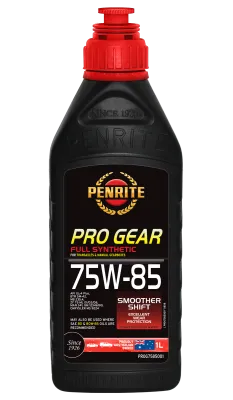
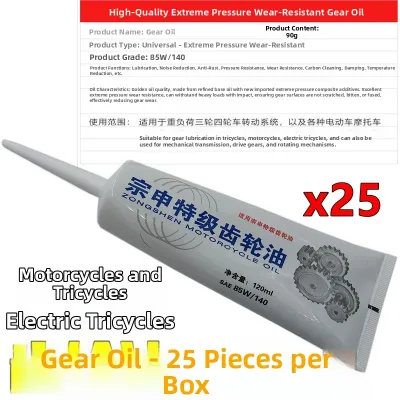
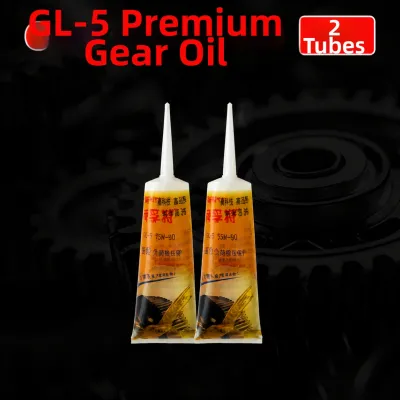

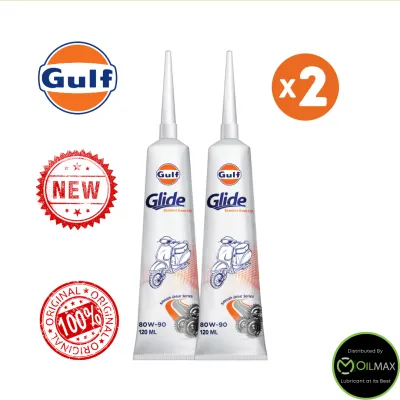
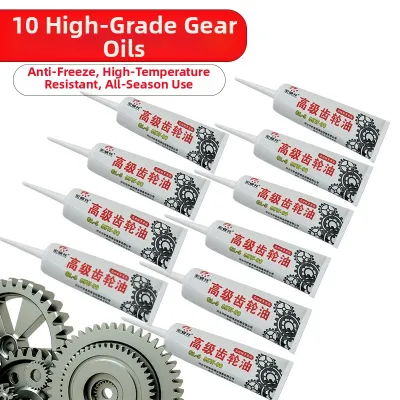
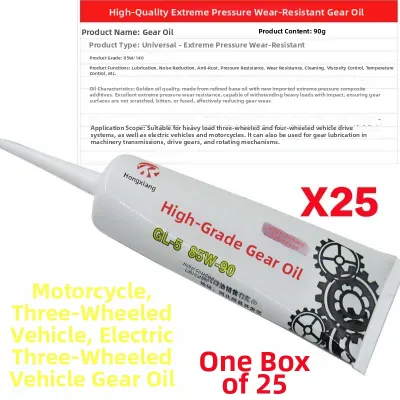
Prices are valid at publication and may change. Please refer to the product page for the latest price.

API GL-4 gear oils are generally formulated for manual transmissions and transaxles. They contain a moderate amount of EP additives, which provide sufficient protection for helical and spur gears without interfering with the operation of internal synchronizers. These synchronizers rely on a specific level of friction to match shaft speeds during gear changes, and excessive EP additives can make the surfaces too slippery, leading to poor shift quality.
In contrast, API GL-5 gear oils are designed for high-stress environments like hypoid differentials and rear axles. Hypoid gears feature offset axes that create a severe sliding action along the gear teeth, requiring roughly double the concentration of EP additives found in GL-4 fluids. Because of this significant difference in chemical composition, these two classifications serve distinct mechanical purposes and are rarely interchangeable.
The Risks of Using the Wrong Gear Oil
Using the wrong gear oil can lead to severe mechanical failure. If you put a GL-5 fluid into a manual transmission that specifies GL-4, the highly reactive sulfur-phosphorus EP additives can attack the “yellow metals” inside the gearbox. Components like brass synchronizer rings can corrode and wear down rapidly, leading to stiff shifting, gear grinding, and eventual transmission failure.
Conversely, using a GL-4 fluid in a differential that requires GL-5 introduces a different set of risks. The lower concentration of EP additives in GL-4 cannot withstand the extreme sliding pressures of hypoid differential gears. Under high torque, the protective barrier fails, resulting in direct metal-on-metal contact, gear scuffing, excessive heat, and premature differential failure.
Taking the time to verify the correct fluid specification is always more cost-effective than facing a major mechanical rebuild. A simple mistake at the parts counter can result in thousands of dollars in repair bills for a replaced gearbox or differential assembly.
How to Verify the Correct Specification for Your Drivetrain
To confirm the correct fluid for your vehicle, start by consulting the technical specifications section of your owner’s manual. This section typically lists the required API service category, the recommended viscosity grade (such as 75W-90), and any specific manufacturer part numbers or OEM approvals. If the physical manual is missing, many manufacturers provide digital copies online, or you can refer to official factory service literature.
When purchasing gear oil, read the product label carefully to verify that it explicitly meets the required API classification. Some modern fluids are labeled as meeting both GL-4 and GL-5 specifications, but you should verify if they are safe for yellow metals before using them in a manual transmission. Look for specific manufacturer approvals on the bottle that match the codes listed in your manual.
If you are still uncertain, or if your vehicle has modified or swapped drivetrain components, do not guess. Consult a qualified mechanic or an authorized dealership parts department to verify the correct fluid. They can cross-reference your vehicle’s Vehicle Identification Number (VIN) to ensure you receive the exact fluid formulation required for your specific setup.
Frequently Asked Questions (FAQ)
This section provides direct answers to common questions regarding gear oil compatibility, mixing risks, and base oil selections.
Can I mix GL-4 and GL-5 gear oils?
Mixing GL-4 and GL-5 gear oils is not recommended due to chemical incompatibility risks. Combining different formulations can alter the concentration of Extreme Pressure (EP) additives, potentially reducing the fluid’s ability to protect your gears or causing accelerated wear on yellow metal components. If you need to change or top up your gear oil, the safest procedure is to drain the existing fluid completely, flush the system if recommended by the manufacturer, and refill it entirely with fresh fluid of the single correct API classification.
Is synthetic gear oil better than conventional for GL-4 and GL-5?
Synthetic gear oils generally offer superior thermal stability, better resistance to oxidation, and improved flow properties at low temperatures compared to conventional mineral-based oils. These characteristics can help extend fluid life and maintain consistent performance across a wider temperature range. However, using a synthetic fluid does not change the required API service classification. You must still strictly match the GL-4 or GL-5 specification required by your vehicle manufacturer, regardless of whether you choose a synthetic or conventional base oil.
Community discussion
Share your experience or ask a question. Comments are reviewed before publication.