
Quick Answer: Which Cooling Seat Cushion Material is Best for You?
In Singapore’s tropical climate, where daily temperatures regularly hover above 30 degrees Celsius and relative humidity often exceeds 80 percent, getting into a car parked under the sun can feel like stepping into an oven. Finding an effective ice cool seat cushion is a common quest for local drivers looking to escape the discomfort of scorching leather or heat-retaining fabric seats. However, there is no single, universally superior material that fits every driver’s needs; instead, the ideal choice depends on your specific driving habits, parking situations, and comfort preferences.
The core trade-off among the three primary cooling cushion materials comes down to thermodynamics and airflow. Gel cushions offer the most intense, immediate cooling sensation upon initial contact due to their high thermal mass, but they can eventually heat up and trap warmth during long drives. Breathable mesh cushions provide continuous ventilation by physically separating your body from the seat, relying on convective airflow to prevent heat and sweat buildup, though they do not offer an active “chilled” feeling. Fabric cooling cushions deliver a soft, traditional, and highly comfortable seating experience with excellent moisture-wicking properties, but their cooling performance is heavily dependent on the efficiency of your car’s air conditioning system.
How Gel, Mesh, and Fabric Cooling Cushions Actually Work
Understanding the science behind how these materials manage heat is key to making an informed decision. Each material utilizes a distinct physical mechanism to regulate temperature, and knowing how these mechanisms interact with your body heat will help you predict how a cushion will perform on short versus long journeys.
Products mentioned in this guide
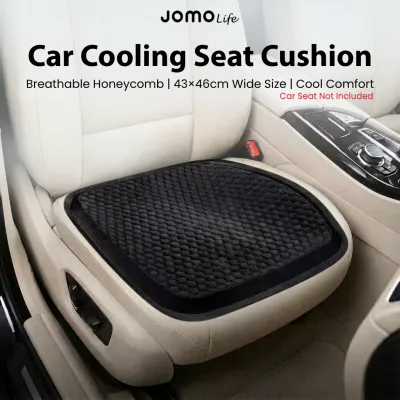
![[SG Stock] Honeycomb Gel Seat Cushion With Cover Silicon Ice Gel Seat Cushion Cooling Mat Egg Support Non Slip Summer Ice Cool Pad Gel Chair Car Office Seat](https://img.lazcdn.com/g/p/bd452066c1c33bff5dd160e661df4be8.jpg_400x400q80.jpg_.webp)
Prices are valid at publication and may change. Please refer to the product page for the latest price.

Gel Cooling Cushions
Gel cooling cushions operate primarily on the principles of conduction and thermal mass. Most automotive gel cushions are constructed using thermoplastic elastomer (TPE) or silicone-based gels, often arranged in a honeycomb or grid structure to allow some physical space for air. Because gel has a high specific heat capacity, it requires a significant amount of heat energy to raise its temperature by one degree. When you first sit on a cold gel cushion, heat quickly transfers from your warm body to the cooler gel, creating an instant, refreshing sensation of coldness.
However, because gel is a dense solid or semi-solid material, it acts as a heat sink with a finite capacity. Over time, as you sit on the cushion, the gel continuously absorbs your body heat until it reaches thermal equilibrium—the point where the cushion’s temperature matches your body temperature. Without active external airflow to dissipate this absorbed heat, the gel can begin to act as an insulator, trapping heat against your skin. This means that while gel is incredibly effective for rapid cooling at the start of a drive, its cooling effect will naturally diminish on longer journeys unless the cushion features an open-cell design that allows heat to escape.
Breathable Mesh Cushions
Breathable mesh cushions rely on convective heat transfer and physical separation rather than thermal absorption. These cushions are typically constructed using a 3D spacer fabric—a specialized textile structure where polyester or nylon monofilaments are knitted vertically between two outer mesh layers. This design creates a highly resilient, springy, and open three-dimensional chamber that remains open even under the weight of a driver.
By keeping your body physically elevated off the dense surface of the car seat, the mesh cushion allows ambient air to circulate freely beneath and behind you. As you drive, the natural air movement within the cabin carries away the warm, humid air generated by your body, replacing it with cooler air. This process facilitates the evaporation of sweat, which is the body’s natural cooling mechanism. Because mesh does not store heat, it never reaches a point of thermal saturation. However, because it relies entirely on ambient air, a mesh cushion will only feel as cool as the air inside your car cabin; if the cabin air is hot, the airflow through the mesh will also be warm.
Fabric Cooling Cushions
Fabric cooling cushions utilize capillary action and specialized high-conductivity fibers to manage heat and moisture. These cushions are often woven from synthetic yarns, such as nylon or polyester blends, which are engineered with flat or cross-shaped cross-sections that maximize surface area. Some premium fabric cushions also incorporate microscopic particles of high-thermal-conductivity materials, such as jade or mica powder, directly into the polymer fibers to give the fabric a naturally cool-to-the-touch sensation.
The primary function of a cooling fabric is moisture-wicking. When you sweat, the specialized weave of the fabric quickly draws moisture away from your skin through capillary action, spreading it across the outer surface of the cushion where it can evaporate rapidly. This evaporative process lowers the temperature of the fabric, providing a subtle, continuous cooling effect. While fabric cushions offer a very natural and comfortable feel, their efficiency is highly dependent on the relative humidity of the surrounding air. In Singapore’s highly humid environment, the rate of evaporation can slow down, meaning these cushions perform best when paired with a strong, dehumidifying car air conditioning system.
Comparing Comfort, Durability, and Daily Usability
While cooling performance is vital, a seat cushion must also support your body comfortably and withstand the rigors of daily driving. Comparing these materials across comfort, support, and maintenance requirements reveals significant practical differences.
Comfort and Ergonomic Support
The physical feel and structural support of each material vary widely, impacting how your body feels after hours behind the wheel. Gel cushions are renowned for their excellent pressure distribution. The viscous nature of the gel allows it to conform dynamically to your pelvic structure, reducing pressure hot spots on your tailbone (coccyx) and sit bones. This makes gel highly comfortable for individuals seeking orthopedic relief. However, gel cushions are heavy—often weighing between 1.5 to 3 kilograms—which can make them cumbersome to move between vehicles. Additionally, in highly air-conditioned cabins, the gel can temporarily stiffen, requiring a few minutes of body contact to soften and conform to your shape.
Mesh cushions offer a completely different tactile experience. They are incredibly lightweight and highly flexible, making them easy to install, adjust, or transfer to another vehicle. The springy monofilament fibers provide a firm, resilient support that does not bottom out, keeping you elevated throughout your drive. However, some drivers find the textured, open weave of raw mesh slightly abrasive against thin clothing, such as lightweight summer trousers or skirts. Opting for a mesh cushion that features a soft fabric border or a finely woven top layer can mitigate this issue while preserving the cushion’s excellent ventilation properties.
Fabric cushions provide the most traditional, plush, and familiar seating experience. They conform gently to your body without any stiffness or spring-back resistance, making them feel like an extension of your car’s original upholstery. However, fabric cushions typically lack the deep structural support of thick gel pads or the firm suspension of mesh. If you suffer from chronic lower back pain or require precise lumbar alignment, a standard fabric cushion may not offer sufficient ergonomic support, making it better suited for drivers who prioritize surface softness over structural pressure relief.
Durability and Long-Term Maintenance
The longevity of your cushion depends on how well its materials withstand physical wear, UV exposure, and the extreme heat cycles of a parked car. Gel cushions are highly durable in terms of shape retention, as high-quality TPE gel will not permanently deform even after years of compression. However, they are vulnerable to physical damage. If the protective outer fabric cover is torn or punctured by keys, pens, or sharp clothing accessories, the internal gel can leak or migrate, ruining the cushion. Furthermore, prolonged exposure to extreme heat inside a car parked in direct sunlight can cause cheaper gel formulations to degrade, dry out, or lose their elasticity.
Mesh cushions are exceptionally durable and resistant to environmental degradation. Because they do not absorb moisture, they are highly resistant to mold, mildew, and bacterial growth, which is a major advantage in humid climates. Cleaning a mesh cushion is straightforward; most can be wiped down with a damp cloth or vacuumed to remove dust. However, the open, honeycomb structure of mesh acts as a trap for small particles, crumbs, and hair. Additionally, the woven fibers can occasionally snag on sharp objects, such as keys, velcro, or pet claws, which can pull the threads and compromise the cushion’s aesthetic appearance.
Fabric cushions require the most active maintenance of the three types. Because they absorb sweat and body oils, they are prone to developing stains and unpleasant odors over time if not washed regularly. Fortunately, many fabric cooling cushions feature removable, machine-washable covers. However, you must exercise caution when laundering these covers. To protect the specialized cooling fibers and moisture-wicking treatments, you must avoid using harsh detergents, bleach, or fabric softeners. Fabric softeners are particularly damaging, as they leave a waxy coating on the fibers that clogs the moisture-wicking pores, permanently reducing the fabric’s cooling capabilities.
Choosing the Right Ice Cool Seat Cushion for Your Driving Needs
To help you select the ideal cushion, let us look at a structured decision framework based on real-world driving scenarios, commute lengths, and vehicle features.
| Feature / Dimension | Gel Cushions | Breathable Mesh Cushions | Fabric Cushions |
|---|---|---|---|
| Primary Cooling Mechanism | Conduction (Heat Absorption) | Convection (Air Circulation) | Evaporation (Moisture Wicking) |
| Initial Cooling Sensation | Very High (Instant Chill) | Moderate (Ambient Temp) | High (Cool-to-the-touch) |
| Sustained Cooling (Long Drives) | Moderate (Can heat-saturate) | High (Continuous airflow) | Moderate (Requires active AC) |
| Support & Firmness | Firm, Orthopedic Support | Springy, Resilient Support | Soft, Plush Comfort |
| Weight & Portability | Heavy (1.5 – 3 kg) | Ultra-lightweight | Lightweight |
| Maintenance Level | Low (Spot clean cover) | Low (Vacuum or wipe down) | Moderate (Regular machine wash) |
| Price Band | Mid to High (S$40 – S$120) | Low to Mid (S$20 – S$60) | Low to High (S$25 – S$100) |
Choose Gel if:
- Your commutes are short: If your typical drive lasts under 30 minutes, a gel cushion will provide immediate, intense relief from a hot car seat before the gel has a chance to reach thermal saturation.
- You need orthopedic support: If you suffer from tailbone pain, lower back discomfort, or sciatica, the superior pressure-redistribution properties of TPE gel will keep you comfortable.
- You park in shaded areas: If you regularly park in a garage or use high-quality windshield sunshades, the gel will remain cool and ready to absorb heat the moment you sit down.
Choose Mesh if:
- You take long drives: If you are a delivery driver, private-hire driver, or frequently embark on long road trips, mesh provides continuous, non-saturating ventilation that keeps you dry for hours.
- You sweat heavily: If your primary goal is to prevent sweat patches on your back and thighs, the open 3D structure of mesh is the most effective way to promote evaporative cooling.
- You want low maintenance: If you want a durable, lightweight cushion that is easy to shake out, vacuum, or wipe clean without worrying about stains or complex washing rules.
Choose Fabric if:
- You prioritize a premium, soft feel: If you dislike the firmness of gel or the textured feel of mesh, fabric offers a luxurious, traditional seating surface.
- You rely heavily on your car's AC: If you always run your air conditioning at a cool setting, a high-conductivity fabric cushion will quickly adapt to that cold air and maintain a comfortable temperature.
- You want easy aesthetic integration: If you want a cushion that matches your car's interior design and can be easily machine-washed to keep it smelling fresh.
Verify first if:
- Your vehicle has built-in seat heaters or active ventilation: Adding any aftermarket cushion, regardless of material, can block the heating elements or restrict the airflow of factory-installed ventilated seats. Always check your vehicle owner's manual to ensure compatibility and prevent overloading the seat's internal fans or heating coils.
What to Verify Before Buying a Cooling Seat Cover
Before purchasing any ice cool seat cushion, you must perform several critical safety and compatibility checks to ensure the product is suitable for your specific vehicle and local driving conditions.
First and foremost is the safety boundary regarding side-impact airbags. Many modern vehicles feature side airbags embedded within the outer bolsters of the front seats. If a cooling seat cushion or its mounting straps wrap around the sides of the seat backrest, they can obstruct, delay, or completely block the deployment of these airbags during a collision. When shopping for a cushion, always verify that the product is explicitly certified as side-airbag compatible, featuring open sides or specialized breakaway stitching designed to yield under the force of an inflating airbag.
Secondly, check the physical installation and mounting interface. Ensure that the cushion’s straps, anchors, and non-slip backing do not interfere with the mechanical seat adjustment tracks, seatbelt buckles, or rear ISOFIX child seat anchors. A cushion that slides around because it cannot be secured properly is a dangerous distraction while driving. Verify the dimensions of your car seat against the cushion’s specifications to ensure a snug, flat fit.
Finally, consider the extreme thermal environment of Singapore. A vehicle parked in an open-air HDB carpark under direct sunlight can experience cabin temperatures exceeding 60 degrees Celsius. Before buying, check the manufacturer’s label for maximum temperature limits. Low-quality gel materials, plastic buckles, or adhesive non-slip backings can melt, degrade, or release toxic chemical off-gassing when exposed to extreme heat. Choosing high-quality, automotive-grade materials ensures that your cushion remains safe, odor-free, and structurally intact, preserving both your health and your vehicle’s original upholstery.
Frequently Asked Questions (FAQ)
Do gel seat cushions expire or lose their cooling effect over time?
While the core gel material does not have a strict expiration date, its thermal and physical properties can degrade over time. Continuous exposure to extreme cabin heat and repeated compression cycles can cause the gel to lose its elasticity, leading to flattening, hardening, or migration within the cushion. Additionally, if the protective inner lining is punctured, the gel can leak or dry out. To maximize the lifespan of a gel cushion, avoid leaving it in direct sunlight when the car is parked for extended periods.
Can I use a cooling seat cushion on top of built-in ventilated seats?
It is generally not recommended to place thick gel or dense fabric cushions over factory-ventilated seats, as they will block the airflow and render the built-in system useless. While a thin, highly breathable mesh cushion may allow some air to pass through, it still restricts the optimal performance of the seat’s internal fans. Placing a heavy or restrictive cushion over ventilated seats can strain the internal fans, potentially leading to mechanical failure. Always consult your vehicle owner’s manual before adding any aftermarket accessories to specialized seats.
Community discussion
Share your experience or ask a question. Comments are reviewed before publication.