
Selecting the right car seat cushion is a decision that goes far beyond simple personal comfort. To find a cushion that truly enhances your driving experience, you must carefully match the physical properties of the cushion material with the specific characteristics of your car’s seat covers. Gel, memory foam, and honeycomb grid cushions each possess distinct structural, thermal, and mechanical behaviors. When placed on leather, fabric, or mesh seats, these materials interact in ways that can either preserve your car’s interior or lead to premature wear, sliding, and uncomfortable heat retention.
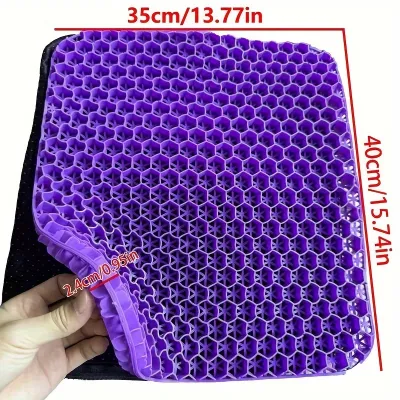
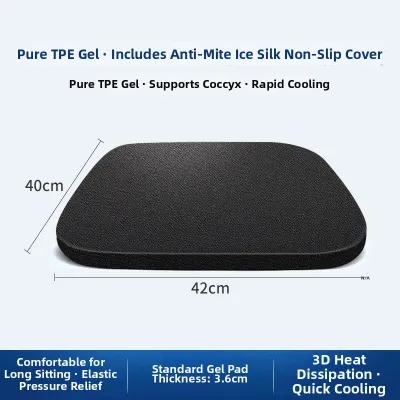
To make an informed choice, it is essential to understand the baseline differences between these three common cushion materials. Solid gel cushions are typically made from dense elastomeric polymers that offer high pressure relief but carry significant physical weight and high thermal mass. Memory foam, or viscoelastic polyurethane foam, relies on body heat and pressure to contour to your shape, providing deep support but naturally trapping airflow within its dense, open-cell structure. Honeycomb cushions utilize a molded, flexible grid pattern that distributes weight through geometric column buckling, leaving vast open spaces that allow air to circulate freely.
Beyond comfort, the weight of the cushion and the texture of its bottom surface play a critical role in protecting your seat covers. Heavy cushions exert constant downward pressure, which can stretch or deform delicate seat materials over time. Furthermore, many cushions feature textured non-slip backings designed to keep them in place; however, the friction generated by these backings during entry and exit can cause abrasive wear on some seat covers while chemically reacting with others. Finally, thick or solid cushion materials act as thermal barriers, which can severely diminish the effectiveness of built-in seat heating or ventilation systems. By analyzing how these factors interact, you can select a cushion that optimizes comfort without compromising your vehicle’s interior.
Products mentioned in this guide
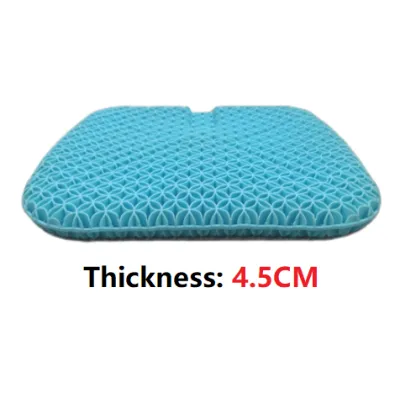
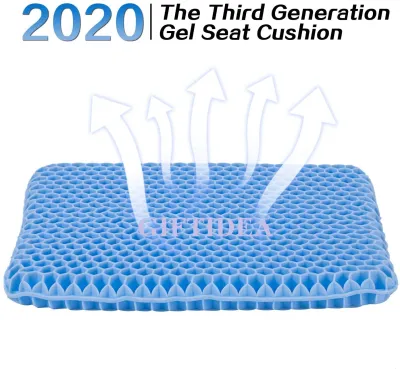
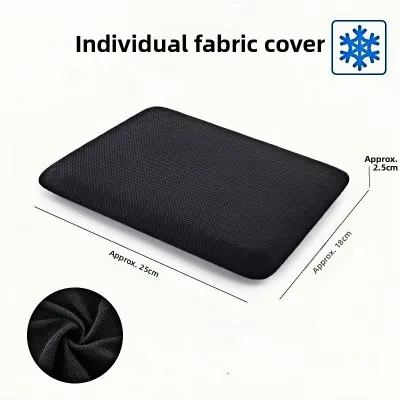
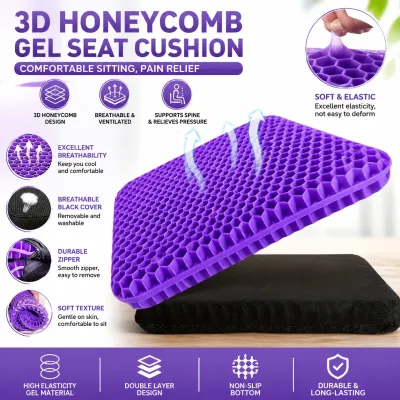
Prices are valid at publication and may change. Please refer to the product page for the latest price.
Choosing a Cushion for Leather Car Seats
Leather car seats are highly valued for their premium appearance and durability, but they present unique challenges when paired with aftermarket cushions. Leather is a natural, non-porous material that tends to retain ambient temperatures. In hot, tropical climates, leather seats parked under direct sunlight can become exceptionally hot, while in cooler conditions, they can feel uncomfortably cold. Managing heat transfer and preventing surface damage are the primary concerns when choosing a cushion for leather upholstery.
Honeycomb grid cushions are highly effective for leather seats, particularly in warm weather. Because leather does not breathe well on its own, the open-channel design of a honeycomb cushion allows air to flow beneath the driver, preventing sweat buildup and reducing the sticky sensation often experienced on hot leather. Solid gel cushions offer a cool initial feel due to their high thermal conductivity, but they lack continuous airflow. Over long drives, a solid gel cushion will eventually absorb body heat and retain it, offering less thermal relief than a true honeycomb grid.
Memory foam cushions provide excellent contouring and can offer a soft, insulating barrier during cooler seasons. However, because memory foam relies on heat retention to soften and conform to your body, it can become uncomfortably warm on hot leather seats. If you opt for memory foam on leather, look for specialized designs that incorporate ventilation channels or breathable fabric covers to mitigate heat trapping.
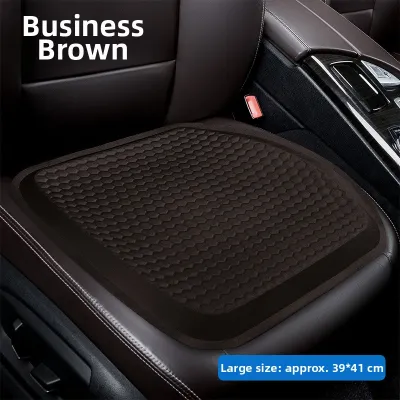
Slipping is a major practical issue on smooth leather surfaces. To prevent the cushion from sliding when you turn corners or get in and out of the vehicle, many manufacturers add non-slip backings made of silicone dots or rubberized grips. While effective at preventing movement, these materials require careful verification. Under high cabin temperatures, some low-grade rubberized backings can undergo plasticizer migration, a chemical process where compounds from the backing leach into the leather finish. This can leave permanent stains, sticky residues, or even peel the protective topcoat of the leather. Always verify that the cushion backing is explicitly labeled as safe for genuine or synthetic leather, or use a soft, neutral fabric barrier between the cushion and the seat.
Choosing a Cushion for Fabric Car Seats
Fabric car seats offer excellent natural traction and breathability, but they are highly susceptible to mechanical wear, staining, and moisture retention. When selecting a cushion for fabric seats, the goal is to find a supportive material that distributes weight evenly without causing abrasive damage to the fabric fibers or trapping moisture within the seat cushion base.

Memory foam is an excellent match for fabric seats from a support perspective. Fabric seats naturally have more give than leather, and the conforming nature of memory foam complements this elasticity, providing deep, pressure-relieving support. Gel and honeycomb cushions also perform well on fabric, offering a firmer, more buoyant support profile that prevents the driver from sinking too deeply into soft, worn-out fabric seats.
The primary risk when pairing any cushion with fabric seats is surface friction. Every time you enter or exit the vehicle, your body weight shifts, transferring shear forces through the cushion to the seat cover. If the cushion has a highly abrasive, rough, or hard plastic non-slip backing, these repeated movements will rub against the fabric fibers. Over time, this friction leads to snagging, pulling, and pilling, which can make the fabric look prematurely aged and worn. For fabric seats, choose cushions with smooth, high-friction fabric bottoms (such as brushed suede or textured polyester) rather than aggressive rubber nubs.
Moisture management is another critical factor for fabric upholstery. Fabric fibers absorb sweat, spilled liquids, and ambient humidity. If you place a solid, non-breathable cushion—such as solid gel or dense, unventilated memory foam—directly onto a fabric seat, moisture can become trapped in the interface between the cushion and the seat. In humid environments, this trapped moisture can quickly lead to the growth of mold, mildew, and unpleasant, musty odors. To prevent this, prioritize highly breathable honeycomb cushions or memory foam options with removable, washable, and moisture-wicking covers. It is also wise to periodically remove the cushion to let both the seat and the cushion air out.
Choosing a Cushion for Mesh Car Seats
Mesh car seats are engineered specifically for maximum ventilation and ergonomic suspension. They feature a tensioned, breathable mesh fabric stretched over a rigid frame, eliminating the dense foam padding found in traditional seats. When choosing a cushion for a mesh seat, the priority is to maintain this built-in airflow while protecting the delicate mesh material from overstretching or tearing.
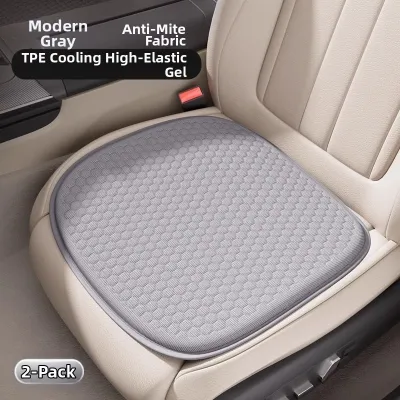
Honeycomb grid cushions are by far the best match for mesh seats. Because both the mesh seat and the honeycomb cushion rely on open, structural geometry rather than solid mass, they work in perfect harmony. The honeycomb grid allows air to pass directly through the cushion and through the mesh seat cover, preserving the cooling performance of the seat’s original design. Gel grid cushions with open-cell structures offer similar benefits, keeping the seating surface cool and dry.
Conversely, solid-bottom memory foam cushions should generally be avoided on mesh seats. Placing a solid block of foam on a mesh seat completely blocks the ventilation path, trapping heat and moisture against your body and defeating the primary engineering benefit of the mesh design. Additionally, because mesh seats lack a solid sub-structure, a dense foam cushion can feel unstable or slide around easily on the flexible mesh surface.
Weight is a critical, often overlooked factor when dealing with mesh seats. Mesh suspension systems are designed to support human body weight distributed evenly across the tensioned fabric. Solid gel cushions are remarkably heavy due to the density of the elastomeric polymer. Placing a heavy gel cushion on a mesh seat adds significant constant load to the suspension fibers and the plastic or metal frame. Over time, this concentrated weight can cause the mesh to stretch permanently, sag, or even tear at the attachment seams. For mesh seats, always check the overall weight of the cushion and prioritize lightweight honeycomb or thin, high-density foam options that provide comfort without overloading the seat’s suspension.
Quick Comparison Matrix: Cushion Types vs. Seat Materials
To help you quickly evaluate your options, the following matrix summarizes how each cushion type performs across different seat materials, highlighting the primary risks and key verification steps for each pairing.
| Cushion Type | Seat Material | Breathability Impact | Slip Risk | Key Verification Item |
|---|---|---|---|---|
| Gel (Solid) | Leather | Low (heats up over time) | High | Verify backing is safe for leather finishes to prevent staining |
| Gel (Solid) | Fabric | Low | Low | Periodically remove cushion to check for trapped moisture |
| Gel (Solid) | Mesh | Blocks airflow | Medium | Check cushion weight to avoid overstretching mesh suspension |
| Memory Foam | Leather | Very Low (traps heat) | High | Ensure cover fabric is breathable; check backing compatibility |
| Memory Foam | Fabric | Low (insulates) | Low | Choose a smooth backing to prevent fabric snagging and pilling |
| Memory Foam | Mesh | Blocks airflow completely | High | Avoid use; defeats the primary ventilation benefits of mesh |
| Honeycomb Grid | Leather | High (excellent airflow) | High | Ensure the grid cover has non-staining, leather-safe grips |
| Honeycomb Grid | Fabric | High | Low | Verify cover fabric is soft and won't abrade seat fibers |
| Honeycomb Grid | Mesh | High (complements mesh) | Low | Confirm cushion weight is minimal to protect seat frame |
Safety and Compatibility Checks Before Installation
Before purchasing or installing any aftermarket seat cushion, you must perform several critical safety and compatibility checks to ensure the cushion does not interfere with your vehicle’s safety systems or mechanical functions.
First, verify side-airbag compatibility. Many modern vehicles feature side-impact airbags integrated directly into the outer bolsters of the front seats. These airbags are designed to deploy through specially engineered seams in the seat cover. While a bottom seat cushion generally sits flat on the seat base, some cushions feature side flaps, straps, or wrap-around covers that secure them to the seat back. You must consult your vehicle’s owner’s manual to locate the exact deployment paths of your side airbags. Ensure that no part of the cushion, its straps, or its mounting hardware covers, obstructs, or puts pressure on these deployment zones.
Second, check physical clearances and driving ergonomics. Adding a seat cushion will raise your seating position, typically by two to five centimeters. This change in height alters your driving posture, your line of sight through the windshield, and your relationship to the steering wheel and pedals. Before driving, adjust your seat height, steering wheel angle, and mirrors to maintain a safe, comfortable driving position. Ensure that your hips are level with or slightly higher than your knees, and that you can fully depress the brake and accelerator pedals without straining. Additionally, verify that the cushion does not block access to seatbelt buckles, seat adjustment levers, power seat buttons, or folding armrests.
Third, confirm compatibility with integrated seat electronics. Modern car seats are highly sophisticated, often containing occupancy sensors, seat heaters, and cooling ventilation systems. Occupancy sensors use pressure or capacitance to detect if a passenger is present, which determines whether the passenger-side airbag should deploy in an accident. A thick, heavy, or rigid cushion can alter how weight is distributed across these sensors, potentially preventing the airbag system from functioning correctly. Check your vehicle’s dashboard warning lights after installing a cushion to ensure no airbag fault codes are triggered. Furthermore, thick cushions act as thermal insulators; placing a dense memory foam or solid gel cushion over seat heaters can cause heat to build up beneath the cushion, potentially damaging the heating elements or the seat cover material. Always refer to both your vehicle manual and the cushion manufacturer’s instructions to verify compatibility with heated and ventilated seats.
Frequently Asked Questions (FAQ)
Can I use a gel seat cushion on a heated car seat?
You must exercise caution when using a gel seat cushion on a heated car seat. Gel polymers have high thermal mass, meaning they absorb a significant amount of heat before their surface temperature rises. When you turn on your seat heater, the gel cushion will cause a noticeable thermal lag, delaying the warming effect. More importantly, you must verify the temperature limits specified by both your vehicle manufacturer and the cushion manufacturer. Excessive heat can cause some gel materials to soften, lose their structural integrity, or release chemical compounds that could damage or stain your seat covers.
Will a memory foam cushion damage leather seats over time?
A memory foam cushion can damage leather seats over time if proper precautions are not taken. The primary risks are mechanical friction and chemical migration. As you shift in your seat, the bottom of the cushion rubs against the leather, which can gradually wear away the protective topcoat. Additionally, cheap non-slip backings on memory foam cushions can react chemically with leather finishes under high cabin temperatures, causing permanent discoloration or peeling. To protect your leather, choose a memory foam cushion with a smooth, leather-safe backing, or place a thin, soft fabric barrier between the cushion and the seat.
Community discussion
Share your experience or ask a question. Comments are reviewed before publication.