
Protecting your vehicle’s paintwork in a tropical environment requires a clear understanding of the different detailing treatments available. Car owners often find themselves choosing between traditional polishing, synthetic sealants like Fusso Coat F7, and semi-permanent ceramic coatings. Each of these methods serves a distinct purpose, ranging from correcting surface defects to establishing a sacrificial barrier against environmental contaminants. Selecting the right approach depends on your vehicle’s current paint condition, your budget, and how much time you want to spend on maintenance.
Understanding the practical differences between these options prevents costly mistakes, such as applying a protective sealant over damaged paint or expecting a polish to shield your car from acid rain. By evaluating how these products interact with your car’s clear coat, you can establish a maintenance routine that preserves both the aesthetic appeal and the resale value of your vehicle.
Understanding the Core Differences in Paint Protection
To make an informed decision, you must first distinguish between products that correct paint defects and those that protect the surface. Many car owners confuse polishing with waxing or coating, leading to improper application and disappointing results.
Products mentioned in this guide
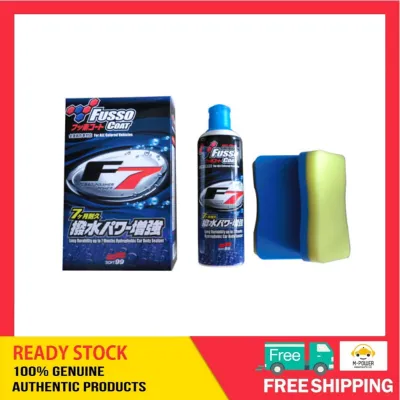

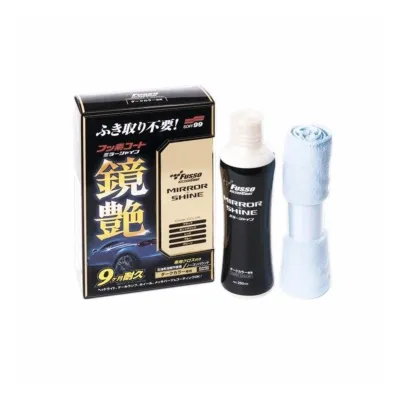
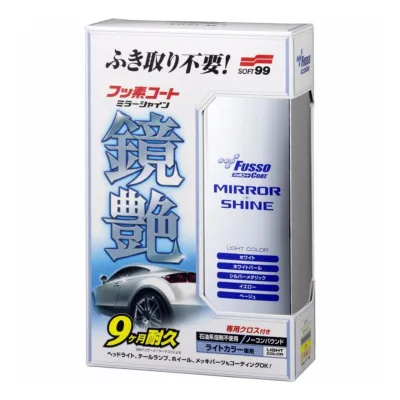
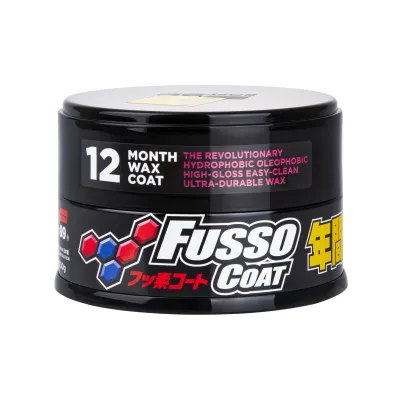
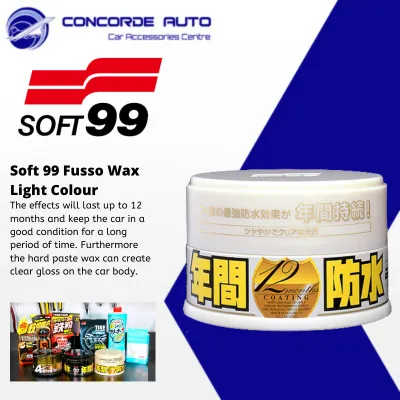
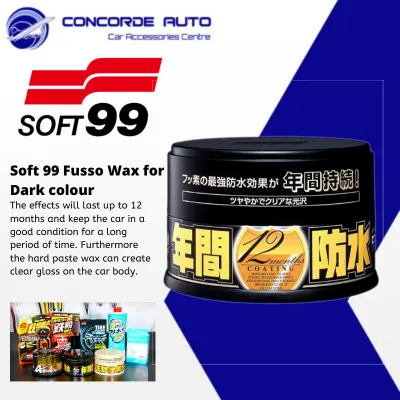
Prices are valid at publication and may change. Please refer to the product page for the latest price.
Car polish is an abrasive liquid compound designed to restore the paint’s clarity rather than protect it. When applied by hand or with a dual-action polishing machine, the microscopic abrasives in the polish gently shave away a microscopic layer of the clear coat. This process levels the surface, effectively removing fine scratches, swirl marks, haze, and oxidation. Because polish contains no protective polymers or waxes, leaving a polished surface bare exposes it directly to UV rays and environmental fallout, causing rapid degradation.
Fusso Coat F7 is a liquid synthetic sealant formulated with fluoropolymers, which are synthetic resins known for their high resistance to heat, water, and chemicals. Unlike traditional carnauba waxes that rely on natural ingredients, this synthetic sealant bonds physically to the paint surface to create a highly hydrophobic barrier. It fills minor microscopic imperfections to enhance gloss and causes water to bead and roll off rapidly, carrying surface dust away with it.
Ceramic coating represents a more advanced tier of paint protection, utilizing silicon dioxide (SiO2) or similar chemical compounds. When applied to the paint, the liquid monomer undergoes a chemical reaction with the clear coat, curing into a semi-permanent, glass-like crystalline layer. This hardened barrier does not simply sit on top of the paint; it becomes an extension of the surface itself, offering resistance to light scratches, chemical etching, and UV degradation.
Comparing Durability, Application, and Maintenance
The tropical climate of Singapore—characterized by intense UV radiation, high humidity, and sudden, heavy downpours—places extreme stress on any paint protection layer. Understanding how each method performs under these conditions is essential for managing your expectations.

Durability varies significantly across the three methods and is highly dependent on environmental exposure and washing habits. A polished surface has zero durability because it offers no protection; it must be sealed immediately. A synthetic sealant like Fusso Coat F7 typically provides several months of reliable water beading and UV protection, though frequent parking in unsheltered, open-air carparks can accelerate its degradation. In contrast, a professionally applied ceramic coating can last for several years, maintaining its structural integrity and hydrophobic properties far longer than any wax or sealant.
The application process highlights the trade-off between DIY convenience and professional precision. Applying a synthetic sealant is a straightforward DIY task that requires minimal specialized equipment. After washing and drying the car, you simply spread the liquid sealant evenly using an applicator pad, let it haze, and buff it off with a clean microfiber towel. Ceramic coating, however, demands a highly controlled environment free of dust, wind, and direct sunlight. The application requires precise timing; leaving the coating on the paint for even a few seconds too long before buffing can create permanent “high spots” or dark, uneven patches that can only be removed by machine polishing.
Maintenance routines also differ based on your chosen protection method. While ceramic coatings make washing much easier because dirt struggles to adhere to the slick surface, they still require regular maintenance. You must wash the vehicle using pH-neutral car shampoos and avoid automated drive-through car washes, which use harsh brushes that can scratch the coating. To maintain the hydrophobic performance of a ceramic coating, you may also need to apply specialized silica-based booster sprays every few months. Maintaining a synthetic sealant simply involves regular washing and a straightforward reapplication of the product once you notice water stops beading on the surface.
Cost and Value Evaluation for Car Owners
Balancing the initial financial outlay against the long-term maintenance costs is a crucial step in deciding which paint protection route to take. Car owners must evaluate whether they prefer a low-cost, high-effort routine or a high-cost, low-effort solution.
Upfront costs vary dramatically between DIY products and professional detailing services. A bottle of synthetic sealant like Fusso Coat F7 is highly economical, typically costing between S$30 and S$60, and a single bottle contains enough product for multiple applications over several years. Professional polishing and paint correction services generally range from S$150 to S$400, depending on the size of the vehicle and the severity of the paint defects. Professional ceramic coating packages represent the highest upfront investment, often ranging from S$500 to upwards of S$1,800 at reputable local workshops, reflecting the intense labor and expertise required for the application.
When evaluating long-term value, you must factor in the value of your personal time and the cost of detailing accessories. While a synthetic sealant is inexpensive, it requires you to dedicate several hours every few months to prep and reapply the product. If you prefer to outsource this labor, the recurring cost of professional waxing can quickly surpass the one-time cost of a ceramic coating over a three-to-five-year ownership cycle. A ceramic coating minimizes the frequency of detailing sessions, saving significant time and effort over the lifespan of the vehicle.
Hidden costs are frequently overlooked by car owners planning to apply a ceramic coating. A ceramic coating cannot be applied directly to neglected paint without locking in existing defects, scratches, and swirl marks. Therefore, professional paint correction is almost always a mandatory prerequisite before coating application. Even if you choose to apply a ceramic coating yourself, you must budget for clay bars, iron decontaminators, isopropyl alcohol prep sprays, and potentially a dual-action polisher to ensure the paint is perfectly clean and smooth before the coating is applied.
Decision Framework: Which Method Fits Your Needs?
To select the ideal paint protection strategy, you must assess your vehicle’s current paint condition, your budget, and your willingness to perform regular maintenance. There is no single option that suits every car owner, but a systematic approach can guide you to the right choice.
You should choose a dedicated polish if your vehicle’s paintwork exhibits visible swirl marks, light scratches, water spot etching, or a dull, oxidized appearance. Polishing is a corrective step rather than a protective one, meaning you must always follow it with a sealant, wax, or ceramic coating to preserve the newly restored finish.
A synthetic sealant like Fusso Coat F7 is the ideal choice if you are working with a modest budget, prefer a hands-on DIY approach, and enjoy spending your weekends maintaining your vehicle. It offers excellent water-beading performance and reliable protection against tropical elements without requiring professional-grade application skills or specialized climate-controlled environments.
A ceramic coating is highly recommended if you view paint protection as a long-term investment, desire the highest level of gloss and chemical resistance, and prefer a low-maintenance washing routine. This option is best suited for those who are willing to pay the premium upfront cost for professional installation or possess the advanced detailing skills and controlled workspace required for a successful DIY application.
Before making your final decision, always verify the current state of your vehicle’s paint under strong, direct lighting to identify any defects that require correction. Read the manufacturer instructions for any product you purchase to ensure compatibility with your paint type, and carefully review the warranty terms and maintenance requirements of any professional detailing package you consider.
Frequently Asked Questions (FAQ)
Can I apply Fusso Coat F7 over a ceramic coating?
Applying a synthetic sealant like Fusso Coat F7 directly over a cured ceramic coating is generally not recommended. Ceramic coatings are engineered to be highly hydrophobic and dirt-repellent, which prevents other products from bonding effectively to their surface. If you apply a synthetic wax or sealant over a ceramic coating, the sealant may smear, create a cloudy finish, or mask the superior self-cleaning and water-beading properties of the underlying coating. Always consult the specific instructions of your ceramic coating manufacturer before applying any top-coat products.
Does polish remove ceramic coating or wax?
Yes, car polish will physically remove both wax and ceramic coatings. Because polish contains abrasive particles designed to level the clear coat, the mechanical action of polishing abrades and strips away any protective layers sitting on top of the paint. If you need to spot-treat a scratch on a coated vehicle by polishing it, you must reapply the ceramic coating or synthetic sealant to that specific area afterward to restore its protective barrier.

Community discussion
Share your experience or ask a question. Comments are reviewed before publication.