
Riding a bicycle at night requires a delicate balance of personal safety, road awareness, and compliance with local traffic regulations. While standard, utilitarian bicycle lights get the job done, many cyclists look for ways to inject some personality into their daily commute or weekend rides. This desire has led to a surge in funny bicycle lights, featuring whimsical shapes ranging from glowing animals and cartoon characters to food items and quirky projection effects. However, choosing a light based purely on its humor or novelty factor introduces a critical safety compromise that every rider must understand before heading out into the dark.
To stay safe while expressing your personal style, these whimsical accessories must be treated as secondary accents rather than your primary line of defense on the road. Most novelty designs are engineered for visual appeal rather than optical performance, meaning they rarely provide the focused, high-output illumination needed for safe nighttime cycling. Understanding how these designs affect your visibility is the first step toward building a safe, fun, and highly visible setup.
The Safety Trade-Offs of Novelty Bicycle Lights
The fundamental challenge with novelty bicycle lights lies in the compromise between physical design and optical engineering. Standard bicycle lights are precision instruments designed to project a controlled beam of light onto the road surface while remaining visible to oncoming traffic. They utilize specialized reflectors and collimating lenses to shape the light, ensuring it illuminates potential hazards like potholes, debris, and wet patches. In contrast, funny bicycle lights prioritize their external shape. A light molded to look like a silicone duck, a piece of fruit, or a cartoon character cannot accommodate the complex optical components required to focus a beam, resulting in scattered, inefficient light dispersion.
Products mentioned in this guide
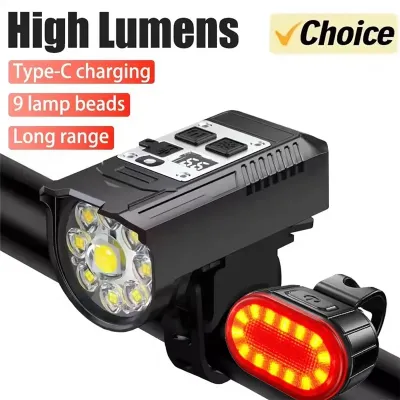
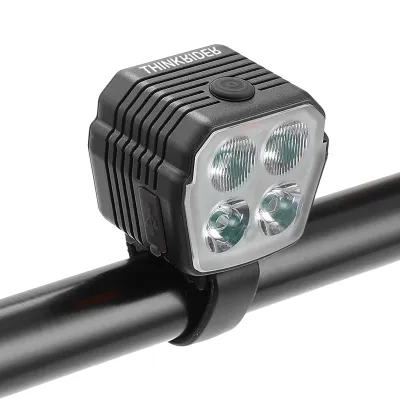
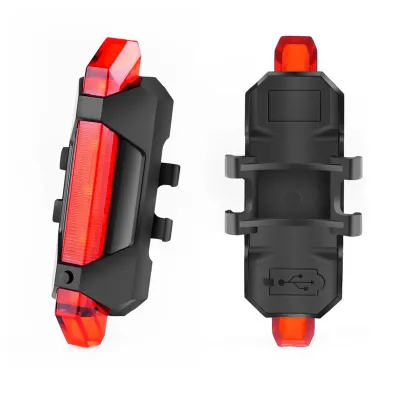
Prices are valid at publication and may change. Please refer to the product page for the latest price.
To evaluate these lights properly, you must distinguish between “seeing” and “being seen”—two entirely different functions of bicycle lighting. Illumination, or the ability to see the road ahead, requires a high-output, focused beam that projects far in front of the bicycle. Conspicuity, or the ability to be seen by other road users, requires only enough brightness to attract attention without causing glare. Most novelty lights are strictly conspicuity lights; they lack the power and optical focus to illuminate the path ahead. Relying on a decorative light to guide you down a dark, unlit park connector or a poorly lit side street can leave you blind to immediate road hazards.
Furthermore, the materials used to construct these humorous designs often actively work against their brightness. Standard lights use highly transparent, clear polycarbonate lenses that allow maximum light transmission. Novelty lights, however, frequently feature thick, colored, or opaque silicone and plastic casings to achieve their quirky appearances. These materials act as heavy filters, absorbing a significant portion of the light emitted by the internal LEDs. A light source that might be perfectly adequate in a clear housing can become dangerously dim once it is forced to shine through a thick layer of green, blue, or yellow decorative plastic.
Common Funny Light Themes and Their Visibility Limits
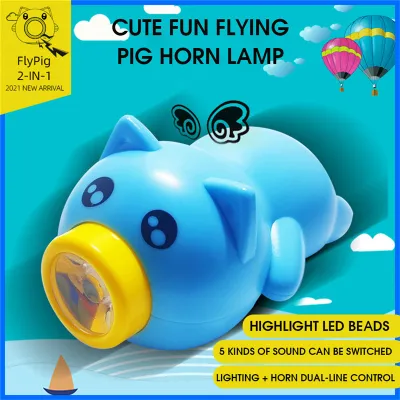
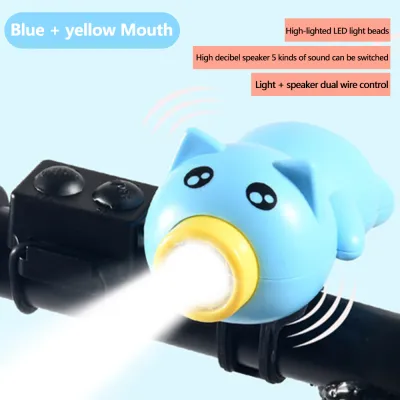
Understanding the specific limitations of different novelty light categories can help you make safer purchasing decisions when browsing an online marketplace. Animal and character-shaped lights are among the most common designs available. These lights typically feature a soft silicone body that wraps around the handlebars or seatpost. While they are highly endearing, their bulky, molded housings often restrict the angle of the light. Because the LED is often recessed deep within the character’s head or body, the light is only visible from a narrow angle directly in front or behind. This creates a significant safety hazard at intersections, where motorists approaching from the side may fail to see your light entirely.

Food and object-themed lights, such as glowing pizzas, avocados, or skulls, present similar challenges regarding LED placement and heat dissipation. High-output LEDs generate a surprising amount of heat, which standard aluminum-bodied lights dissipate through integrated cooling fins. Because novelty lights are almost exclusively housed in cheap, insulating plastics or silicones, they cannot support high-power LEDs without melting or degrading the internal circuitry. Consequently, manufacturers are forced to use low-power, low-output LEDs that offer minimal visibility. The lack of internal reflectors in these irregular shapes means the light is diffused in all directions, making it look like a faint, colored smudge from a distance rather than a distinct warning signal.
Quirky LED effects, such as ground projection lights and laser lane markers, represent another popular category. These devices project patterns, symbols, or simulated bike lanes onto the asphalt around the cyclist. While these effects can look spectacular in pitch-black, controlled environments, their real-world utility is highly limited. In typical urban environments, the ambient light from streetlamps, commercial signage, and vehicle headlights easily washes out the projected patterns, rendering them virtually invisible. Additionally, the laser diodes and projection lenses required for these effects consume a large amount of battery power, often leading to a rapid drop in brightness over the course of a single ride.
Wheel spoke lights and valve cap lights are a unique subcategory of novelty lighting that actually offers genuine safety benefits when used correctly. These lights attach directly to the moving parts of the bicycle, creating glowing circles of light as the wheels spin. Because they provide side-profile visibility—an area where standard front and rear lights are often lacking—they can significantly increase your visual footprint at junctions. However, their effectiveness is entirely dependent on your riding speed; if you are stopped at a red light or moving slowly through heavy traffic, the visual effect is greatly diminished, and they should never replace stationary side reflectors or frame-mounted lights.
Essential Safety Specs to Check on Novelty Lights
When evaluating any humorous bicycle light, you must look past the quirky exterior and inspect the technical specifications listed on the product packaging or manufacturer documentation. The first specification to verify is the lumen rating, which measures the total amount of visible light emitted by the source. While a reliable primary headlight for urban riding should offer at least 200 to 400 lumens, many novelty lights struggle to produce even 50 lumens. If a product does not list a lumen rating at all, it is safest to assume it is intended purely as a low-power decorative accent rather than a functional safety device.
Battery capacity and power management are equally critical considerations. The compact, irregular shapes of funny lights leave very little room for internal batteries. Many of these designs rely on disposable coin-cell batteries, which have a very limited capacity and can lose power rapidly in cold or damp conditions. Replacing these batteries frequently is not only inconvenient but also costly over time. If you choose a rechargeable model, check the specified run times carefully. A novelty light that only lasts an hour on its highest setting is a liability on longer rides, and you should always verify that the charging port is well-protected from dust and moisture.
The mounting mechanism of a bicycle light is often the difference between a safe ride and a lost accessory. Many novelty lights use simple, integrated silicone bands that stretch around the handlebars or seatpost. While these mounts are easy to install and remove, they often lack the grip and tension required to keep the light stable on uneven surfaces. On bumpy roads or when riding over curbs, a loose silicone mount can easily slip, causing the light to rotate and point uselessly at the ground or directly into your eyes. Look for lights that feature secure, screw-on brackets or high-friction rubber backings that prevent slipping.
Finally, you must consider the environmental durability of the light. Bicycles are exposed to rain, road spray, mud, and intense sunlight, all of which can quickly ruin poorly sealed electronics. Before purchasing a novelty light, check the product specifications for an Ingress Protection (IP) rating. A rating of IPX4 indicates that the light can withstand splashes of water from any direction, making it suitable for riding in light rain. Lights without an IP rating are highly susceptible to water ingress, which can cause short circuits, corrosion, and sudden light failure mid-ride.
How to Safely Pair Funny Lights With Primary Illumination
To enjoy the fun aspect of novelty lights without compromising your safety on the road, you must adopt a dual-light strategy. This approach involves positioning your funny lights strictly as secondary, decorative accents while relying on high-quality, dedicated safety lights for primary illumination. By separating the roles of personality and performance, you can customize your bicycle’s appearance while ensuring you remain fully visible to everyone else on the road.
Your primary lights must be mounted in their optimal, legally compliant positions to ensure maximum effectiveness. This means installing a powerful, white headlight with a focused beam pattern on the center of your handlebars, adjusted slightly downward to avoid blinding oncoming road users. Your primary rear light should be a bright, red LED mounted high on your seatpost or rear rack, ensuring it is not obstructed by bags, clothing, or the rear wheel. Once these primary lights are securely in place, you can mount your novelty lights on other parts of the frame, such as the fork legs, seat stays, or even your helmet, where they can serve as extra points of visual interest.
Managing the light modes of your various devices is also essential for maintaining a safe riding environment. Most bicycle lights offer both steady and flashing modes. While flashing modes are highly effective at catching the attention of motorists in busy, well-lit urban areas, they can be incredibly distracting or even disorienting when used incorrectly. If you are using multiple novelty lights alongside your primary illumination, avoid setting all of them to different flashing patterns simultaneously. This can create a chaotic visual display that makes it difficult for drivers to judge your distance and speed. A good rule of thumb is to keep your primary headlight on a steady beam to illuminate your path, use a steady or slow-pulsing mode for your primary taillight, and reserve rapid flashing modes for a single, secondary novelty light.
Regular maintenance is the final step in ensuring your dual-light setup remains safe and effective. Before every ride, take a moment to check the alignment of all your lights, ensuring that none of the mounts have slipped or rotated. Clean the lenses of both your primary and novelty lights regularly, as road grime, dust, and mud can drastically reduce their light output. If you are using rechargeable lights, establish a routine of plugging them in after every few rides to ensure you are never caught with a dead battery when the sun goes down.
Frequently Asked Questions (FAQ)
Are funny bicycle lights legal to use on public roads?
In most jurisdictions, bicycle lighting laws are highly specific regarding the colors and placement of lights used on public roads. Generally, you are required to display a white light visible from the front and a red light visible from the rear during hours of darkness. Many novelty lights come in non-standard colors like blue, green, or purple; using these as your primary lights can be illegal and highly confusing to other road users, who rely on standard color coding to determine your direction of travel. Always check your local transport authority’s guidelines regarding acceptable light colors, mounting heights, and flashing frequencies to ensure your setup remains fully road-legal.
Can I use a novelty light as my only bike light at night?
No, you should never rely on a novelty light as your sole source of illumination when riding at night. These lights are designed primarily for aesthetic appeal and lack the optical engineering, lumen output, and beam focus required to safely illuminate the road ahead or alert motorists from a safe distance. Relying on a low-power, heavily diffused novelty light increases your risk of failing to see road hazards like potholes or debris, and makes it much harder for drivers to spot you in low-visibility conditions. Always pair your decorative lights with high-quality, certified primary headlights and taillights.
Community discussion
Share your experience or ask a question. Comments are reviewed before publication.